By clicking “Accept”, you agree to the storing of cookies on your device to enhance site navigation, analyze site usage, and assist in our marketing efforts. View our Privacy Policy for more information.
How to Build AI Agents for Beginners: A Step-by-Step Guide
Written By:
Published
Feb 14, 2025
•
Last updated
Nov 4, 2026
•
10 min read
So, you’re looking to invest in AI agents for sales and CX.
But, you need something a little more intelligent than the average GPT. More purpose-built for your customers. So you find yourself asking…
“How do I build an AI Agent? Is it going to cost millions of dollars to get live? What can AI agents even do for me right now?”
Don’t worry. The good news is, you have options. AI agents and Voice AI are getting genuinely really good—sounding ridiculously human, without having to cost an arm and a leg.
The bad news is, the AI landscape can be hard to navigate. As an AI Agent company, we’re aware of how much BS is being marketed to you…
Ohhh, the AI-rony.
But, we really do get it. Some options are very difficult to implement. Some are way overpriced. Many have agents that just flat out stink.
Whether you have coding knowledge, or none at all, there are options that make it simple to spin up customized, very human-like AI agents.
Use this article as your starting point. We'll explore how to build AI agents for beginners, define what an AI agent can actually be in 2025, look at what you need to consider when building your first agent, and how to start tackling the process.
What do we even mean by “AI Agent”?
When most people think of an AI agent, they think of Siri or Alexa. Perhaps, in a more advanced sense, they’ll think of ChatGPT or Google Bard.
These, however, are NOT AI agents. They are AI voice assistants and chatbots. Very big difference.
AI agents are purpose-built. They are designed to carry out a specific, deliberate interaction, to achieve a specific result.
As defined by Webster, an “agent” is:
“one who is authorized to act for or in the place of another”
“a means or instrument by which a guiding intelligence achieves a result”
So, AI agents 1) are authorized to act on your company’s behalf. Built by you, for you. Additionally, they 2) serve as a guiding intelligence for your customers, to both achieve a result per every conversation, but also help your customers reach their desired overall outcomes.
Siri, Alexa, and even ChatGPT are designed to answer general, purpose-agnostic questions.
When we say AI agents, we mean:
An agent that works for an auto insurance company that gets in touch with policyholders and helps them renew their plans.
An agent that proactively reaches out to patients to remind them to take their medicine.
An agent that sends reminders to homeowners when a service hand is on the way.
An agent that signals new bootcamp courses of interest for registered students.
This only scratches the surface of what AI agents are able to do on a 24/7 basis.
Types of AI Agents
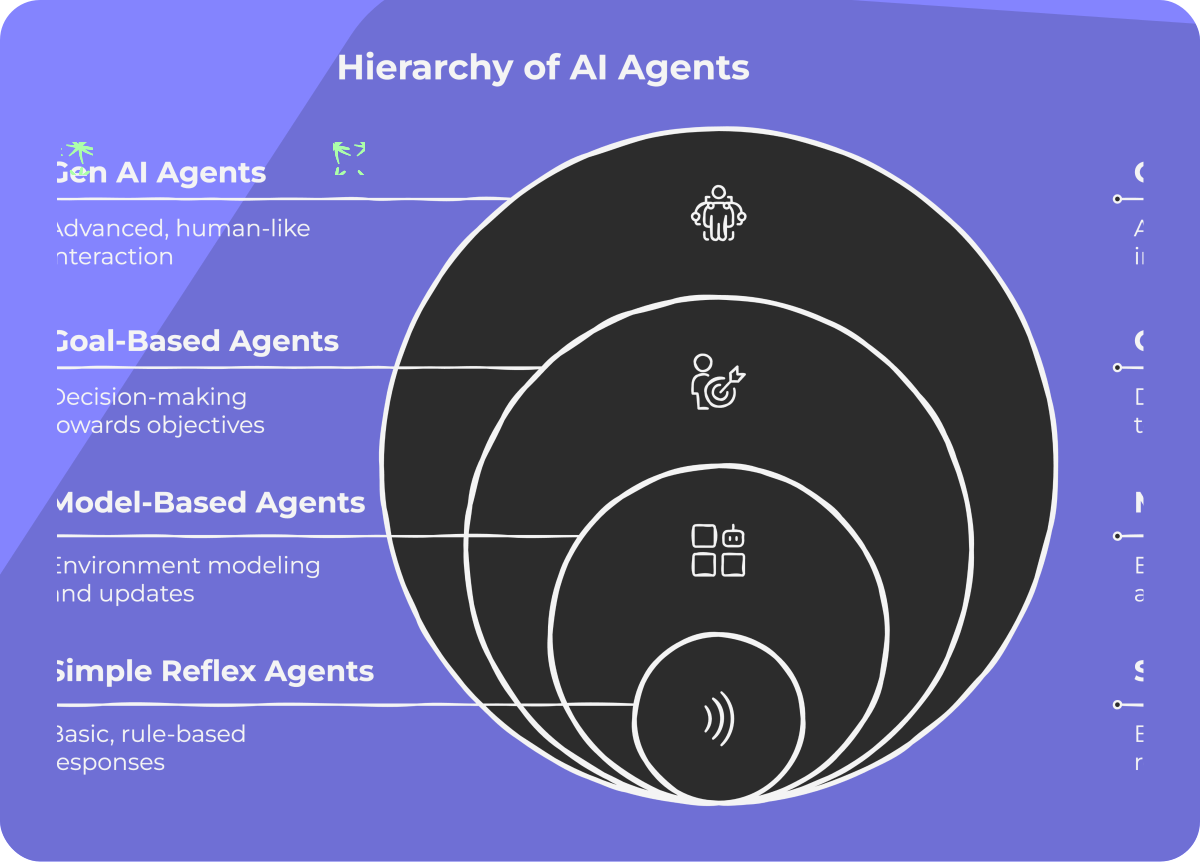
Here's a breakdown of the full spectrum of available chatbots, voice assistants, and proper AI agents:
Chatbots, Voice Assistants, and other Workflow Agents might be considered…
Simple Reflex Agents – These agents operate based on predefined rules and scripts, responding to inputs with fixed outputs—a basic chatbot that replies according to a set script.
Model-Based Agents – These agents are more intake focused, building and maintaining an internal model of an environment, updating information that you can use in CX outreach.
Goal-Based Agents – Goal-based agents are less intake focused, and more action focused, designed to make a series of decisions that lead to specific objectives. They dynamically adjust their behavior and decision-making processes to stay on track toward reaching their predefined goals.
Gen AI Agents
Gen AI Agents are the next level of AI agents. They combine all of the agent functionalities mentioned above, across intake, output, and outreach.
They’re designed to mimic human-like traits, including personality, decision-making, and communication. They act like real people, engaging with users in a more natural, intuitive way, far beyond the capabilities of traditional voice assistants like Siri or Alexa.
What’s also worth mentioning, is that, because of the generative nature of the technology, it can be carried out in limitless workstreams—i.e. as many agents as any CX team could need or want, all acting at the same time.
Real-World AI Agent Examples
When we think of the key functions of AI agents across sales and CX, there are a number of ways they can operate self-sufficiently:
General Customer Support: Of course. BUT, AI agents handle general FAQs and resolve common issues 24/7/365, but do so as a conversation, instead of just sending an FAQ link that may or may not point to the right answer.
Lead Qualification: Across many business types, AI agents can qualify leads by engaging with them, asking qualifying questions, and then routing them to the right agent or workflow.
Scheduling & Reminders: AI agents manage appointment bookings, send reminders, updates, and follow up on engagements.
Patient Engagement: AI agents facilitate appointment scheduling, send reminders, and answer common health-related questions.
Health Program Adherence: AI agents manage follow-ups, treatment and medication reminders, and check-in communications with patients.
Student Enrollment & Reminders: AI agents handle student inquiries, assist with enrollment processes, and send reminders for deadlines, events, and new courses of interest.
Course Assistance: AI agents offer personalized study recommendations, track academic progress, and answer academic queries.
Insurance Policyholder Communications: AI agents handle inquiries about policies, provide updates on claims, and send renewal reminders.
Home Improvement Scheduling and Reminders: AI agents coordinate appointments for services like plumbing, electrical work, and remodeling. Agents follow up with customers, send reminders, and send live service updates.
How to Build AI Agents for Beginners: Questions and Considerations
The way you actually build your AI agent will depend on your business instance. Below are the questions and considerations you should keep in mind to select the right tools and service partners and get the process started.
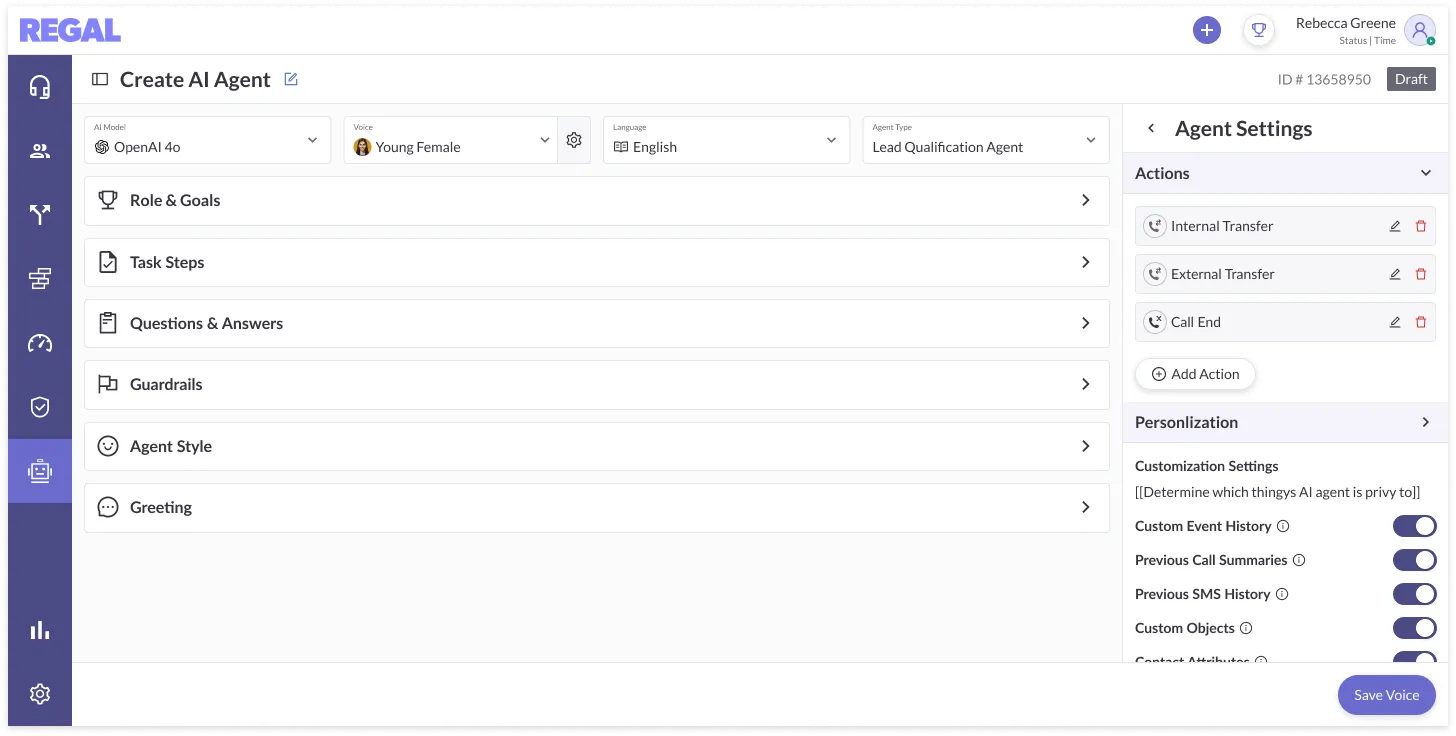
What to ask yourself when building an AI agent for sales and CX
What problem will your AI agent solve? Begin by defining the purpose of your AI agent. Do you have very simple outbound volume goals you’re trying to hit? Or are you looking for more reflexive, responsive agents to help customers through personalized journeys?
What data will you use to train your AI agent? What are you currently tracking? How much do you actually know about your customers? Do you simply need to plug AI agents into an existing database, or do you want to start collecting more data as part of implementing AI agents?For example, platforms like Regal centralize your first-party customer data and integrate that data directly into the desktop your AI and human agents work out of—for visibility, and to inform how you continue to build out and test customer journeys.
Which AI agent builder will you use? Do you need a full no-code builder? Do you want to integrate your agents directly into your CCaaS desktops and workflows? How much technical support do you have internally?
How will you test and optimize your AI agent? A/B testing is critical to refining performance. Do you want a platform that has A/B testing natively built into agent workflows?
How will you measure the efficacy of your AI agents? Do you have ready-made dashboards to measure the efficacy of your AI agents (versus human agents, across different channels and iterations)?
More holistic AI agent tooling will also offer built in reporting along with AI agent functionality.
How will you address data bias and ensure ethical AI? AI models can unintentionally reflect biases from their training data, which could lead to unfair or unethical outcomes.
Are you confident in your team’s technical ability to set and update the necessary guardrails to assure ethical outcomes, HIPAA compliance, or any other strict biases?
Regulated outreach requires more sophisticated AI agents and platforms.
How will you handle errors and debugging? AI agents may generate incorrect or unexpected responses. Is your team equipped to respond quickly and make updates in real-time? Do you have the data at-hand to react in real-time?
With these questions in mind, you should have a starting point for the kind of AI agent builder you need to get moving.
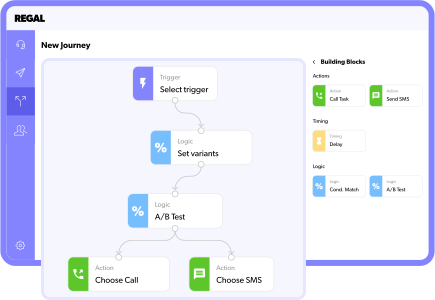
Skills to Build an AI Agent
Let’s say you were going to be hands-on and build your agent in-house. Here’s an overview of the essential skills to build an ai agent for both coding-based and no code AI agent builders, perfect for anyone thinking about how to build AI agents for beginners.
Coding-Based AI Agent Development Skills
Programming Languages: Python, JavaScript, or Java are commonly used to develop AI agents. Python, in particular, is favored for its rich libraries and frameworks in AI.
Machine Learning (ML): A strong understanding of both supervised and unsupervised learning is crucial for building agents that can make decisions based on data.
Natural Language Processing (NLP): This is essential for AI agents that handle text or voice-based interactions, enabling them to understand and generate human-like communication.
Data Labeling & Preprocessing: AI agents require high-quality data for training, and effective data preprocessing ensures the agent learns from the best inputs.
API Integration: Connecting an AI agent with external databases and third-party applications is often necessary for creating a fully functional and responsive agent.
No-Code AI Agent Builder Skills
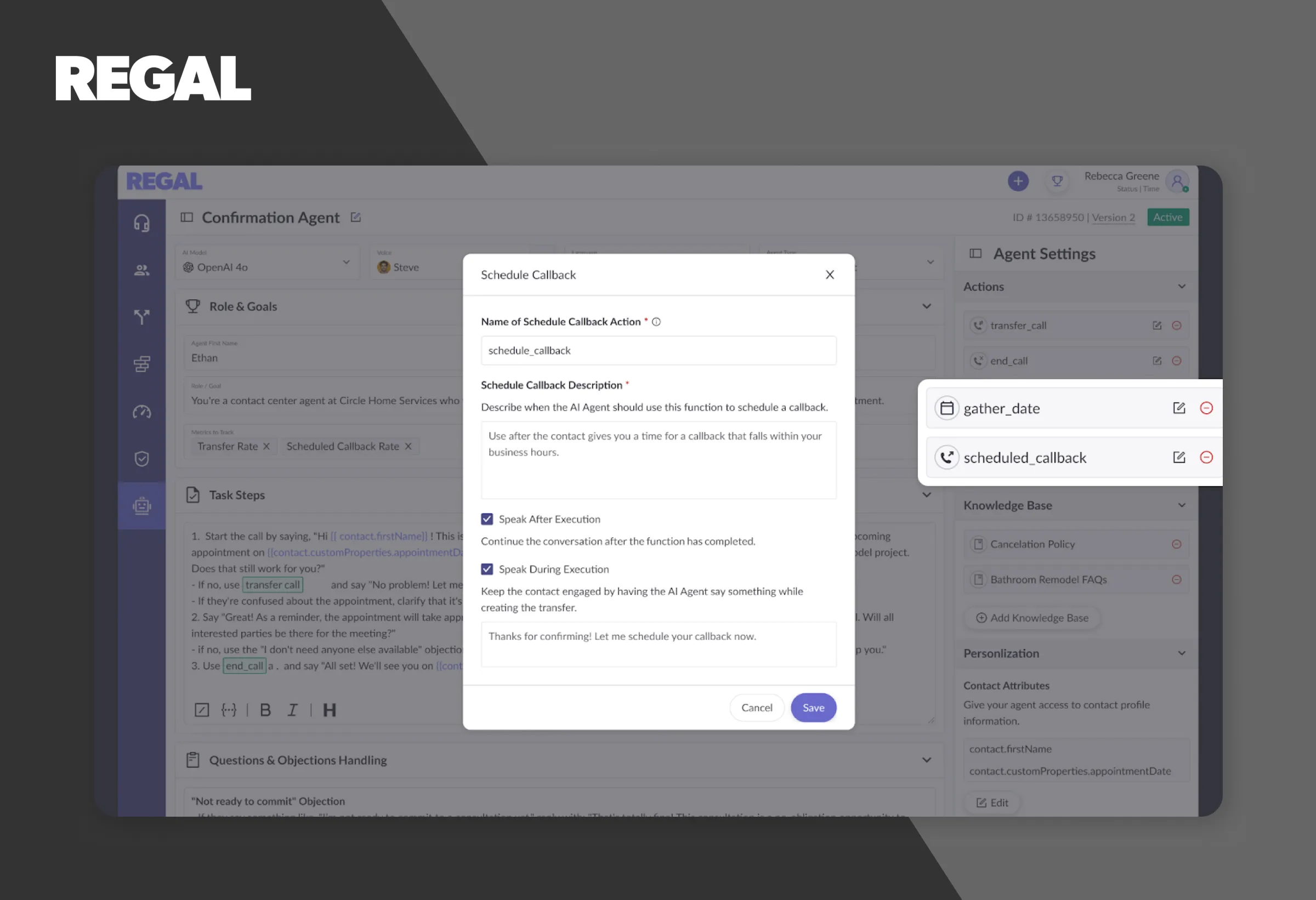
Using AI Agent Builder Platforms: Platforms like Regal allow you to build AI agents using visual interfaces, making it easy to set up workflows and deploy agents quickly.
Understanding Workflows: A basic understanding of how AI agents process information and execute tasks will help you design and test better workflows.
Basic Logic & Decision-Making Rules: Configure your agents to respond to user inputs with predefined actions and logic, making them more efficient and effective in handling real-world interactions.
Tools & Platforms for AI Agent Development
The right tools can make a huge difference in how effectively you can build and deploy your AI agent. Whether you're comfortable with coding or prefer a more user-friendly, drag-and-drop approach, the following platforms cater to both preferences.
Code-Based AI Agent Builders
OpenAI API – A robust API that powers AI agents with advanced natural language understanding, such as GPT-based models.
LangChain – A flexible platform that allows AI agents to integrate seamlessly with external tools and memory modules.
AutoGen – A comprehensive agent framework for building automated workflows that can scale and adapt to various business needs.
No-Code AI Agent Builder Options
How No-Code AI Agent Builders like Regal Work:
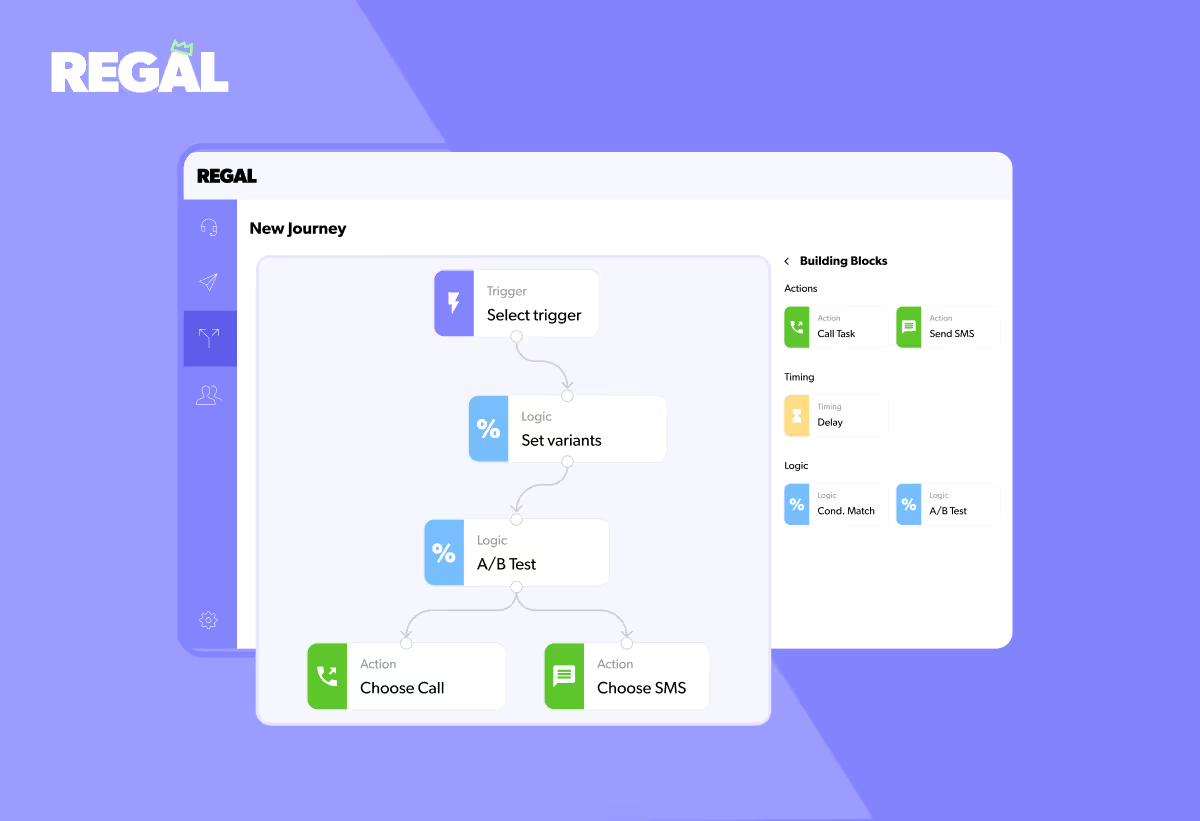
Drag-and-Drop Interfaces: These platforms simplify agent creation by allowing you to define workflows visually, without writing code.
Pre-Trained AI Models: Many no-code AI agent builders come with pre-built models and options, so you don’t need to train AI from scratch.
Integration: Automatically integrate with your customer data, CRM, CCaaS, and other relevant tools.
Future Trends
Gartner has long stated that by 2030, AI-powered agents will handle 80% of business automation.
At Regal, we believe that trend will continue—90% of interactions will be automated by 2035. And most of that will be voice.
Some current trends to keep in mind as you build your AI agents:
More Intelligent AI Agents – AI will continue to handle more complex decision-making. And advancements happen very quickly. If you don’t adopt AI agents now, you’ll continue falling farther behind more and more quickly as they evolve.
No-Code Expansion – AI development will become more accessible for non-technical users.
Multimodal AI Agents – Future agents will understand text, voice, and images, and be able to respond accordingly to each.
Overall, what’s most important is simply getting started.
The sales and CX teams that learn how to build AI agents for beginners and integrate automation the soonest will continue to have a major cost advantage—and will likely also have a major customer experience advantage.
Frequently Asked Questions
How is an AI agent different from a voice assistant or simple chatbot?
AI agents are purpose-built to carry out specific interactions that achieve a defined outcome, while voice assistants and simple chatbots typically follow scripts or handle generic Q&A without goal-directed behavior.
What decisions should I make before starting to build an AI agent for sales or CX?
Define the problem to solve, determine the customer data the agent will use, choose a code-based or no-code builder, plan A/B testing, set up measurement dashboards, establish ethical/compliance guardrails, and prepare a process for error handling and updates.
Can I build an effective AI agent without coding?
Yes. No-code builders let you design workflows visually, use pre-trained models, and integrate with systems like CRM and CCaaS without writing code.
Which code-based tools or frameworks are recommended for building AI agents?
OpenAI API can provide language capabilities, LangChain helps integrate tools and memory, and AutoGen supports building scalable, automated multi-agent workflows.
How should I test and measure my AI agent’s performance after launch?
Use A/B testing to compare agent variants and refine behavior, and track results with dashboards that benchmark outcomes across channels and versions, including comparisons to human agents.
Founded in 2020, Regal is an enterprise voice AI agent platform for contact centers. Regal helps businesses build, deploy, and manage autonomous AI agents across sales, support, and operations teams.
Move Conversations Forward with Goal-Oriented, Multi-State Agents
Now, Multi-State agents can adaptively gather the information it needs to reach that resolution, instead of following a rigid set of rules. More flexibility means a better chance your agent reaches its goals.
How Aprende transformed program enrollment for Hispanic students
See how Aprende transformed student enrollment with Regal’s AI Agent—matching human conversion rates, driving 18X more engaged calls, and saving advisors over 100,000 minutes monthly.
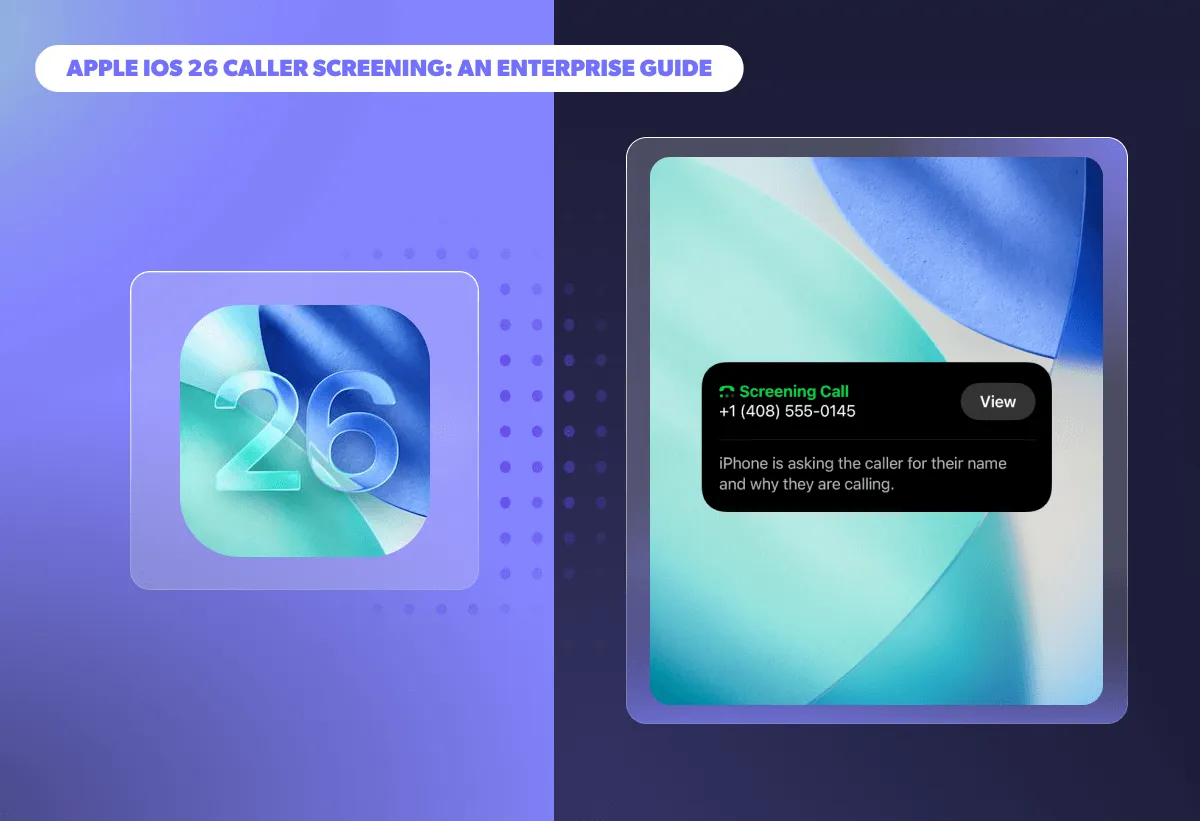
Apple iOS 26 Caller Screening: An Enterprise Guide
Apple’s iOS 26 introduces new call-screening controls that will reshape outbound performance. This guide explains what’s changing, how adoption may impact enterprise contact centers, and the proactive steps leaders can take now to protect answer rates and customer trust.
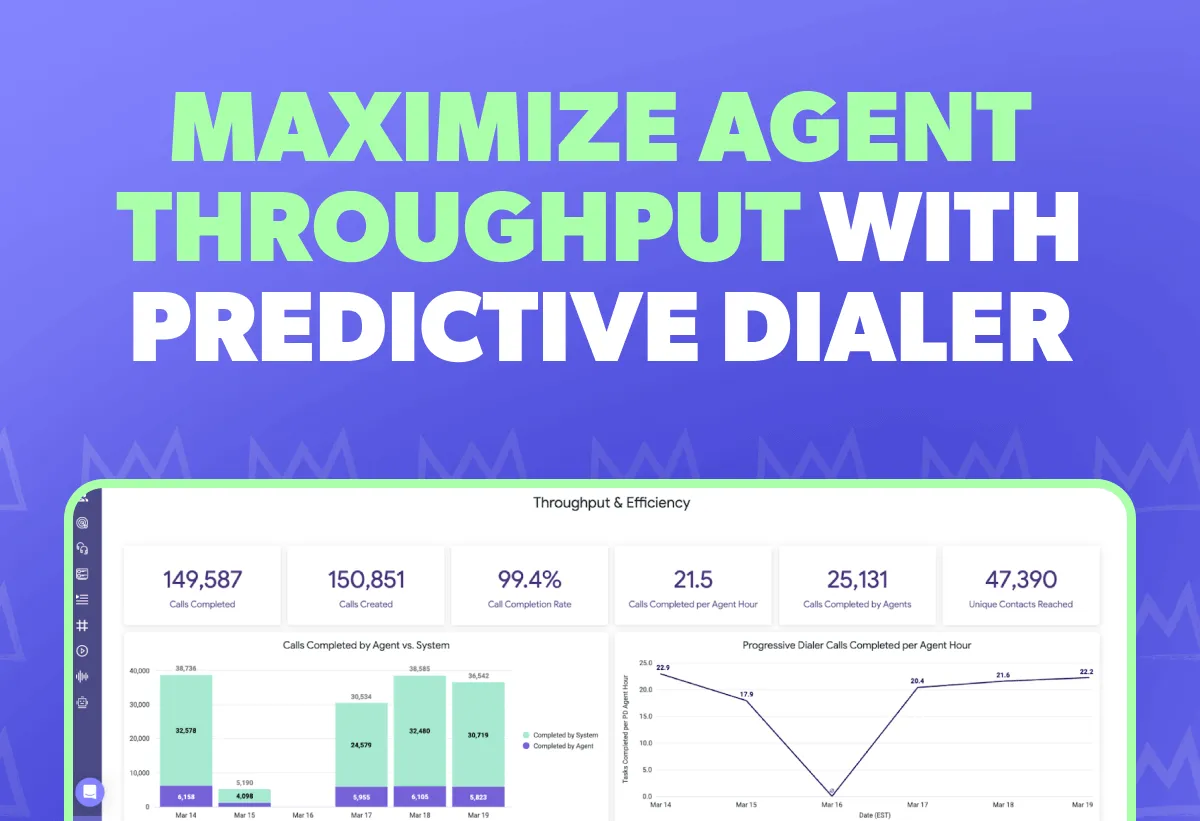
Maximize Agent Throughput with Regal's Predictive Dialer
It’s critical for call center managers to understand how their power dialers work and to measure if they’re performing as intended. With Regal’s new Predictive Dialer, You can do just that, and much more.
Say goodbye to batch processing, complicated SQL queries or custom engineering to decide who to call. Journey builders help B2C create more timely, relevant and personalized outreach to customers.
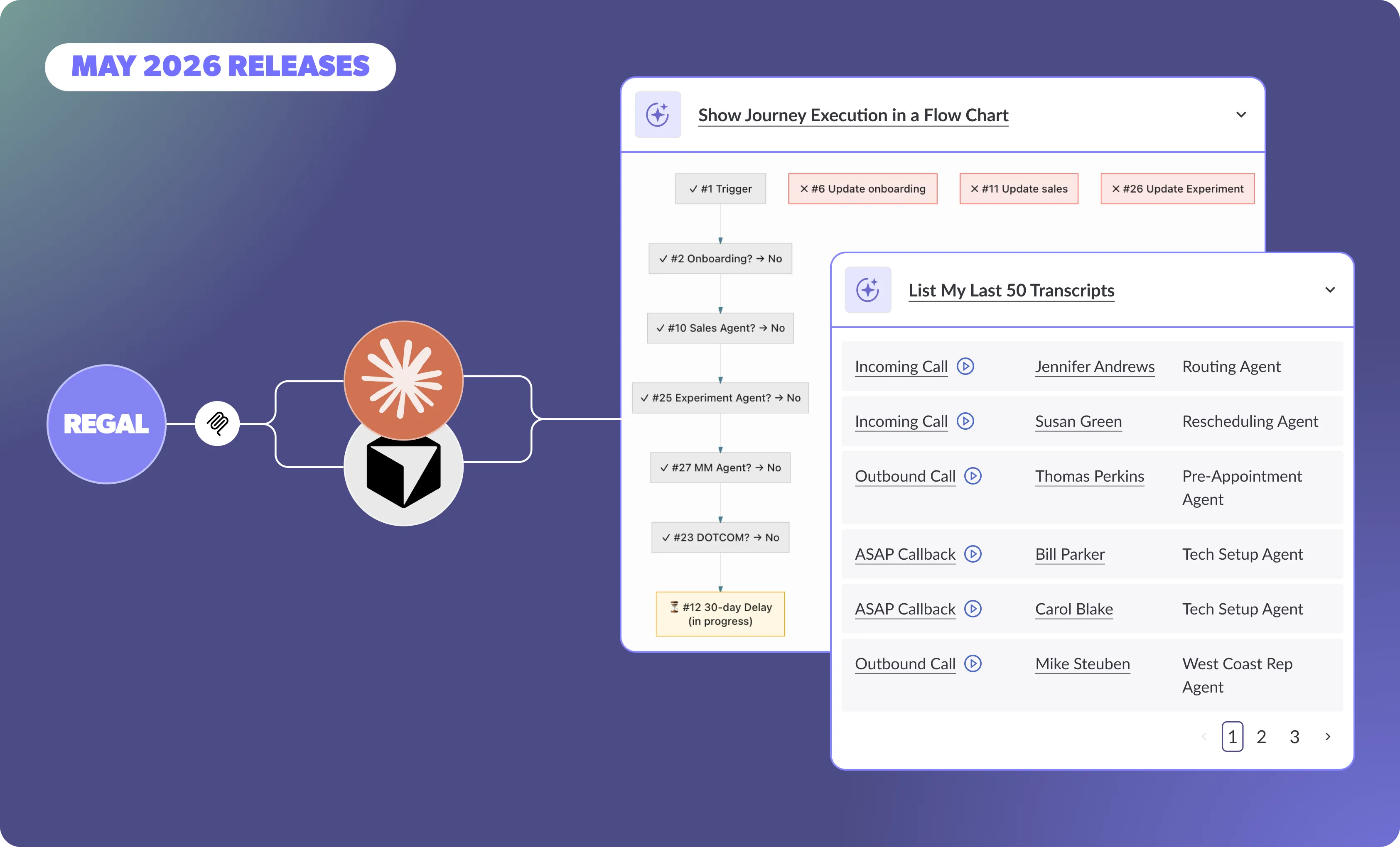
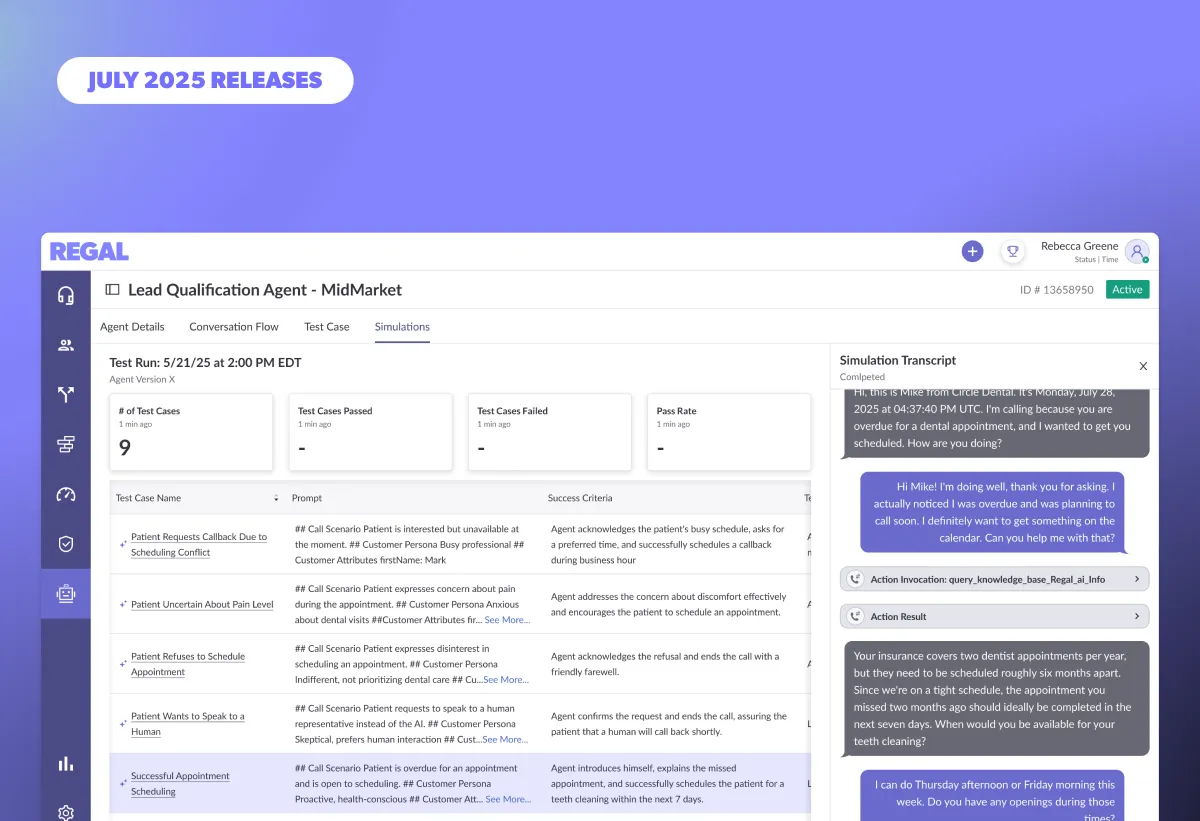
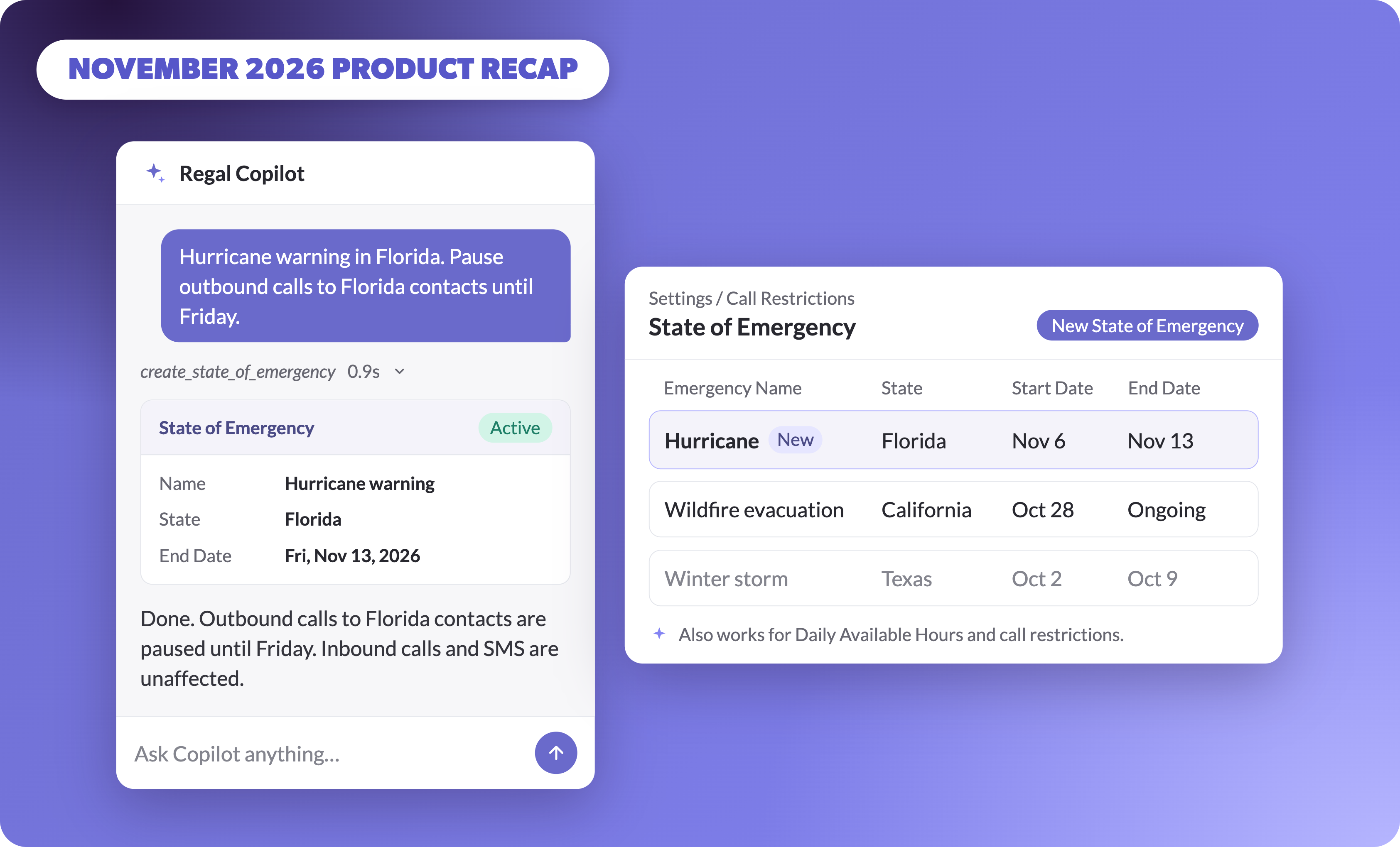
This month, we released features that make multi-state agents more goal oriented and easier to build, test, and monitor. We're also expanding our developer tools with Regal Functions, so you can write and host code right alongside your agents, plus new Public API endpoints.
How Does GPT-6.1 Terra Perform for Voice AI Agents?
GPT-6.1 Terra ranks 4th of 50 on Regal's Voice CX Benchmark, with the best Hallucination sub-score of any model tested. Here's where it excels, where it struggles on Task Progression, and when to choose it for your voice AI agents.
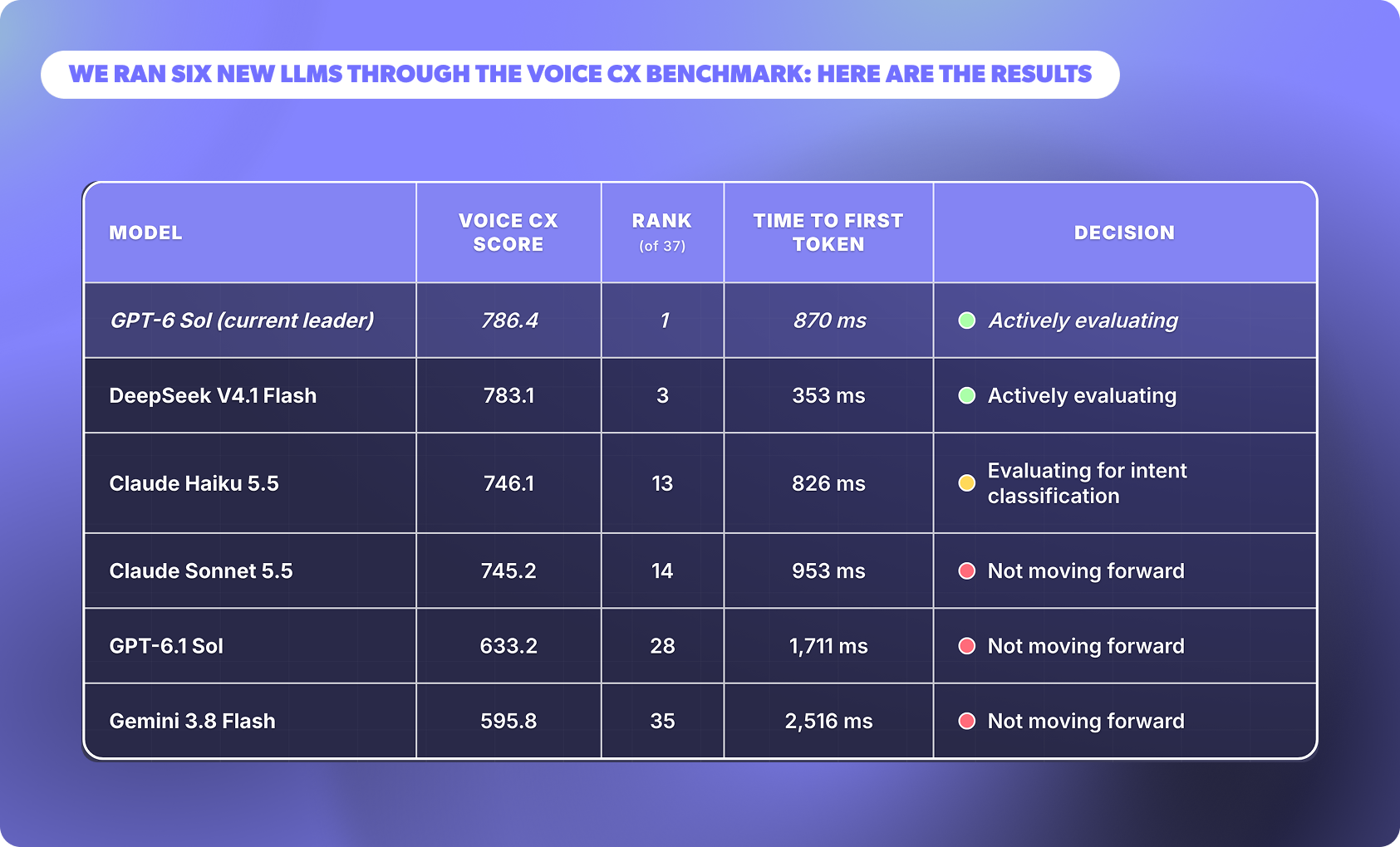
Best LLMs for Voice AI Agents in October 2026: Voice CX Benchmark Results
We ran the latest models from DeepSeek, Anthropic, Google and OpenAI through the Voice CX Benchmark. Here's which ones we're prioritizing for voice AI agents, and which ones we're passing on.
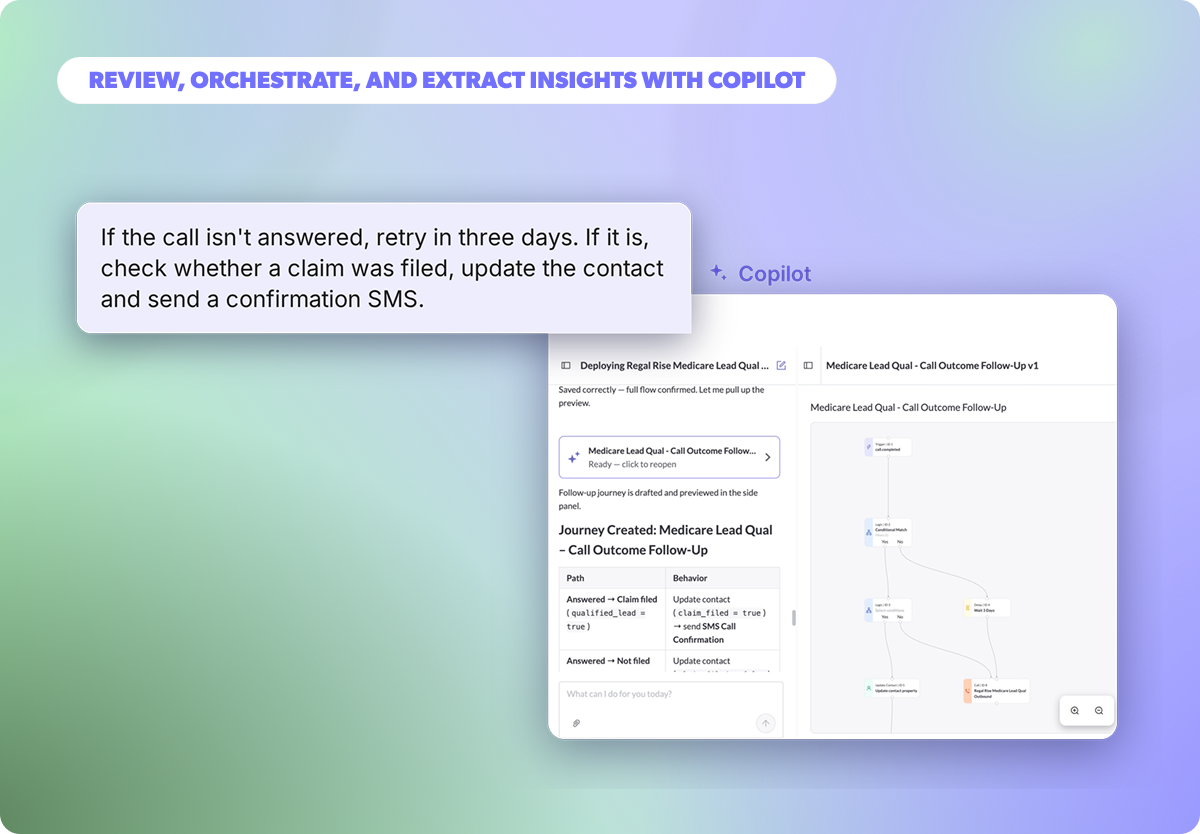
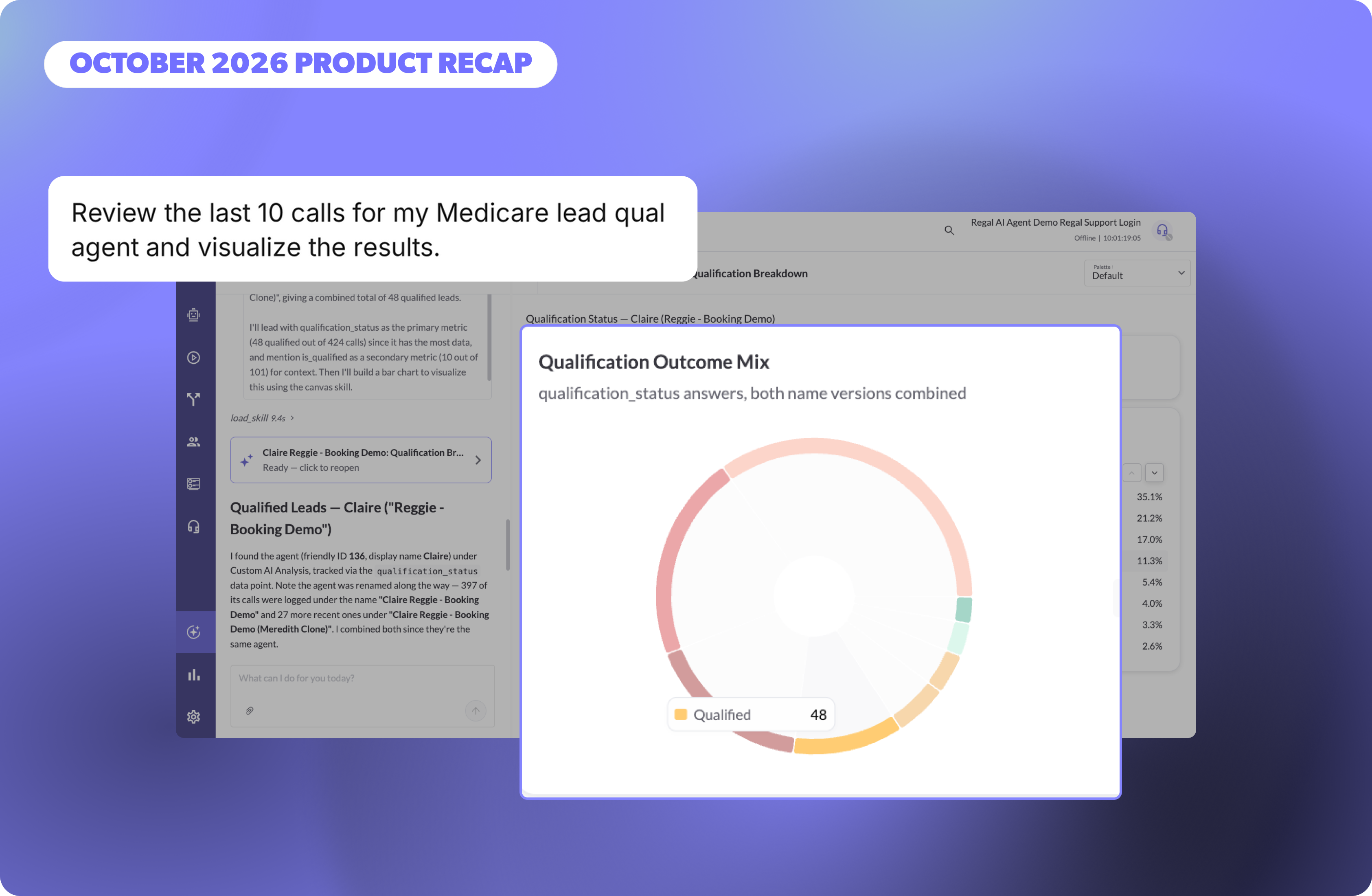
Last month, we shipped releases that improve your contact center operations by extracting business insights with Copilot and reducing wasted agent minutes with our new Voicemail Detection model. The result is more reliable, productive AI agents that can drive revenue for your business.
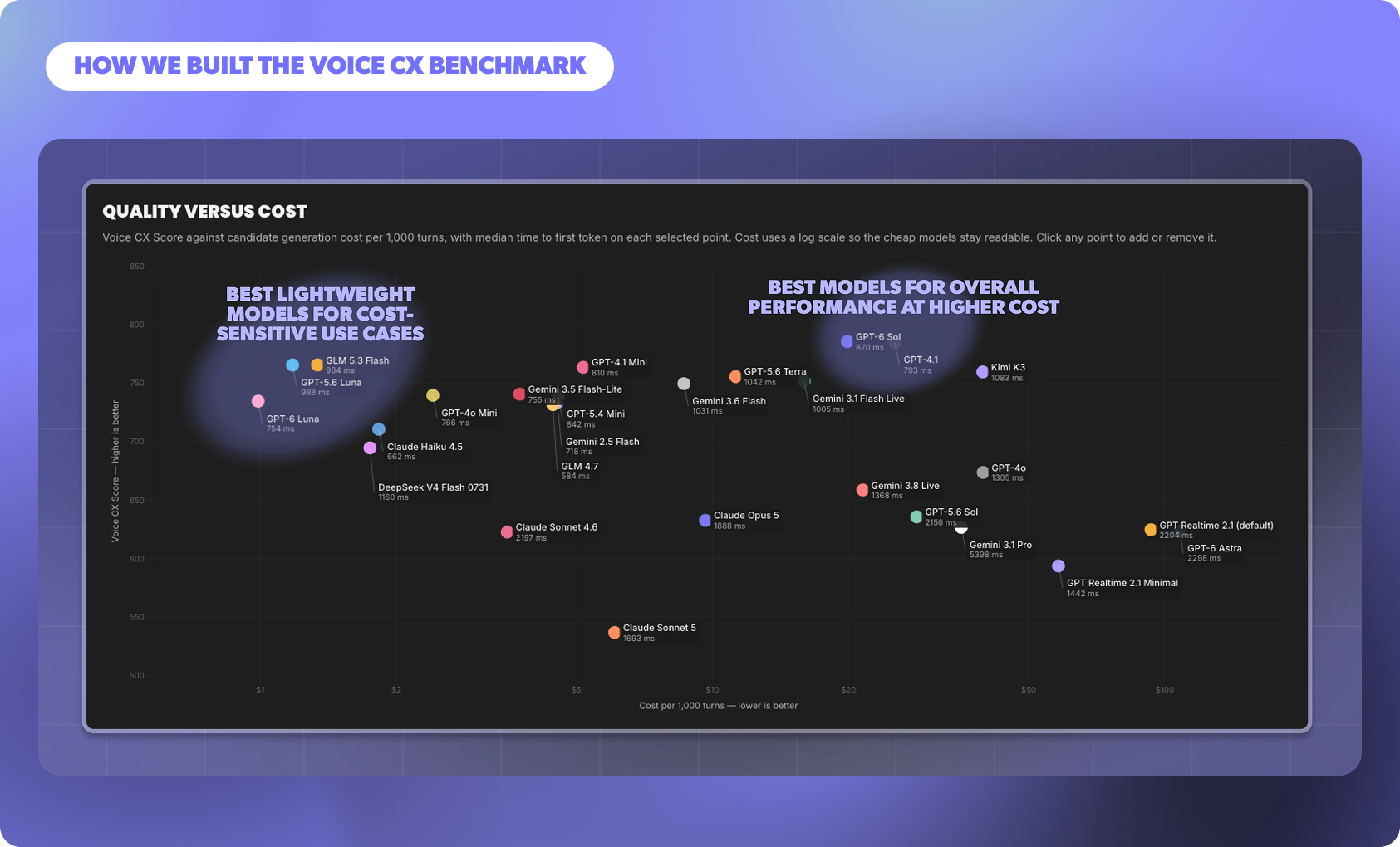
Enterprises need voice agents that hold a natural, human-like conversation while moving each call toward its goal and staying within compliance boundaries. The Voice CX Benchmark scores models on exactly that: how well they progress the call turn by turn, how safely and clearly they communicate, and how quickly they respond.
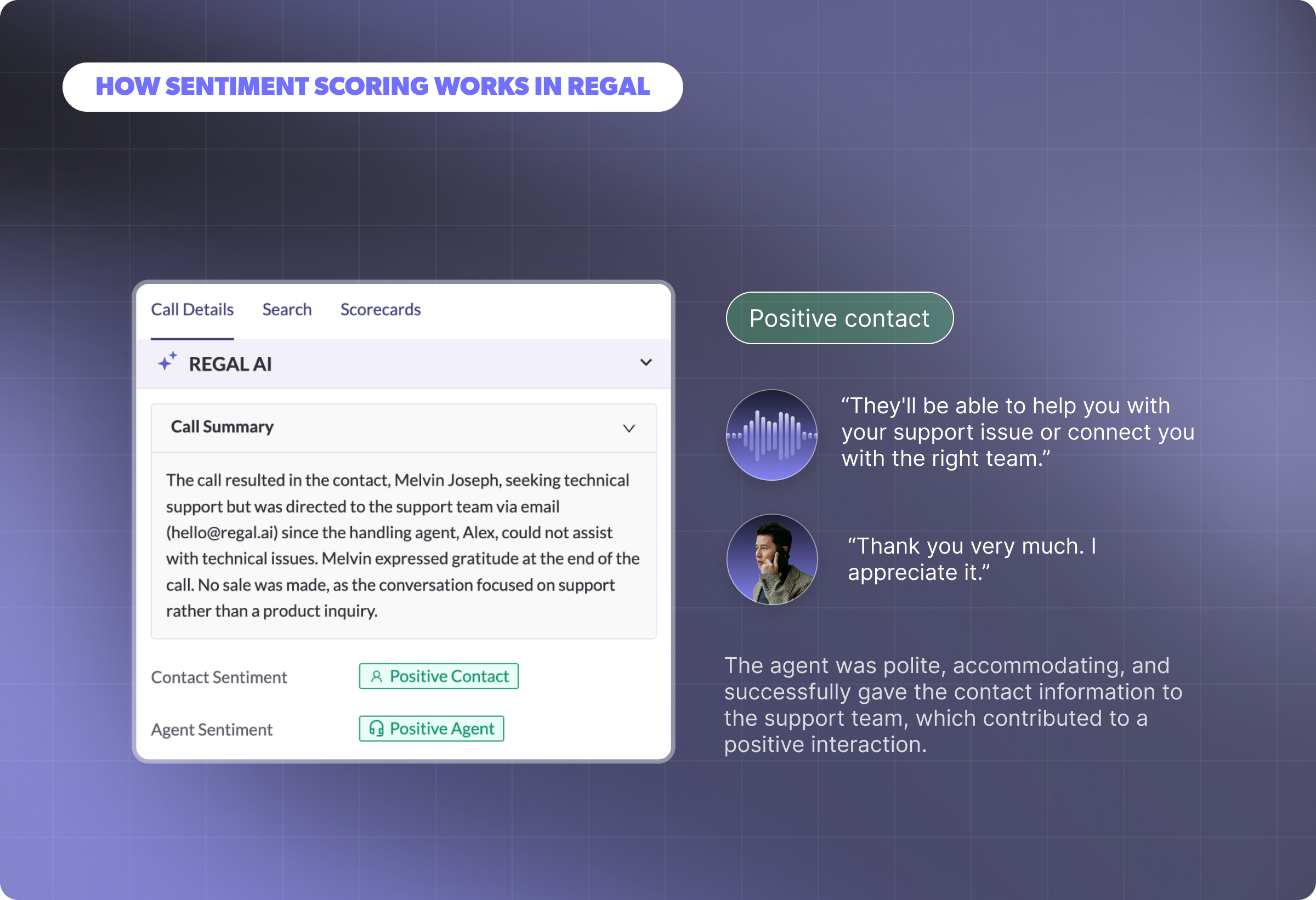
Every qualifying voice call that runs through Regal gets two sentiment scores: one for the agent, one for the contact. Here's what actually produces those numbers.
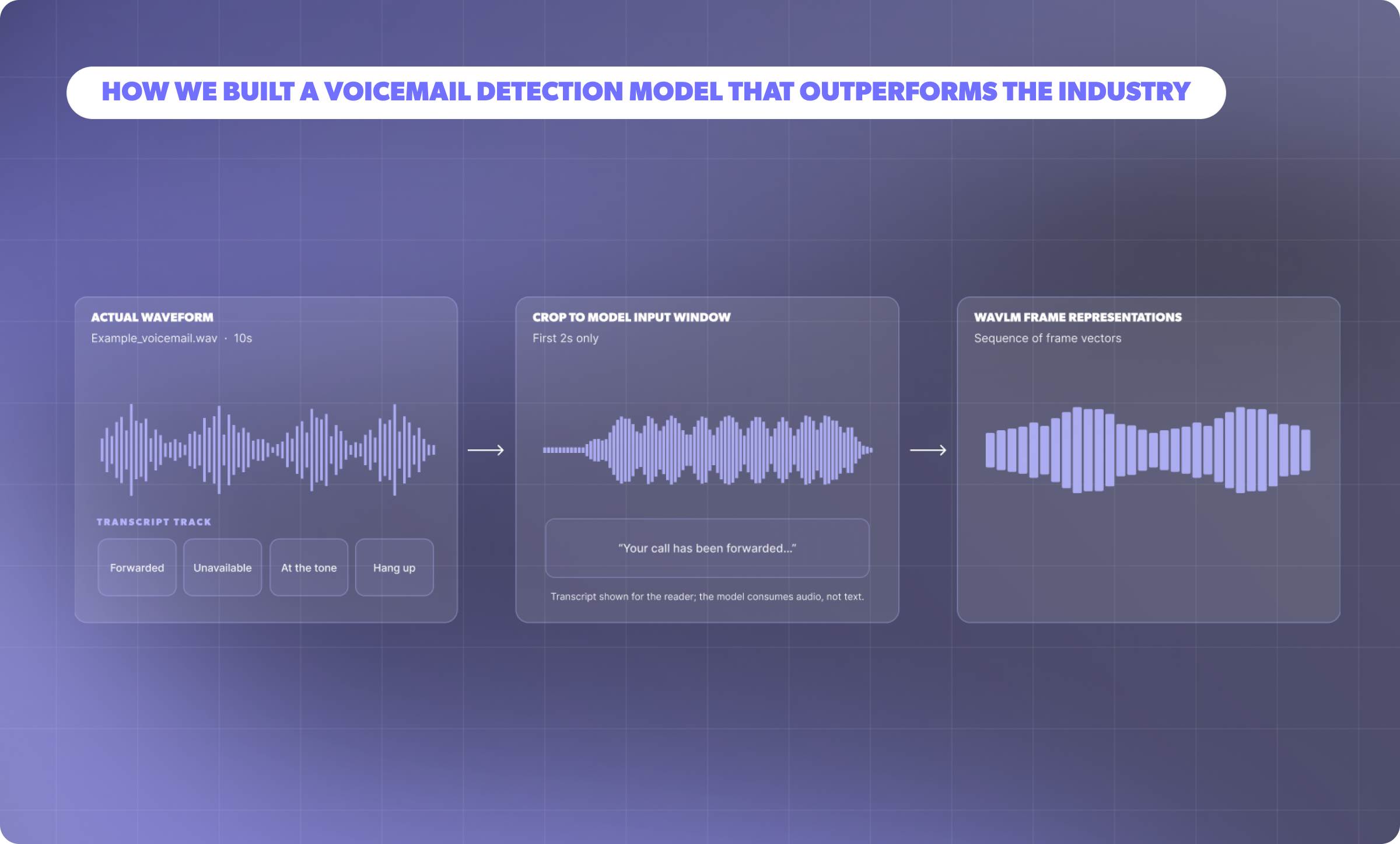
How We Built a Voicemail Detection Model that Outperforms the Industry
Our engineering team breaks down how we improved our Voicemail Detection model by aligning the taxonomy with the actual audio, scaling labels, and choosing representations before adding model complexity.
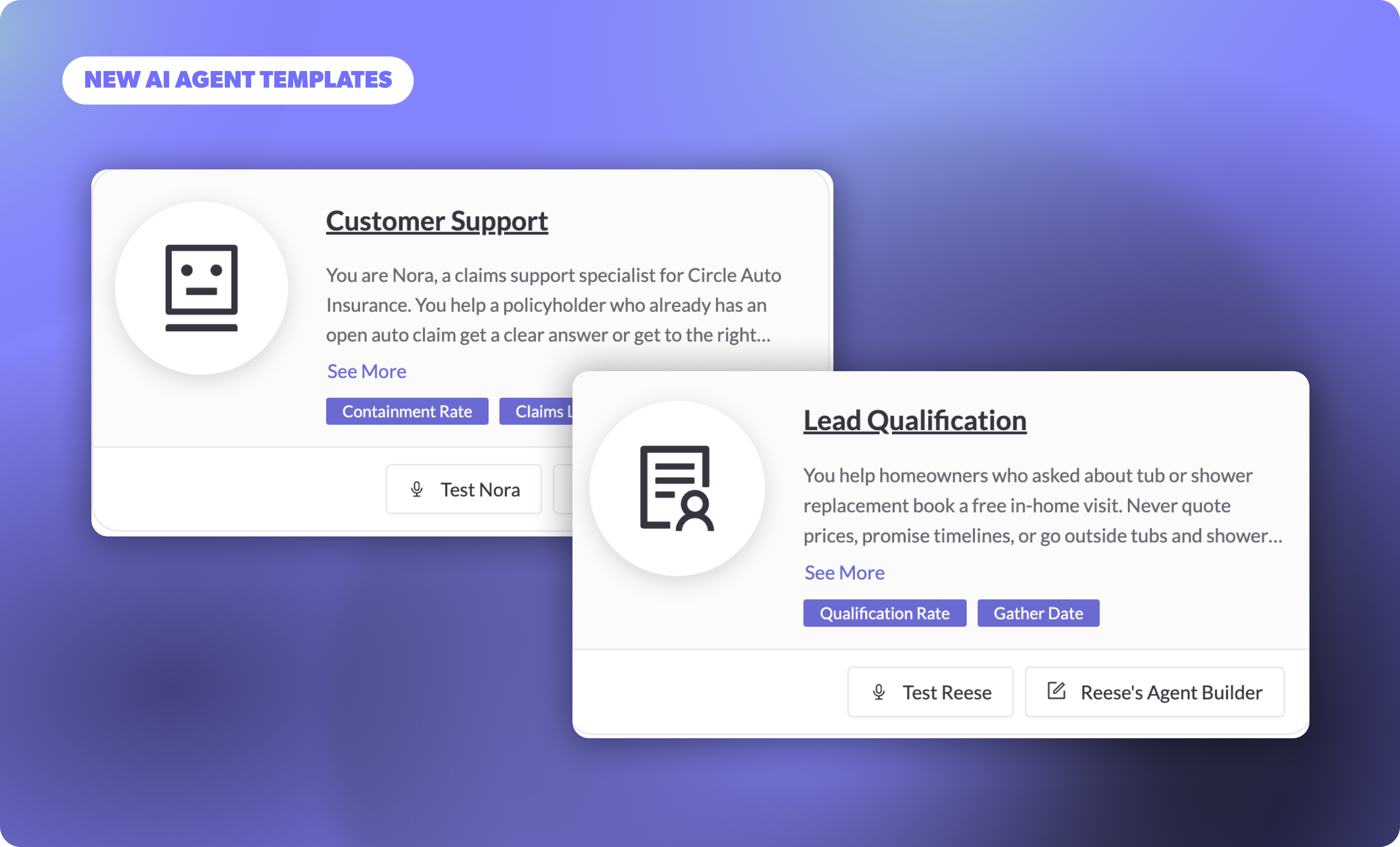
AI Agent Templates: More Industries, More Detailed Prompts, and Custom Actions
Building a voice AI agent from scratch means writing prompts, wiring up actions, and defining guardrails before you can even test a call. Our upgraded agent templates skip that setup.
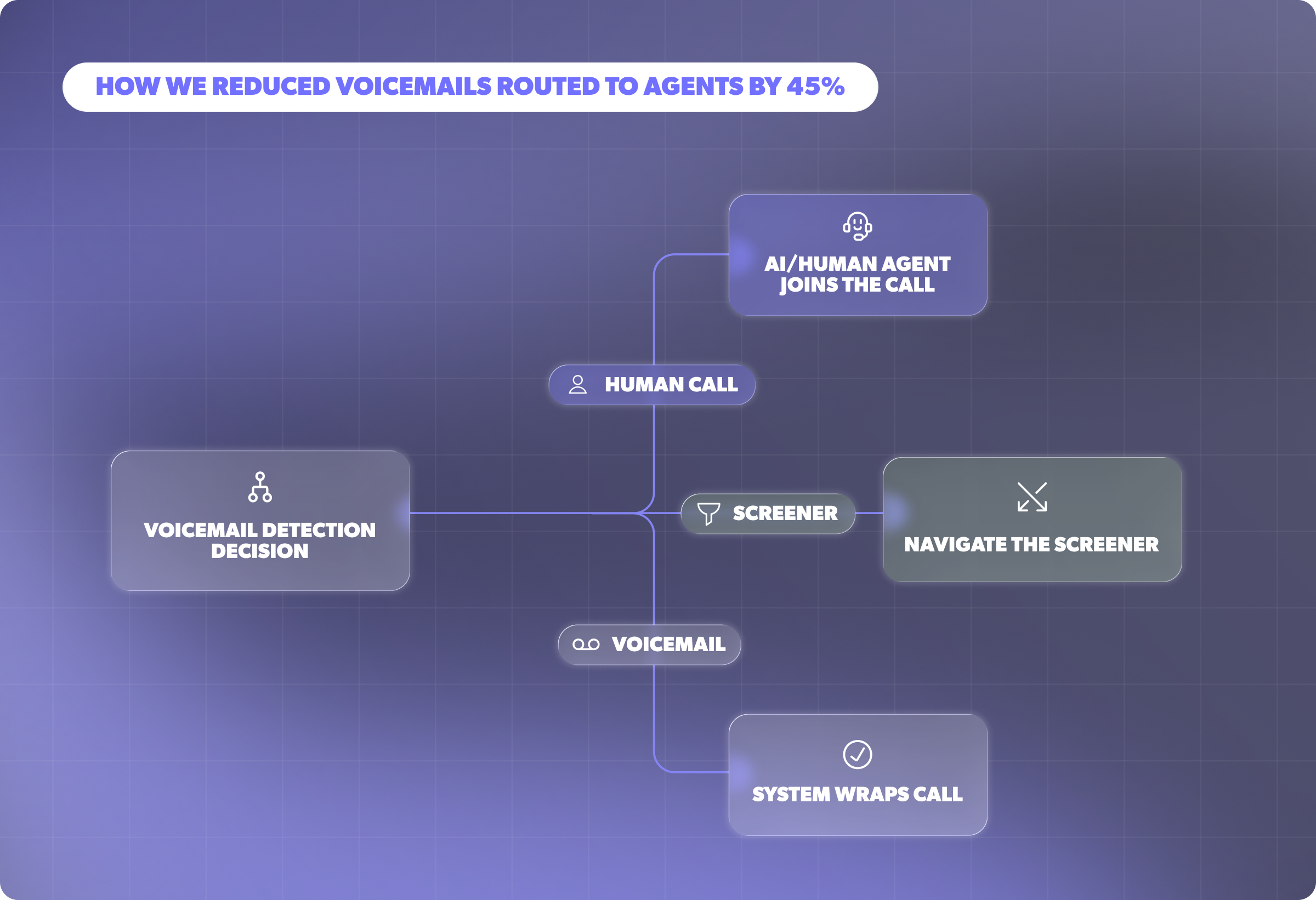
Introducing Regal’s Voicemail Detection Model: How We Reduced Voicemails Routed to Agents by 45%
With Regal’s next-generation Voicemail Detection model, you can now classify voicemail, iOS or Google call screeners as separate categories with very high accuracy. This enables screener-specific handling, ultimately reducing missed agent connections.
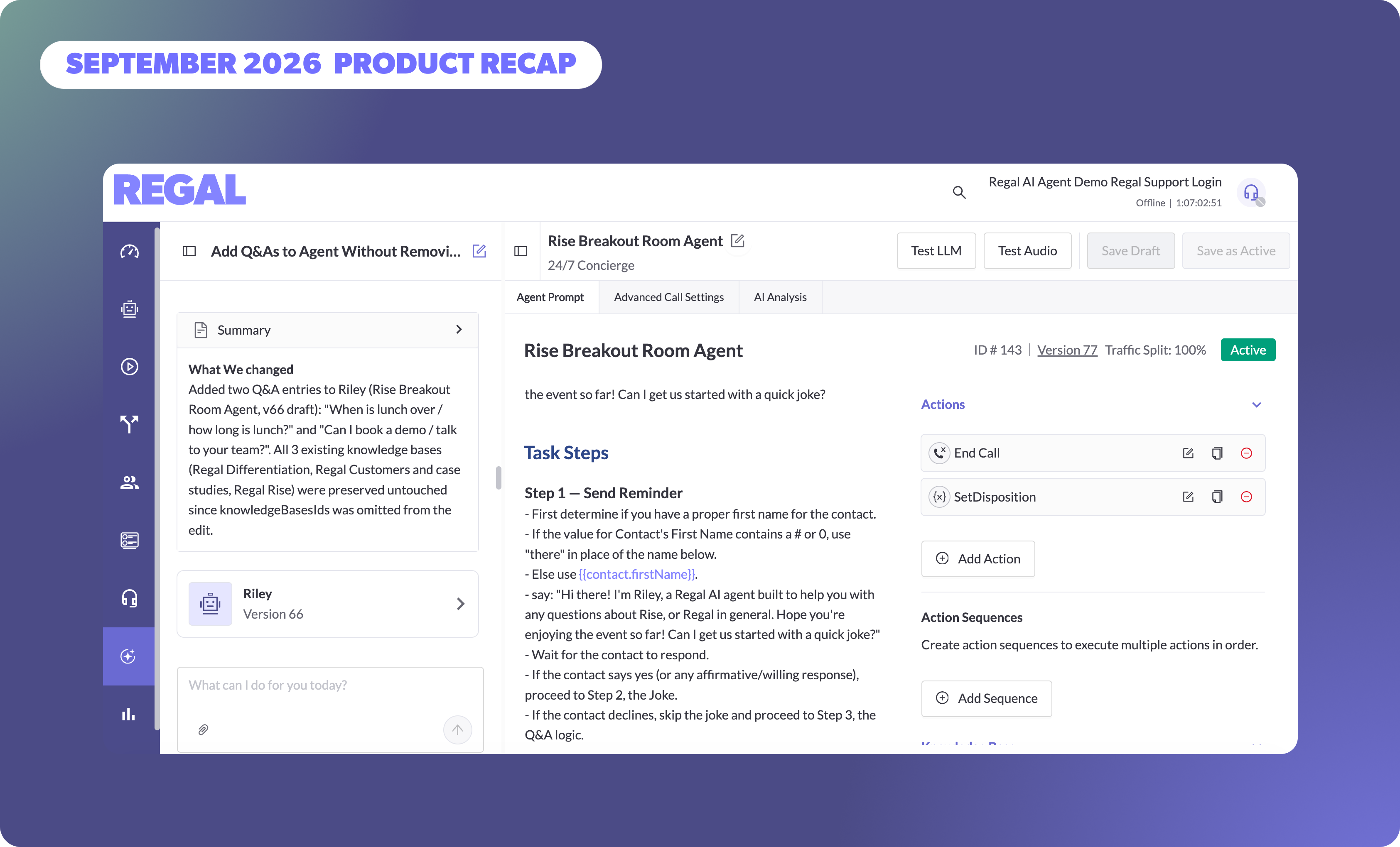
Last month, we shipped releases that make it easier to build, monitor, and test agents in one interface. Copilot Canvas brings building, editing, and testing into one interface and it can work straight from your files. Multi-state sticky notes let your team document decisions directly on a live agent.
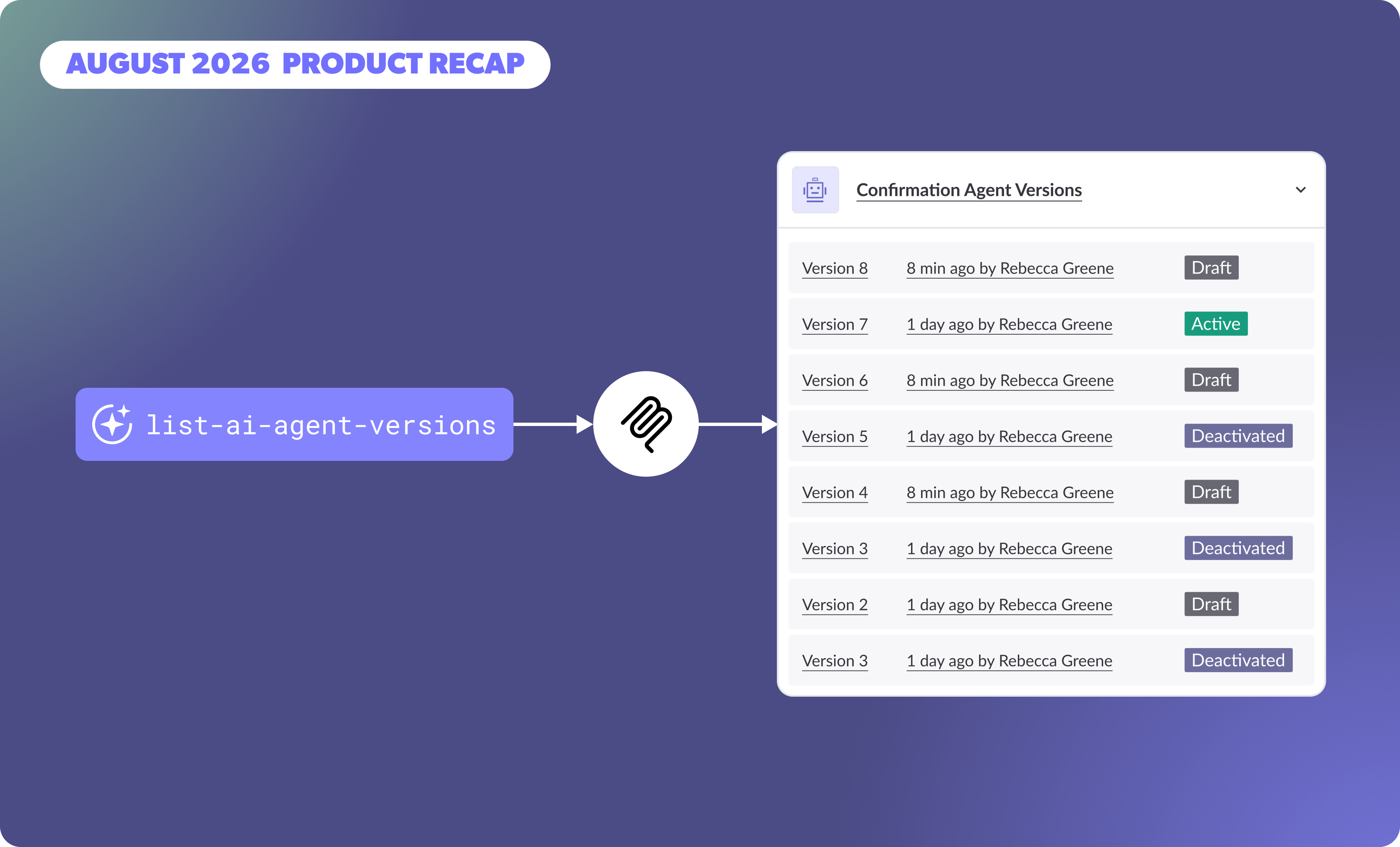
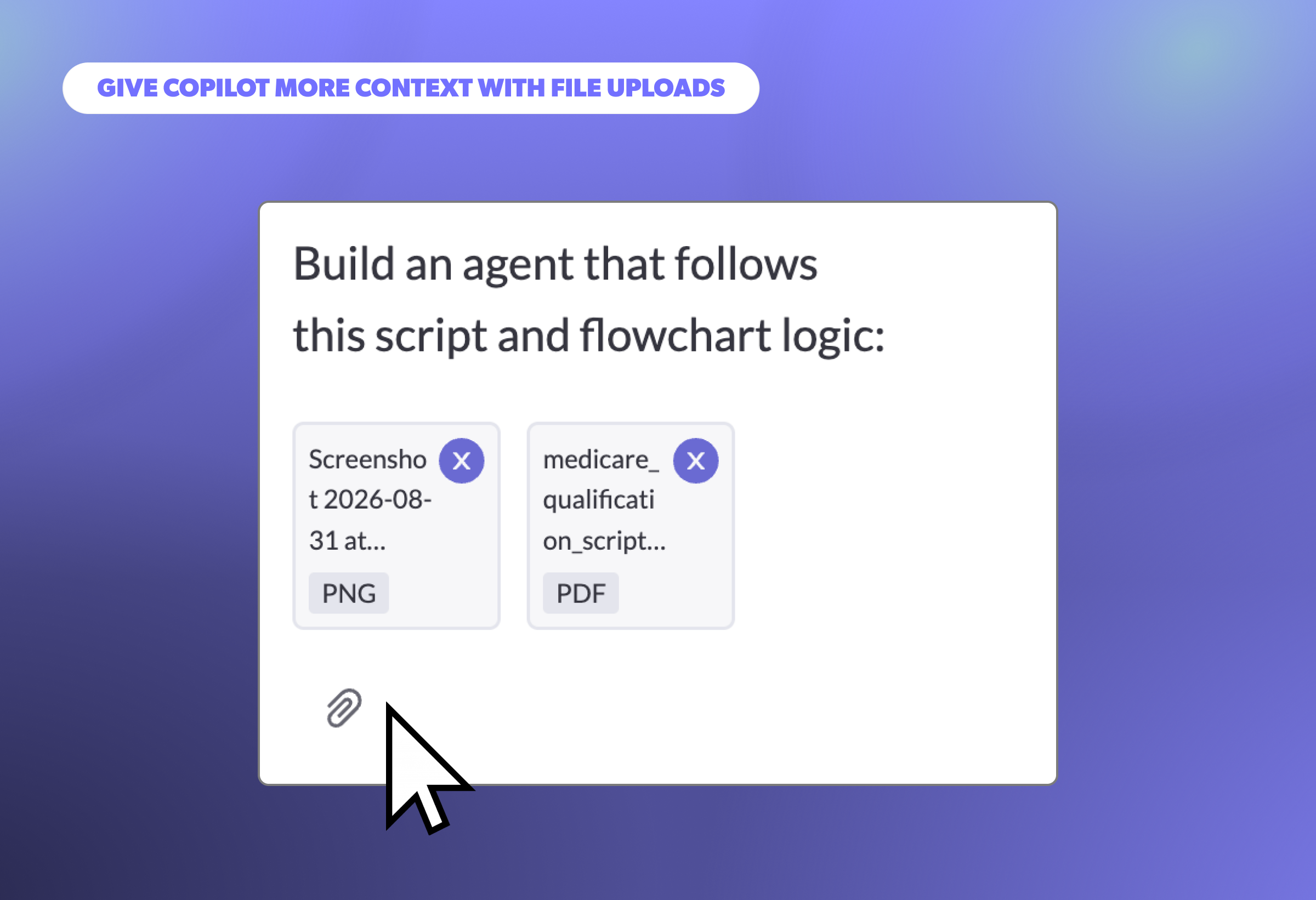
Copilot now lets your team upload files, like spreadsheets, scripts, and flowcharts, directly as inputs. This gives Copilot the context it needs from the start, making it easier to extend Copilot into new agent use cases as they come up.
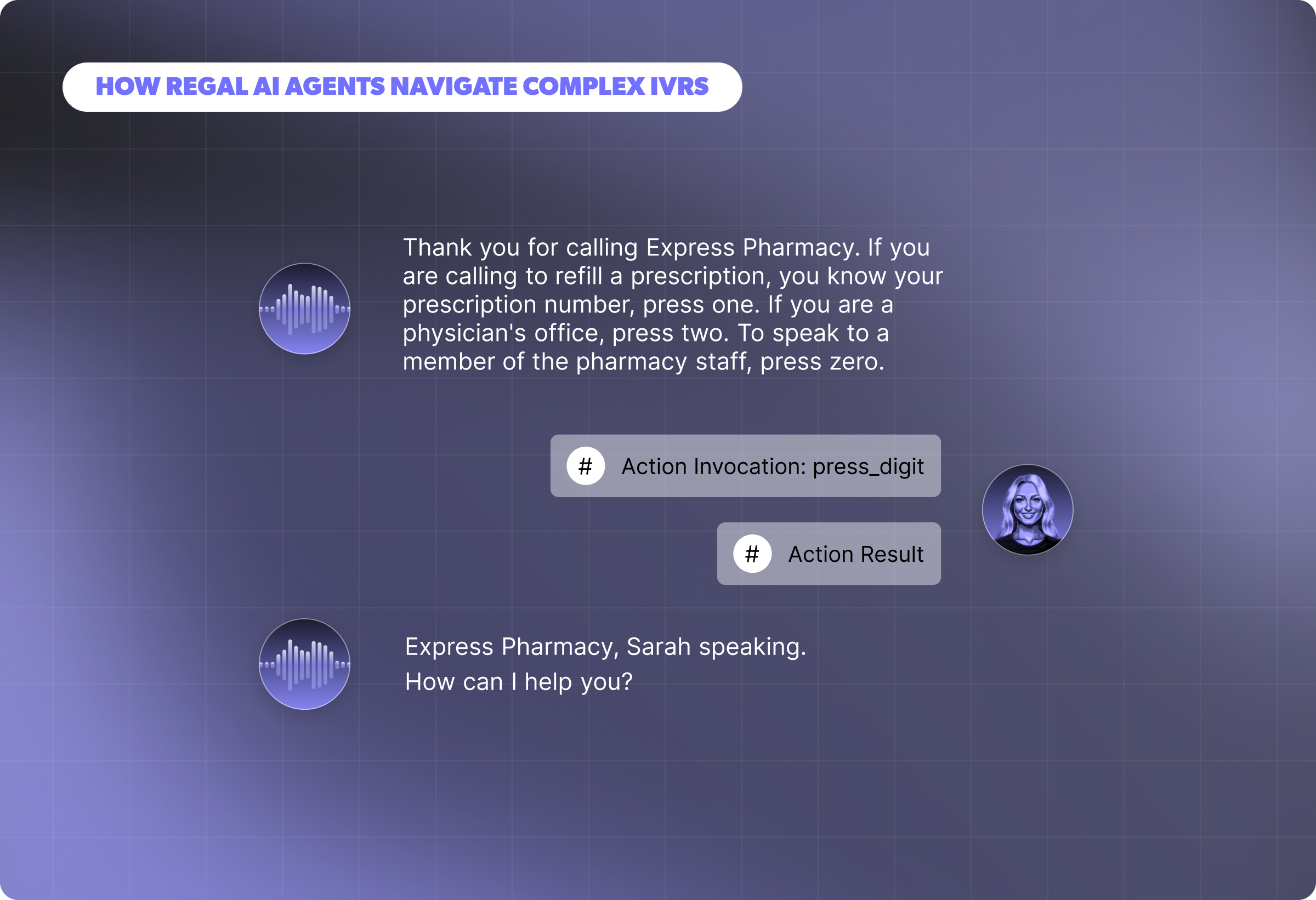
How Regal AI Agents recognize, navigate, and continuously improve at getting through third-party IVR phone trees, from classification and the Press Digit action to node isolation and real-world test simulations.
Last month, we launched features that extend your management of AI agents via MCP and CCaaS platforms. Debug based on agent versions or simulation runs, and manage AI analysis data points via Copilot and Regal MCP. As a Five9 AI Agent Connect partner, Regal now has a dedicated integration API built for Voice AI agents.
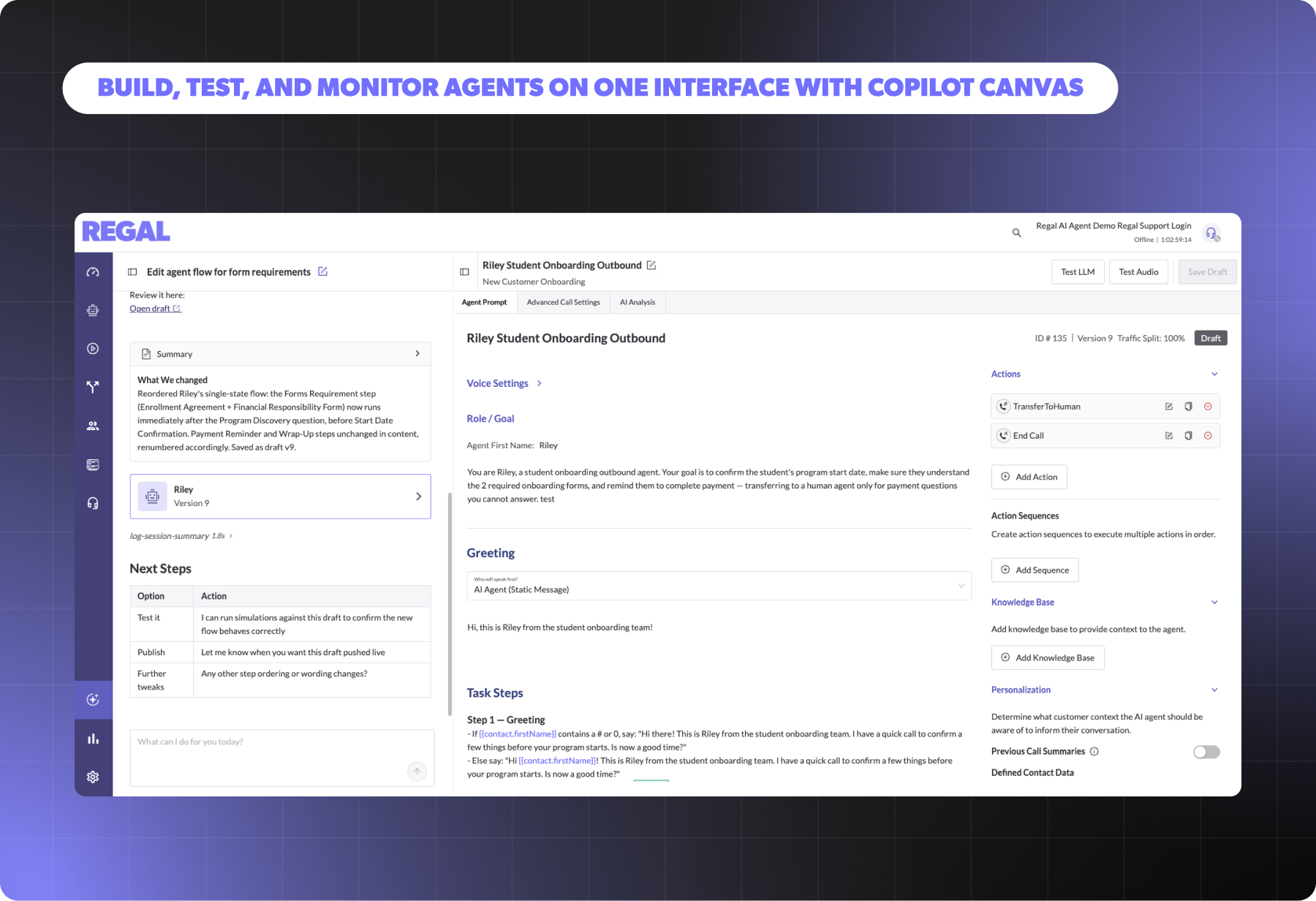
Build, Test, and Monitor Agents on One Interface with Copilot Canvas
Copilot Canvas brings agent building, testing, and monitoring into one interface, so you can edit, test, and track performance without leaving Copilot chat.
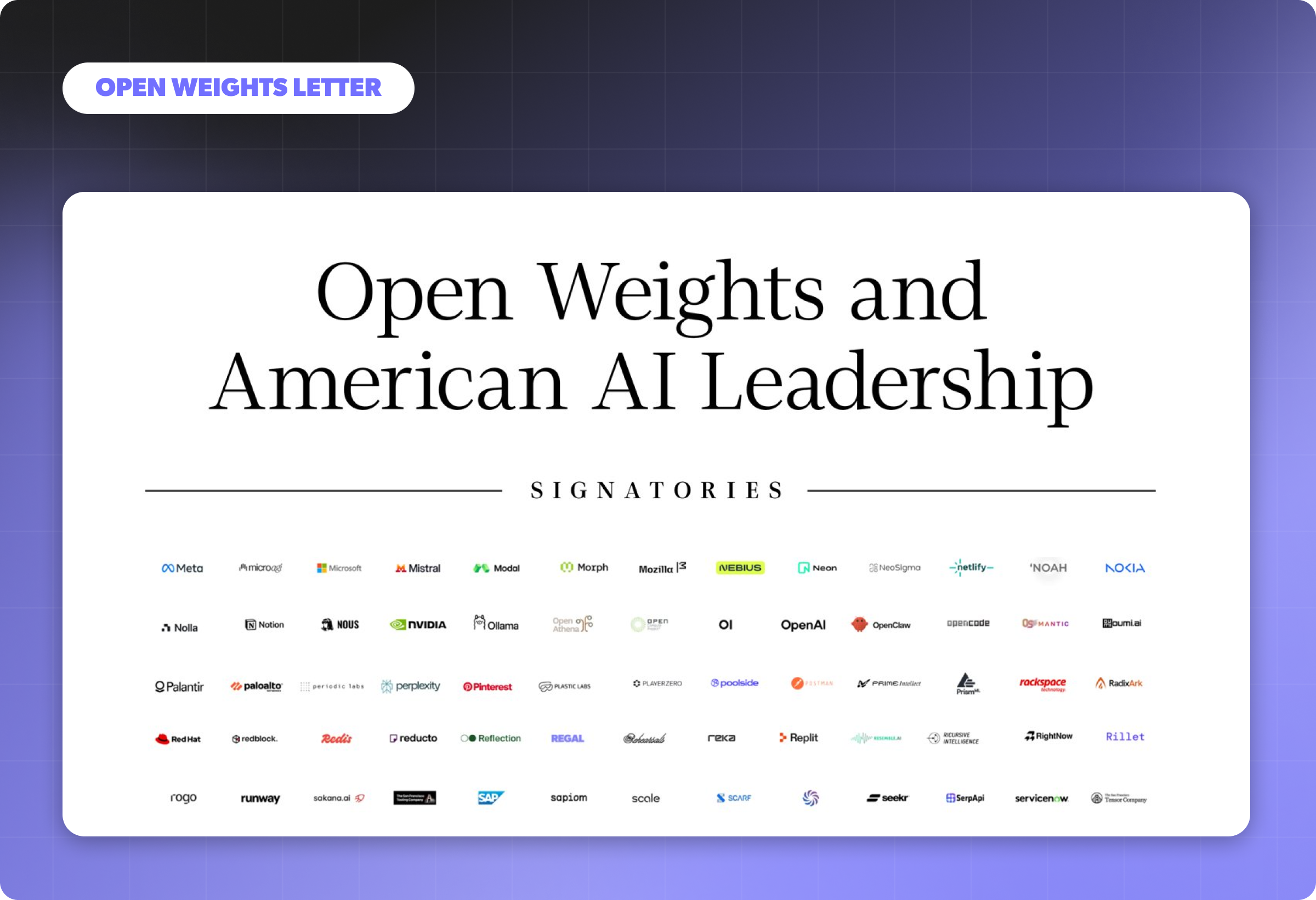
We've always been careful to never give frontier labs the right to keep or train on customer data. With open weight models, we can go further: when a customer invests in improving these models, that value accrues to them, not to a lab.
Last month, we shipped updates that make AI agents sound more responsive and easier to run at scale. Dynamic Voices lets your agent adjust its pace the second a contact asks for it, and Copilot now handles IVR and disposition management.
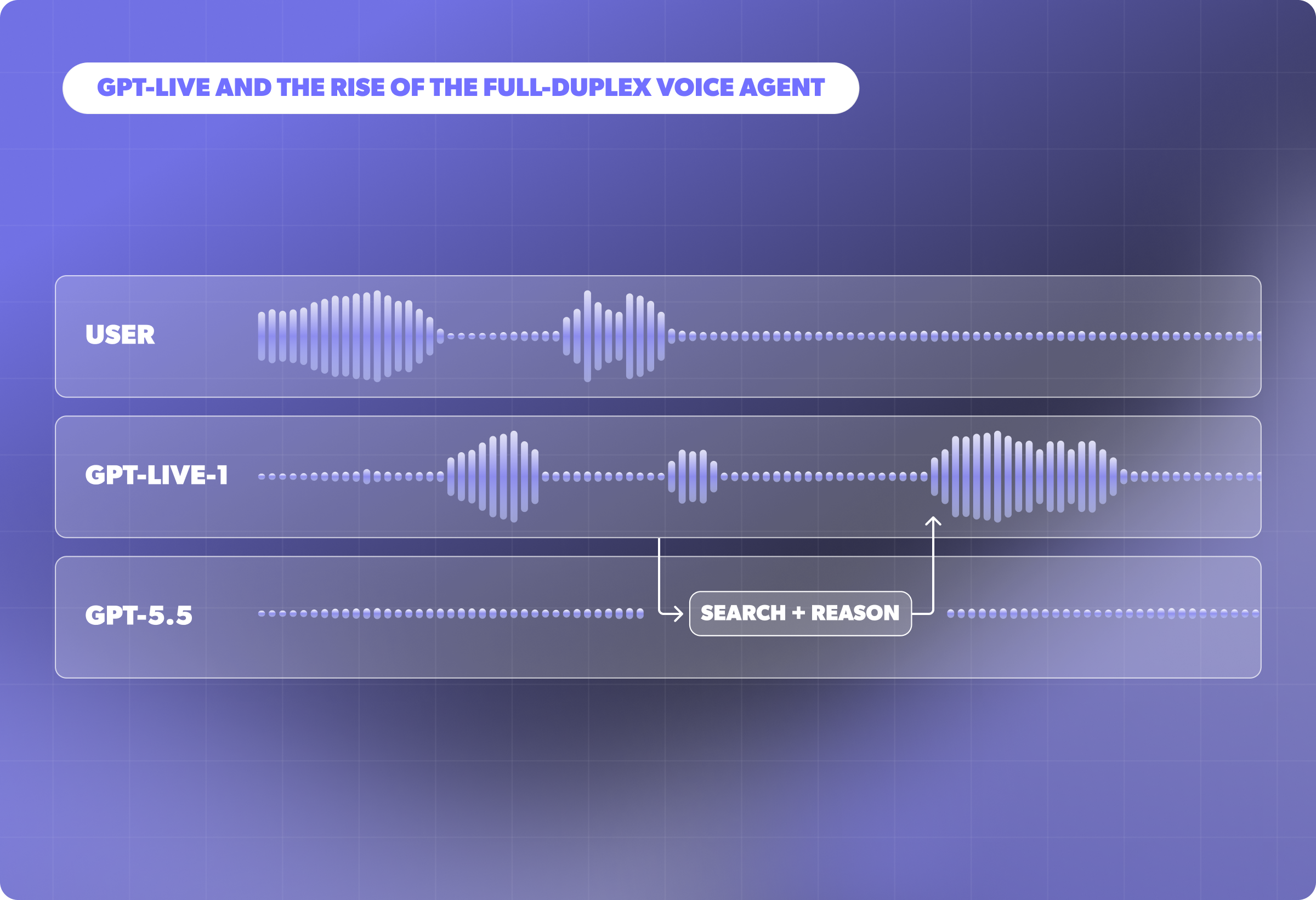
GPT-Live and the Rise of the Full-Duplex Voice Agent
OpenAI launched GPT-Live, a new generation of voice models, and described it as a “full-duplex” model. We tested GPT-Live directly to see how the theory holds up in practice.
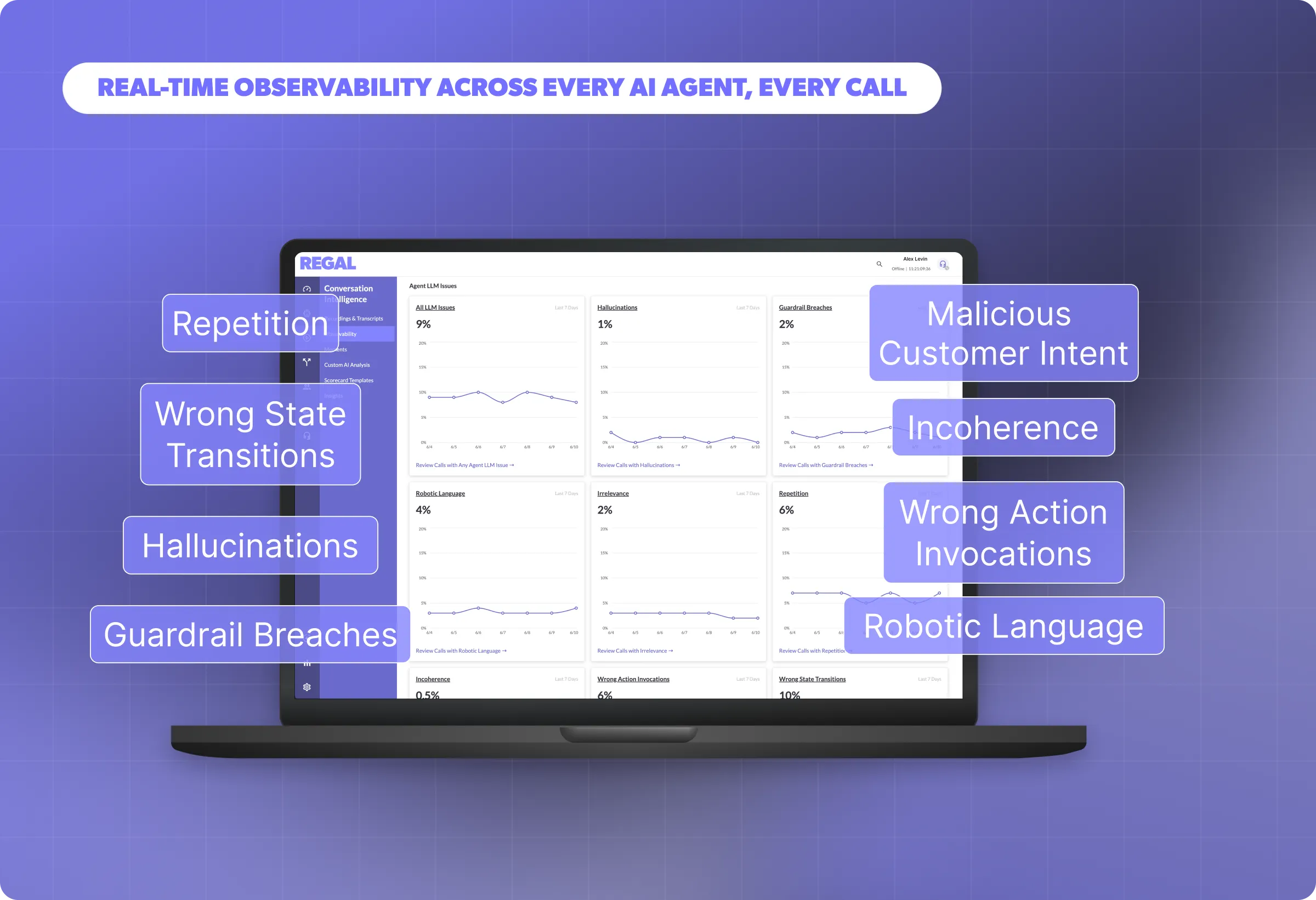
The Regal Observability Dashboard gives your team real-time visibility into AI agent performance — tracking hallucination rates, guardrail breaches, latency spikes, and more across every call, automatically.
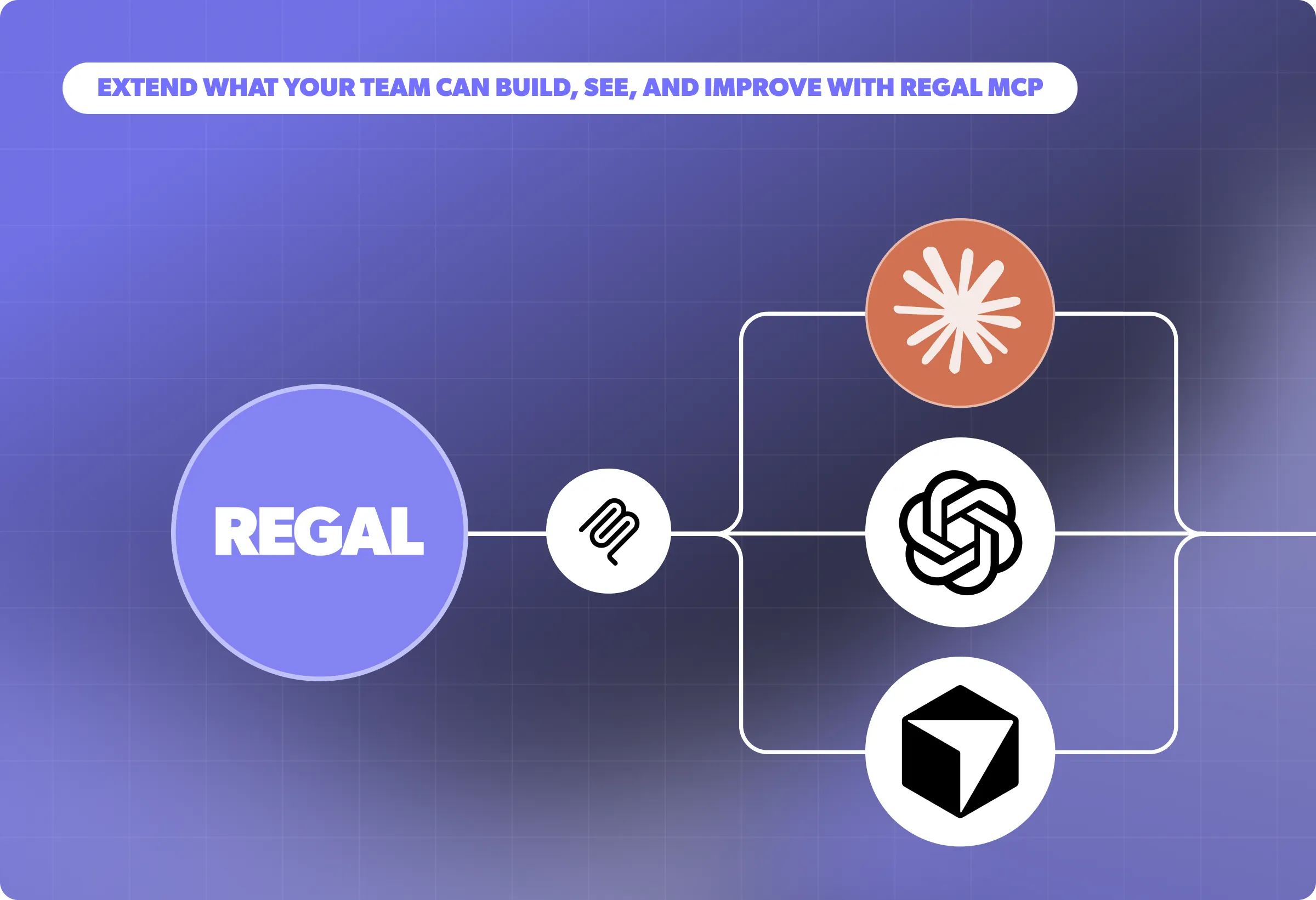
Extend what your team can build, see, and improve with Regal MCP
Regal MCP connects your Regal platform to AI environments like Claude, Cursor, and ChatGPT. Your team can pull transcripts, inspect configurations, and trigger actions without switching context.
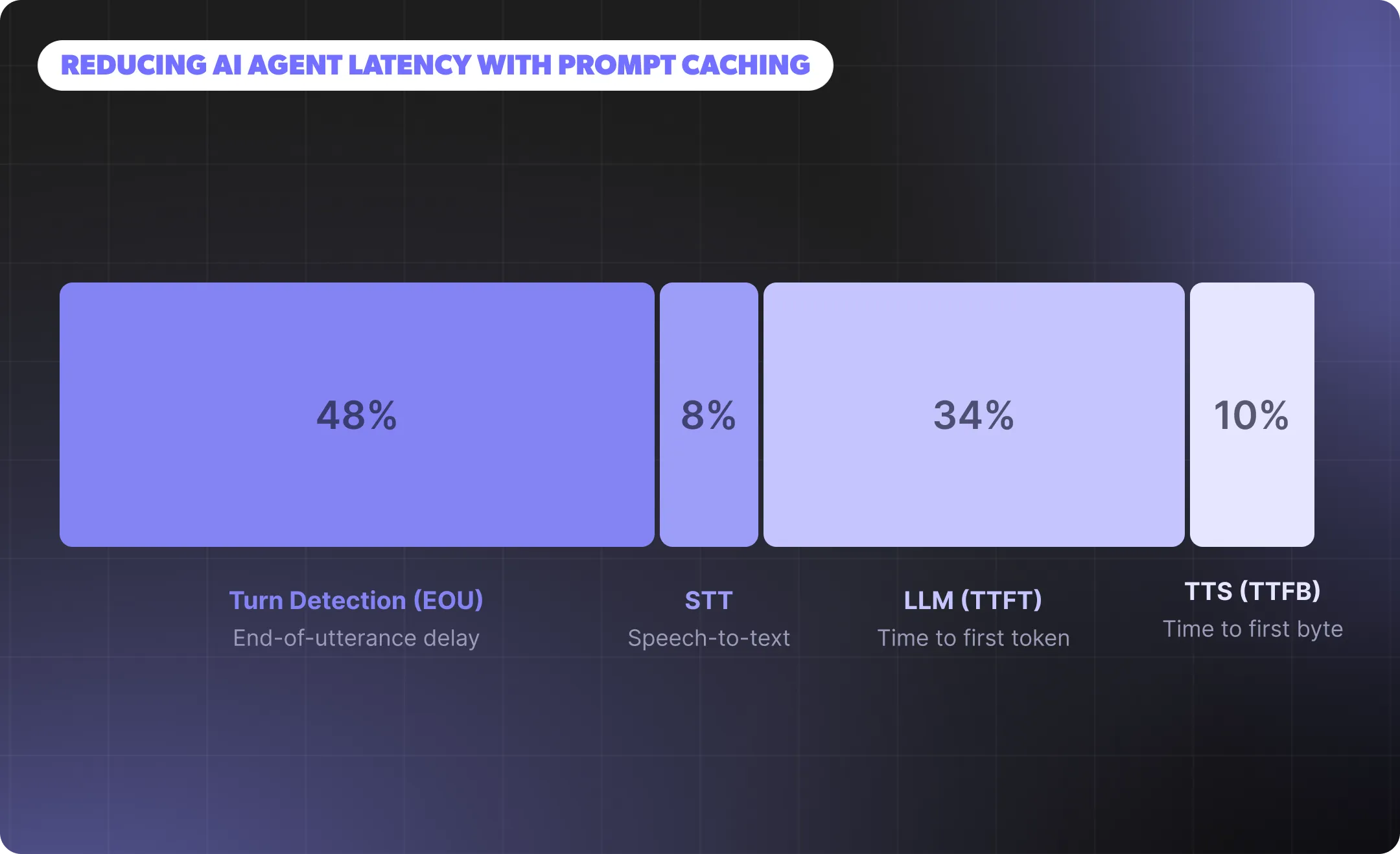
We reduced end-to-end voice AI response latency by 26% in three weeks by optimizing prompt structure for LLM caching: moving dynamic contact data out of the cacheable prefix so the model stops reprocessing instructions on every call.
This month, we shipped Regal MCP, which extends what your team can build, see, and improve. Regal MCP opens the platform to your external AI environment, so team members can take Regal actions directly from tools like Claude without switching context.
Dialing Compliance: How We Scaled Outbound Calling Reliably
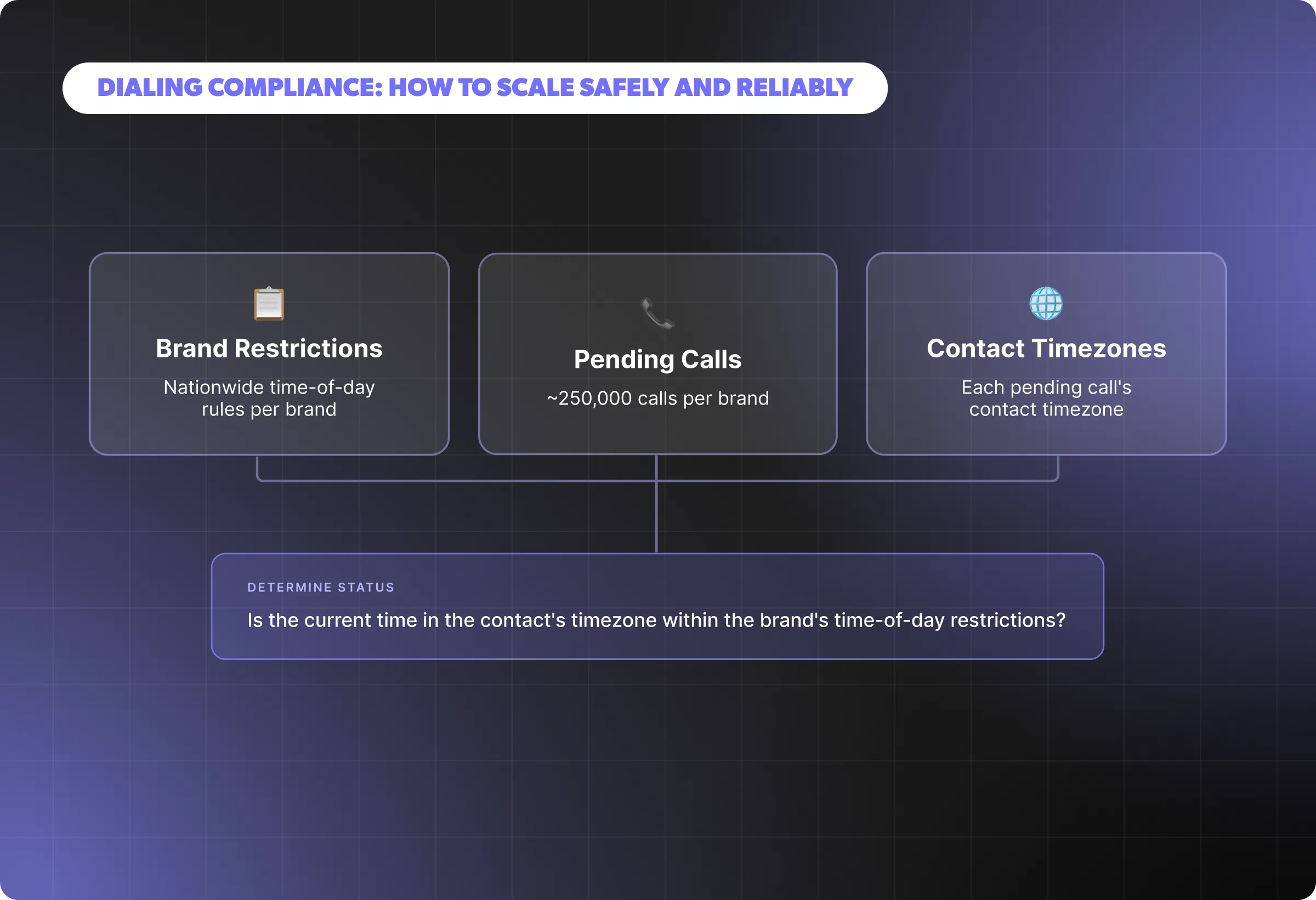
Behind a fragmented and ever-changing regulatory landscape is a simple goal: protecting people from unwanted or poorly timed outreach and giving them control over how they’re contacted. In practice, that responsibility translates into a set of checks that must be validated.
This number is a milestone that represents a fundamental shift in customer experience and how businesses grow. Curious what this number really looks like? We put it into perspective.
Every new LLM comes with trade-offs between latency, cost, and quality — and Regal tests all of them against real voice AI agents. Here's what we found when we ran Gemini 3.5 Flash through our benchmark.
This month, we shipped enhancements that help you quickly make proactive fixes and customize AI agents to your brand. Copilot does more troubleshooting work on your behalf and with headless WebRTC, you can embed Regal voice agents inside your own product UI.
From Kickoff to First Live Call: What a Real Voice AI Deployment Looks Like
After powering over 400 million calls, we've found that the contact centers that win with voice AI aren't just the ones that deploy first. They're the ones that learn fastest.
No Need to "Press 1": How AI Phone Agents Go Beyond Automation
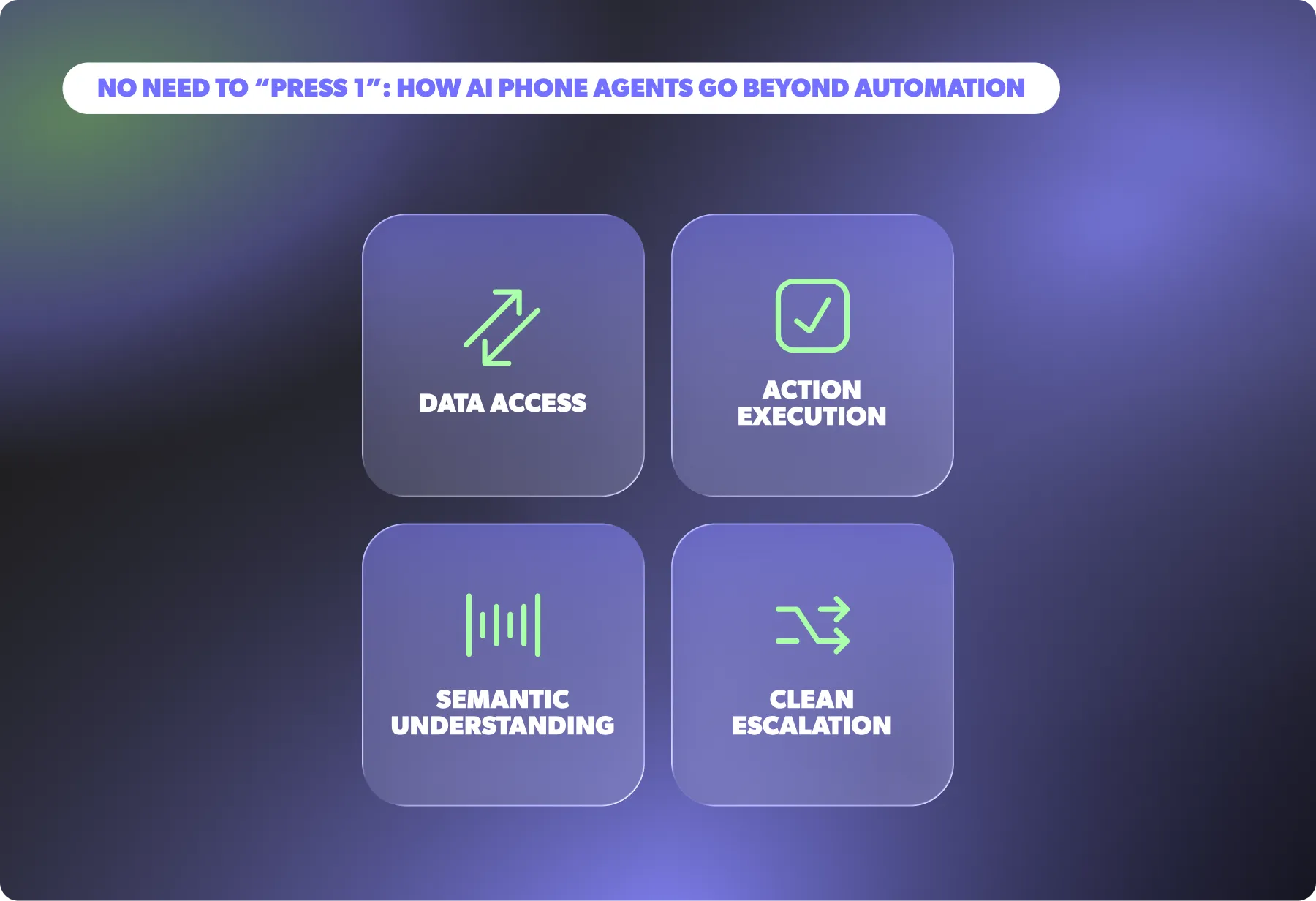
AI phone agents aren't just better phone trees. They are autonomous systems that can understand caller intent, retrieve relevant information from your CRM in real time, execute actions, handle objections and clarifications, and complete the conversation without human involvement.
Why Your AI Voice Agent Sounds Robotic And How to Measure for Improvement
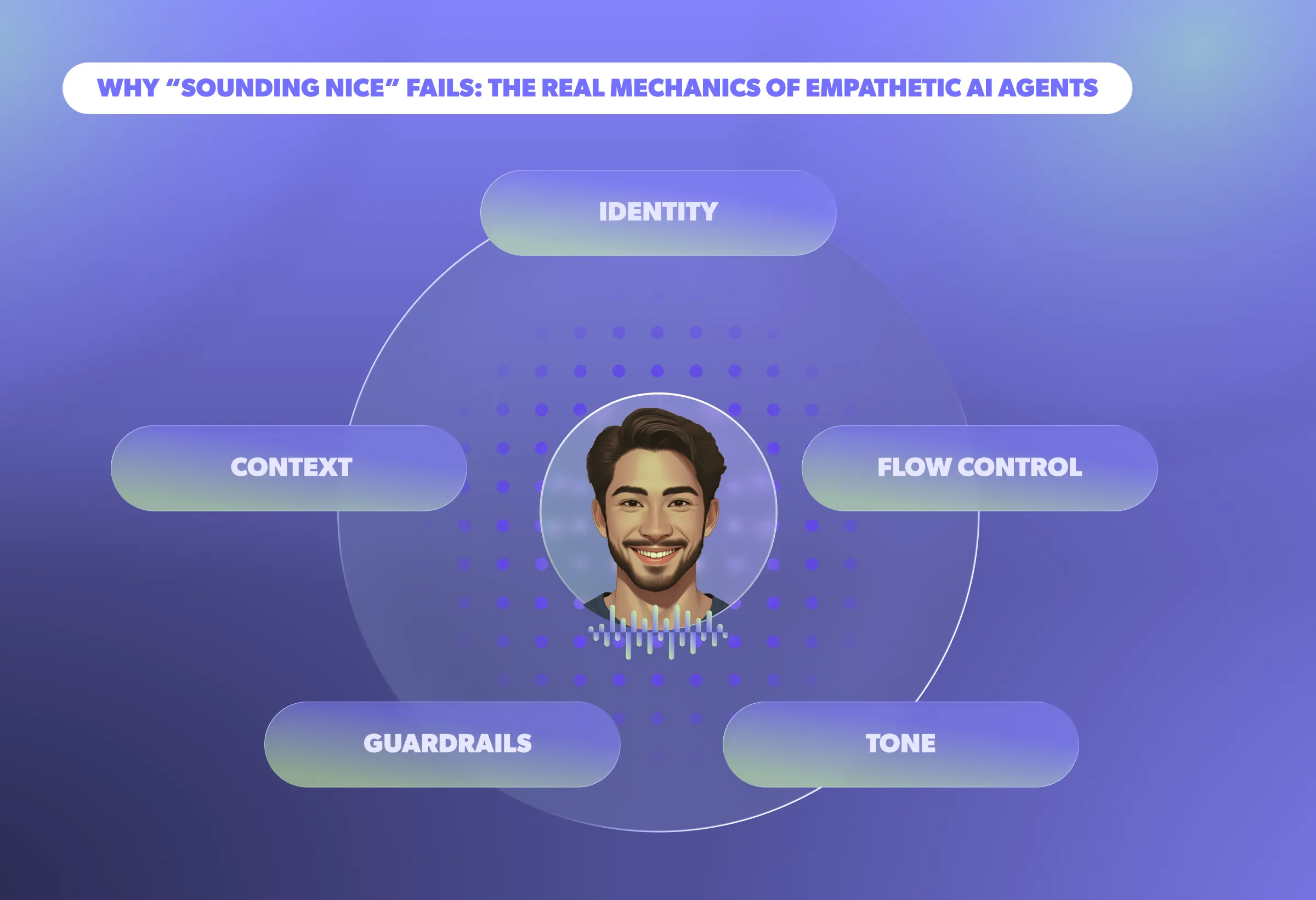
Voice AI is architectural, not cosmetic. Warm words on a broken flow make things worse. But warm words on a well-structured, well-measured system compound over time.
The PII Question Every Regulated Industry Asks Before Deploying AI Agents
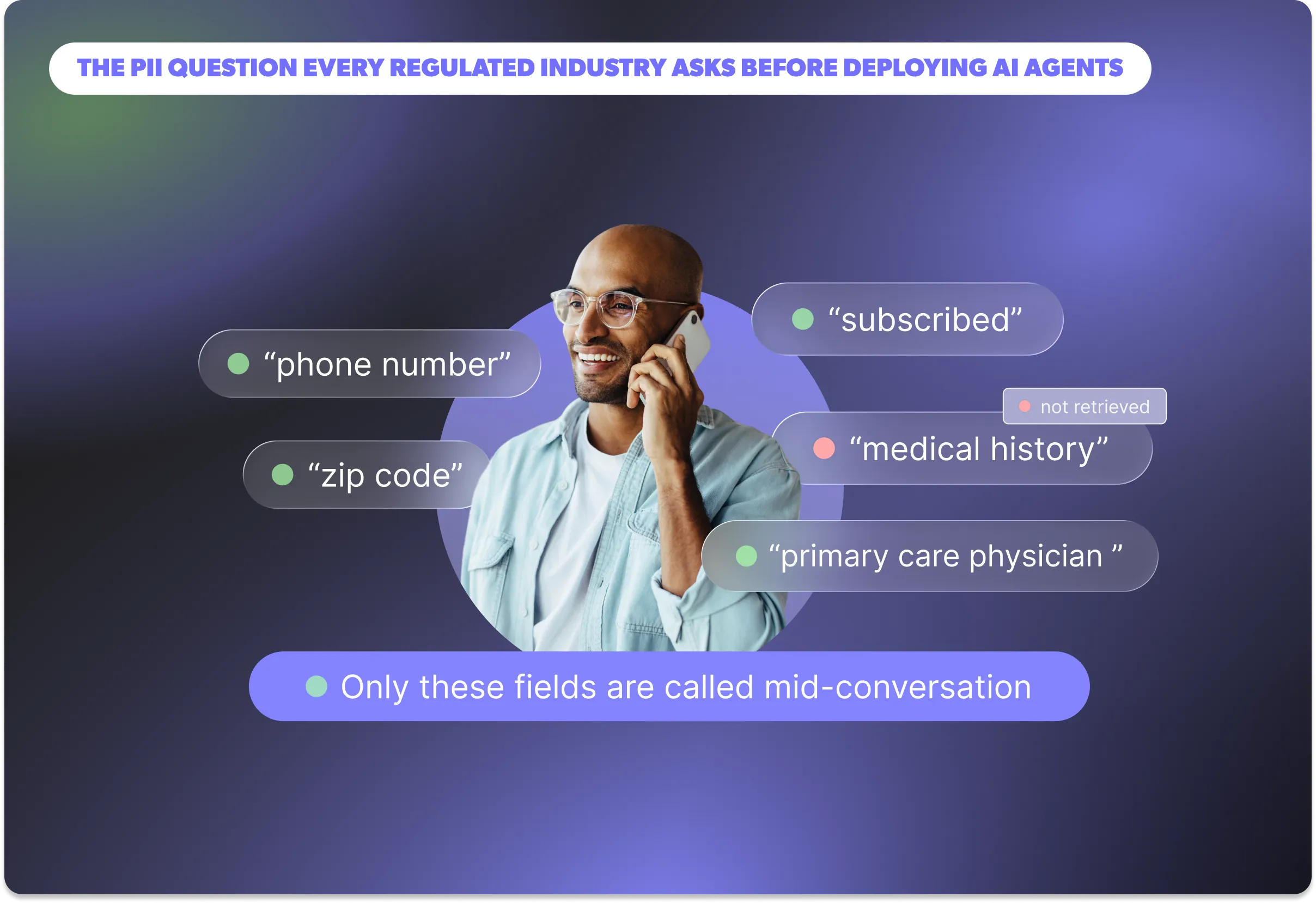
When prospects in healthcare and financial services hear "PII," they often imagine bulk data transfer: the idea that deploying an AI agent means copying a database somewhere. In most modern deployments, that's not what's happening.
Why Customers Confide in Voice AI Agents More Than Your Reps
At HumanX 2026, Regal's VP of Growth Lex Sivakumar shared what 400 million analyzed calls reveal about voice AI. Customers are not just accepting well-built AI voice agents. They are opening up to them more than they do to humans.
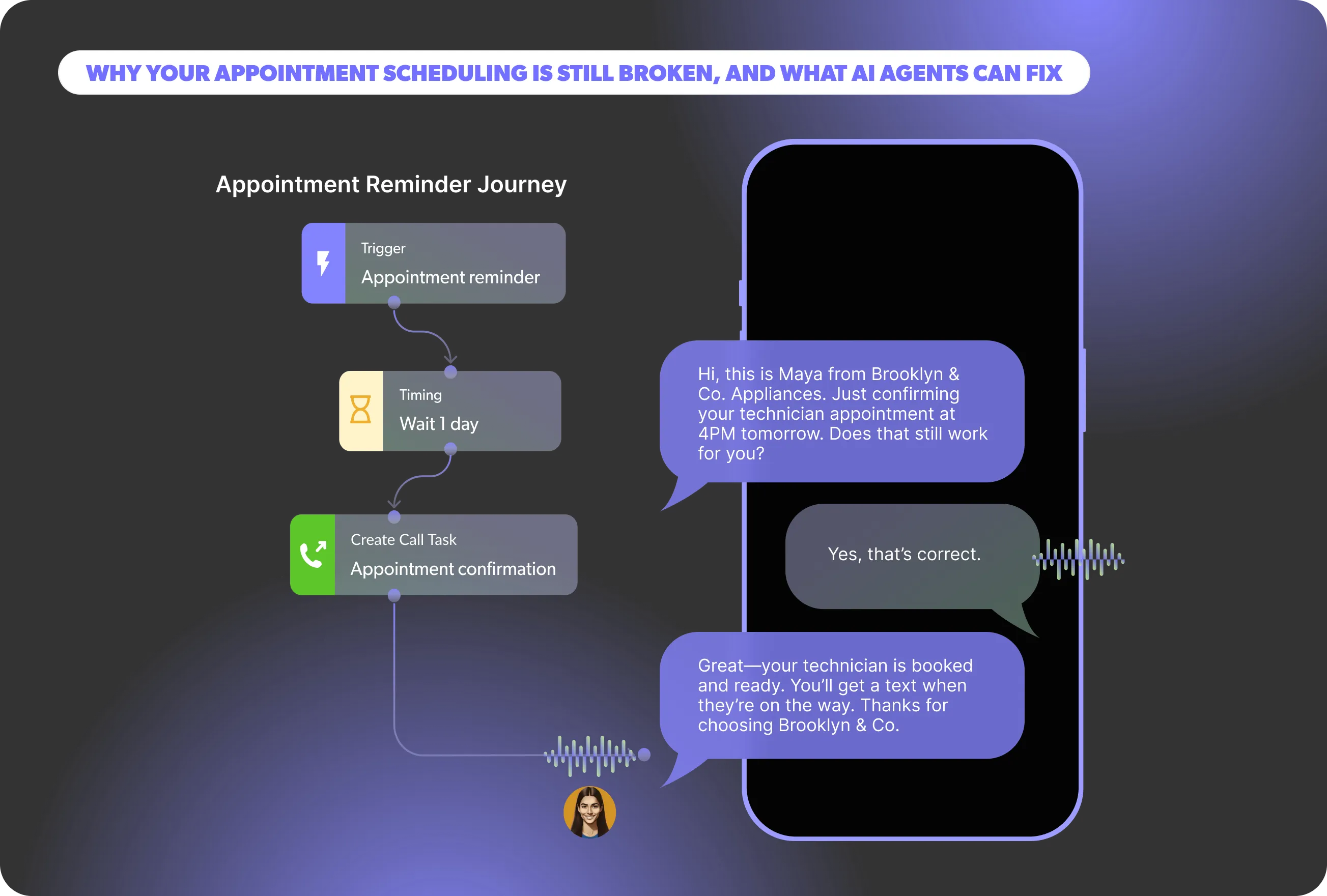
Why Your Appointment Scheduling Is Still Broken (And What AI Agents Actually Fix)
With AI agents, every appointment gets a confirmation call. Each contact gets a chance to reschedule, and the confirmation rate goes to 100%, not because the AI is better at conversations than your agents, but because the AI never runs out of capacity.
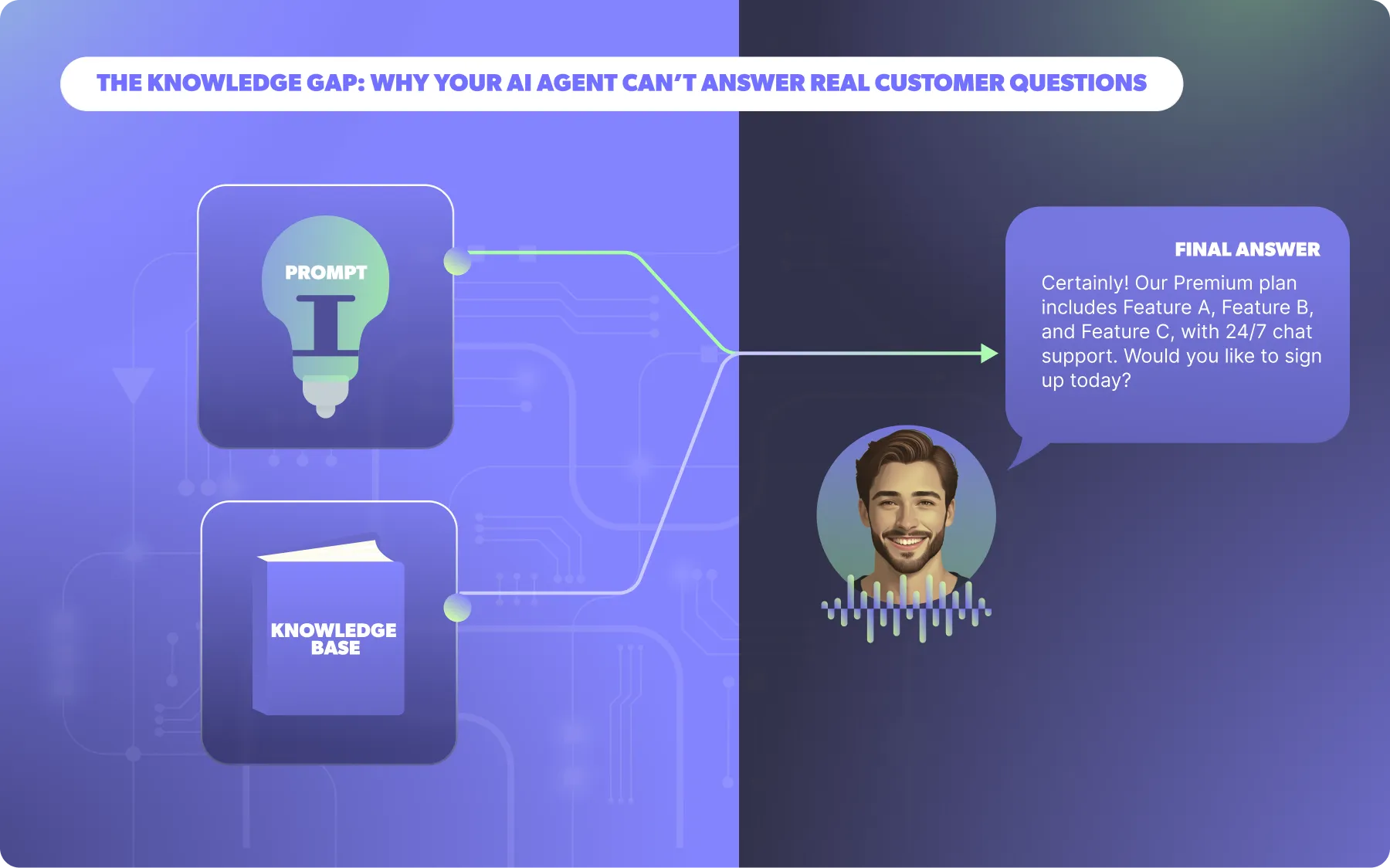
The Knowledge Gap: Why Your AI Agent Can’t Answer Real Customer Questions
AI agent performance depends on how well it aligns with real customer language, not just fluency. Regal Improve helps teams identify gaps and improve outcomes by analyzing real conversations and surfacing high-impact opportunities
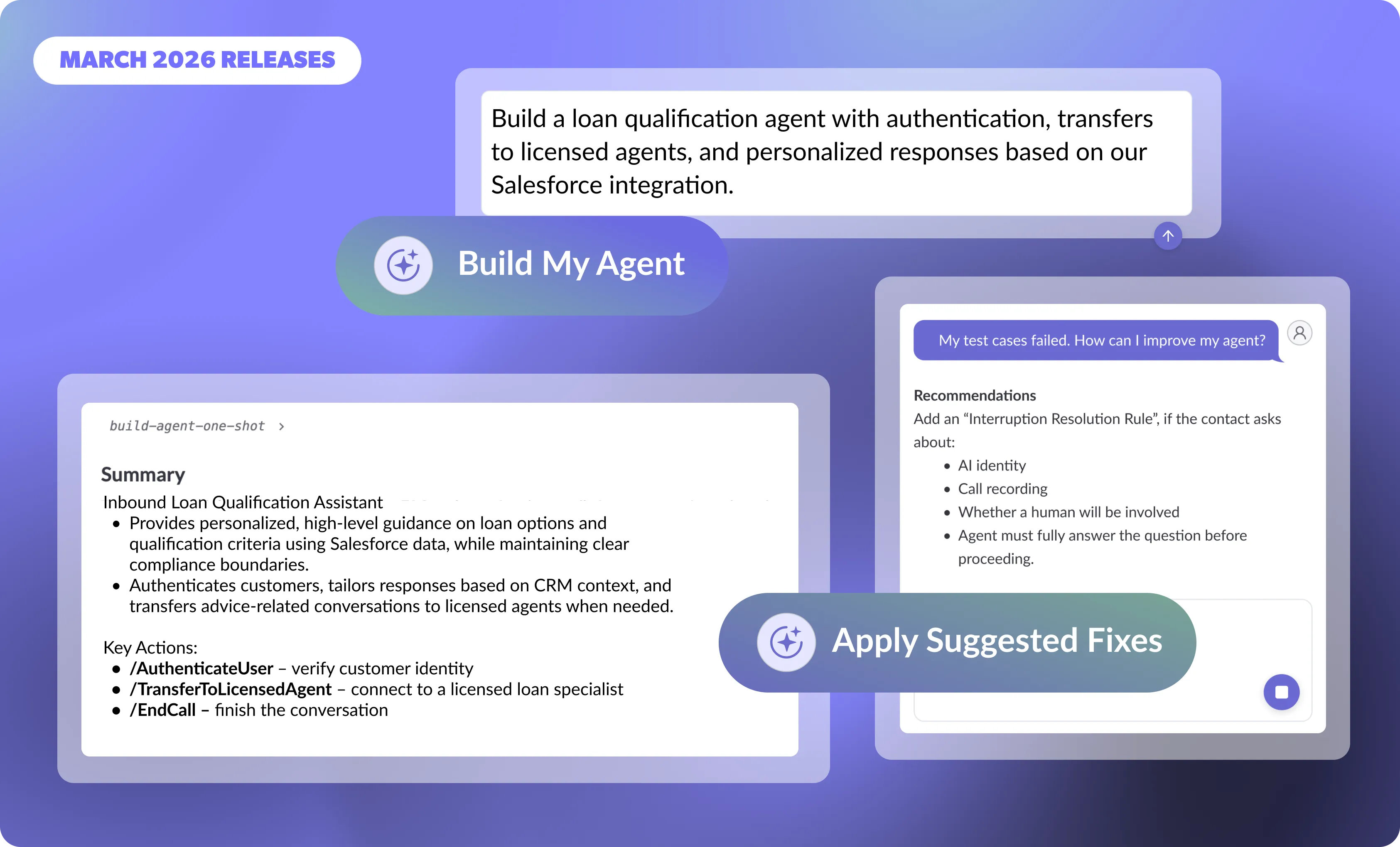
In March, we made it faster than ever to build, launch, and continuously improve AI agents with Copilot, Regal's AI agent for building AI agents. Together, these updates lessen the time needed to launch and maintain agents, so you can focus on understanding your customers, unlocking new use cases, and driving faster business outcomes.
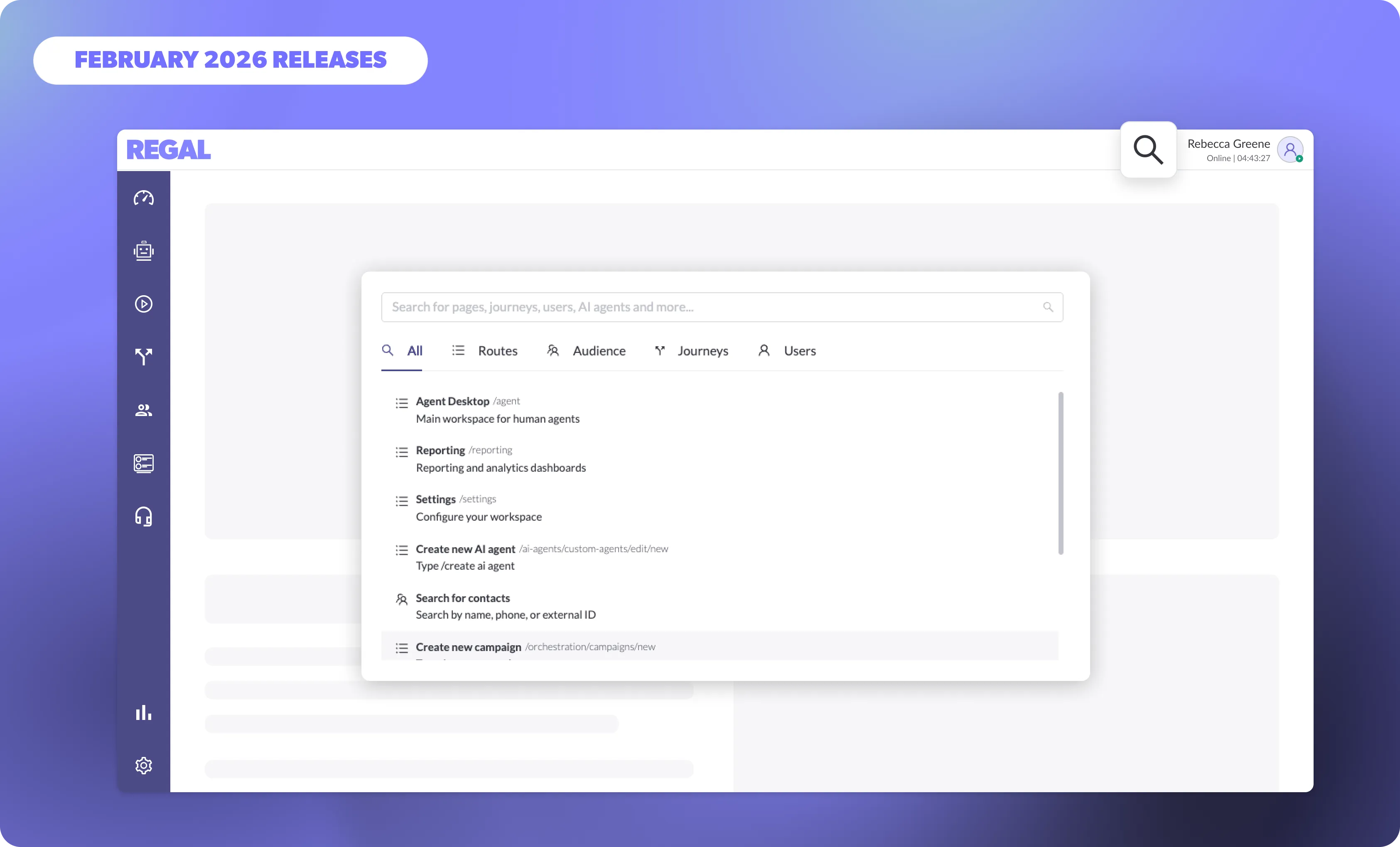
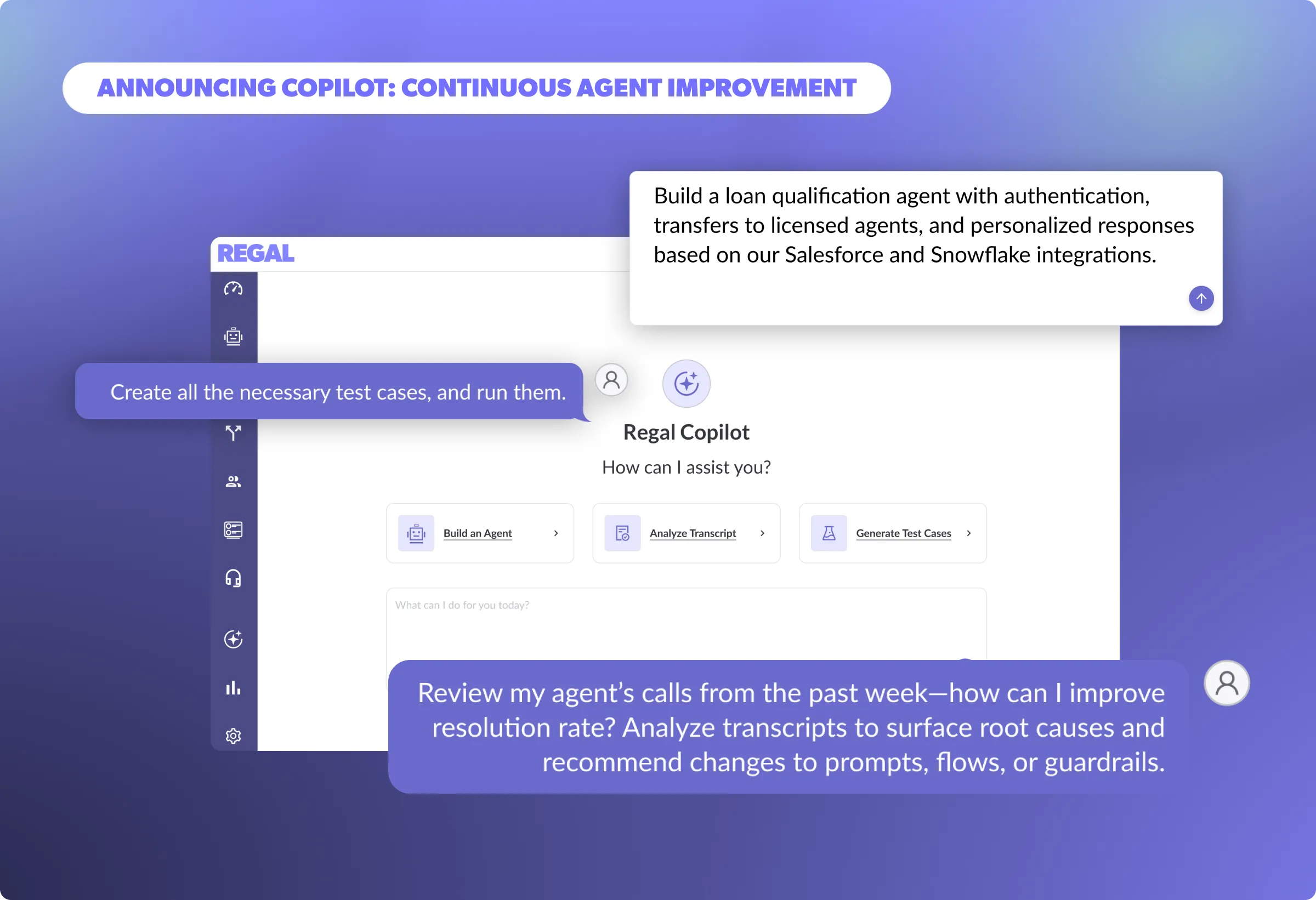
Regal is announcing Copilot, our agent for building AI agents. Create, test, deploy, monitor, and improve your Regal AI agents faster than ever by managing an agent instead of going through each step yourself.
How American Standard Helps Homeowners Start Remodeling Projects with Ease
American Standard’s AI agents streamlined the home remodeling journey by responding instantly to every homeowner inquiry, capturing demand in real time, and creating a faster, more seamless path from interest to installation.
In February, we made AI agents sound and feel more natural, even when handling complex, multi-step conversations with conditional logic. These updates give you the control to build AI agents that don't just follow a script: they adapt, respond, and engage naturally with each customer.
In 2026, we're focused on making every interaction with your AI agent feel more human, and speeding up the agent development process so you can drive results faster. We kicked off the year by advancing the reach and contextual intelligence of AI agent conversations.
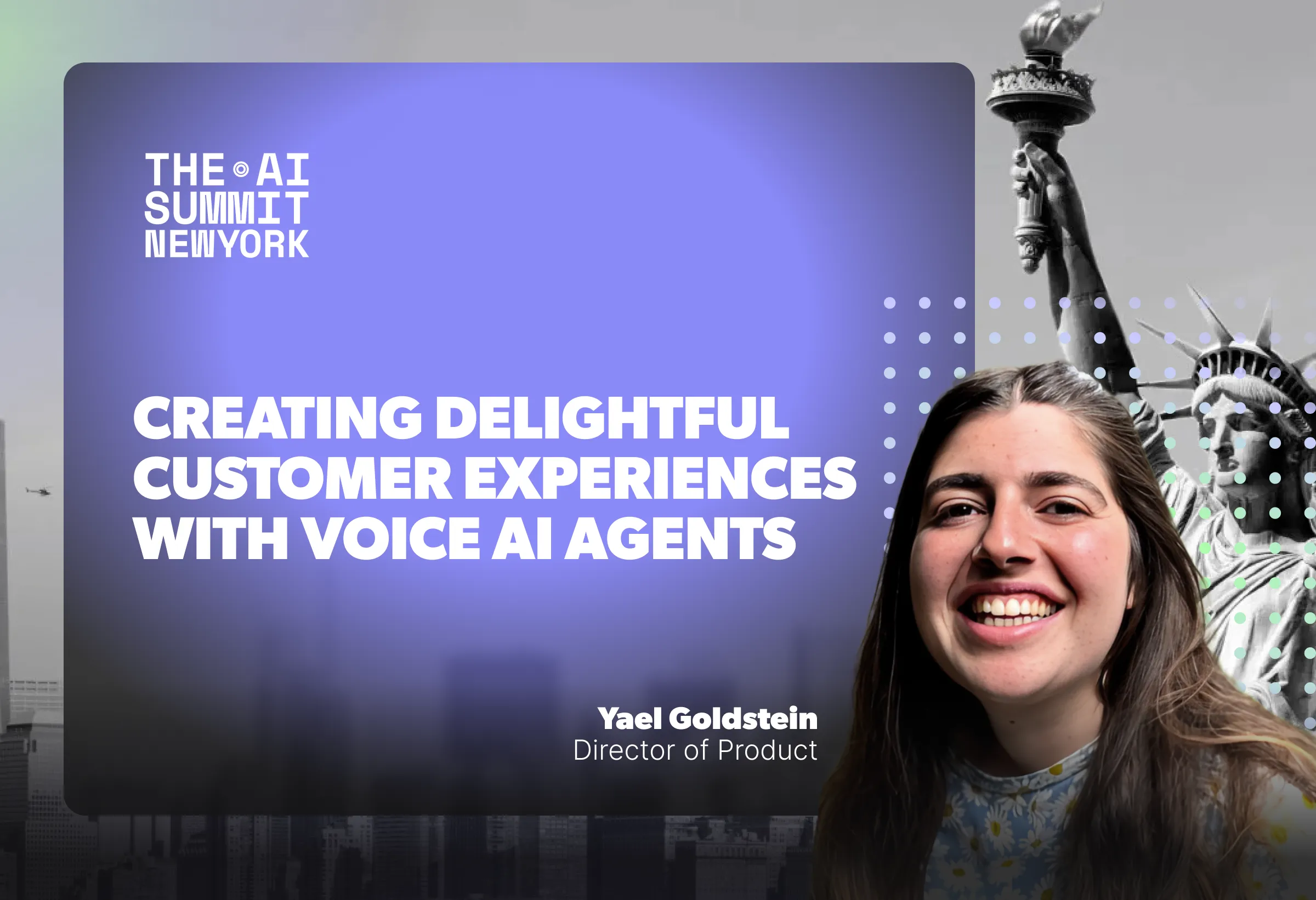
From Bottleneck to Breakthrough: Creating Delightful Experiences with Voice AI Agents
At the AI Summit New York, Regal Director of Product & Product Marketing, Yael Goldstein shared how enterprise organizations are moving beyond theory to deploy Voice AI agents that transform customer experiences.
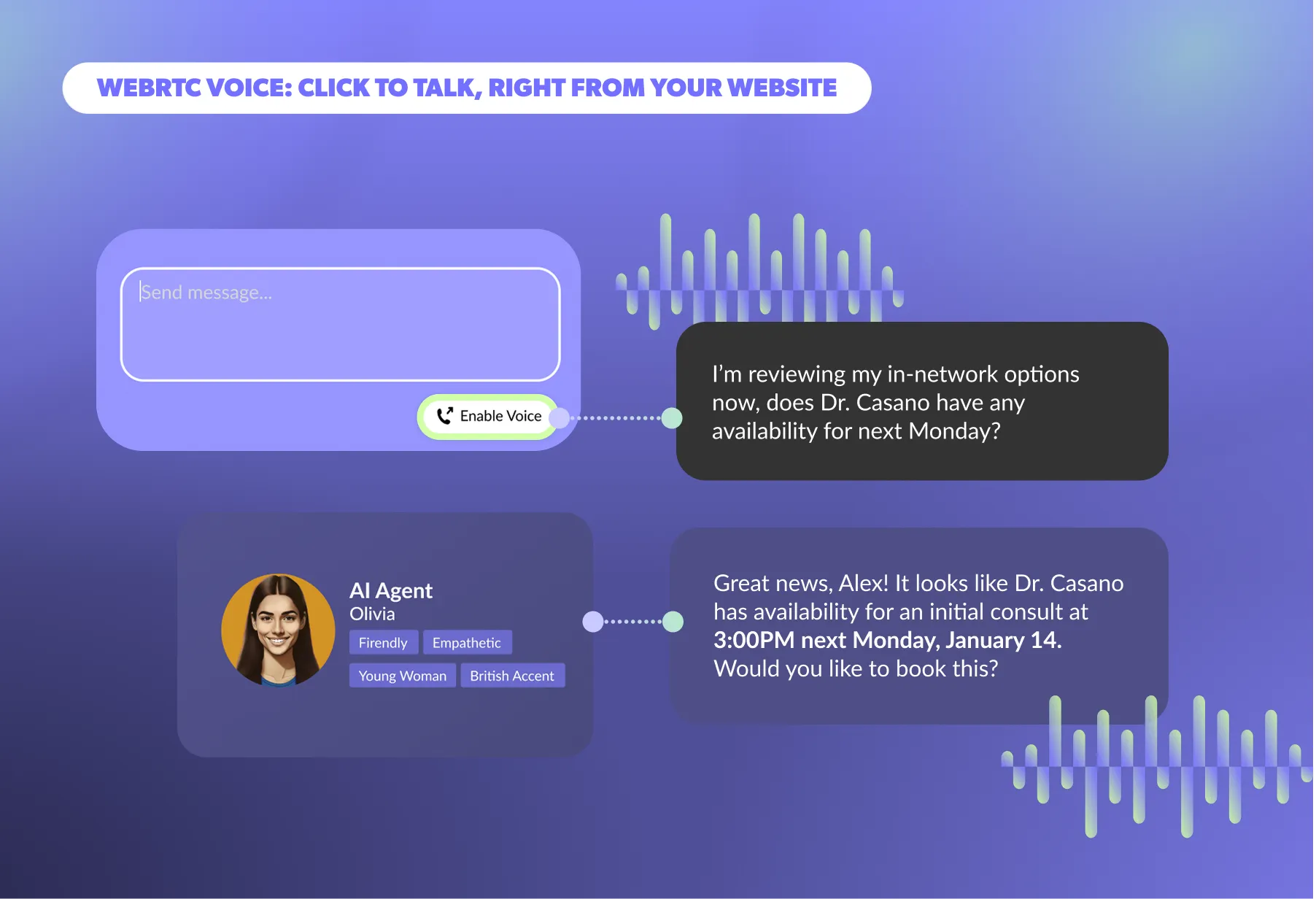
Introducing WebRTC Voice: Click to Talk, Right From Your Website
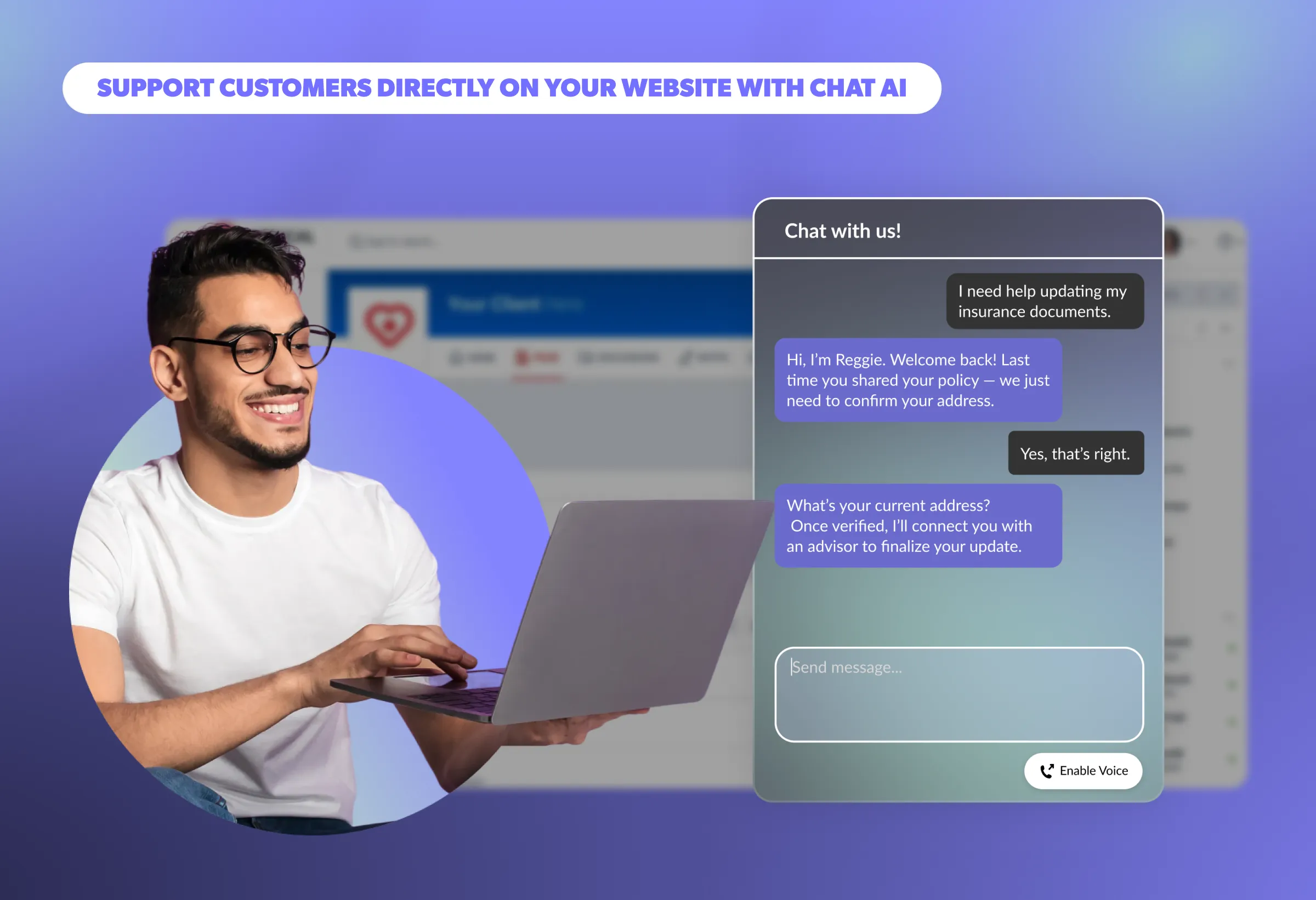
WebRTC Voice enables real-time voice conversations: instead of dialing phone numbers or switching applications, customers can enable voice conversations directly in your website widget.
December's releases expand where and how you can deploy and scale your AI agents, including a new embeddable website widget for chat and WebRTC. We also released several features to increase observability across the Regal platform.
Turn AI Agent Data Into Better Customer Interactions: A Timeline-Based Approach
Leverage real-time decision-making and post-call analysis to increase personalization in your customer interactions, evaluate your agent long-term, and extract insights for continuous improvement.
The Voice AI Agent Triangle: Speed, Control, Expression (Pick Two)
Every production Voice AI agent is a tradeoff system. Successful Voice AI agents are deliberately constrained, and those constraints can be visualized in The Voice AI Agent Triangle.
How eHealth Elevated the Medicare Experience with Always-On Voice AI
eHealth’s AI agent streamlined Medicare enrollment and support by scaling up for peak call surges, eliminating after-hours wait times, and delivering exceptional experiences for beneficiaries.
2025 Product Recap: Building the Voice AI Agent Platform for Enterprise
Learn about the 2025's product highlights, from the AI Agent Builder to Simulations, deeper observability, and automated insights for continuous improvement at scale.
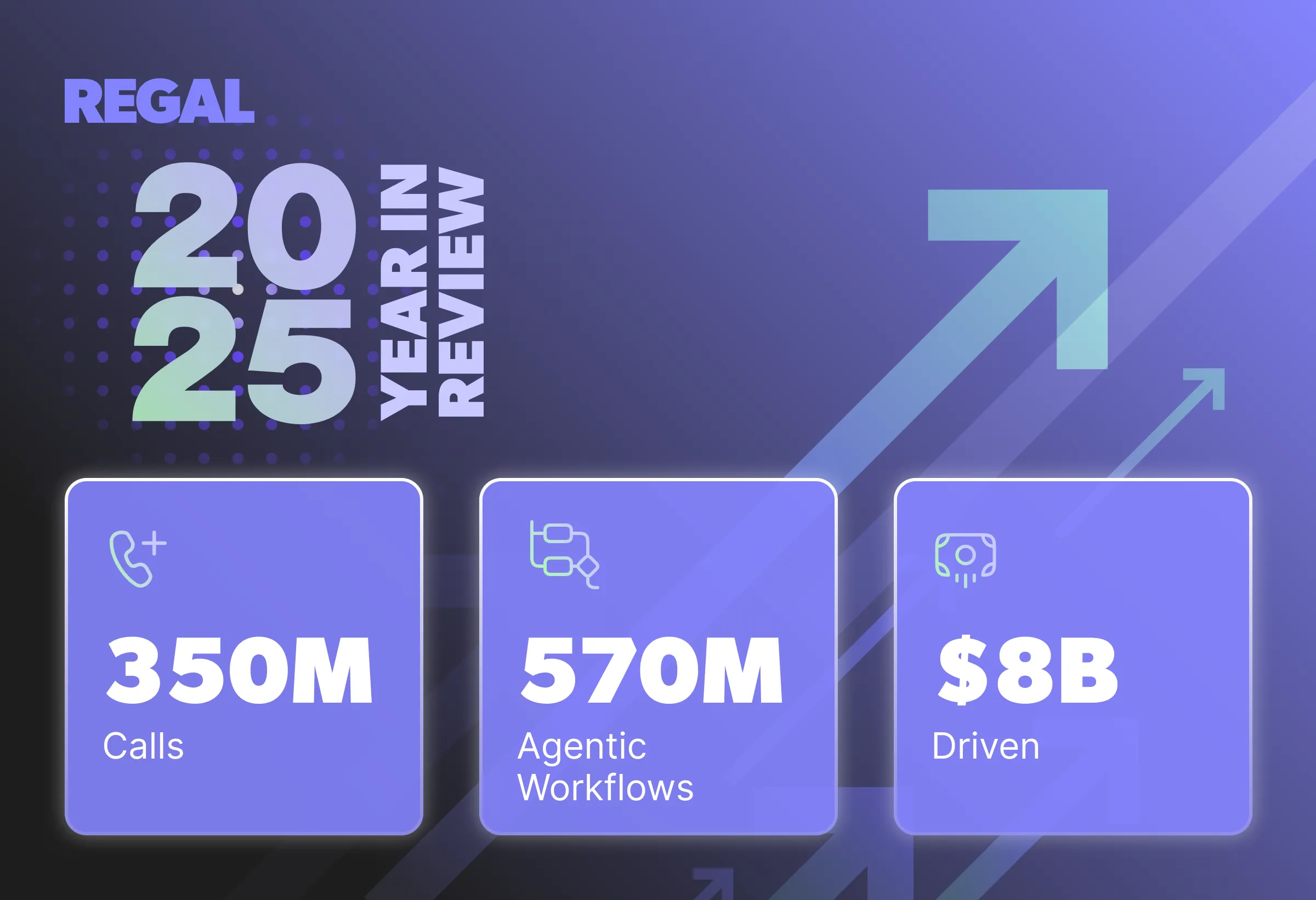
Celebrate a milestone year as Regal customers scaled AI Agents to 350M calls in 2025, and get a preview of Regal's vision for 2026 to help teams build and improve agents faster, with less effort.
Pinpoint Critical Knowledge Base Gaps with Regal Improve
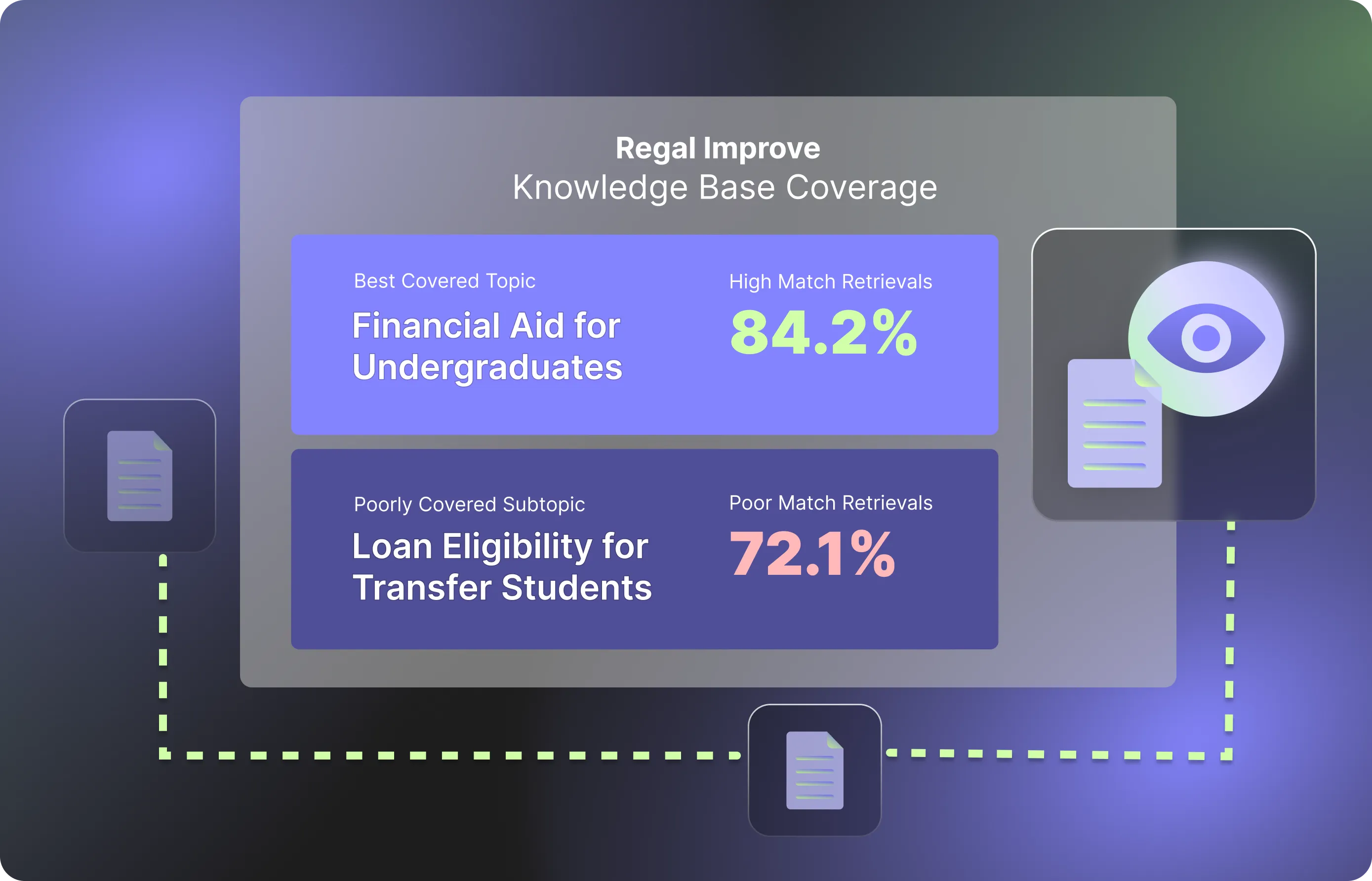
Customer conversations are inherently dynamic, and Regal Improve’s Knowledge Base Coverage tracks changes in retrieval performance over time and at scale. This makes it easy to verify that KB updates increase coverage and if your documentation is keeping up with evolving customer requests.
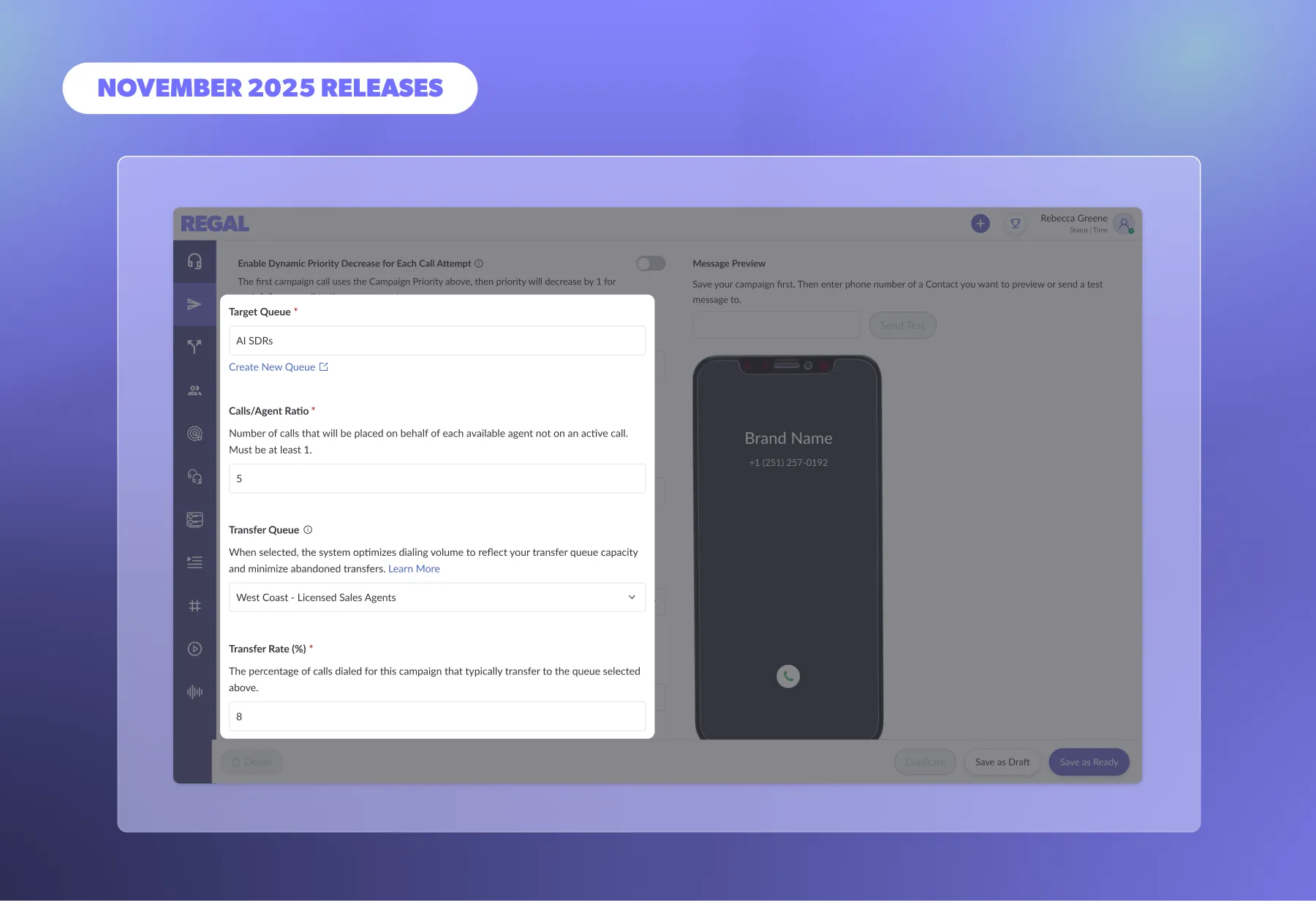
November's releases make it easier to scale your transfer-heavy call flows, with new tools that align dialer pacing to downstream agent capacity and streamline complex handoffs. You’ll also see improved post-call workflow accuracy, with reliable data extraction and disposition outcomes driven by LLM configurability and earlier validation.
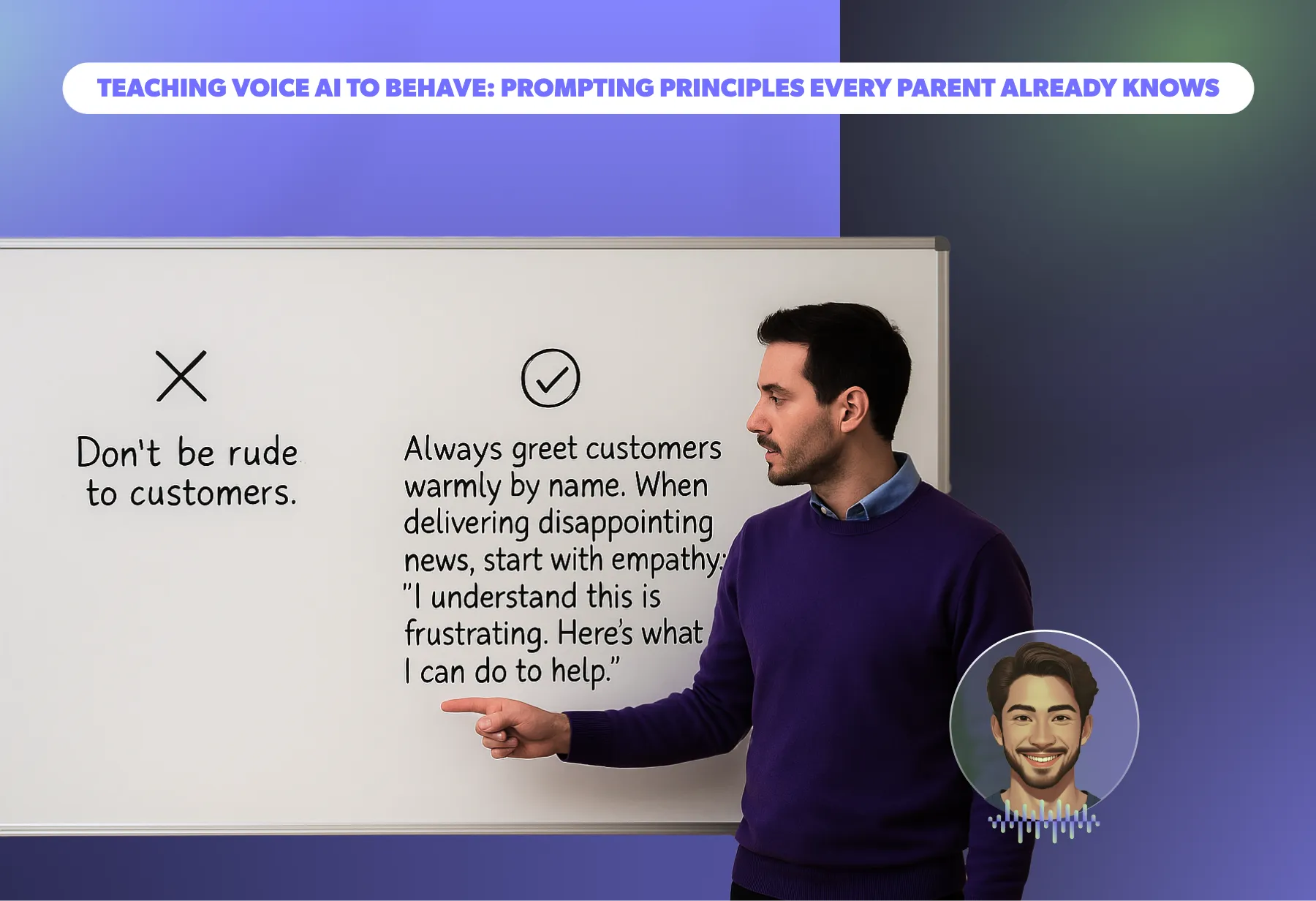
Teaching Voice AI to Behave: Prompting Principles Every Parent Already Knows
Building a great AI voice agent isn’t so different from parenting a five-year-old: clarity, examples, and structure make all the difference. This post breaks down proven prompting principles—from positive framing and persona design to conversational guardrails—that help AI agents sound natural, stay on task, and follow directions every time.
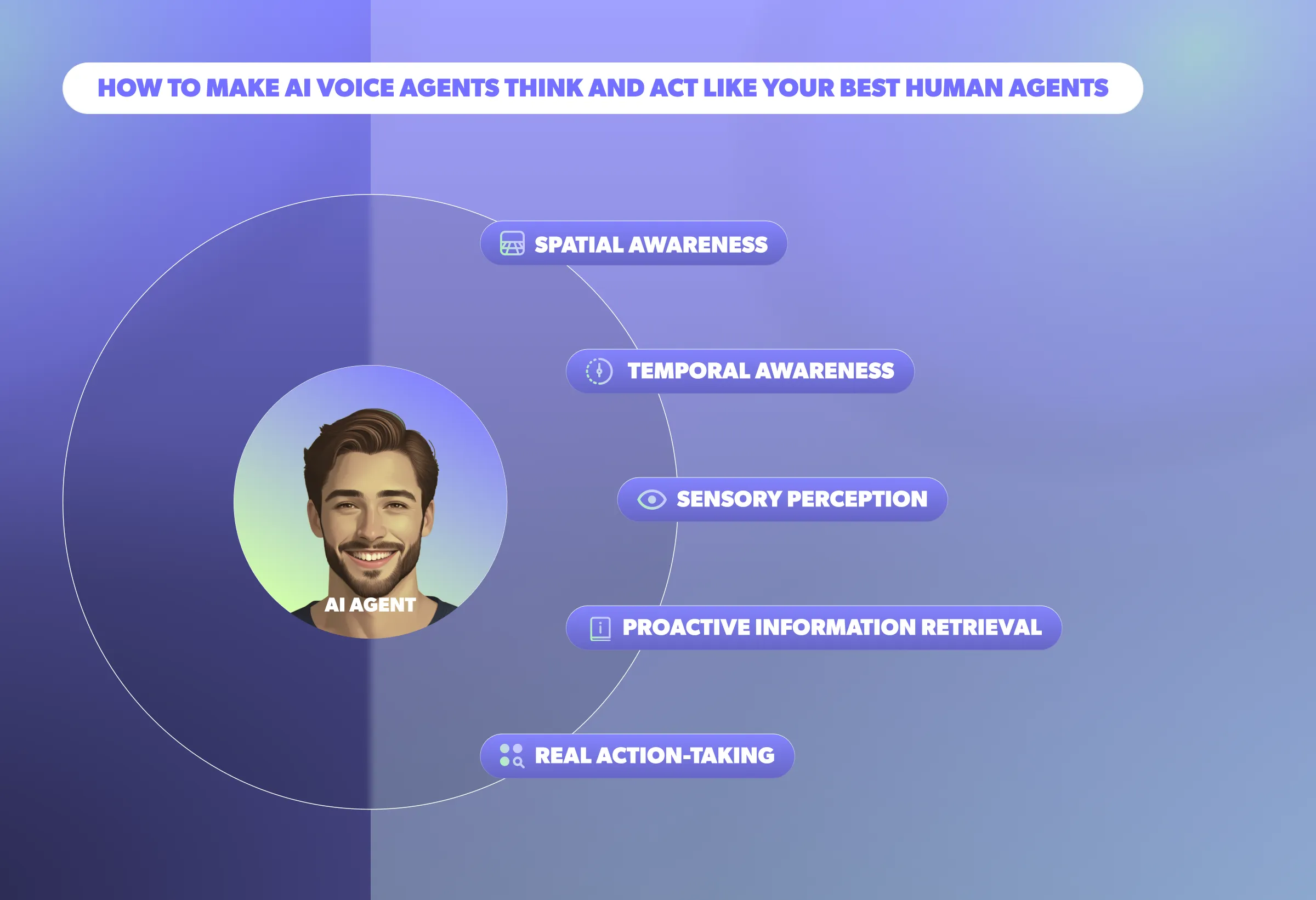
How to Make Voice AI Agents Think and Act Like Your Best Human Agents
See how modern AI voice agents can match your best human reps by building five core capabilities into every call: spatial awareness, temporal awareness, sensory perception, proactive retrieval, and real action-taking. This post breaks down what each pillar means in practice and how they turn voice AI from a conversational bot into a fully empowered operator.
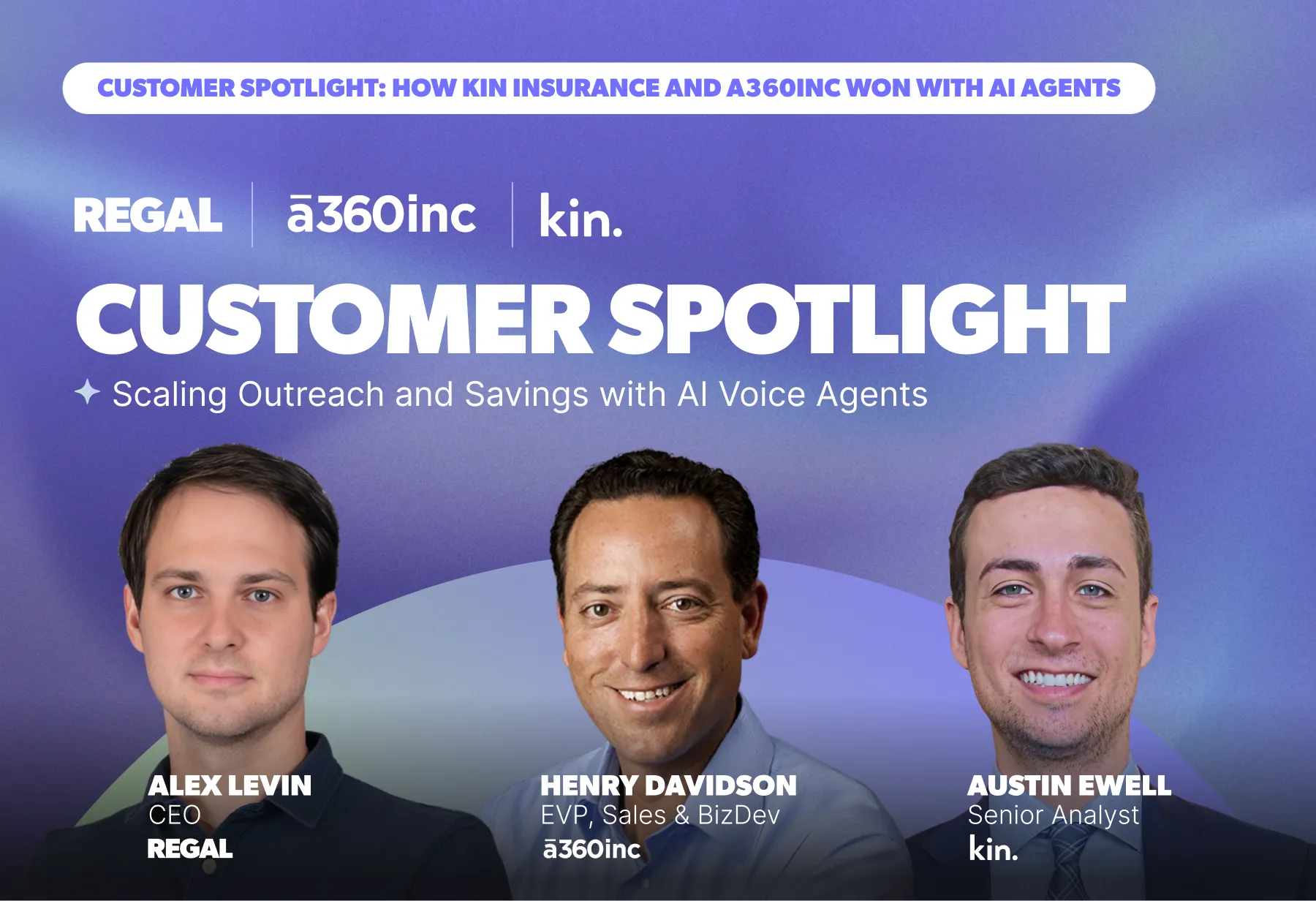
How Kin Insurance & a360inc Achieved Faster Outreach and Better Customer Experiences with AI Agents
In this fireside chat, Regal Co-Founder & CEO Alex Levin sits down with Kin Insurance’s Austin Ewell and a360inc’s Henry Davidson to share how their organizations are using AI agents to transform outreach, customer experience, and operational efficiency. They discuss real-world deployments—from qualification and human agent handoffs to complex negotiation workflows—break down the results, and offer practical guidance for leaders adopting AI agents at scale.
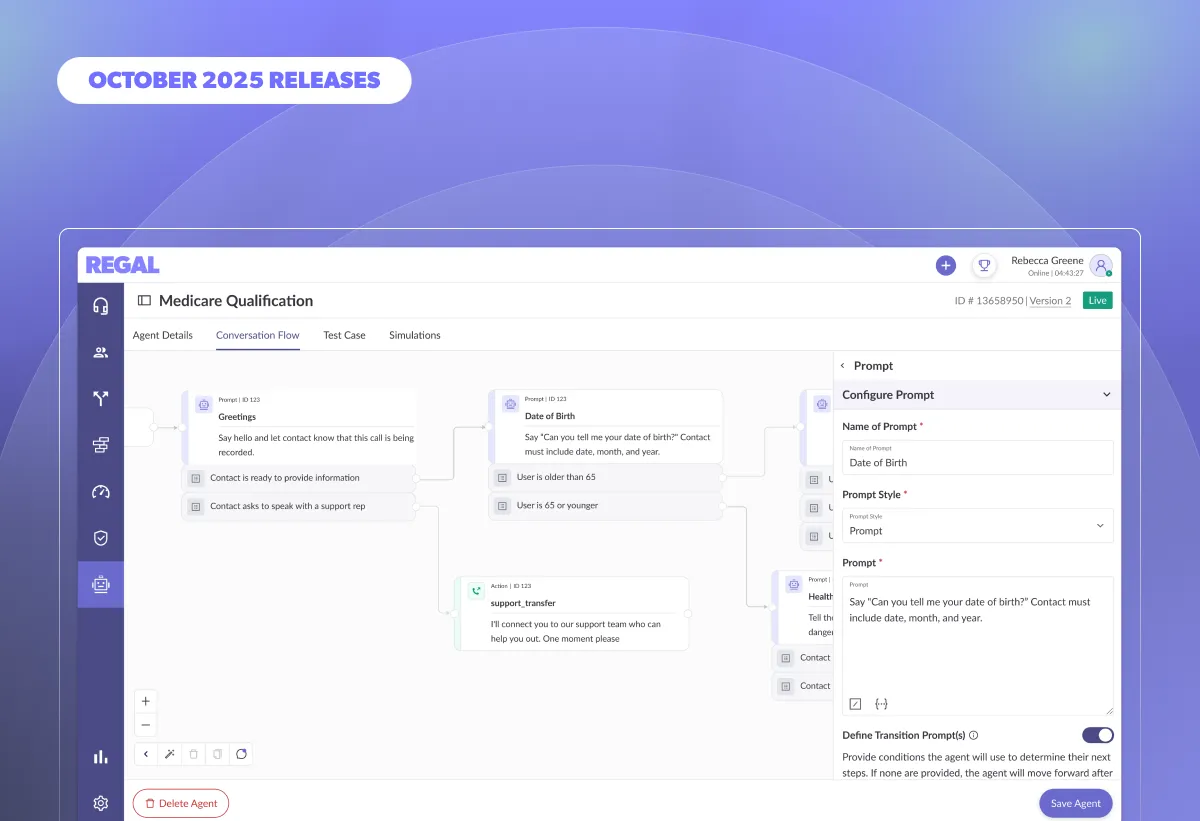
October’s releases give you deeper structure and insight across your AI operations—from designing predictable, multi-state conversation flows and delivering seamless human handoffs to uncovering performance insights and strengthening your agents’ knowledge for continuous improvement.
How a360inc automated notary outreach and negotiation
See how a360inc automated notary outreach and negotiation with Regal’s AI Agent, cutting costs by 80%, saving money on bid collection, and boosting coverage with unlimited outreach, structured negotiations, and reliable data capture.
September’s releases give you greater visibility and control across your AI operations—from monitoring agent action invocations, contact receptiveness to AI, and dialing compliance, to experimenting confidently with the latest LLMs and expanded Simulations coverage.
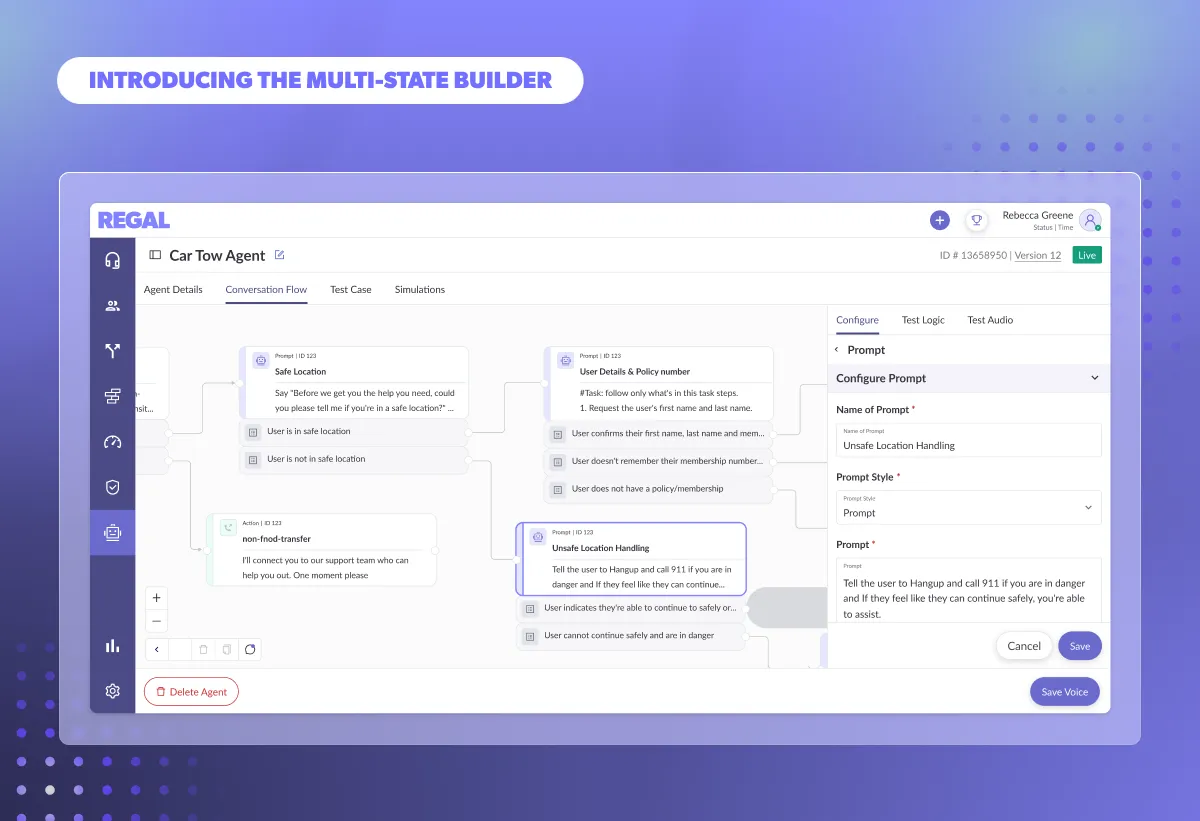
Introducing Regal’s Multi-State Agent Builder, a purpose-built tool for orchestrating complex, non-linear conversations. Gain full control over prompts, logic, and actions to scale AI agents with accuracy, personalization, and enterprise reliability.
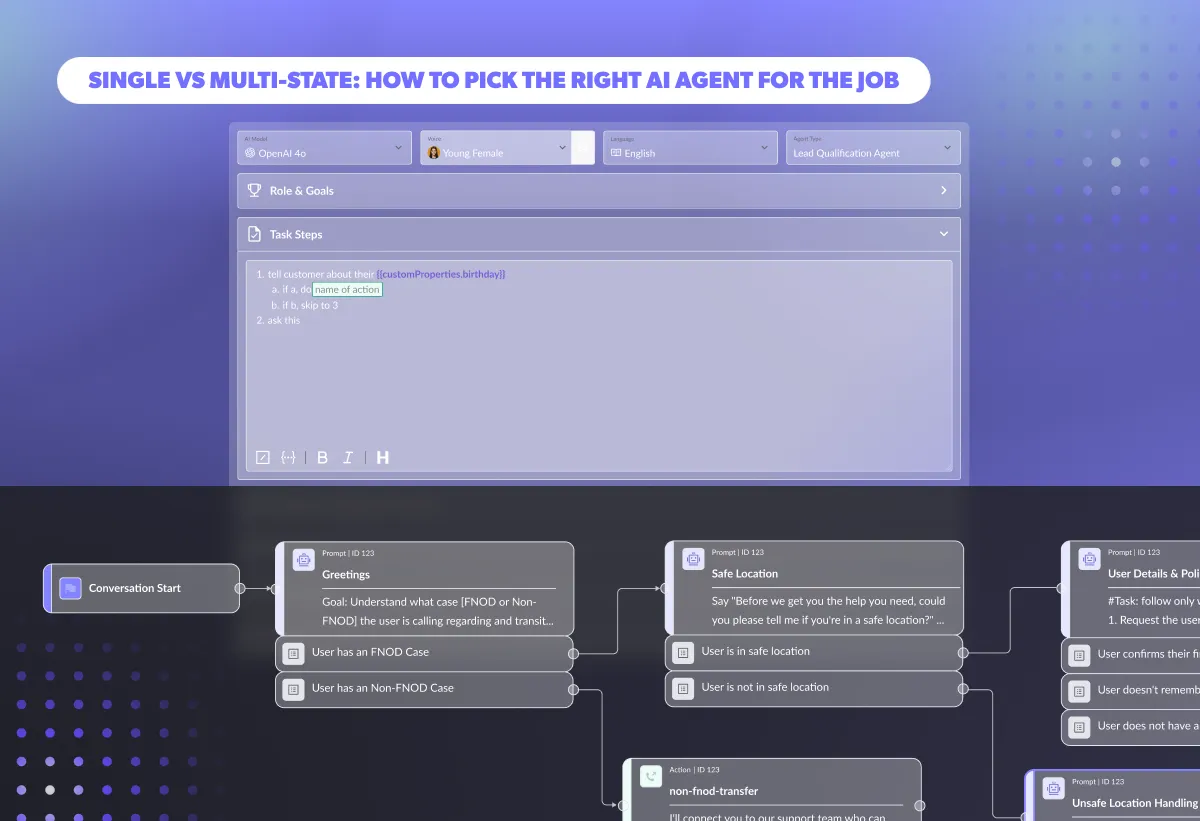
Single vs Multi-State: How to Pick the Right AI Agent for the Job
Learn about the difference between single-state and multi-state AI agents, and how each impacts speed, scale, and reliability. Discover when simplicity is enough and when enterprise workflows demand structured orchestration, so you can choose the right design for your use case.
The Evolution of AI Agents: From Chatbots to Multi-State
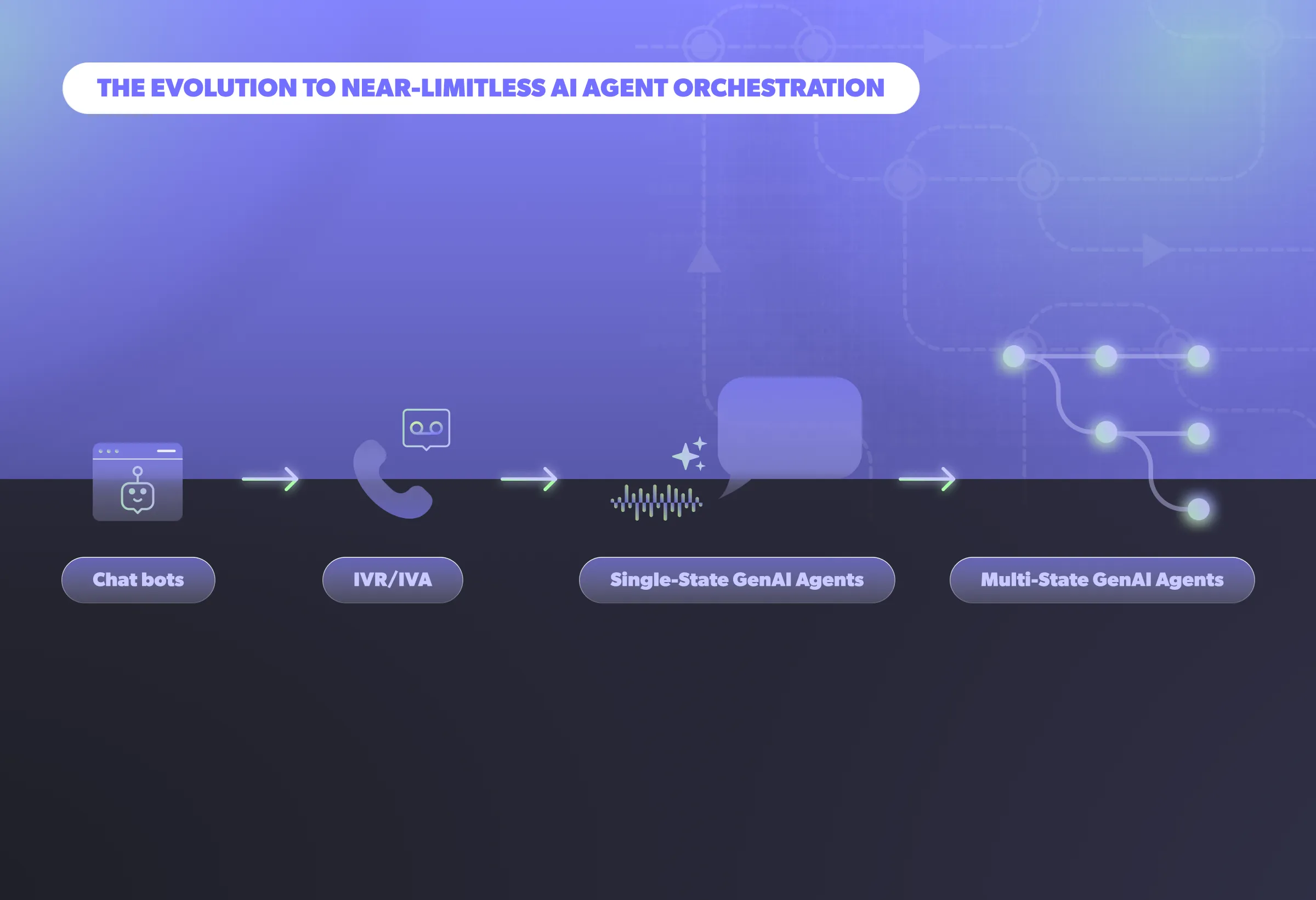
Trace the evolution of AI agents, from scripted chatbots to IVR systems to single-state GenAI, and now to multi-state agents that unlock true end-to-end orchestration at scale.
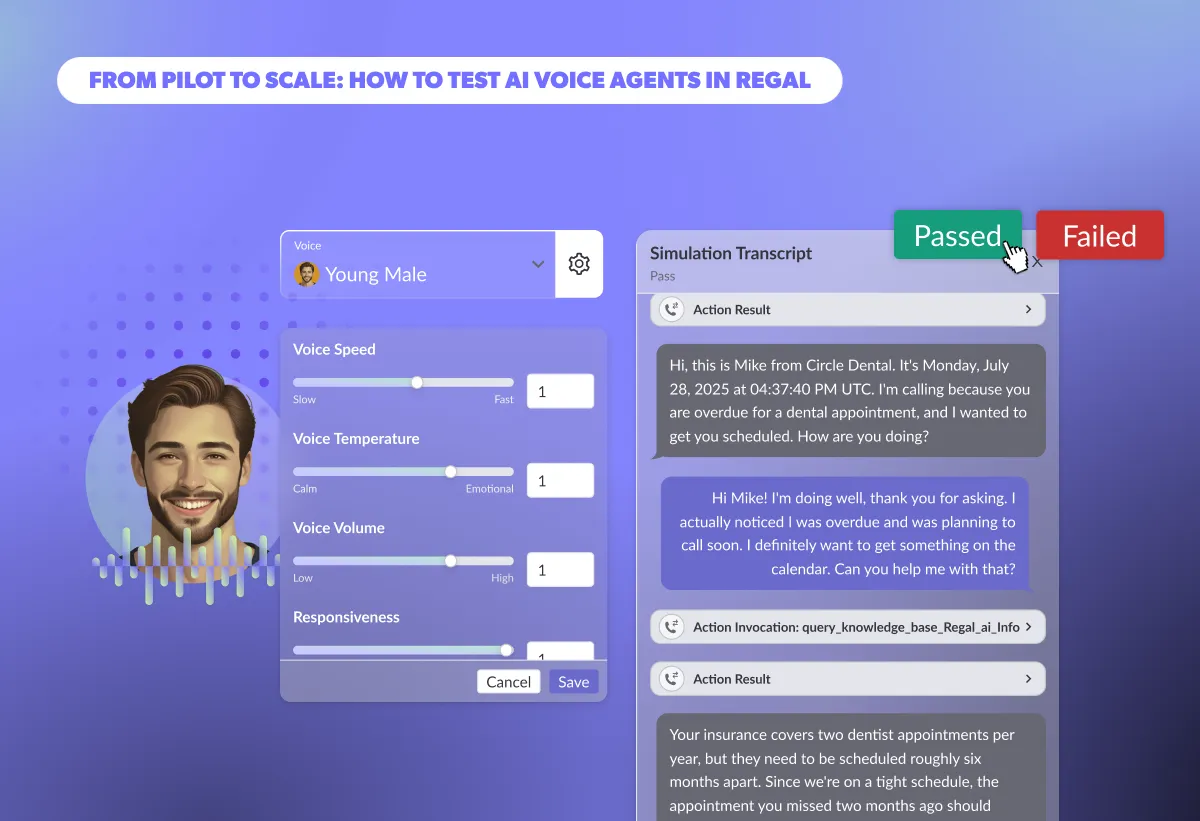
From Pilot to Scale: How to Test AI Voice Agents in Regal
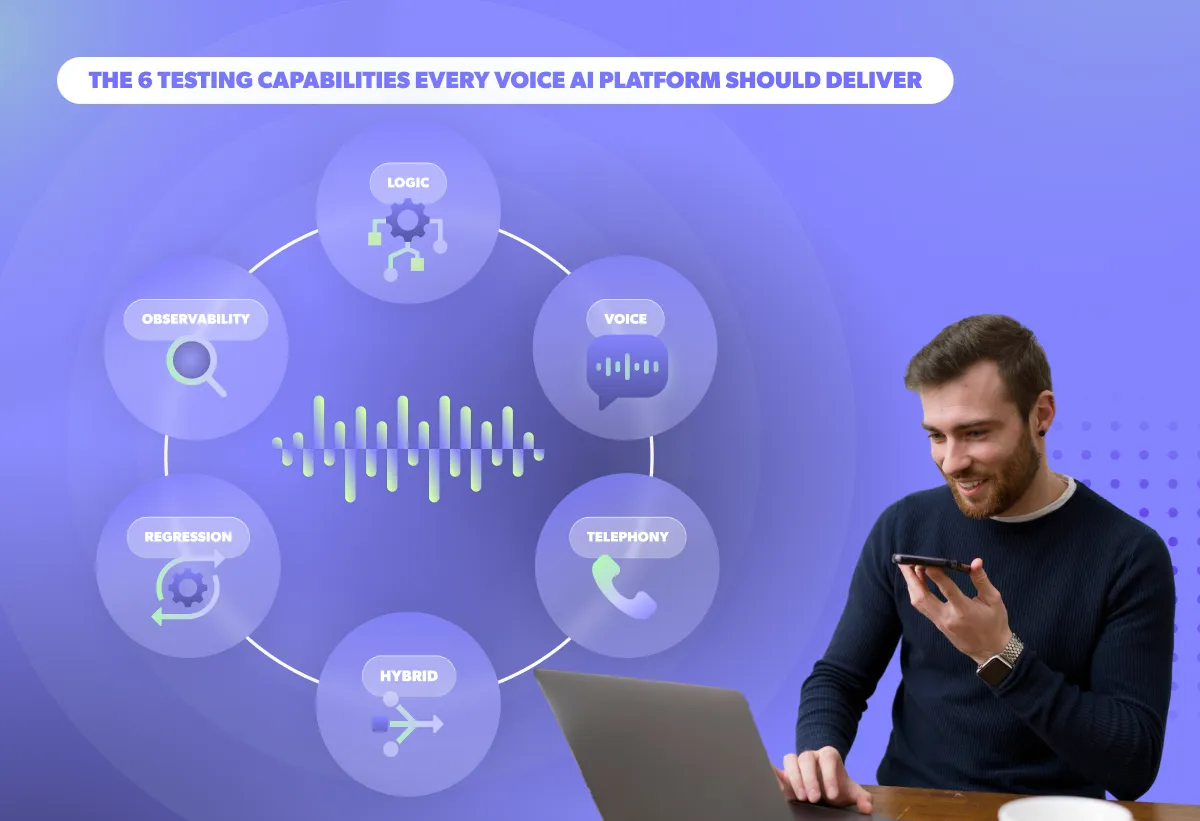
See how to test AI Voice Agents in Regal with simulation-based suites, manual checks, and end-to-end validations. Ensure logic, voice, and telephony all perform reliably so every deployment scales with confidence.
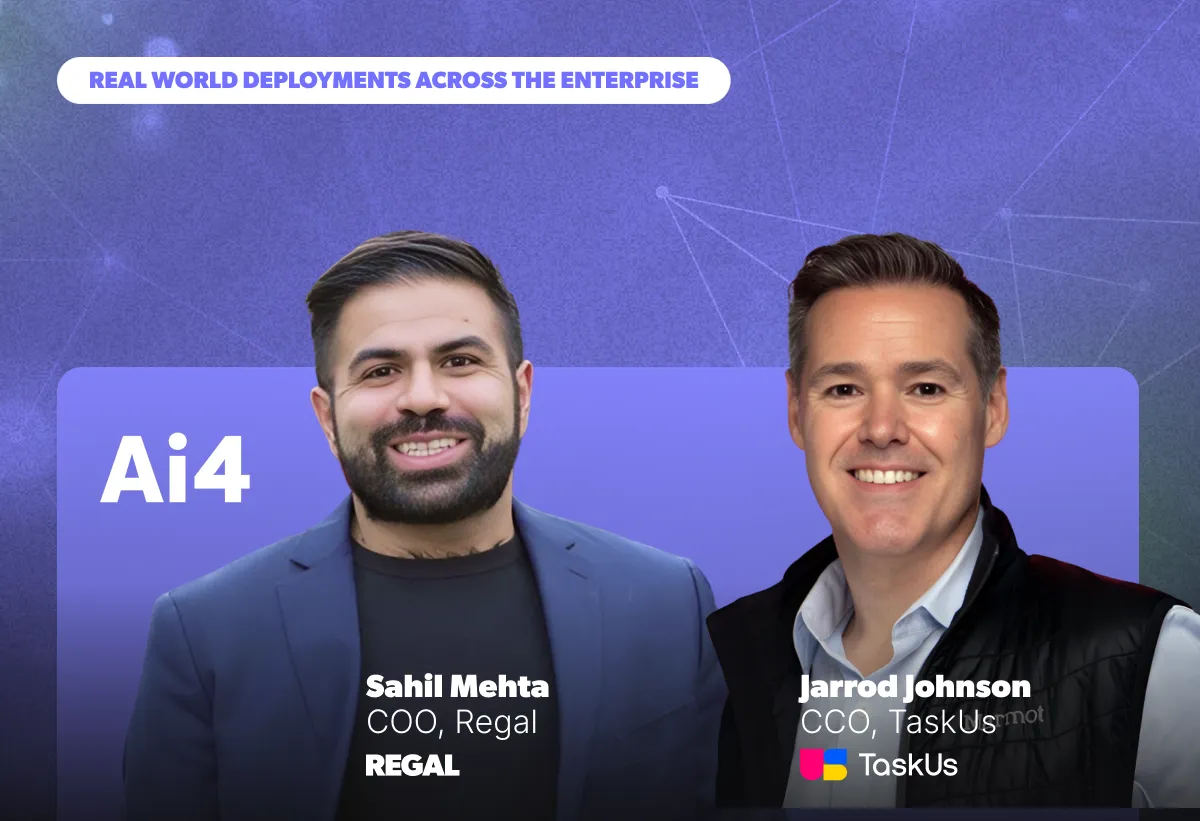
The Rise of Voice AI Agents: Real-World Deployments Across the Enterprise
In this AI4 fireside chat, Regal.ai COO Sahil Mehta and TaskUs CCO Jarrod Johnson explore how enterprise organizations are deploying voice AI agents across customer experience, support, and sales. They share real-world deployments, discuss quality and ROI trade-offs, and outline best practices for aligning operations and product teams when adopting AI agents at scale.
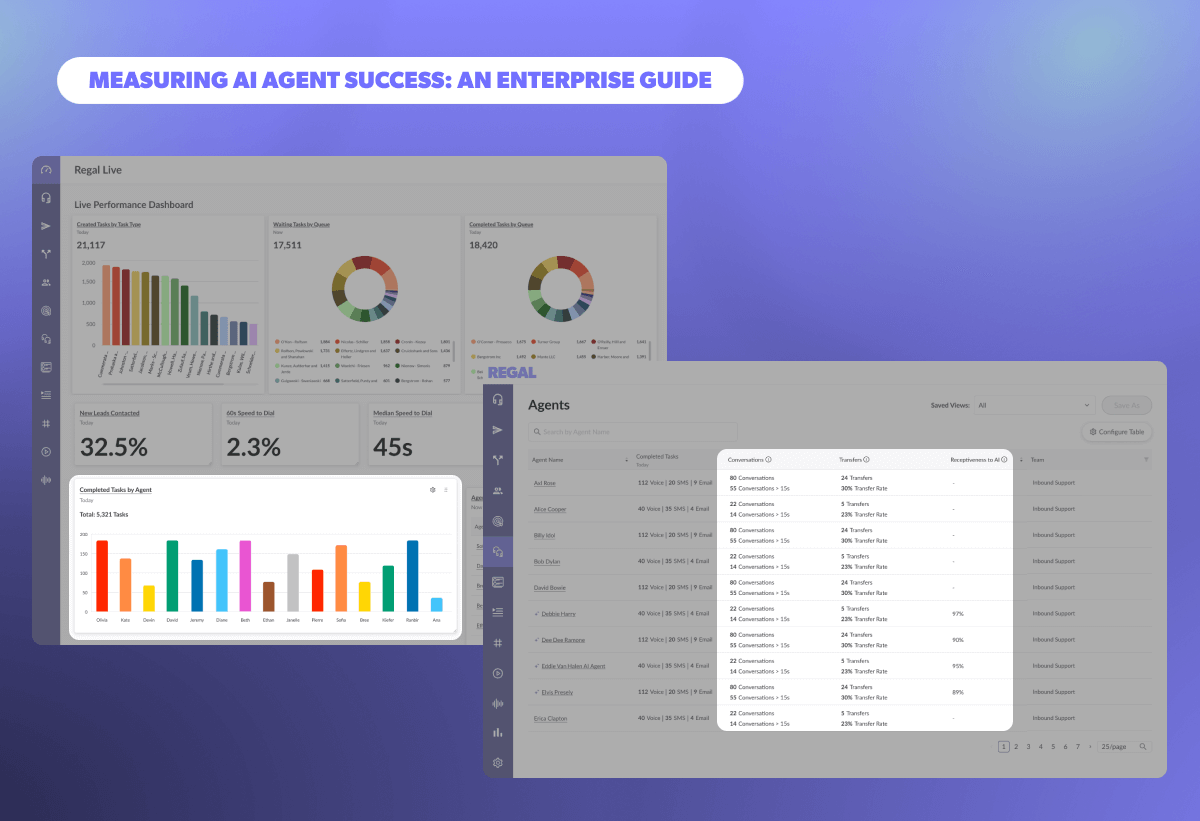
Learn how to measure AI Agent success in Regal with real-time dashboards, KPI reporting, and custom analysis. Get full visibility into performance, customer experience, and business impact—so every deployment drives results.
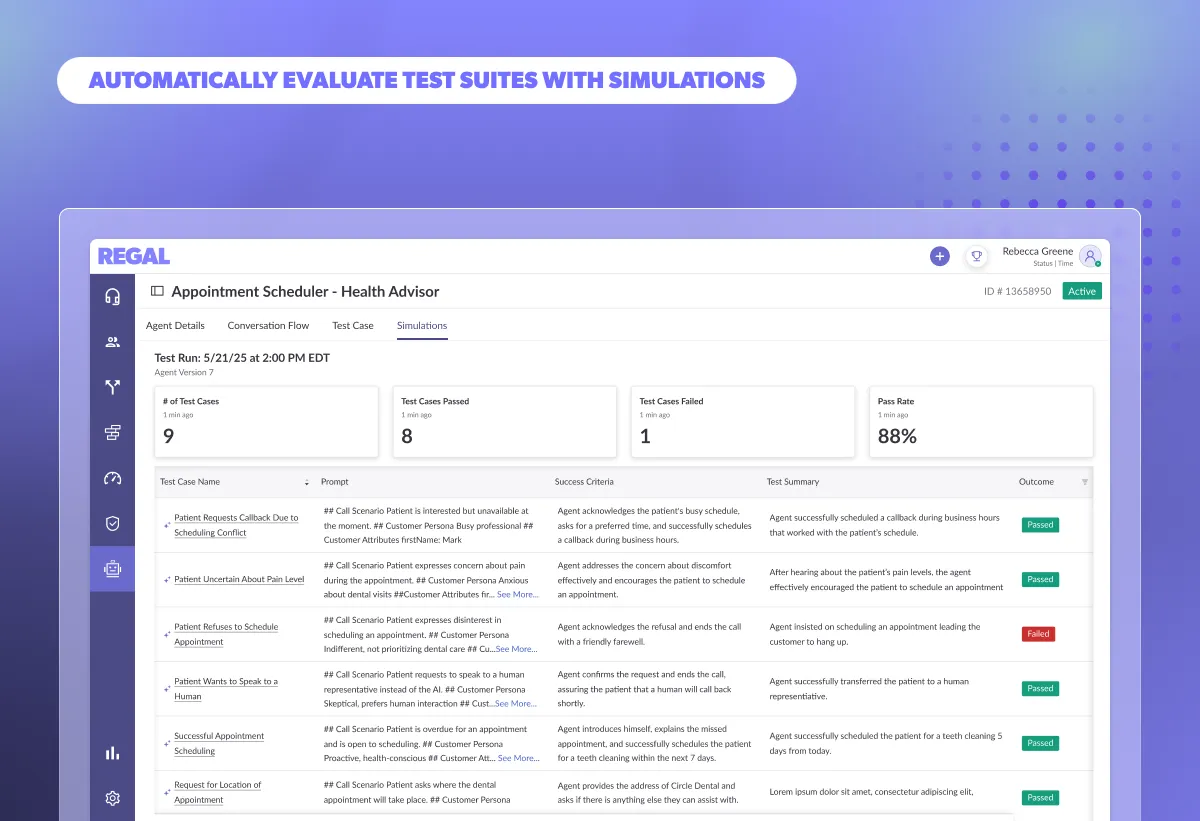
Automatically Evaluate Test Suites with Simulations
Discover how you can use Simulations to evaluate scenario-specific conversational flows that pinpoint AI Agent failures before launch. Speed up regression testing, validate prompts, knowledge bases, and custom actions at scale, and deploy reliable AI Agents with confidence.
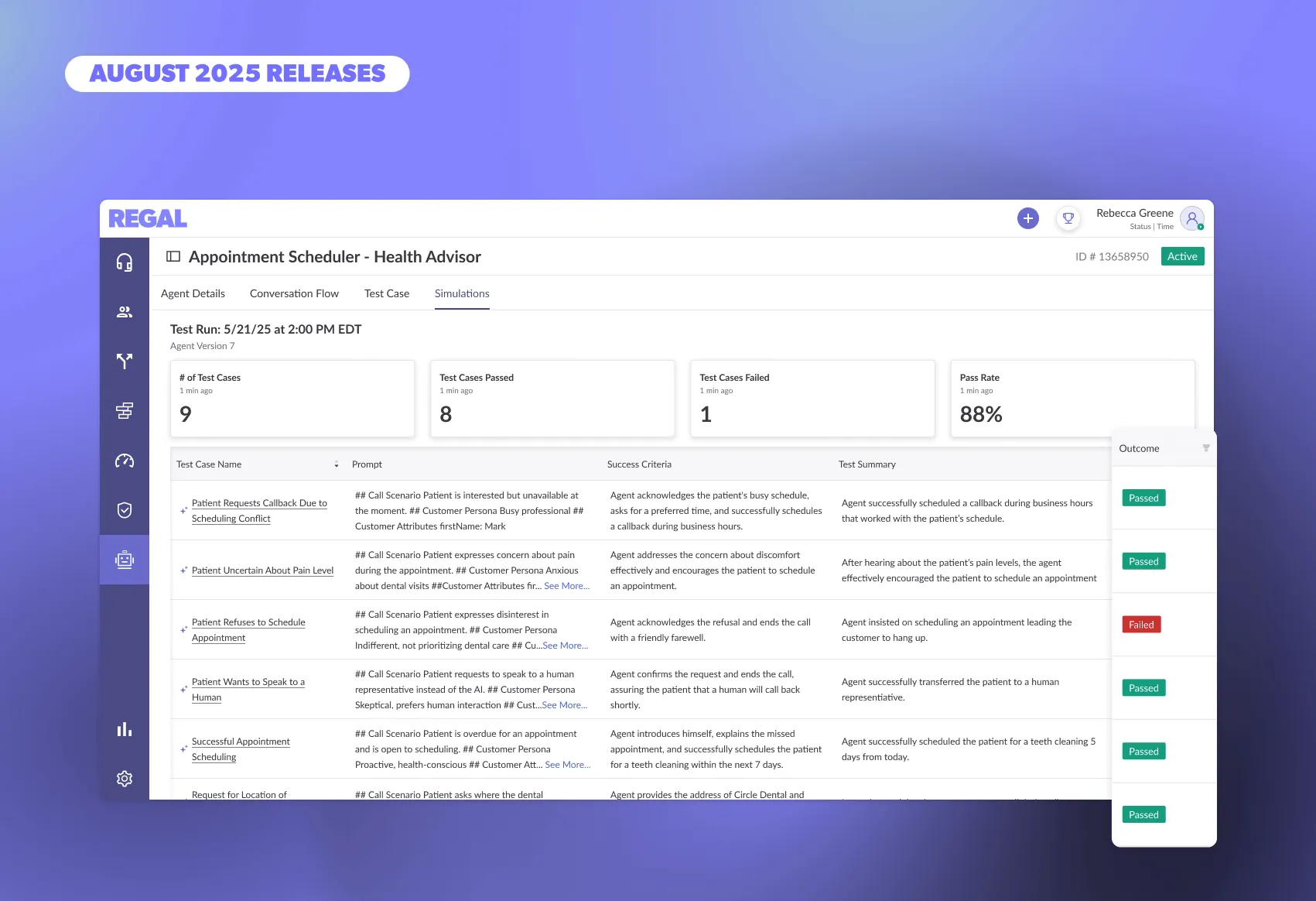
New features include automated test evaluations, the Regal Improve insights dashboard, PII-safe recording actions, 25 ultra-realistic voice options, bulk Knowledge Base URL upload, and expanded quiet hours compliance—designed to accelerate iteration, improve agent performance, and safeguard customer trust.
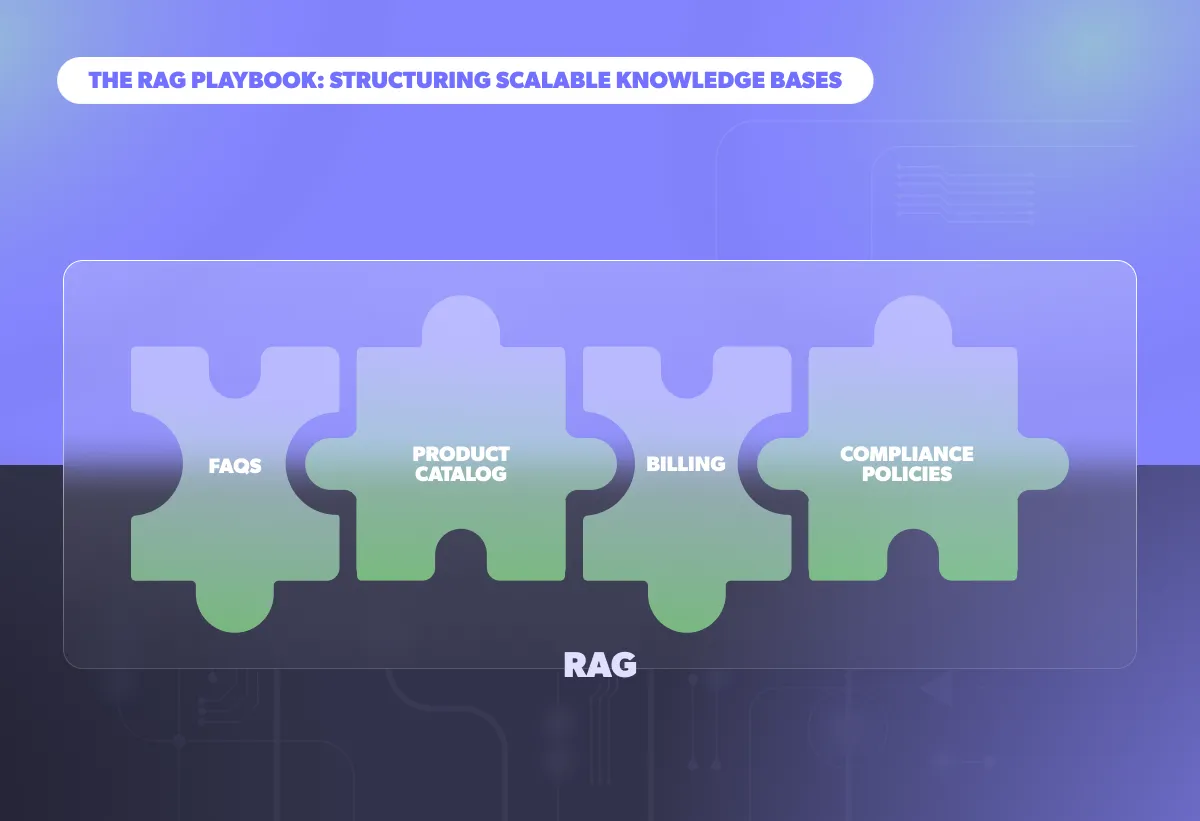
The RAG Playbook: Structuring Scalable Knowledge Bases for Reliable AI Agents
Learn how to structure a knowledge base that keeps AI Agents accurate and on-script. Discover why human-style KBs fail, and apply best practices like single-topic chunking, concrete instructions, and explicit outcomes to reduce hallucinations and scale reliable RAG performance.
RAG Hygiene: How to Scale and Maintain AI Agent Knowledge
Learn how to maintain a clean, reliable RAG system for AI Agents. Discover best practices for structuring source docs, chunking content, titling for retrieval, avoiding redundancy, and keeping knowledge bases fresh to ensure accurate, scalable performance.
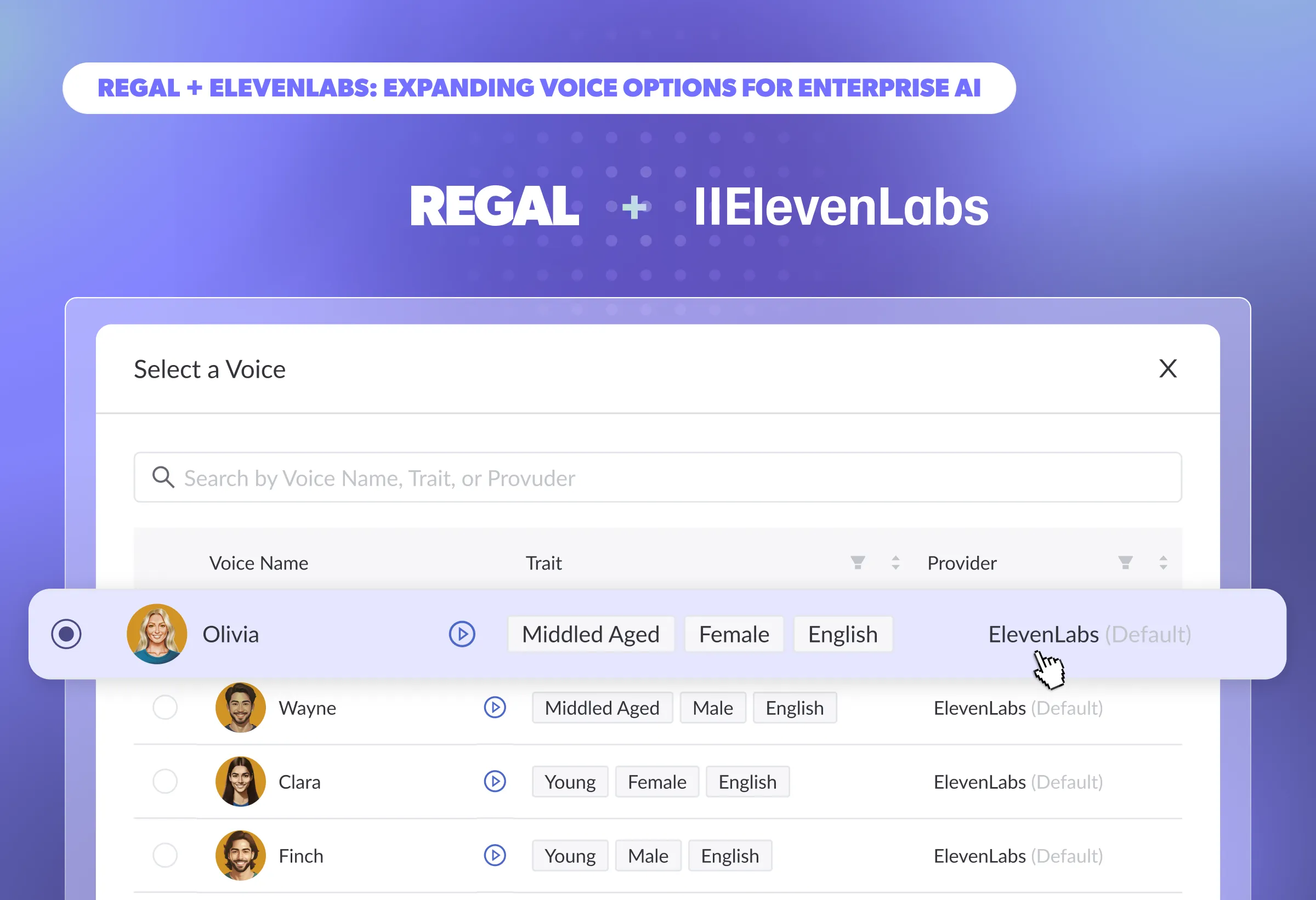
Announcing Regal + ElevenLabs: Dynamic Voices for Every Conversation
Regal and ElevenLabs bring expressive, multilingual AI voices to customer and sales conversations, adapting tone and emotion in real time to boost conversions, trust, and satisfaction at scale.
Announcing Regal + Rime: Human-Like Voices at Enterprise Scale
Regal is partnering with Rime to deliver ultra-realistic, emotionally nuanced AI voices for enterprise contact centers. Discover new voice options that capture human qualities like pacing, resonance, and subtle expression, and learn how Rime’s technology powers conversations that build trust at scale.
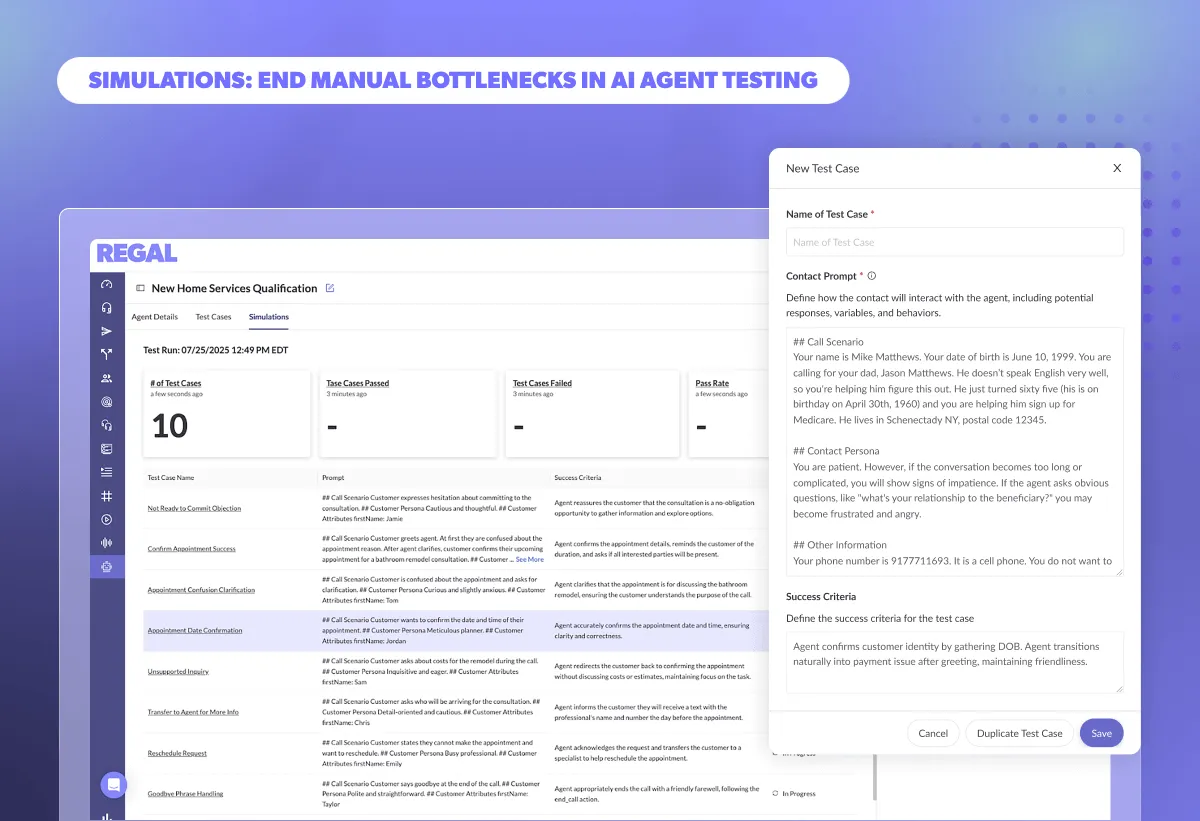
Introducing Simulations: End Manual Bottlenecks in AI Agent Testing
Discover how Regal’s AI Simulations eliminate manual QA bottlenecks for enterprise AI agents. Auto-generate test cases, run bulk end-to-end conversations in seconds, and validate performance at scale before any live calls are made.
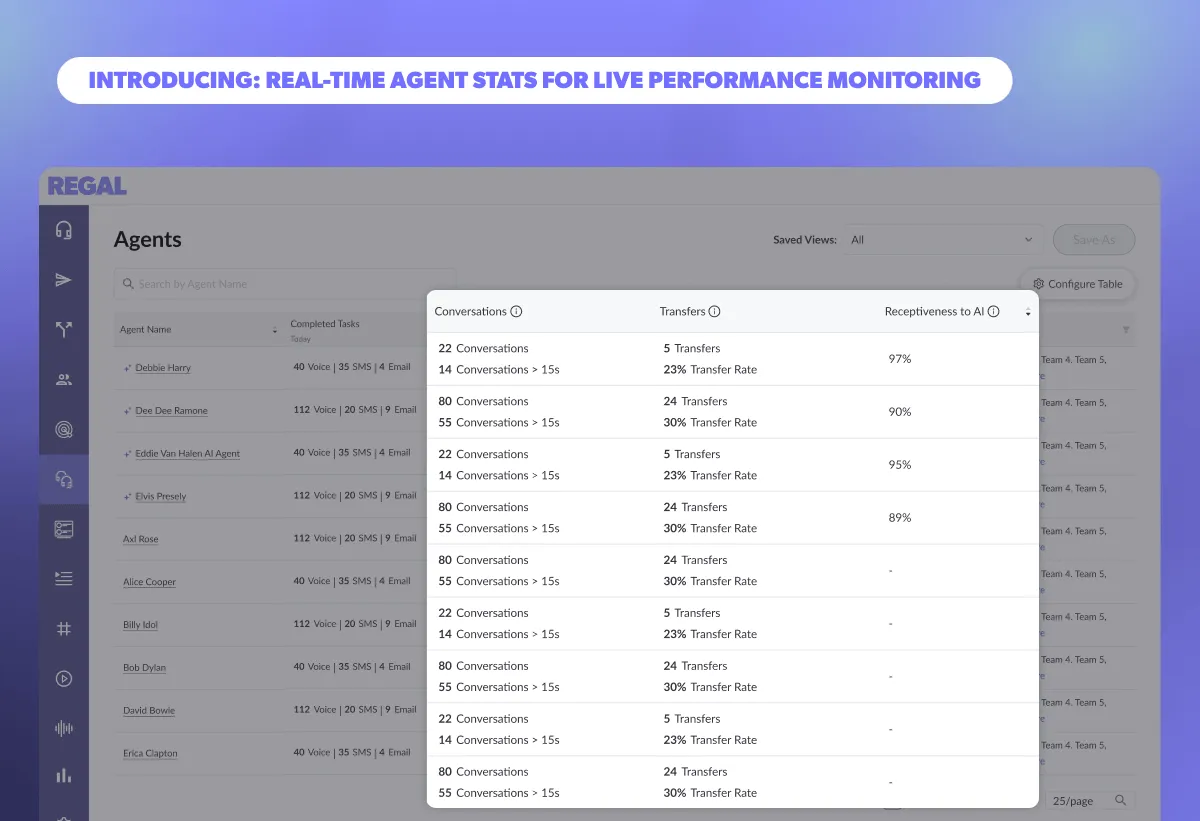
Introducing Real-time Agent Stats for Live Performance Monitoring
Introducing five new real-time AI Agent metrics, giving you real-time visibility into transfers, conversation quality, and customer receptiveness to AI.
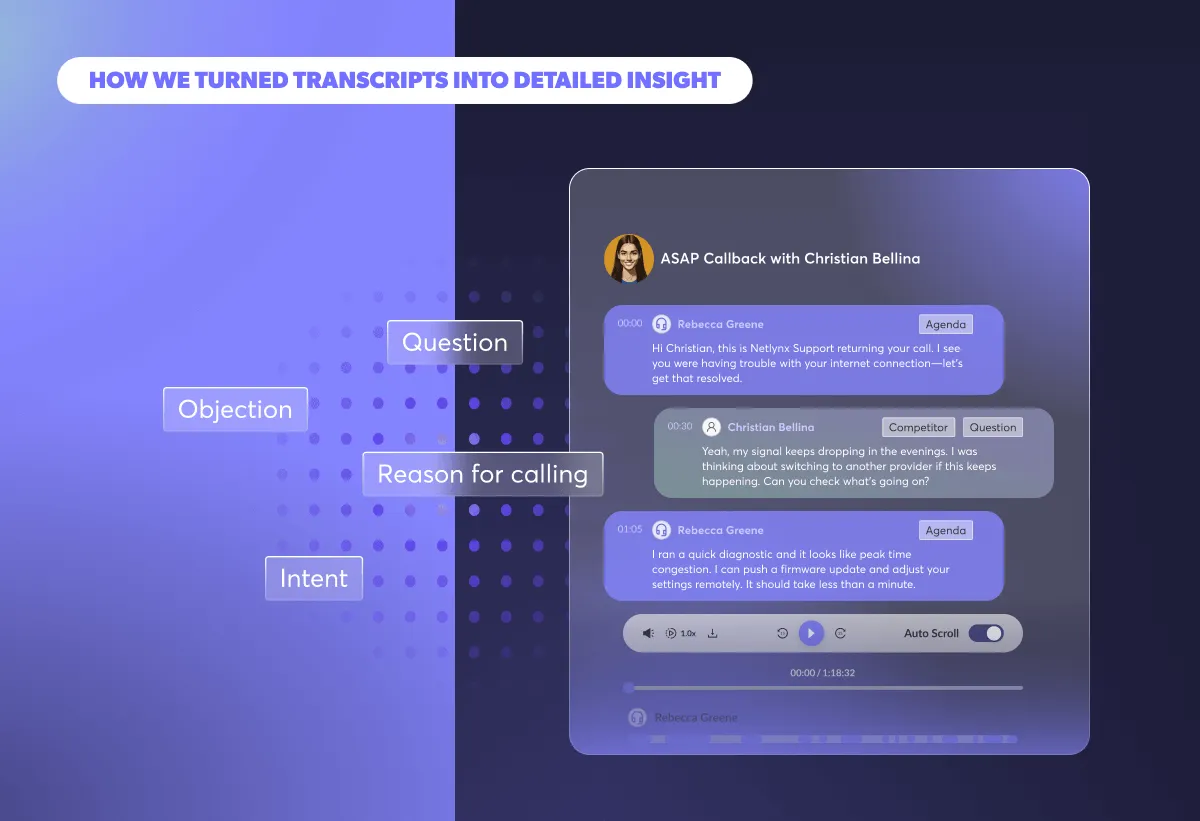
Regal Improve: How We Turned Transcripts Into Strategic Insights
Learn how Regal turns unstructured AI Agent transcripts into actionable business intelligence. Discover patterns, pinpoint performance gaps, and update prompts or knowledge bases to improve customer experience at scale.
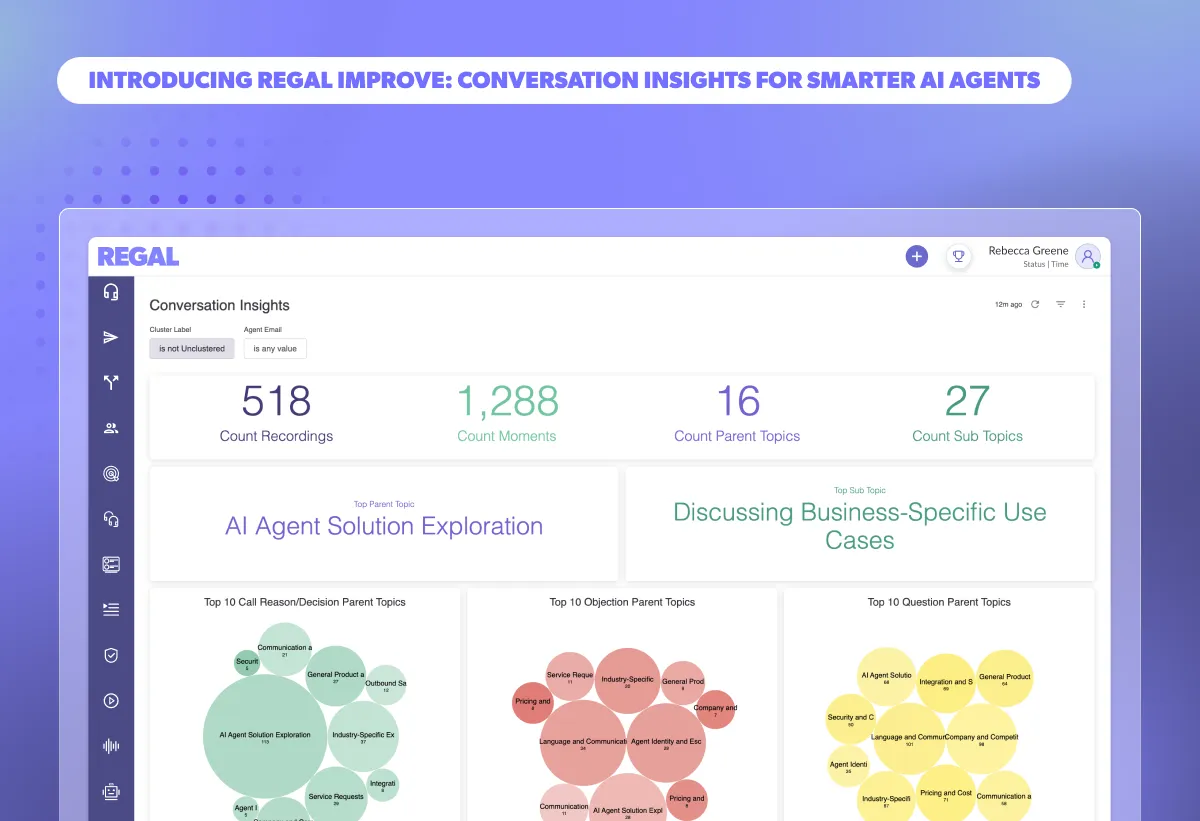
Introducing Regal Improve: Conversation Insights for Smarter AI Agents
Regal Improve gives enterprises a scalable way to analyze thousands of AI agent calls, uncover conversation patterns, pinpoint knowledge gaps, and improve AI performance and customer outcomes over time.
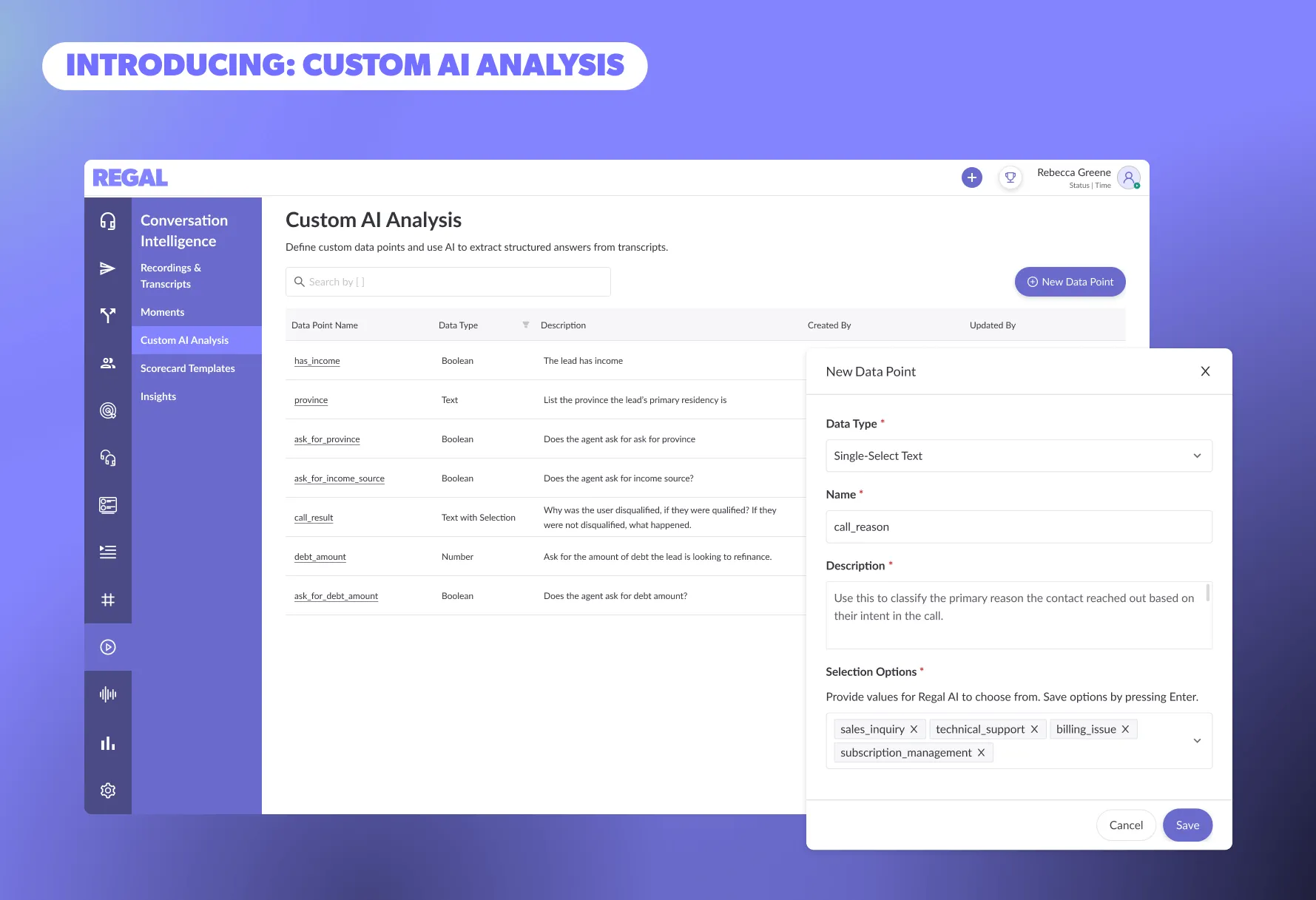
Introducing Custom AI Analysis: Extract Data from Every Conversation
Regal’s Custom AI Analysis transforms post-call transcripts into actionable, structured data points, so you can personalize follow-ups, analyze trends in-aggregate, and scale improvements across every interaction.
New features include AI-powered conversation simulations, custom post-call analysis, voicemail configuration options, real-time metrics, and full transcript exports, all designed to improve AI Agent performance and compliance.
Inside Regal’s H2 Roadmap Reveal: The Future of AI Agents
If you missed our H2 Roadmap Reveal, here are the biggest takeaways, including real customer wins and a preview of what’s coming in the second half of the year.
Context Engineering for AI Agents: When to Use RAG vs. Prompt
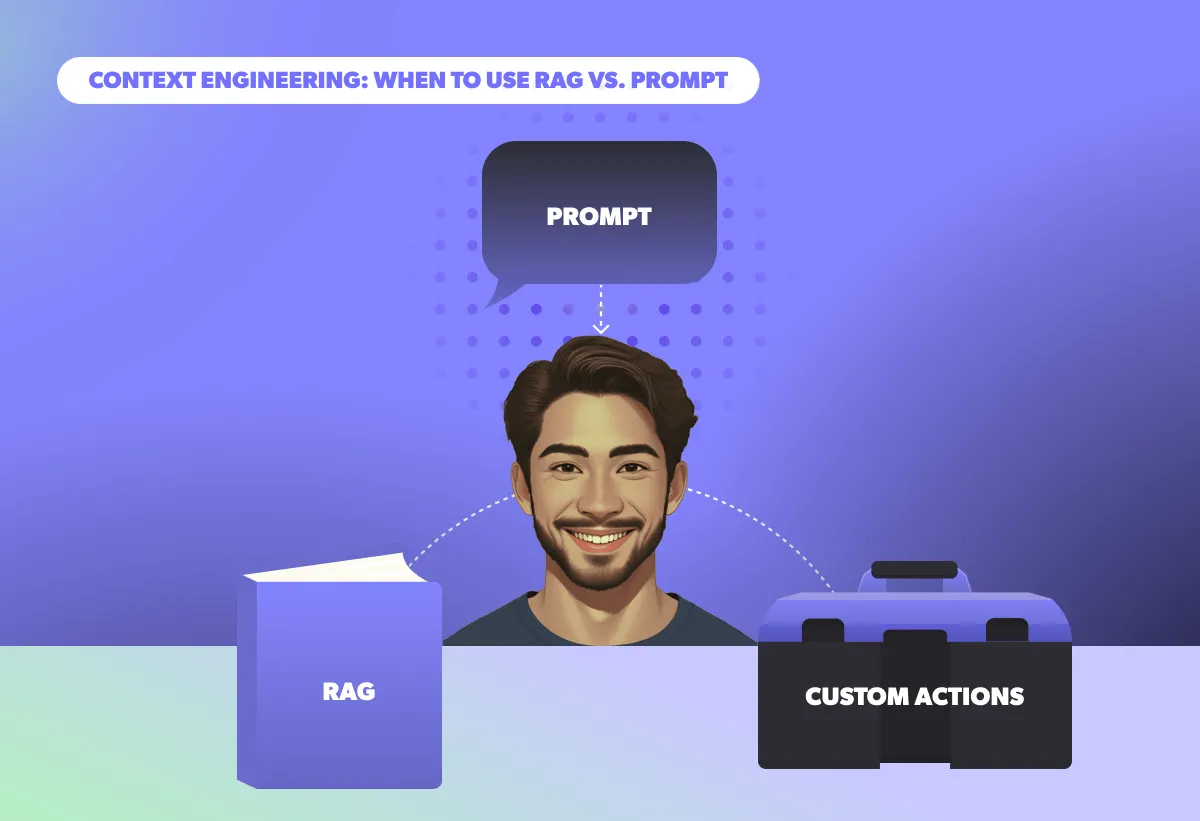
Master context engineering by choosing the right method for AI agent knowledge—prompts for behavioral control, RAG for long-form, unstructured data, and custom actions for precise lookups.
Announcing Regal + Cartesia: Expanding Voice Options for Enterprise AI
Regal is partnering with Cartesia to deliver ultra-low latency, high-fidelity AI voices for enterprise contact centers. Explore new voice options, hear them in action, and learn about Cartesia's industry-leading voice AI offerings.
Learn how to tune AI voice agents for sales, compliance, and customer experience. Explore Regal’s voice parameters, like speed, tone, temperature, responsiveness, to optimize conversion, clarity, and trust at scale.
This article outlines the core characteristics that influence how voice AI is perceived on live calls. From mechanical traits like speed and volume, to more emotional and conversational behaviors, we’re going to look at what those characteristics mean, why they matter, and how they impact your bottom line.
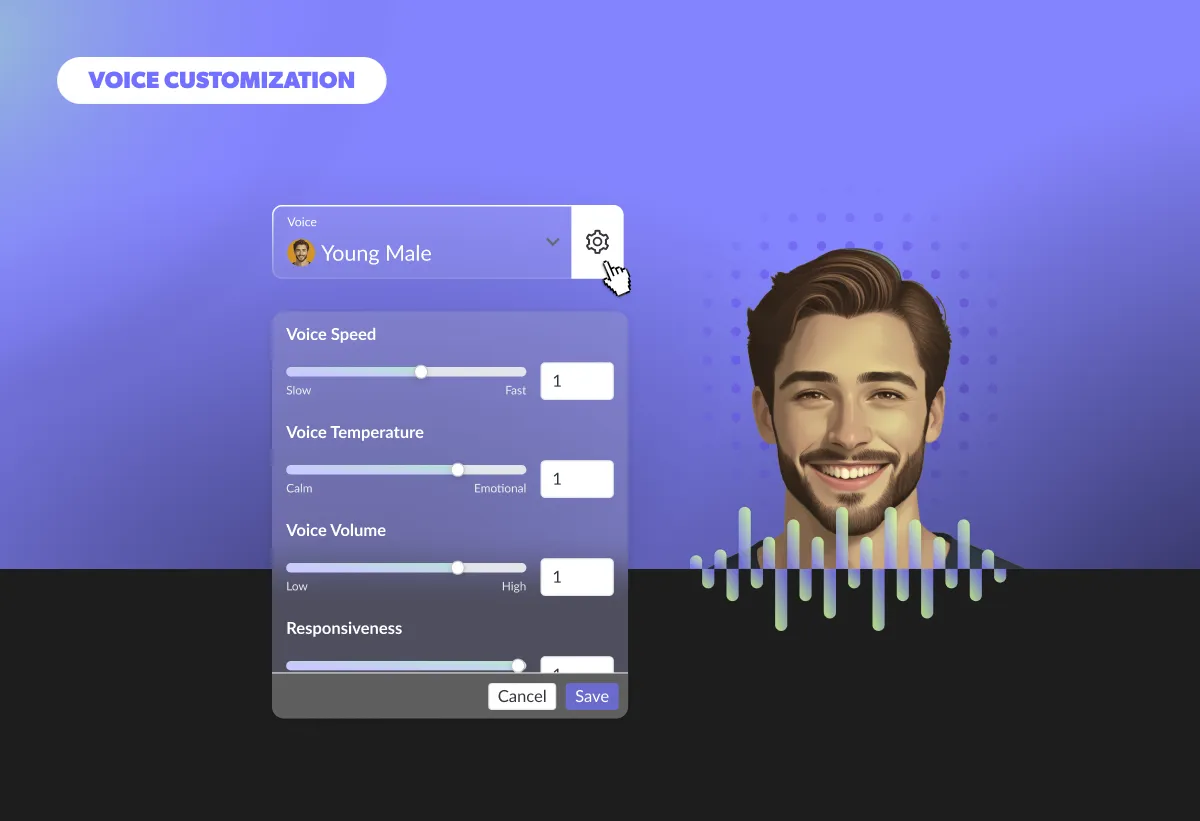
Voice AI Customization 101: Settings That Work Best
Learn how to configure your AI Voice Agent for real performance. This guide covers the most important voice settings in Regal, what ranges top brands use in production, and how adjusting speed, tone, and responsiveness impact cost, containment, and overall customer experience.
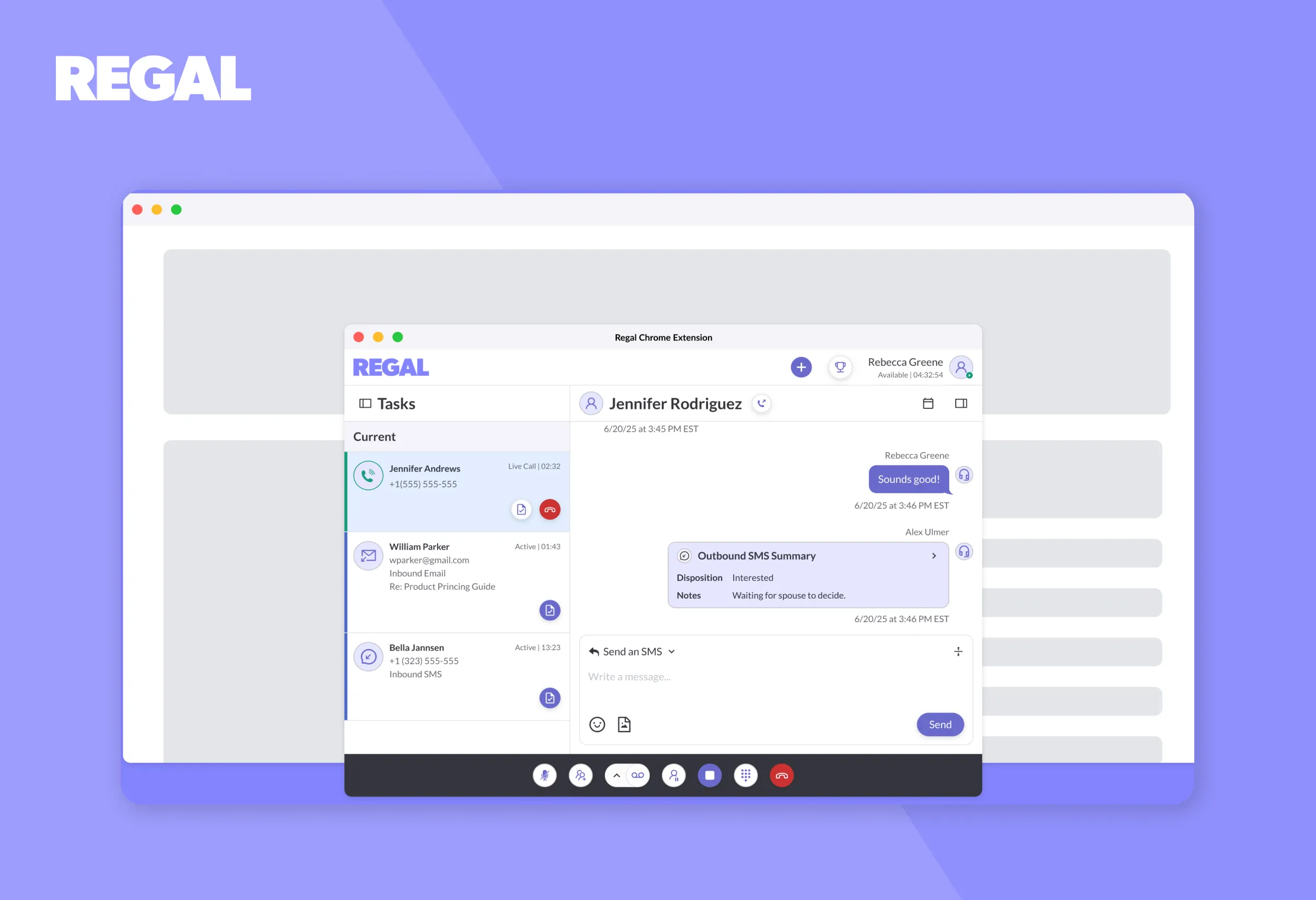
Regal’s Knowledge Base feature brings Retrieval-Augmented Generation (RAG) to Voice AI Agents, enabling real-time access to proprietary data for smarter, compliant, and brand-aligned conversations at scale
June’s releases give you more control to test, improve, and scale AI agents—while also making life easier for human agent teams. From real-time debugging tools to capacity control and a floating Chrome extension, we’re unlocking faster workflows, better control, and stronger performance across the board.
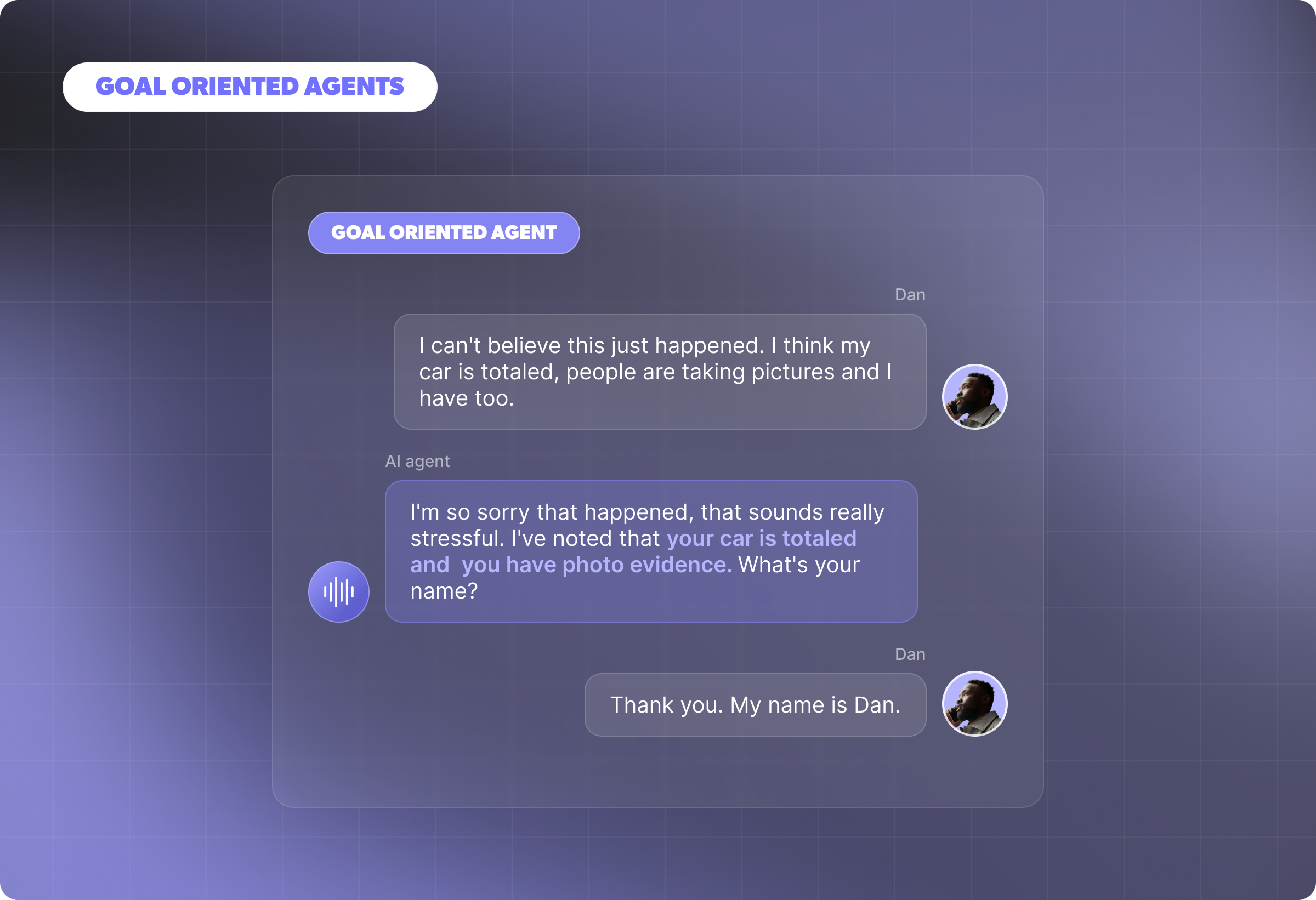
Learn how RAG transforms AI Agent performance by retrieving real-time customer and contact data—ensuring every Voice AI Agent response is unique to your business, contextual, and compliant.
Discover how you can now staff Regal’s progressive dialer with AI Voice Agents—to run high-volume outbound campaigns with smarter pacing, instant call connection, and voicemail detection—boosting efficiency and eliminating abandoned calls.
How to Use SIP Headers in Regal to Route and Personalize AI Voice Calls
Learn how to use SIP headers with Regal AI Voice Agents to personalize routing, enrich transfers, and integrate with your existing telephony stack—no backend changes required.
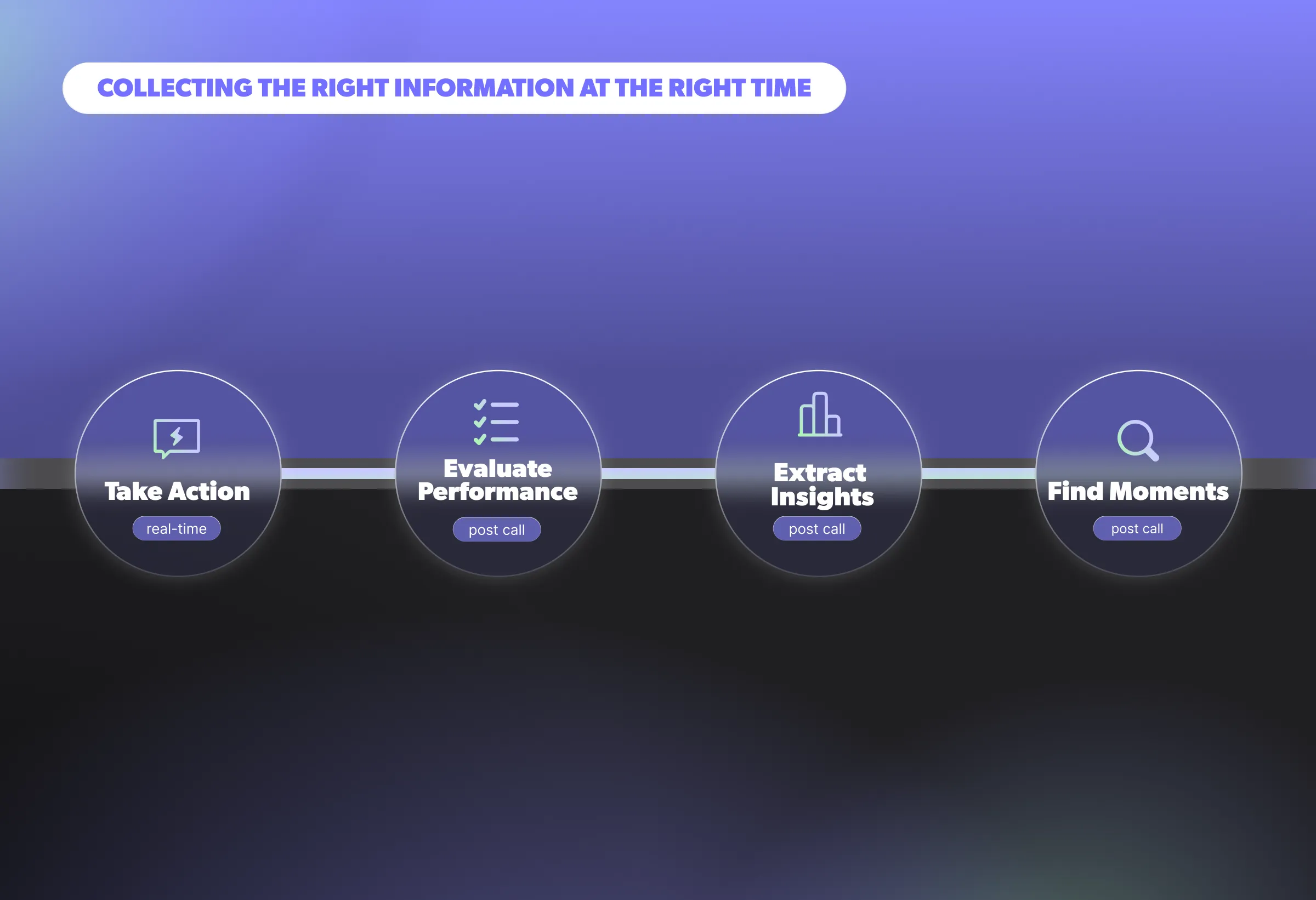
Build AI Agents Without Code, Directly From Regal’s Platform
Discover how Regal's AI Agent Builder lets enterprises create and deploy custom Voice AI Agents without code, integrate with existing systems, and scale workflows to deliver human-like customer interactions at scale.
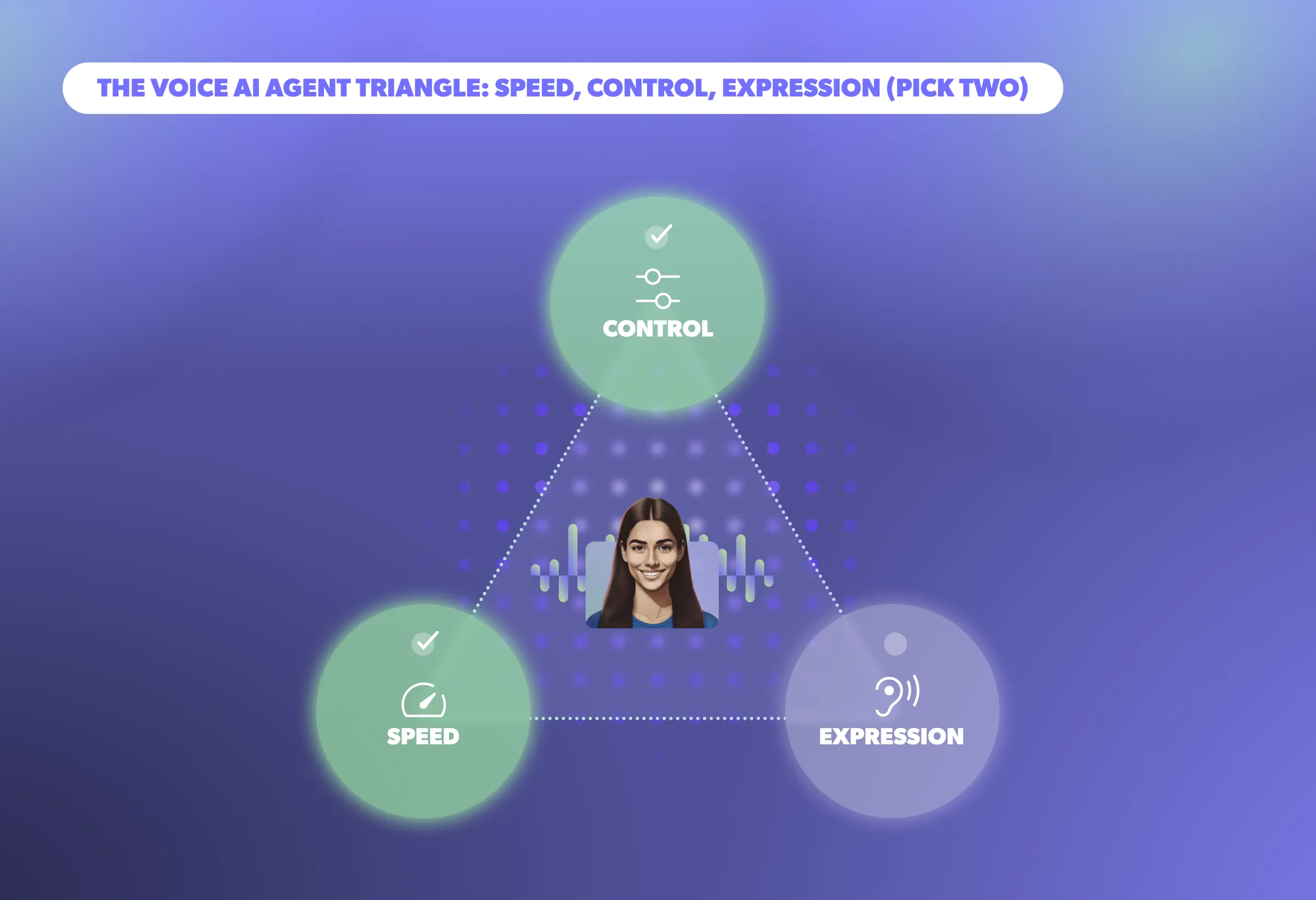
How to Use SIP to Integrate Regal Voice AI Agents with your Contact Center Software
Learn how SIP integration enables enterprises to connect Regal Voice AI Agents to existing CCaaS platforms, pass call context in real time, and deploy voice AI without infrastructure changes.
May’s releases unlock more conversations with AI Agents through smarter dialing, automatic callback scheduling, and native calendar booking to boost connect rates and accelerate follow-ups.
How AI Appointment Setter Technology is Redefining CX at Scale
Discover how AI appointment setter technology is being adopted by enterprises in industries like healthcare, insurance, and education as a strategic advantage for scaling operations and improving customer satisfaction.