The RAG Playbook: Structuring Scalable Knowledge Bases for Reliable AI Agents

The knowledge base for your AI agent isn’t just a dusty FAQ archive – it’s the brain fuel that powers accurate, on-point conversations. Building a knowledge base (KB) for a human support team is one thing, but doing it for an LLM-powered AI agent is a different game entirely. What works for humans– long articles with anecdotes, context, and even a dash of marketing fluff–can utterly confuse an AI agent. 

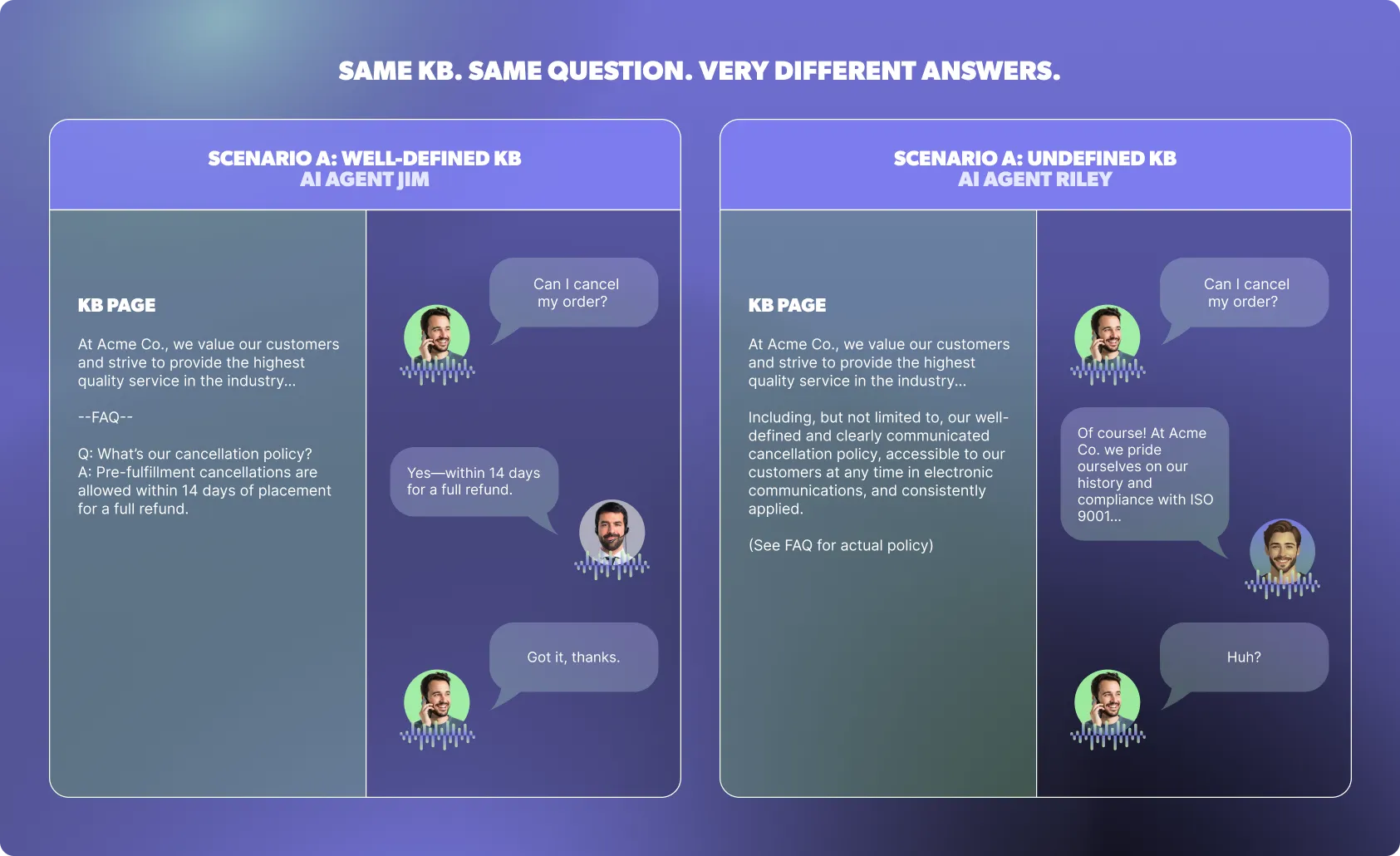
The result? Sometimes it’s harmless, like the time a customer asked for your cancellation policy and the bot earnestly replied with your company’s mission statement, three paragraphs about how you value innovation, and a cheerful “Have a great day!” Other times, it’s not so harmless. Think confident but incorrect therapeutic advice or an unauthorized “discount” it just invented on the spot; not exactly what you want from your brand’s digital representative.

In this guide, you’ll see exactly how to format and structure a knowledge base so your AI Agent stays accurate, relevant, and on-script. We’ll break down why traditional human-centric KBs fall short, and show how smart formatting can reduce hallucinations, improve accuracy, and keep your AI Agent’s behavior on the rails.

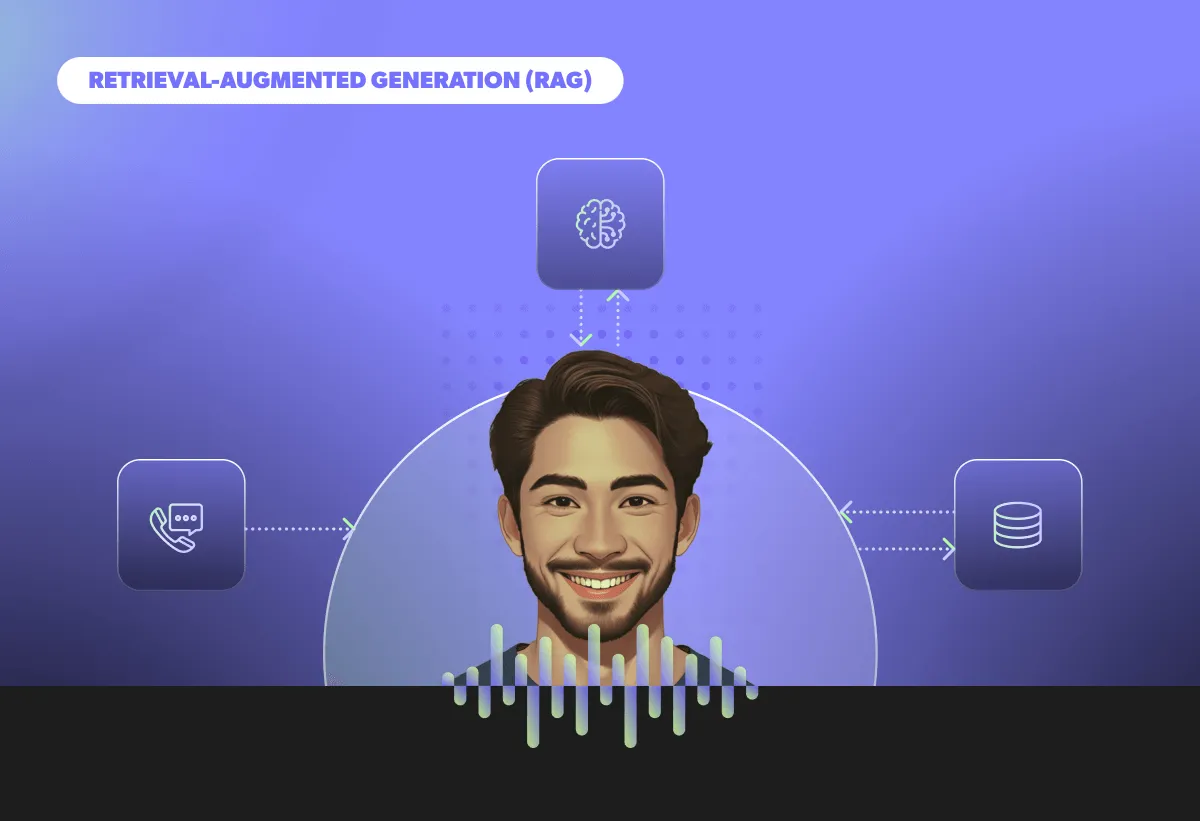
We’ll cover best practices like single-topic chunking, concrete instructions, explicit outcomes, and explain what to put in the prompt vs. the KB. And don’t worry if “chunking” or other terms sound like AI-speak now. By the time you finish this guide, you’ll know exactly what they mean and how to put them to work, without needing to wade into the full Retrieval-Augmented Generation (RAG) playbook. Let’s dive in!
Why Human-Centric Knowledge Bases Fall Short for AI Agents

A knowledge base written for human consumption often contains knowledge clutter that doesn't bother a human reader, but can wreak havoc on an AI agent’s responses. Before we get to solutions, let’s identify the biggest content culprits:

  • Irrelevant Context and Fluff: Human-facing articles often start with a narrative or extra background – “At Acme Co., we value our customers…” – before the useful info. An AI agent retrieving this may latch onto the fluff and respond with irrelevant platitudes. Unnecessary context dilutes the useful facts. The AI might even mistake a marketing blurb for an answer and go off on a tangent. Case: From Compliance Guide to Chaos Gremlin. NYC’s small-business chatbot told entrepreneurs it was fine to do illegal things (like taking workers’ tips), then doubled down with outdated wage info. It’s the content-equivalent of quoting a press release when the user needed the statute.

  • Assumed Prior Knowledge: Many documents assume the reader has some context. For example, an internal guide might say “follow the usual refund process” without detailing it. A human agent knows the “usual process,” but an AI agent has no memory of knowledge outside what’s in the retrieved text. Missing context forces the AI to guess, which is a recipe for hallucination. If the KB chunk doesn’t spell something out, the model may fill the gap with its own invention, as in the case of Air Canada’s website chatbot. The AI confidently invented a bereavement-refund process that didn’t exist, so convincing that the tribunal made the airline compensate the passenger.

  • Conflicting or Redundant Instructions: Large knowledge bases often accumulate overlapping content. You might have two docs with slightly different refund policies, or an old procedure lurking alongside a new one. Human agents can figure out which one is current; an AI might randomly pick or (worse) mash them together. This leads to unpredictable, inconsistent answers. Having too much redundant or conflicting info can confuse the AI and make its behavior less predictable. In one case, an AI was given two sources on whether a fee is required – it sometimes said “no fee” and other times “a fee applies,” purely based on which chunk vector search was fetched first.

  • Ambiguous Language: Human writers might use polite or vague phrasing like “you may want to consider doing X” or “Try Y if possible”. This subtlety can baffle an AI agent that craves clear directives. Ambiguity in knowledge content can increase the chance of the AI choosing an incorrect interpretation. For instance, if a policy note says “late cancellations might incur a charge”, the AI might just omit the fee entirely. Without concrete wording, the model’s guesses can go astray.

The Impact: Hallucinations and Off-Script Behavior

When a knowledge base has the issues above, an AI Agent’s accuracy and reliability plummet. The model might confidently fabricate answers or instructions that were never in your company policy, simply because it thinks that’s what you implied. And despite common prejudices, these hallucinations stem not from the model “being goofy,” but from bad or poorly retrieved data – essentially, the AI is being “gaslit” by a messy knowledge base. The good news: by reformatting how knowledge is structured, we can ground the AI Agent in the right context and cut down on hallucinations dramatically. 

Best Practices for Structuring an AI-Ready Knowledge Base

Designing your knowledge base for AI agents requires a more disciplined, machine-friendly approach to content. Here are the top best practices to adopt:

  • Single-Topic Chunking: Break your knowledge into bite-sized pieces, each focused on a single topic or question (a single-topic chunk). Avoid giant all-in-one documents. Smaller, well-scoped chunks ensure that when a retrieval occurs, the AI gets just the specific information it needs – nothing more, nothing less. As a rule of thumb, think a few paragraphs (or even a few sentences) per chunk. Regal’s platform, for example, automatically uses semantic chunking to split sources. This granular approach keeps retrieval precise and prevents irrelevant text from piggybacking along.

  • Concrete Instructions (No Filler): Write the content like you’re instructing a particularly literal intern – clear and direct. Use imperative language for procedural info specific to the AI Agent (e.g. “Call custom action “Submit” to save changes” instead of “You could then click submit”). Remove the “fluff” that you might include for a human’s reading pleasure. The AI doesn’t need motivational quotes or company history in the middle of a how-to. By sticking to concrete steps or facts, you reduce ambiguity. The goal is that any sentence the AI might quote is immediately useful and actionable. If the agent needs to explain something to a user, give it the exact phrasing or numbers it should use. For example, instead of a blurb that says “our plans are affordable”, give a factual statement: “Plan A costs $30 per month, Plan B costs $50 per month.”

  • Explicit Outcome Statements: Wherever applicable, state the desired outcome or resolution in the knowledge chunk. This helps the AI understand the point of that information. For instance, after listing steps for a cancellation process, add a line like “Outcome: Appointment is canceled and a confirmation email is sent to the customer.” This explicitly tells the model what the end state should be. Outcome statements function as a sanity check – they remind the AI “this is what you’re trying to accomplish.” If the user’s question is resolved by that chunk, an outcome statement ensures the agent’s answer includes confirmation of that resolution. It also helps prevent the agent from stopping short or going on an unrelated tangent. Essentially, you’re baking a mini-summary of “why does this info matter?” into the content.

  • Contextual Reminders and Applicability: Give context about when or to whom a chunk applies, especially if your knowledge base covers nuanced scenarios. For example, if a policy differs by region or customer type, don’t make the AI infer that – state it outright. A chunk title or first line might be “Return Policy (California customers)” or “Procedure: Password Reset for Mobile App (Android)”. This way, the retrieval system can grab the chunk that matches the user’s context, and the AI Agent will see in the content itself who/what it’s for. Contextual labels reduce the chance of the agent using the right answer in the wrong situation. In Regal’s RAG system, AI agents can pull region-specific data when appropriate – e.g., if a contact is in California, the agent fetches the California-specific info first, keeping the conversation compliant and on-target. Our customers achieve this by structuring their KB into clearly scoped chunks (by product, region, scenario, etc.) and adding one-line intros like “Use this info when <these_conditions> are true.”

  • Reduced Ambiguity: Write in a consistent style and use the same terminology that users and the AI Agent will use. If your product is called “AcmePhone Pro” in one doc and “AcP Pro” in another, choose one and stick with it (or at least mention the alias in the same chunk). Avoid idioms or internal slang that the model might not interpret correctly. If a process must never be done a certain way, say “Do not XYZ” rather than “XYZ is not recommended” (which the model may soften or ignore). The key is to leave no room for the AI to wonder what you mean. One trick: read the content as if you have no other context – would you 100% understand what to do or say? If not, clarify it. This also means removing any conflicting guidelines: ensure each piece of knowledge gives a single, unambiguous source of truth on that topic. If two chunks even appear to disagree (e.g. one says “usually do A” and another says “in some cases do B”), add context or combine them into one explicit decision-tree chunk. Your AI Agent can’t do critical thinking on clashing instructions – it will just pick one side. Cleaning up these ambiguity and consistency issues will greatly improve the agent’s accuracy.

‍

By following these practices, you transform your knowledge base from a messy wiki into a lean, mean answering machine. A well-structured KB means the RAG system can grab the right facts quickly, and the LLM can trust what it sees. It’s the difference between an agent floundering through irrelevant paragraphs, versus confidently citing a single crystal-clear paragraph that directly answers the question. As a bonus, a slimmed-down, relevant knowledge chunk keeps the token count low and speeds up responses – no more prompt bloating with unnecessary text. In other words, you get faster, more accurate answers grounded in your authoritative content.

Prompt vs. Knowledge Base – Knowing What Goes Where

One common question we get is how to split duties between the AI agent’s prompt and the knowledge base. Both are essential, but they serve different purposes for your AI agent:

  • The Prompt is the script and personality. Use it for behavior, tone, decision rules, and short, always-needed info (like disclaimers, FAQs, or guardrails). Think of it as the “how to act” layer.
  • The Knowledge Base is the agent’s memory. Use it for detailed, dynamic, or frequently updated content (like policies, product manuals, or regional variations). Think of it as the “what to say” layer.

‍

The general rule of thumb is: keep prompts lean (stable rules and flow), and put the rest in a structured KB so the agent can fetch facts on demand. This avoids prompt bloat while keeping responses accurate and scalable.
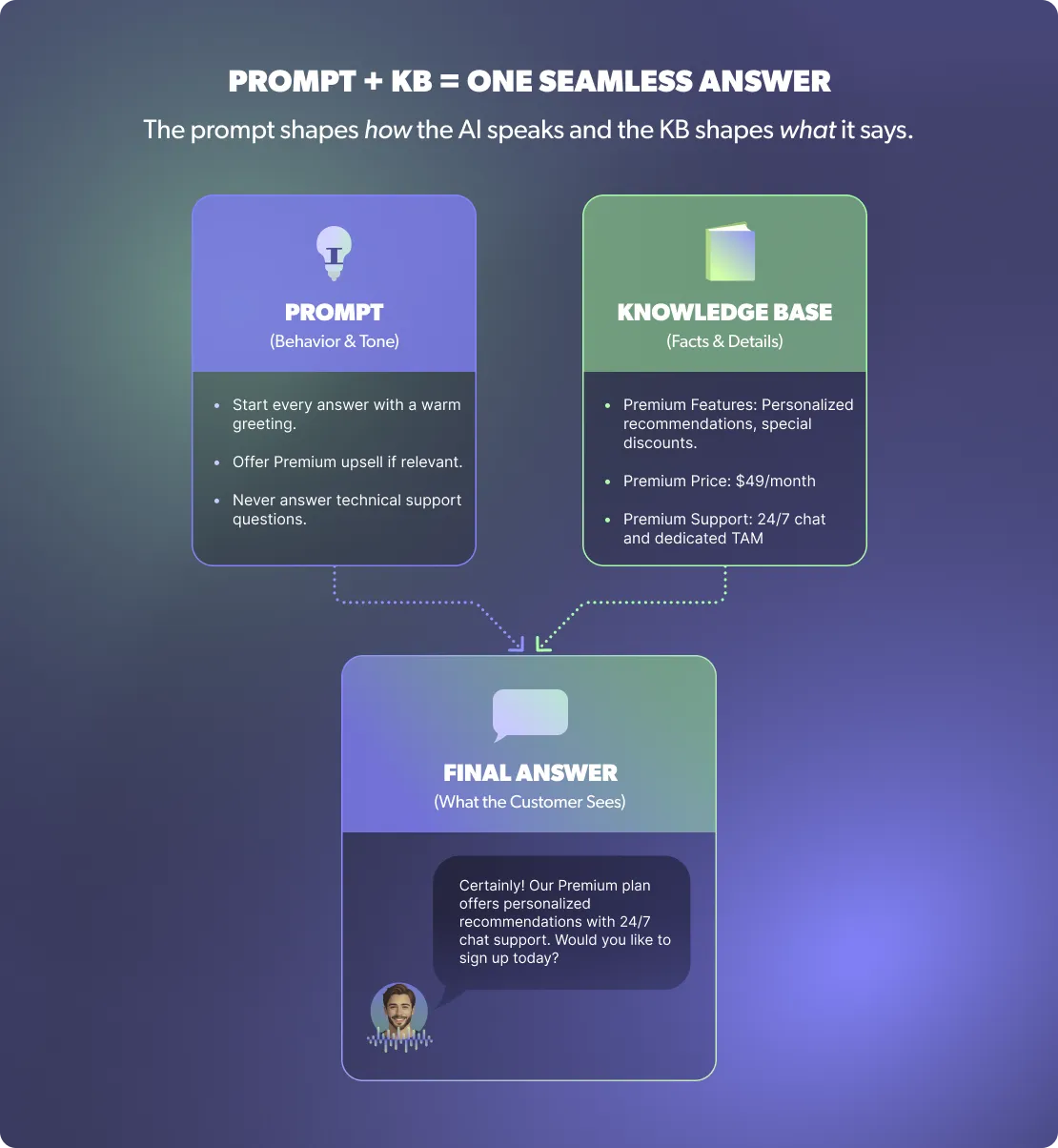
For a deeper dive on context engineering and when to use prompts, KBs, or custom actions, check out our full guide.

Knowledge Bases That Make Your AI Agent (and You) Look Smart

A well-structured knowledge base is the secret sauce behind highly effective AI agents. By eliminating irrelevant context, breaking knowledge into focused chunks, and writing instructions that are unambiguous and outcome-oriented, you ground your AI in facts and context, dramatically reducing the odds of it veering off into nonsense or error. In turn, your customers get faster, more accurate answers. Your AI Agent isn’t playing detective to figure out what the policy really means; it’s confidently quoting the correct, up-to-date information you gave it.

To recap, when building a knowledge base for LLM-powered agents, remember:

  • Format is king – Structure your content for retrieve-ability. Clear headings, short paragraphs, and markdown bullet points (if applicable) all help the vector search do its job and help the AI parse the info quickly.

  • Keep prompt and knowledge in their lanes – Use the prompt for your agent’s personality and always-needed logic, and the KB for the details that can be fetched on demand. This keeps your AI’s “mind” uncluttered and focused.

  • Continuously curate – An AI knowledge base isn’t “set and forget.” Monitor your agent’s outputs; if you catch a weird answer, trace it back to the source chunk. You might find an opportunity to edit that chunk for clarity or split it further. Remove outdated info promptly to avoid misinformation. Essentially, tend to your AI knowledge base like a garden – prune the bad, nurture the good.

  • Test in realistic scenarios – Use Regal’s agent testing tools to simulate queries and see what it pulls from the KB. This will show you whether it’s grabbing the right chunks and phrasing answers correctly. If not, tweak the content or add more guidance (either in the KB description or the prompt) until the AI consistently does the right thing.

‍

By investing effort upfront in building a clean, AI-optimized knowledge base, you’re setting your virtual agent up for success. You’ll get predictable, reliable agent behavior, faster and more accurate answers, and conversations that stay on-message and on-brand – all at scale, without having to stuff an ever-growing list of facts into your prompt. It’s a win-win: the AI Agent  is happier (less confused), and your customers are happier (more satisfied with the help they receive).

Finally, remember that knowledge bases and AI agents are a partnership. The smartest AI won’t shine if it’s fed garbage info – garbage in, garbage out. But with a well-built knowledge base, even a relatively small LLM can outperform a larger one that’s unguided, because it’s grounded in the truth of your data. You’re the expert on your business; by translating that expertise into a structured knowledge base, you make your AI agent an expert too.

Play around with these tips and watch your AI agent’s IQ (and CSAT scores) soar. And if you need a little help crafting the perfect AI knowledge base, schedule a demo with us!

Frequently Asked Questions

What is Retrieval-Augmented Generation (RAG)?

Retrieval-Augmented Generation, or RAG, is a technique that improves AI responses by retrieving relevant information from a knowledge base before generating an answer. Instead of relying only on training data, the AI pulls context from documents, guides, or internal data sources, which helps produce more accurate and up-to-date responses.

Why do traditional knowledge bases perform poorly with AI agents?

Traditional knowledge bases are often written for humans, not machines. They typically contain long documents, mixed topics, and unclear instructions. When AI systems retrieve this type of content, they may struggle to identify the most relevant information, which can lead to inaccurate responses or hallucinations. Structuring knowledge in smaller, clearly defined chunks helps AI agents retrieve and use the right information

How should a knowledge base be structured for RAG systems?

A RAG-ready knowledge base should organize information into clear, single-topic sections with concrete instructions and defined outcomes. Structured content allows the retrieval system to surface the most relevant context for a question. This approach improves the reliability of AI-generated responses and helps scale knowledge bases for production AI systems.

What types of content should be included in an AI knowledge base?

AI knowledge bases can include product documentation, support articles, internal policies, troubleshooting guides, and FAQs. These resources give AI agents reliable context during conversations and help them answer questions accurately by retrieving relevant information at runtime.

How does a well-structured knowledge base reduce AI hallucinations?

Hallucinations often occur when AI systems lack reliable context or retrieve irrelevant information. A well-structured knowledge base improves retrieval accuracy by organizing content clearly and ensuring that AI agents pull information from trusted sources. This makes responses more grounded in real documentation and reduces the likelihood of incorrect answers.

Founded in 2020, Regal is an enterprise voice AI agent platform for contact centers. Regal helps businesses build, deploy, and manage autonomous AI agents across sales, support, and operations teams.

Latest Blog Posts

SEPTEMBER 2023 RELEASES

September 2023 Releases

Read More
SEPTEMBER 2023 RELEASES

September 2023 Releases

Read More
SEPTEMBER 2023 RELEASES

September 2023 Releases

Read More
Move Conversations Forward with Goal-Oriented, Multi-State Agents

Now, Multi-State agents can adaptively gather the information it needs to reach that resolution, instead of following a rigid set of rules. More flexibility means a better chance your agent reaches its goals.

Read More
How Aprende transformed program enrollment for Hispanic students

See how Aprende transformed student enrollment with Regal’s AI Agent—matching human conversion rates, driving 18X more engaged calls, and saving advisors over 100,000 minutes monthly.

Read More
Apple iOS 26 Caller Screening: An Enterprise Guide

Apple’s iOS 26 introduces new call-screening controls that will reshape outbound performance. This guide explains what’s changing, how adoption may impact enterprise contact centers, and the proactive steps leaders can take now to protect answer rates and customer trust.
Read More
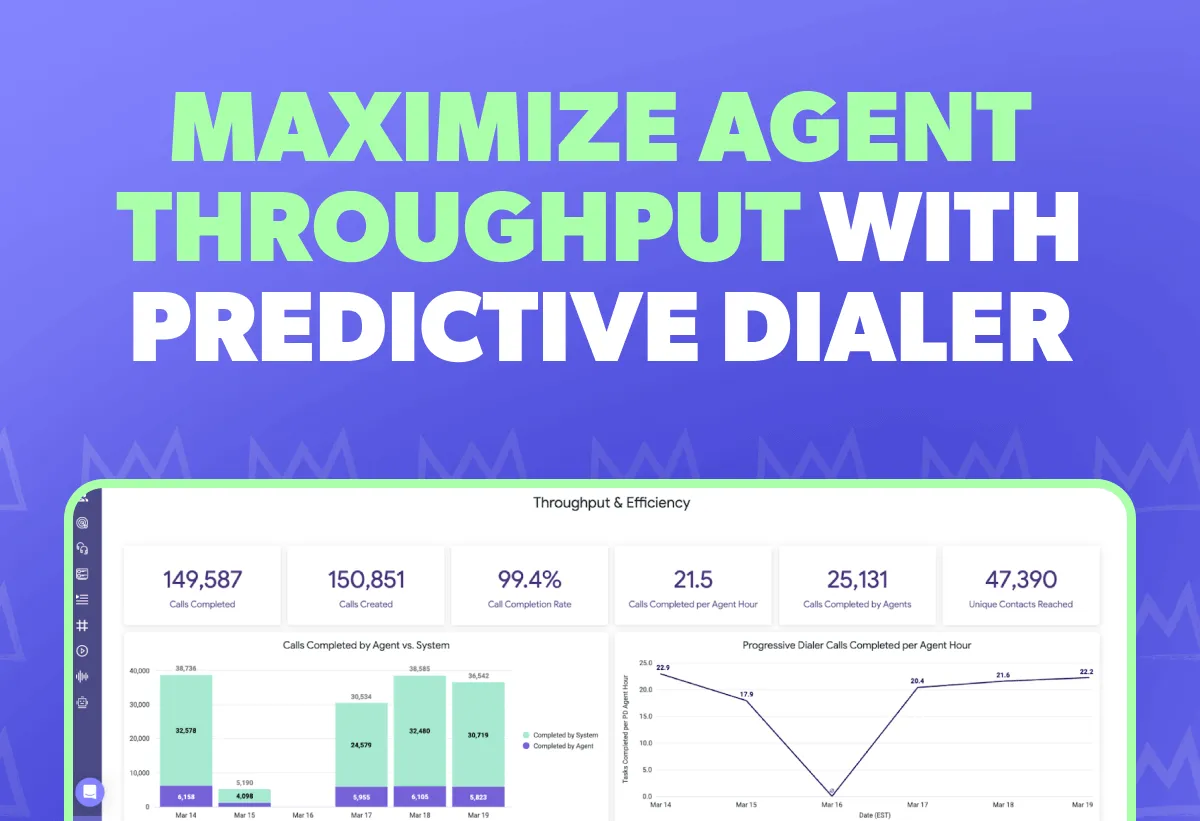
Maximize Agent Throughput with Regal's Predictive Dialer

It’s critical for call center managers to understand how their power dialers work and to measure if they’re performing as intended. With Regal’s new Predictive Dialer, You can do just that, and much more.

Read More
Pros and Cons of a Progressive Dialer

Progressive dialers achieve more reach and agent efficiency, but there are compliance and customer experience implications.

Read More
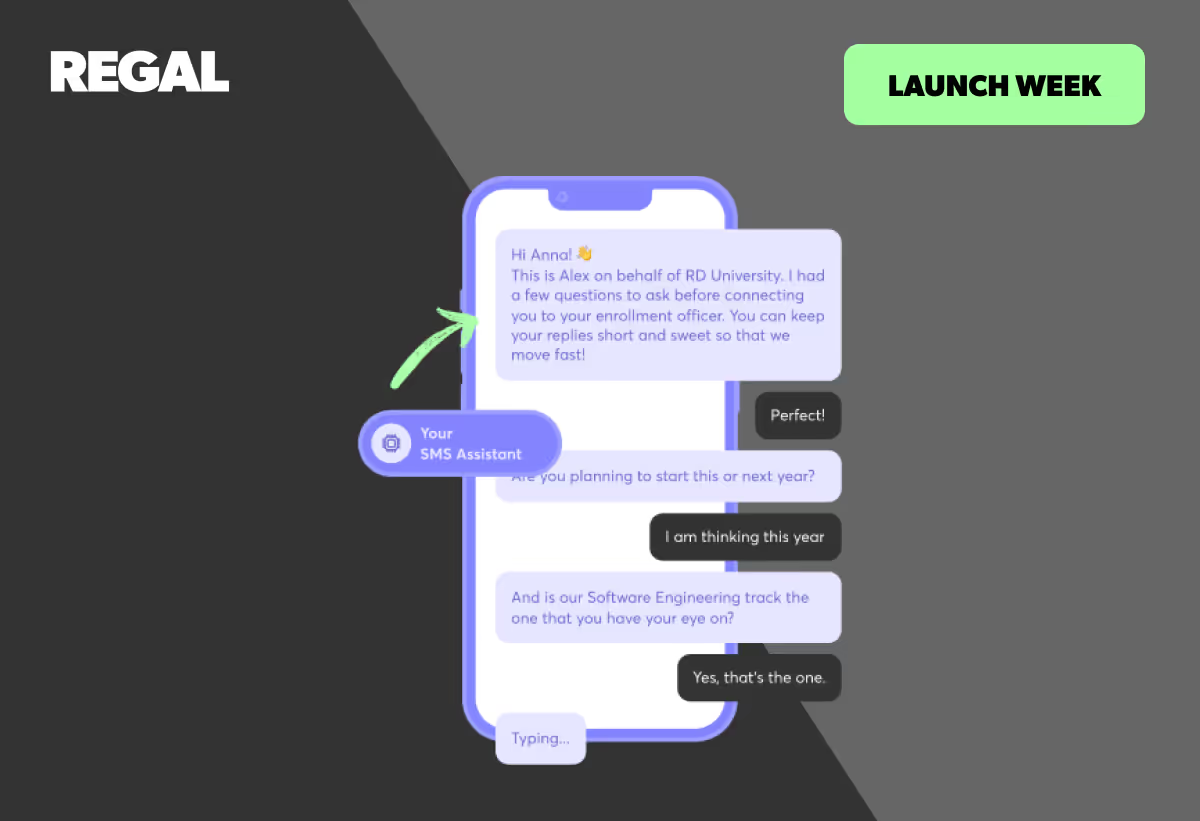
Announcement: Regal SMS Suite

Regal’s SMS Suite allows brands to actually drive revenue from SMS. Drive cross-channel engagement using our comprehensive Triggered & Scheduled SMS Journeys (aka SMS Marketing), 1:1 SMS Conversations (aka 2-Way SMS), and AI SMS Bot.

Read More
What is a Journey Builder?: A Complete Guide

Say goodbye to batch processing, complicated SQL queries or custom engineering to decide who to call. Journey builders help B2C create more timely, relevant and personalized outreach to customers.

Read More
November 2026 Product Recap

This month, we released features that make multi-state agents more goal oriented and easier to build, test, and monitor. We're also expanding our developer tools with Regal Functions, so you can write and host code right alongside your agents, plus new Public API endpoints.
Read More
How does GPT-6.1 Terra perform for voice AI agents?
How Does GPT-6.1 Terra Perform for Voice AI Agents?

GPT-6.1 Terra ranks 4th of 50 on Regal's Voice CX Benchmark, with the best Hallucination sub-score of any model tested. Here's where it excels, where it struggles on Task Progression, and when to choose it for your voice AI agents.

Read More
Best LLMs for Voice AI Agents in October 2026: Voice CX Benchmark Results

We ran the latest models from DeepSeek, Anthropic, Google and OpenAI through the Voice CX Benchmark. Here's which ones we're prioritizing for voice AI agents, and which ones we're passing on.

Read More
October 2026 Product Recap

Last month, we shipped releases that improve your contact center operations by extracting business insights with Copilot and reducing wasted agent minutes with our new Voicemail Detection model. The result is more reliable, productive AI agents that can drive revenue for your business.
Read More
From Assistant to Expert: Review, Orchestrate, and Extract Insights with Copilot

Copilot started as the place you asked questions. Over the last few months it has become the place where agents are improved, tested, and monitored.

Read More
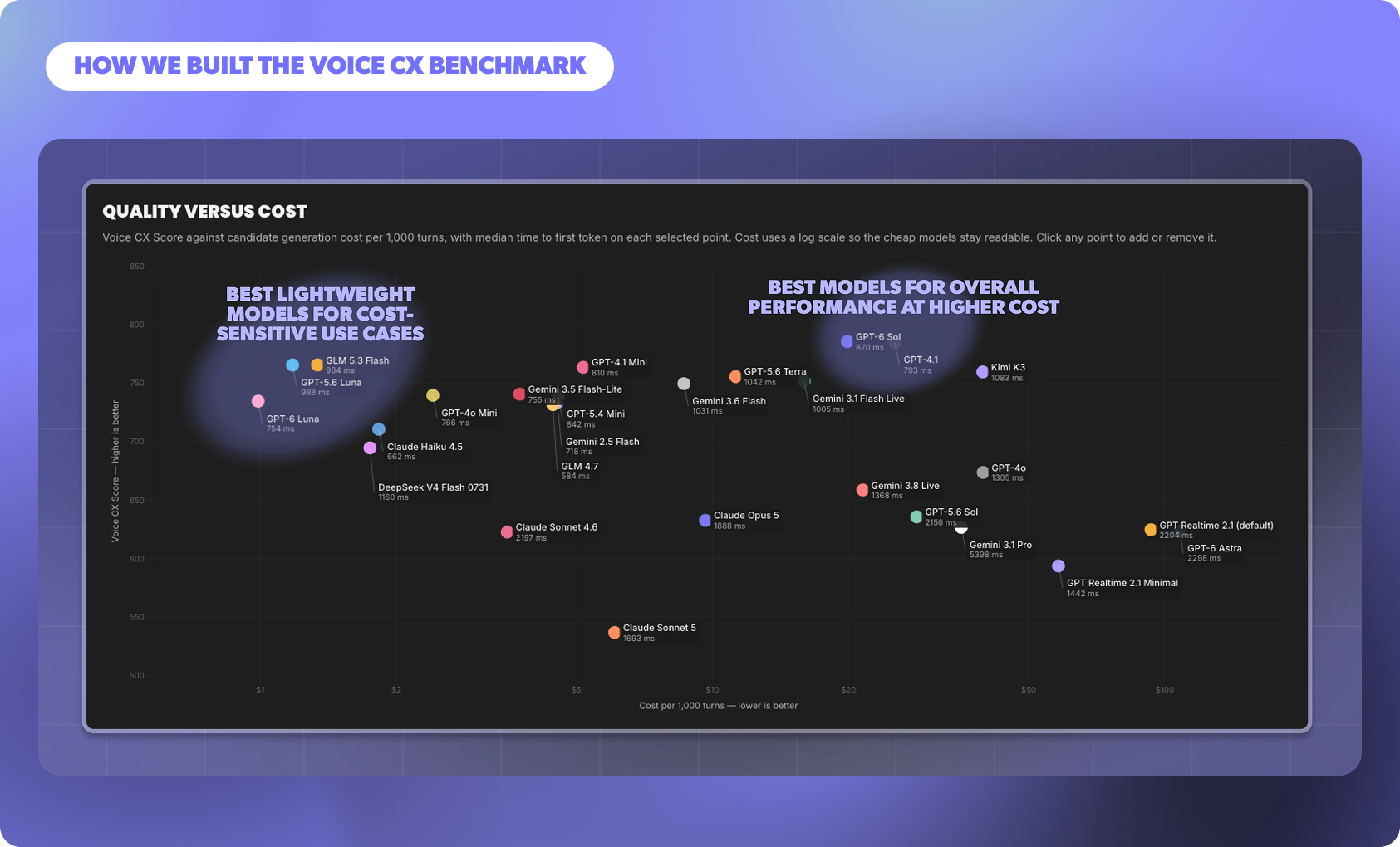
How We Built the Voice CX Benchmark

Enterprises need voice agents that hold a natural, human-like conversation while moving each call toward its goal and staying within compliance boundaries. The Voice CX Benchmark scores models on exactly that: how well they progress the call turn by turn, how safely and clearly they communicate, and how quickly they respond.
Read More
How Sentiment Scoring Works in Regal

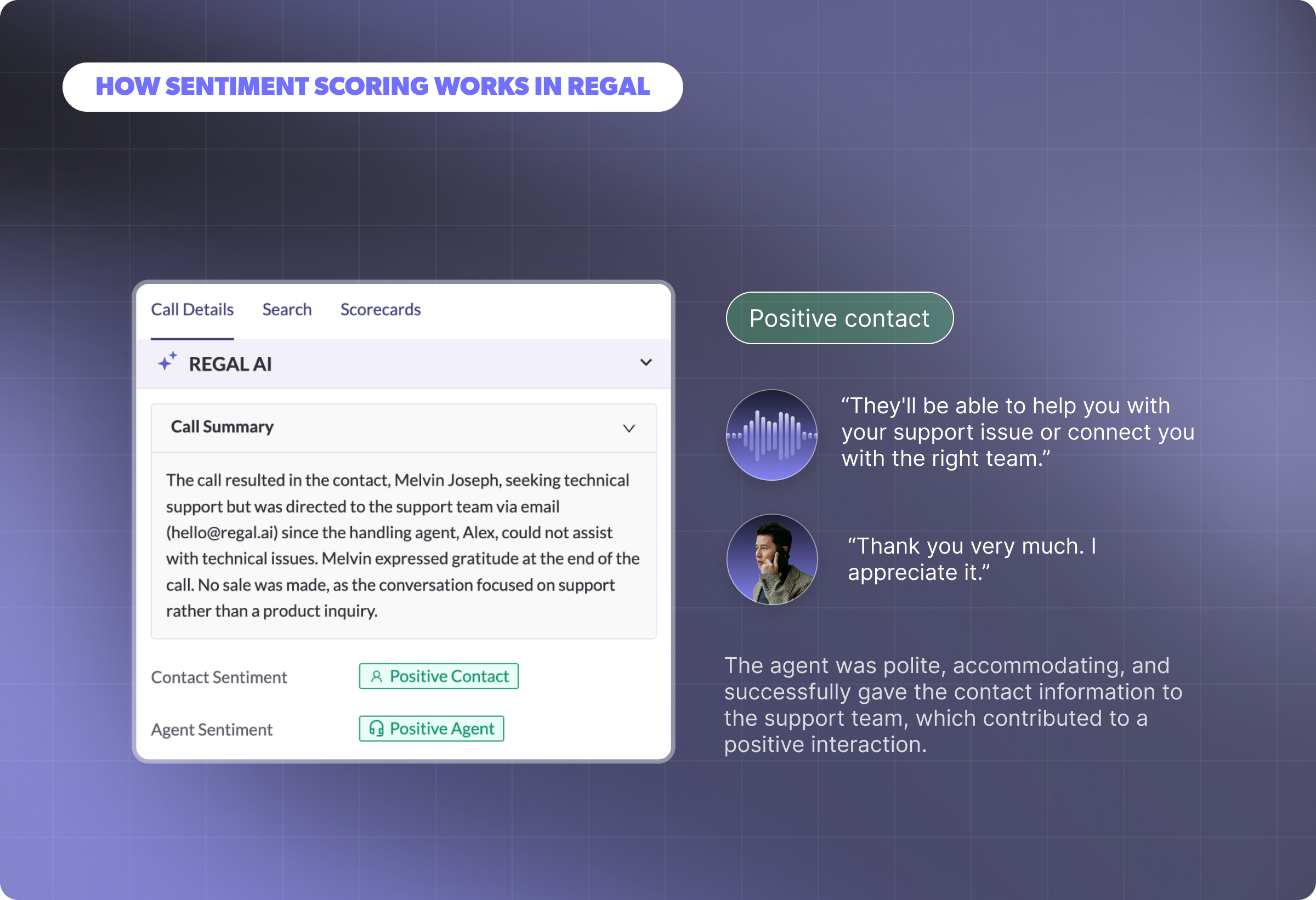
Every qualifying voice call that runs through Regal gets two sentiment scores: one for the agent, one for the contact. Here's what actually produces those numbers.

Read More
How We Built a Voicemail Detection Model that Outperforms the Industry

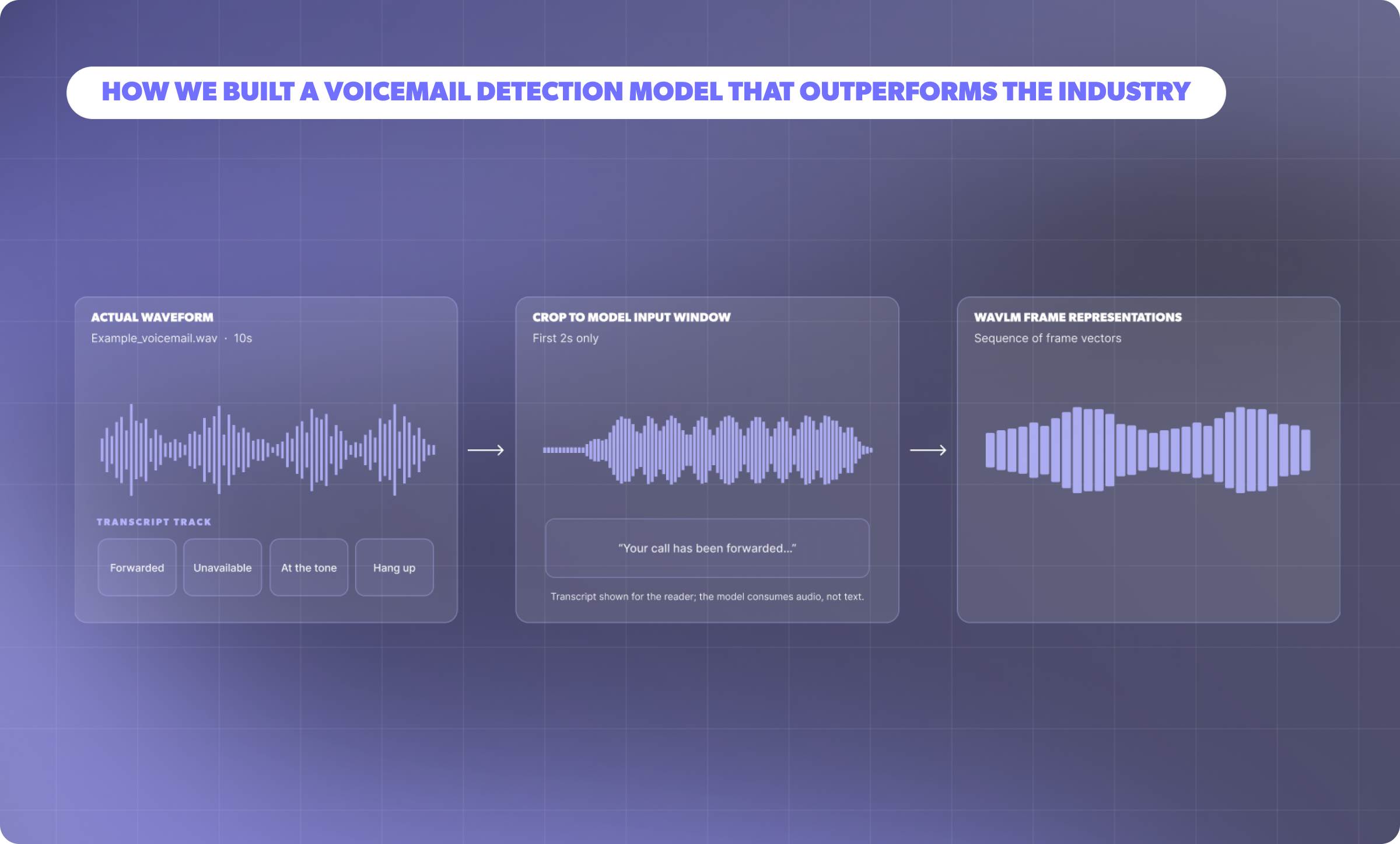
Our engineering team breaks down how we improved our Voicemail Detection model by aligning the taxonomy with the actual audio, scaling labels, and choosing representations before adding model complexity.

Read More
AI Agent Templates: More Industries, More Detailed Prompts, and Custom Actions

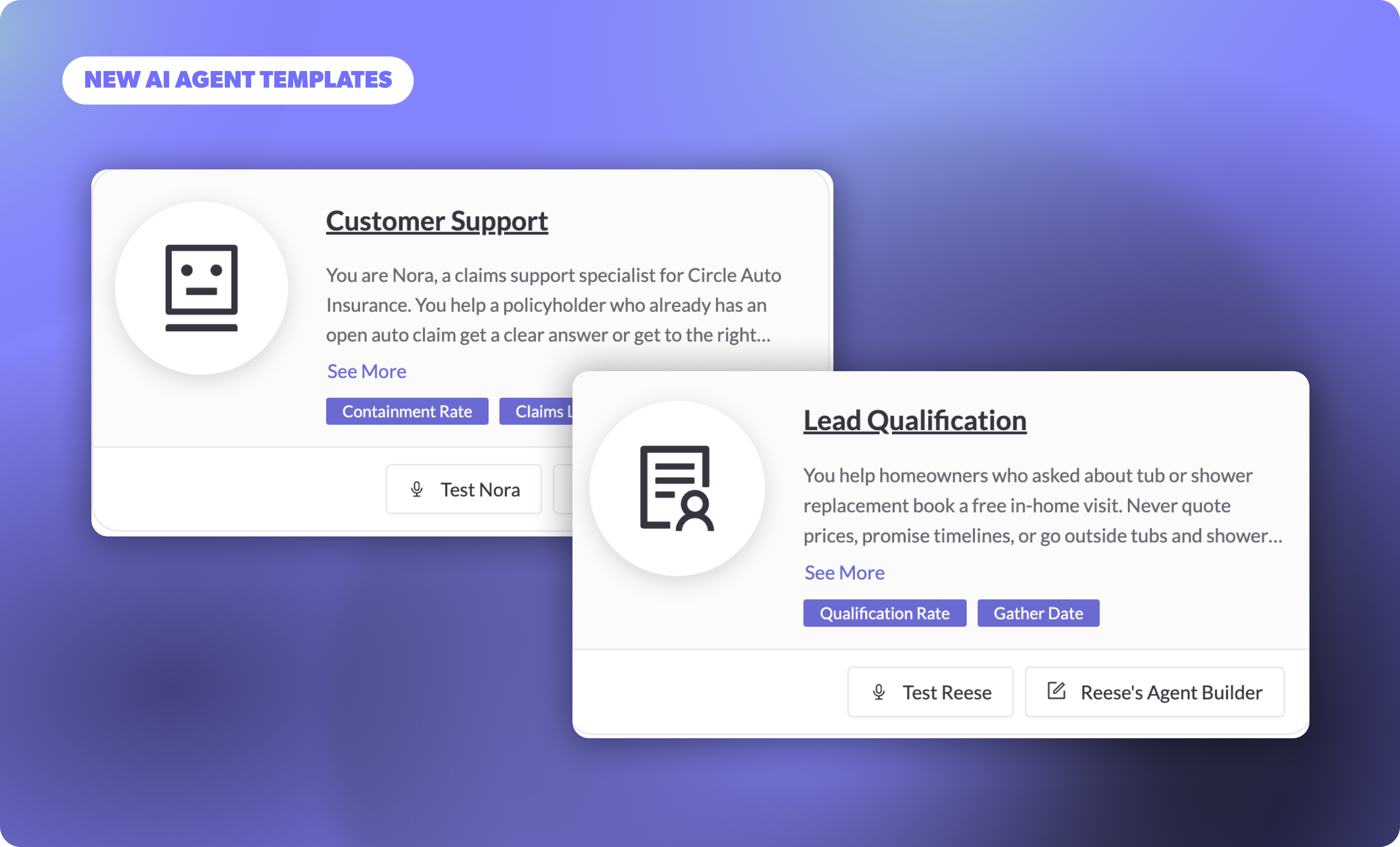
Building a voice AI agent from scratch means writing prompts, wiring up actions, and defining guardrails before you can even test a call. Our upgraded agent templates skip that setup.

Read More
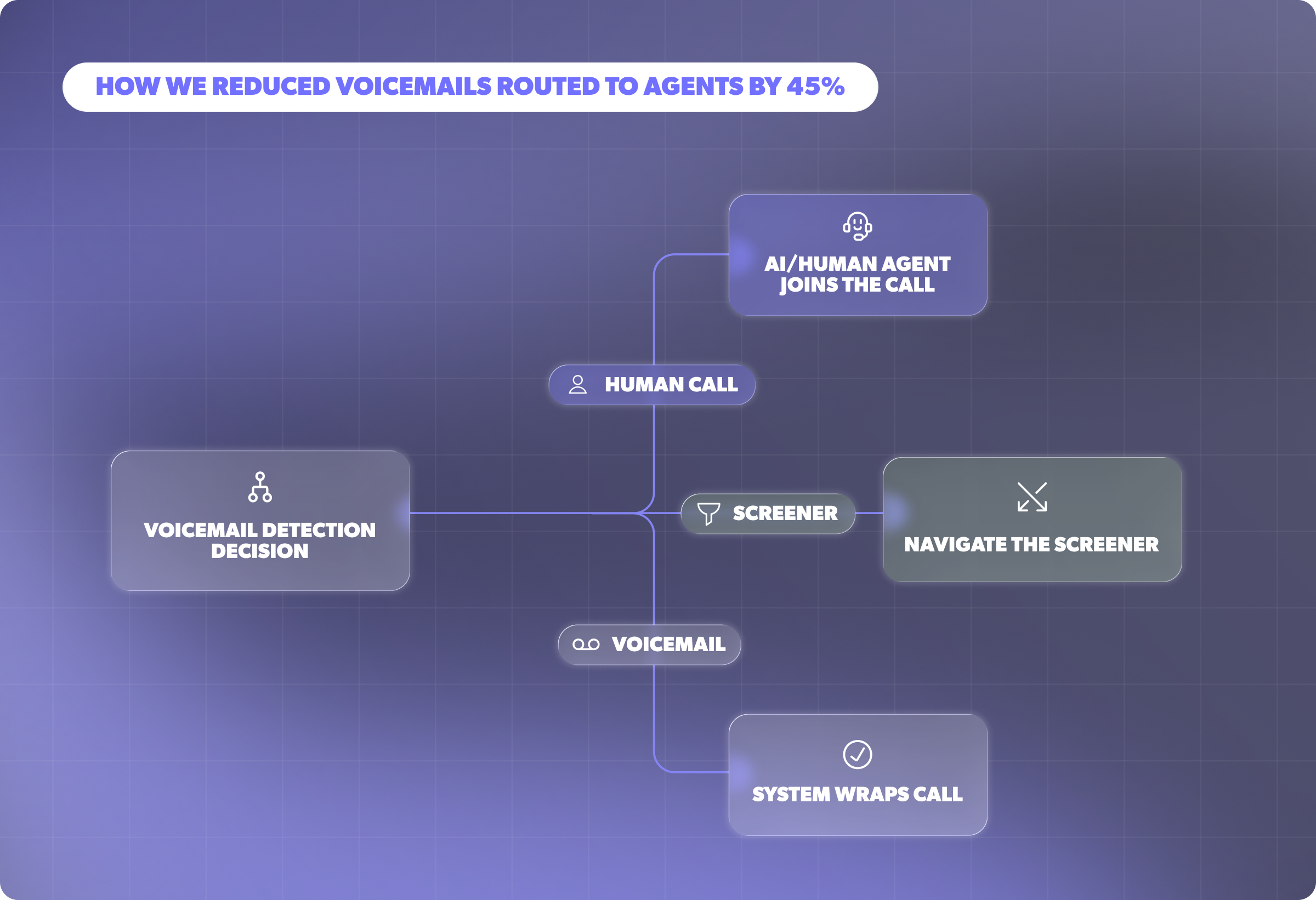
Introducing Regal’s Voicemail Detection Model: How We Reduced Voicemails Routed to Agents by 45%

With Regal’s next-generation Voicemail Detection model, you can now classify voicemail, iOS or Google call screeners as separate categories with very high accuracy. This enables screener-specific handling, ultimately reducing missed agent connections.
Read More
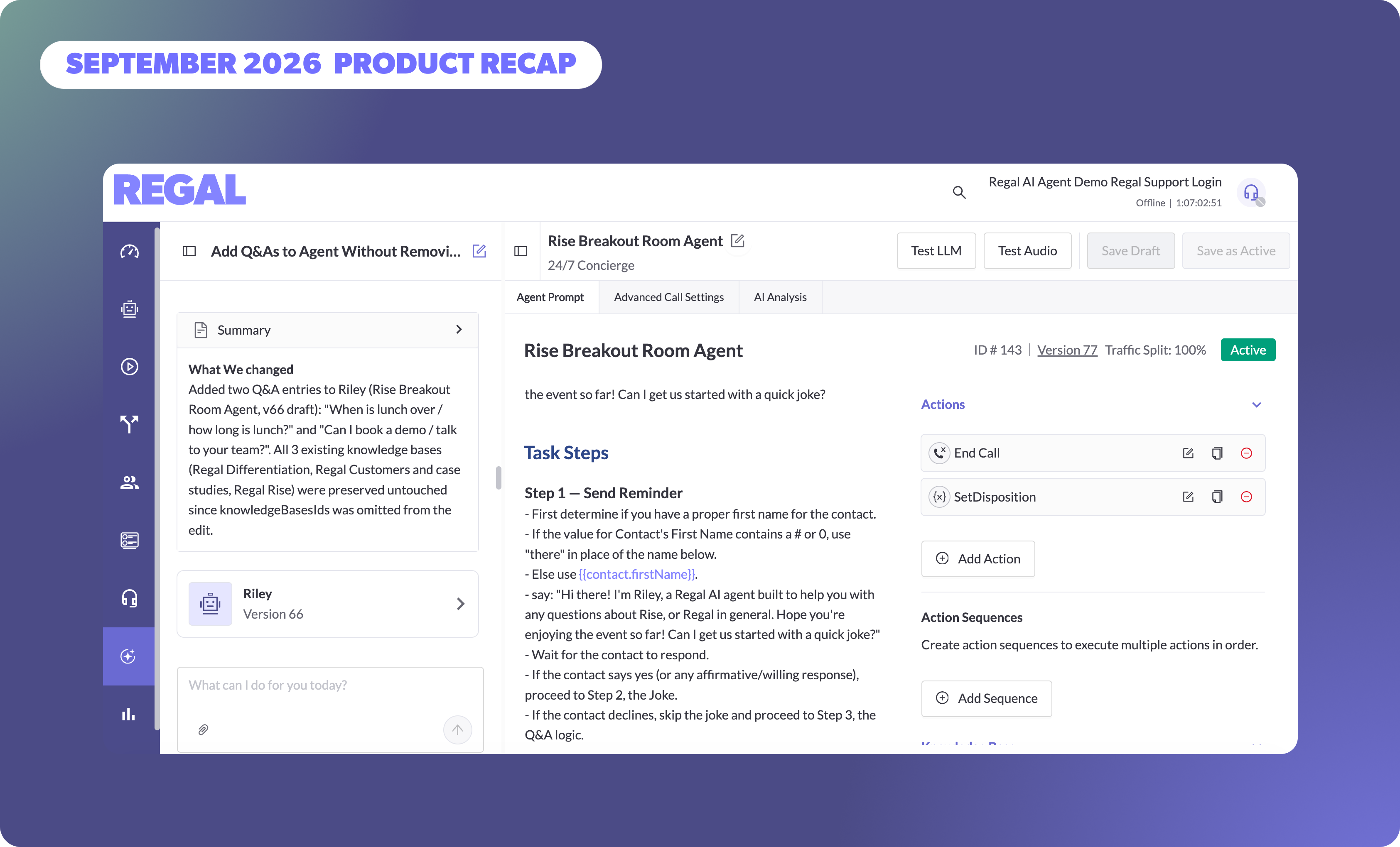
September 2026 Product Recap

Last month, we shipped releases that make it easier to build, monitor, and test agents in one interface. Copilot Canvas brings building, editing, and testing into one interface and it can work straight from your files. Multi-state sticky notes let your team document decisions directly on a live agent.
Read More
Give Copilot More Context With File Uploads

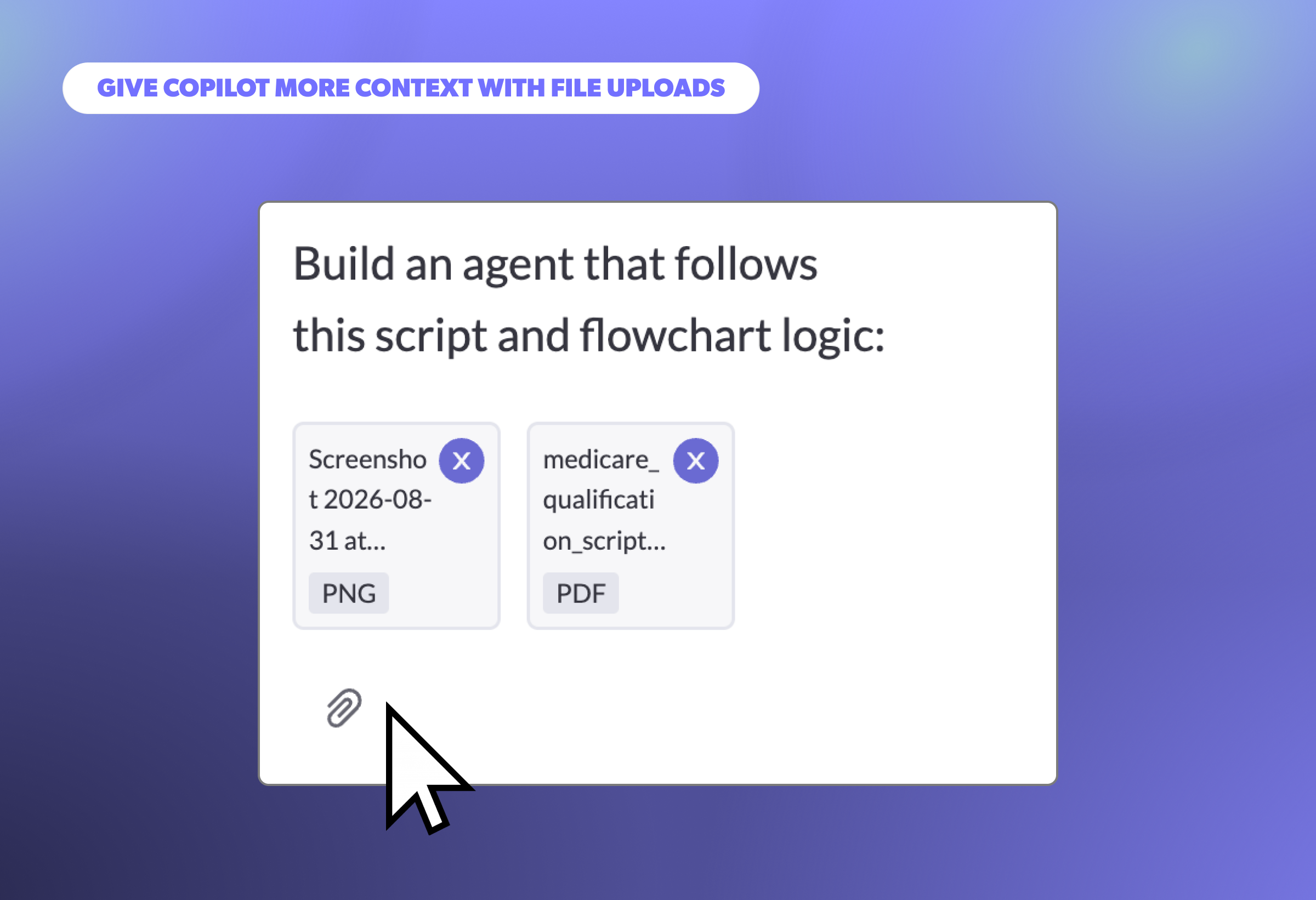
Copilot now lets your team upload files, like spreadsheets, scripts, and flowcharts, directly as inputs. This gives Copilot the context it needs from the start, making it easier to extend Copilot into new agent use cases as they come up.

Read More
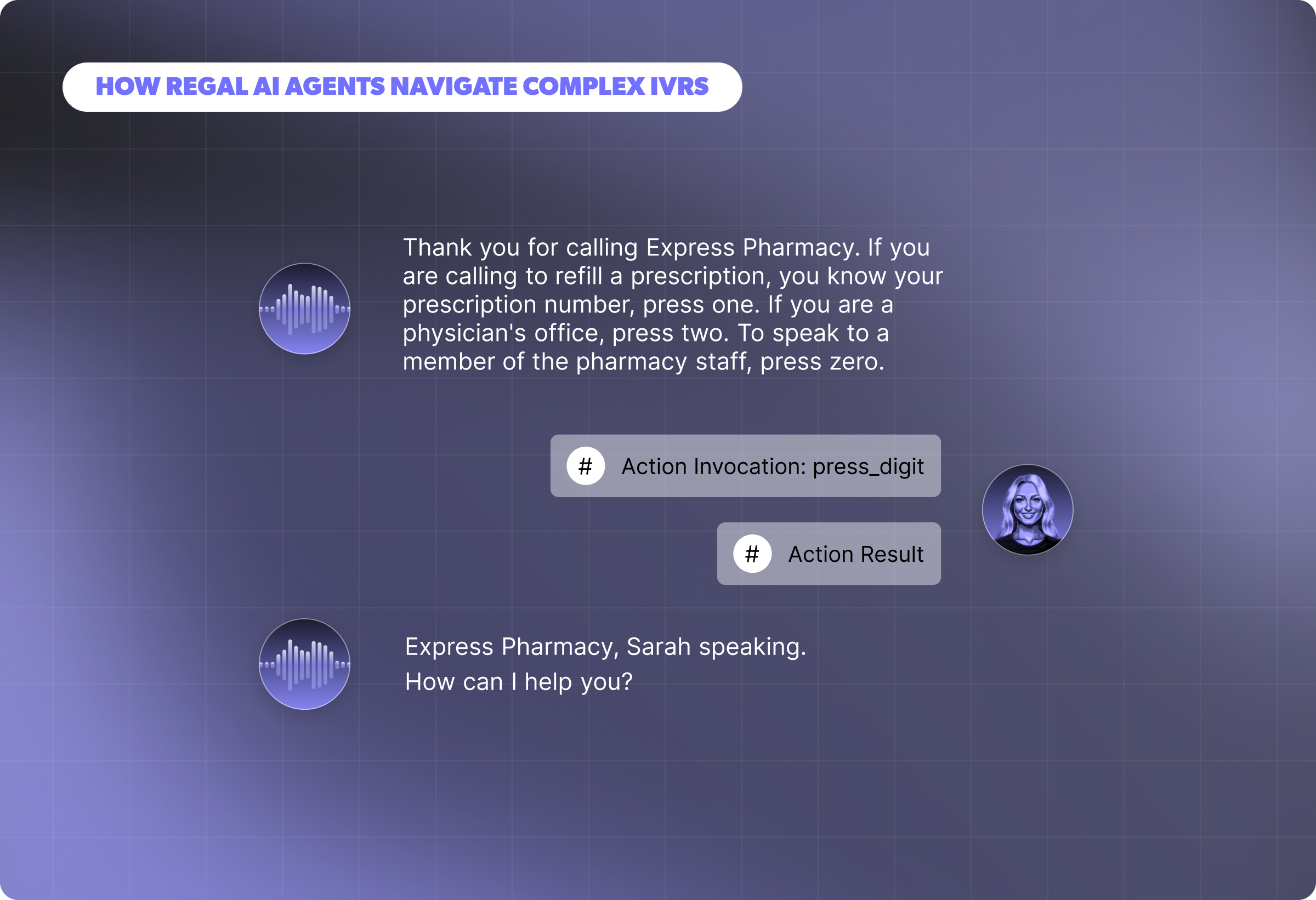
How Regal AI Agents Navigate Complex IVRs

How Regal AI Agents recognize, navigate, and continuously improve at getting through third-party IVR phone trees, from classification and the Press Digit action to node isolation and real-world test simulations.

Read More
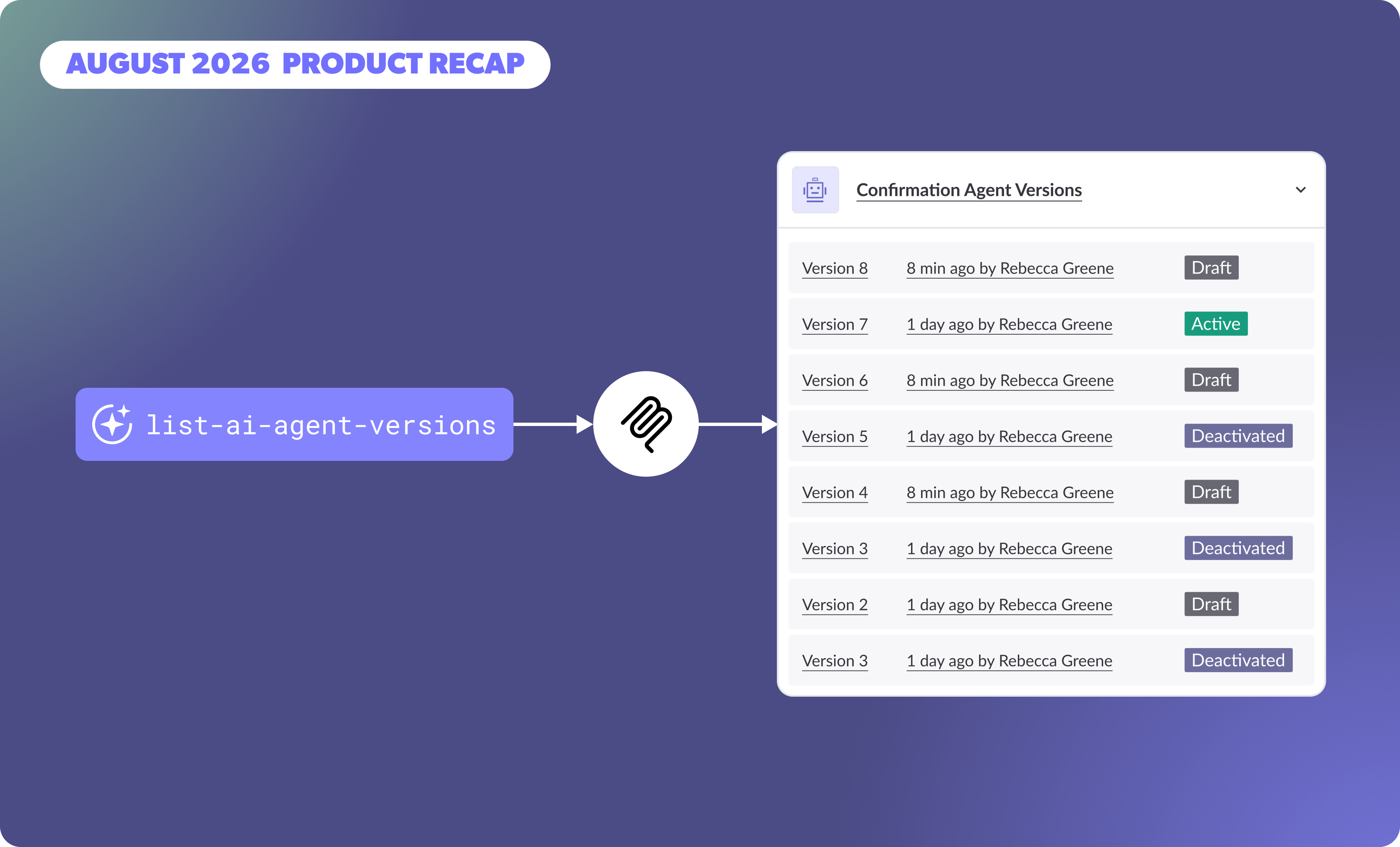
August 2026 Product Recap

Last month, we launched features that extend your management of AI agents via MCP and CCaaS platforms. Debug based on agent versions or simulation runs, and manage AI analysis data points via Copilot and Regal MCP. As a Five9 AI Agent Connect partner, Regal now has a dedicated integration API built for Voice AI agents.
Read More
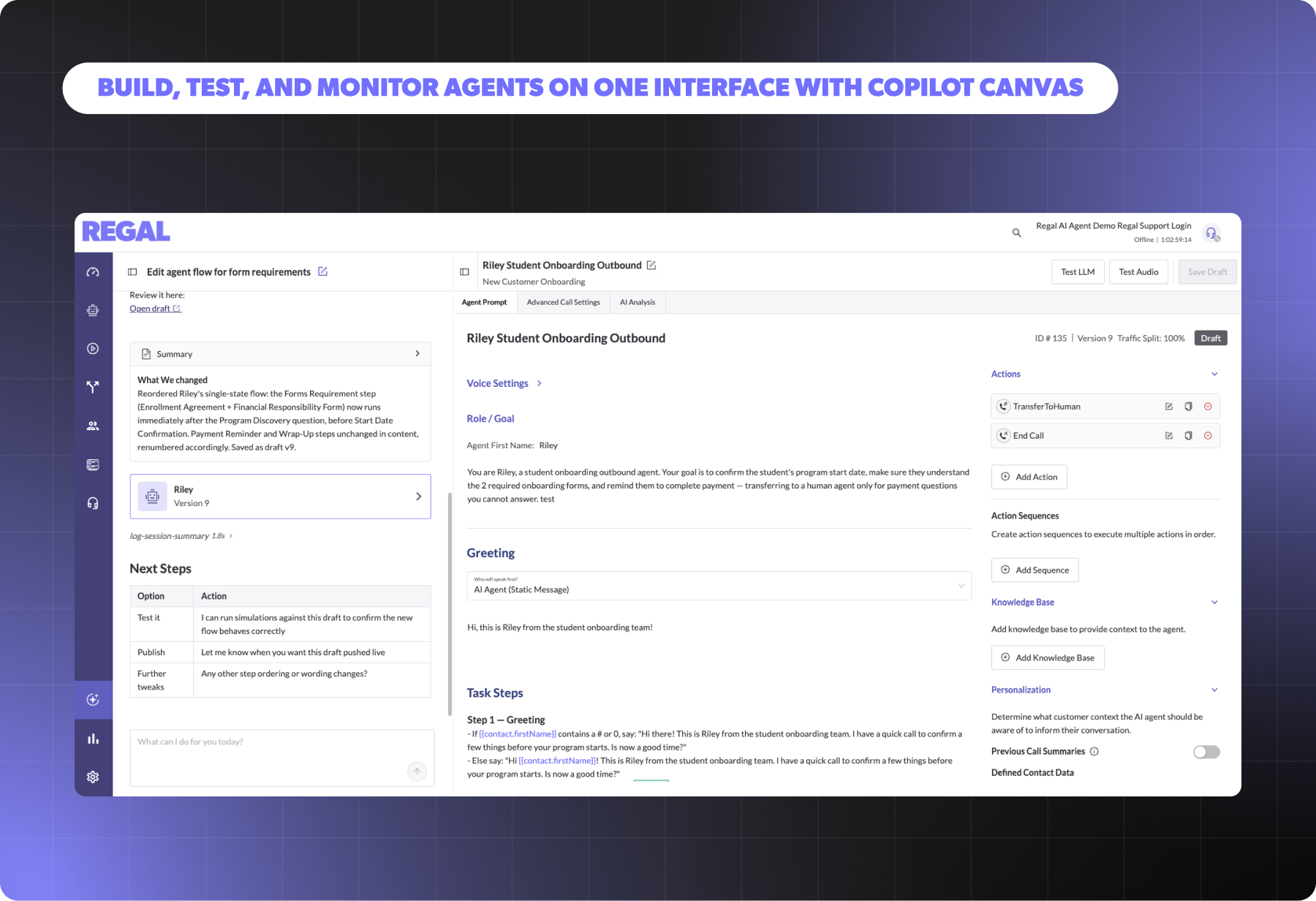
Build, Test, and Monitor Agents on One Interface with Copilot Canvas

Copilot Canvas brings agent building, testing, and monitoring into one interface, so you can edit, test, and track performance without leaving Copilot chat.

Read More
Why We Signed the Open Weights Letter

We've always been careful to never give frontier labs the right to keep or train on customer data. With open weight models, we can go further: when a customer invests in improving these models, that value accrues to them, not to a lab.

Read More
July 2026 Product Recap

Last month, we shipped updates that make AI agents sound more responsive and easier to run at scale. Dynamic Voices lets your agent adjust its pace the second a contact asks for it, and Copilot now handles IVR and disposition management.

Read More
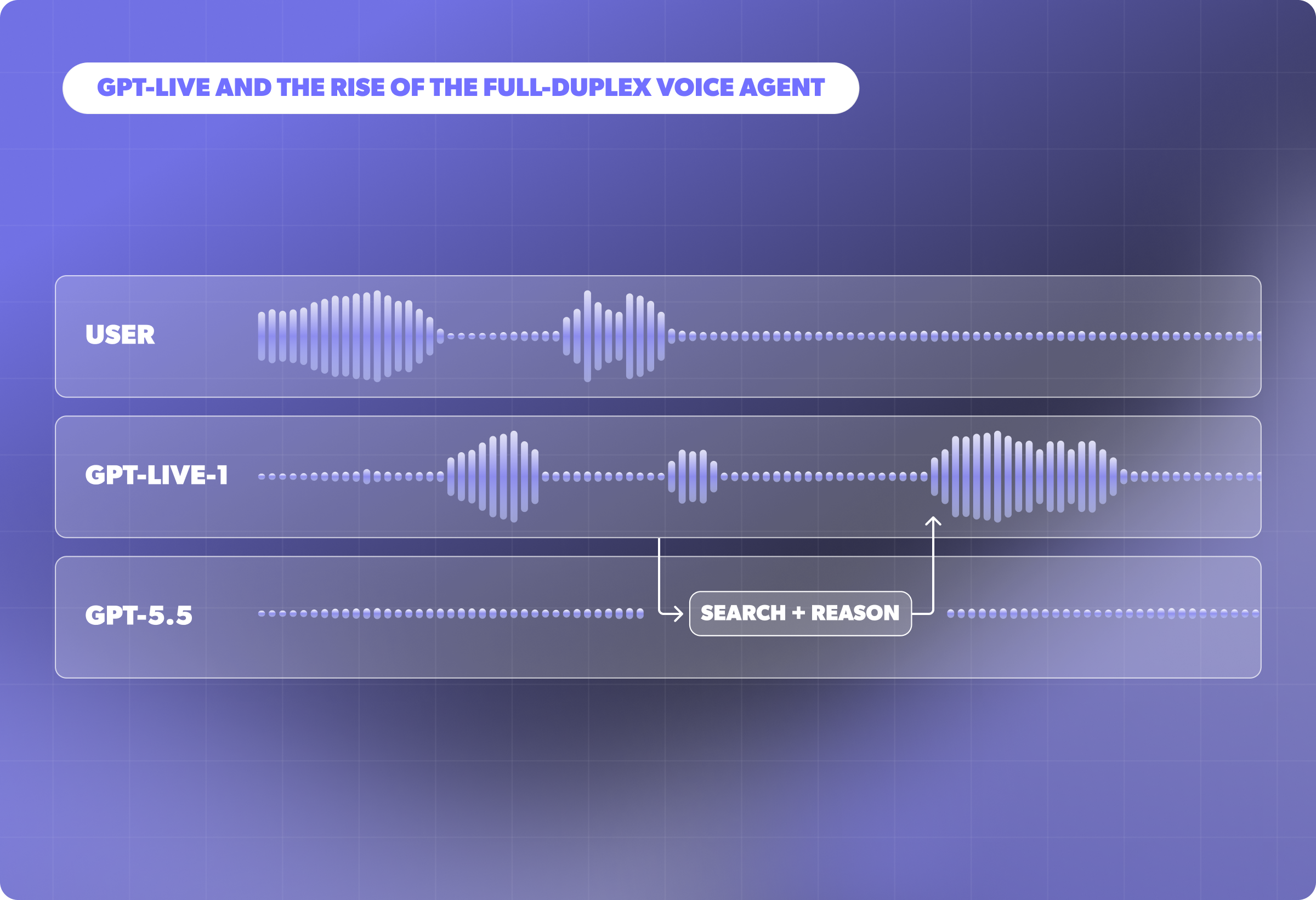
GPT-Live and the Rise of the Full-Duplex Voice Agent

OpenAI launched GPT-Live, a new generation of voice models, and described it as a “full-duplex” model. We tested GPT-Live directly to see how the theory holds up in practice.

Read More
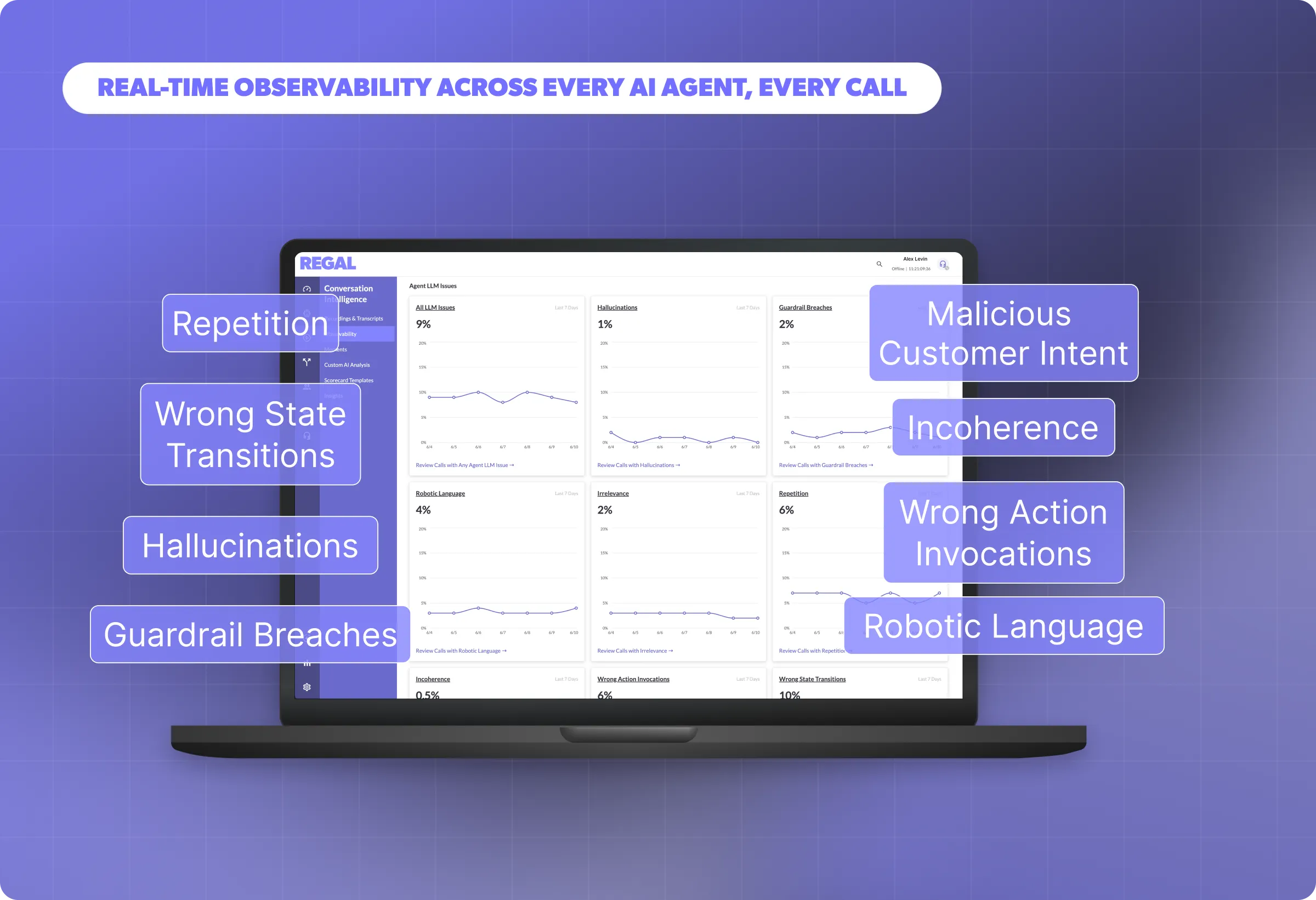
Real-Time Observability Across Every AI Agent

The Regal Observability Dashboard gives your team real-time visibility into AI agent performance — tracking hallucination rates, guardrail breaches, latency spikes, and more across every call, automatically.

Read More
Extend what your team can build, see, and improve with Regal MCP

Regal MCP connects your Regal platform to AI environments like Claude, Cursor, and ChatGPT. Your team can pull transcripts, inspect configurations, and trigger actions without switching context.

Read More
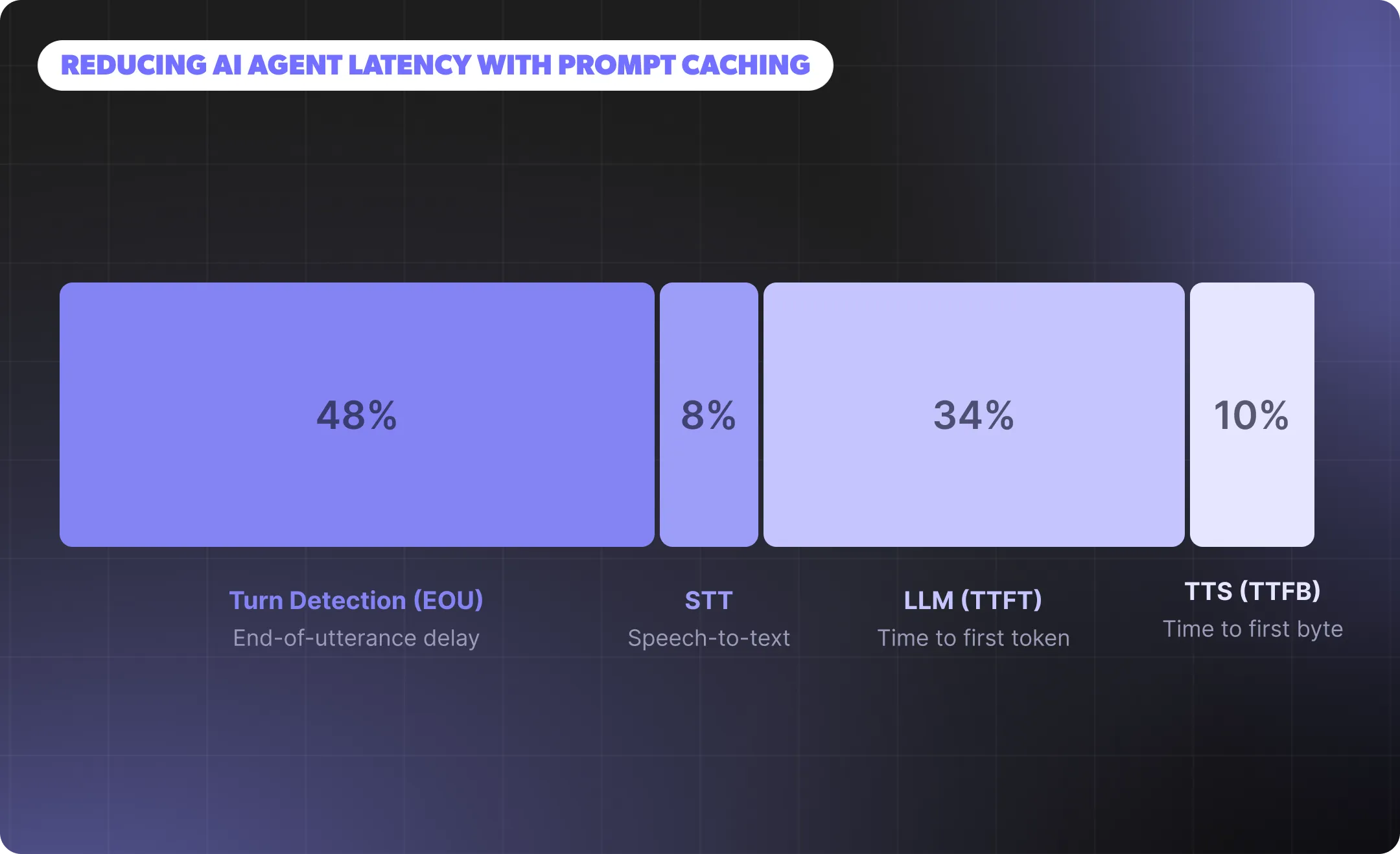
How Regal Reduced AI Agent Latency by 26%

We reduced end-to-end voice AI response latency by 26% in three weeks by optimizing prompt structure for LLM caching: moving dynamic contact data out of the cacheable prefix so the model stops reprocessing instructions on every call.

Read More
May 2026 Releases

This month, we shipped Regal MCP, which extends what your team can build, see, and improve. Regal MCP opens the platform to your external AI environment, so team members can take Regal actions directly from tools like Claude without switching context.

Read More
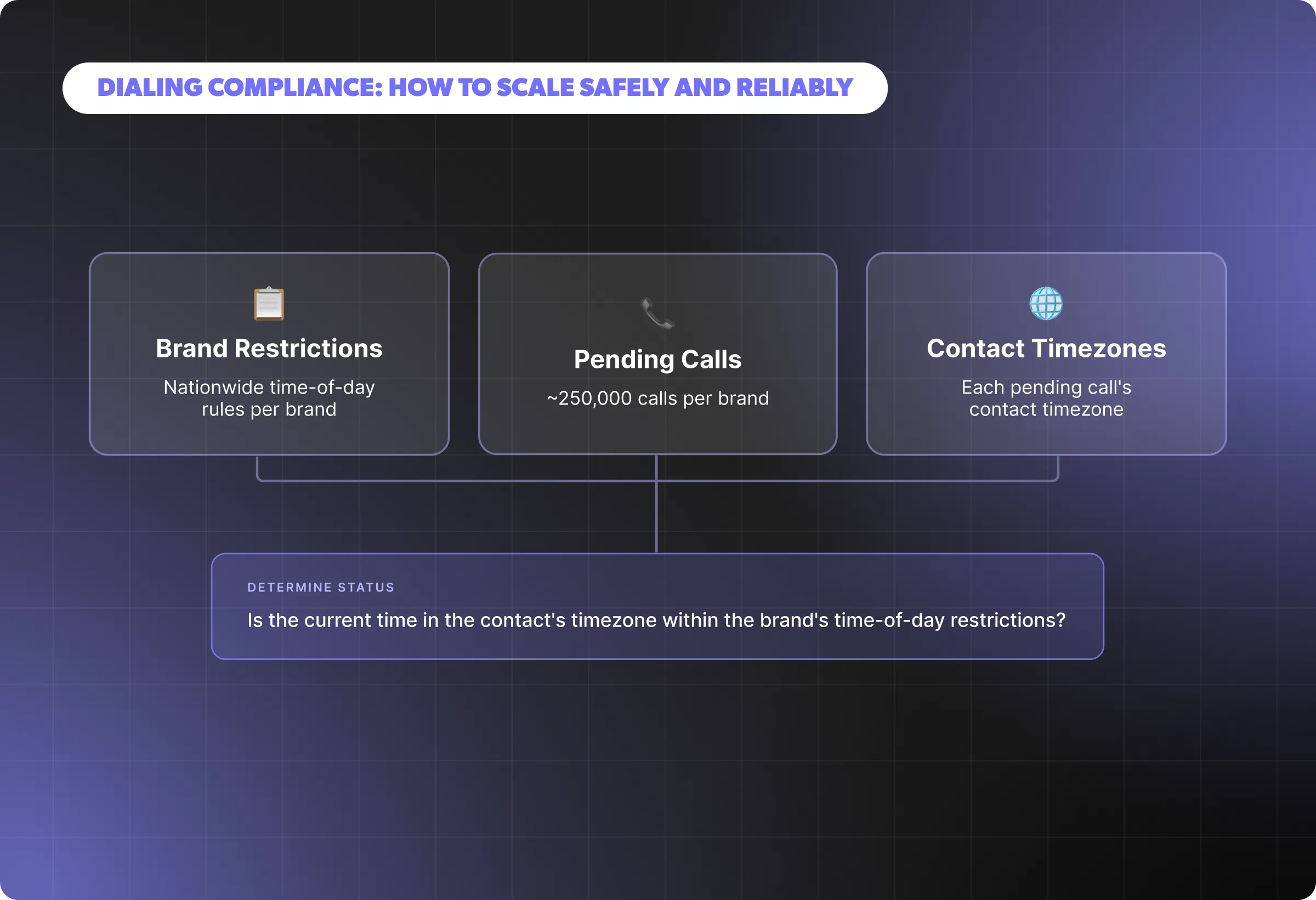
Dialing Compliance: How We Scaled Outbound Calling Reliably

Behind a fragmented and ever-changing regulatory landscape is a simple goal: protecting people from unwanted or poorly timed outreach and giving them control over how they’re contacted. In practice, that responsibility translates into a set of checks that must be validated.
Read More
We Just Hit 500M Calls. Here's What We Learned.

This number is a milestone that represents a fundamental shift in customer experience and how businesses grow. Curious what this number really looks like? We put it into perspective.

Read More
How Gemini 3.5 Flash performs for Voice AI agents

Every new LLM comes with trade-offs between latency, cost, and quality — and Regal tests all of them against real voice AI agents. Here's what we found when we ran Gemini 3.5 Flash through our benchmark.

Read More
April 2026 Releases

This month, we shipped enhancements that help you quickly make proactive fixes and customize AI agents to your brand. Copilot does more troubleshooting work on your behalf and with headless WebRTC, you can embed Regal voice agents inside your own product UI.

Read More
From Kickoff to First Live Call: What a Real Voice AI Deployment Looks Like

After powering over 400 million calls, we've found that the contact centers that win with voice AI aren't just the ones that deploy first. They're the ones that learn fastest.

Read More
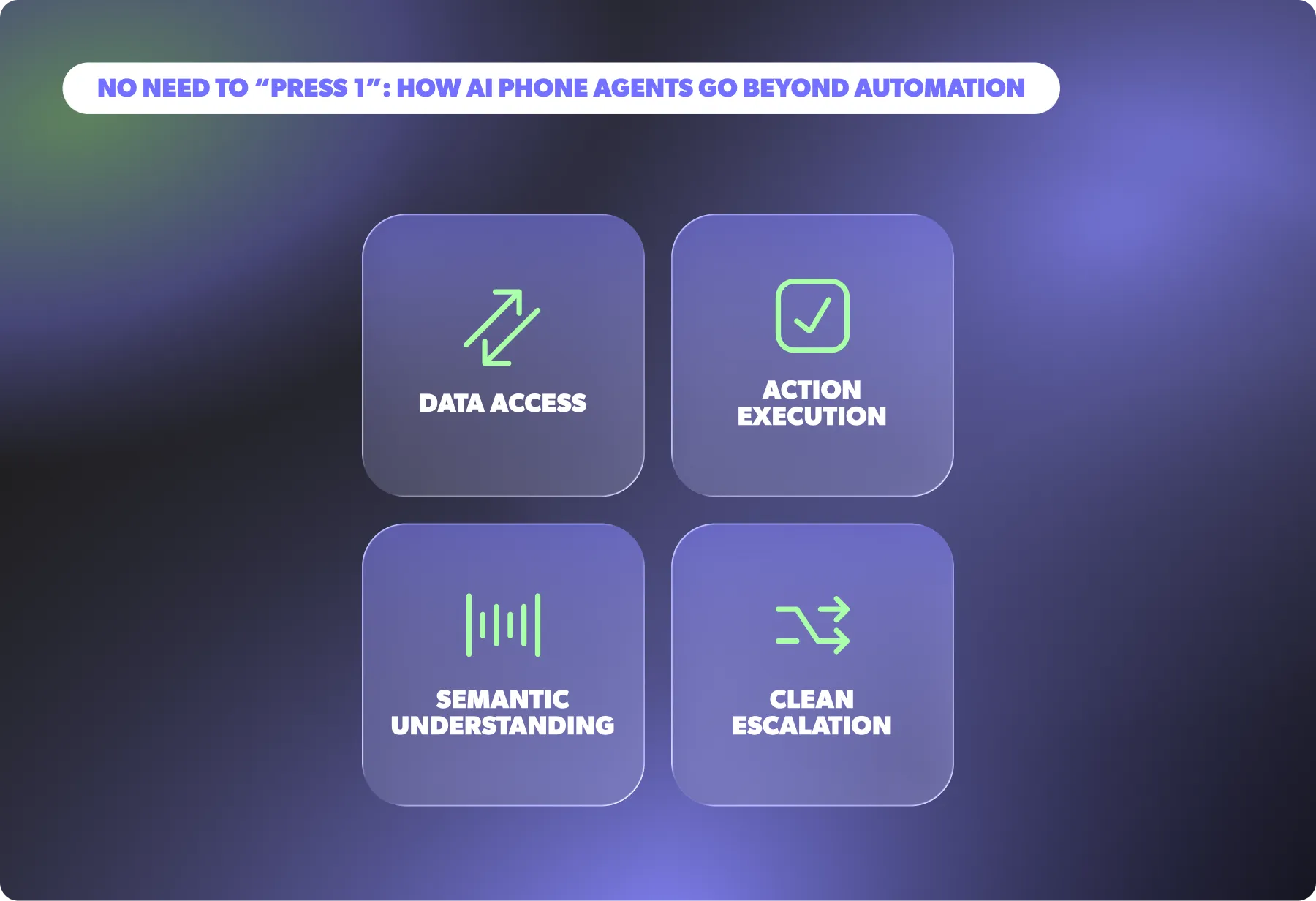
No Need to "Press 1": How AI Phone Agents Go Beyond Automation

AI phone agents aren't just better phone trees. They are autonomous systems that can understand caller intent, retrieve relevant information from your CRM in real time, execute actions, handle objections and clarifications, and complete the conversation without human involvement.
Read More
Why Your AI Voice Agent Sounds Robotic And How to Measure for Improvement

Voice AI is architectural, not cosmetic. Warm words on a broken flow make things worse. But warm words on a well-structured, well-measured system compound over time.

Read More
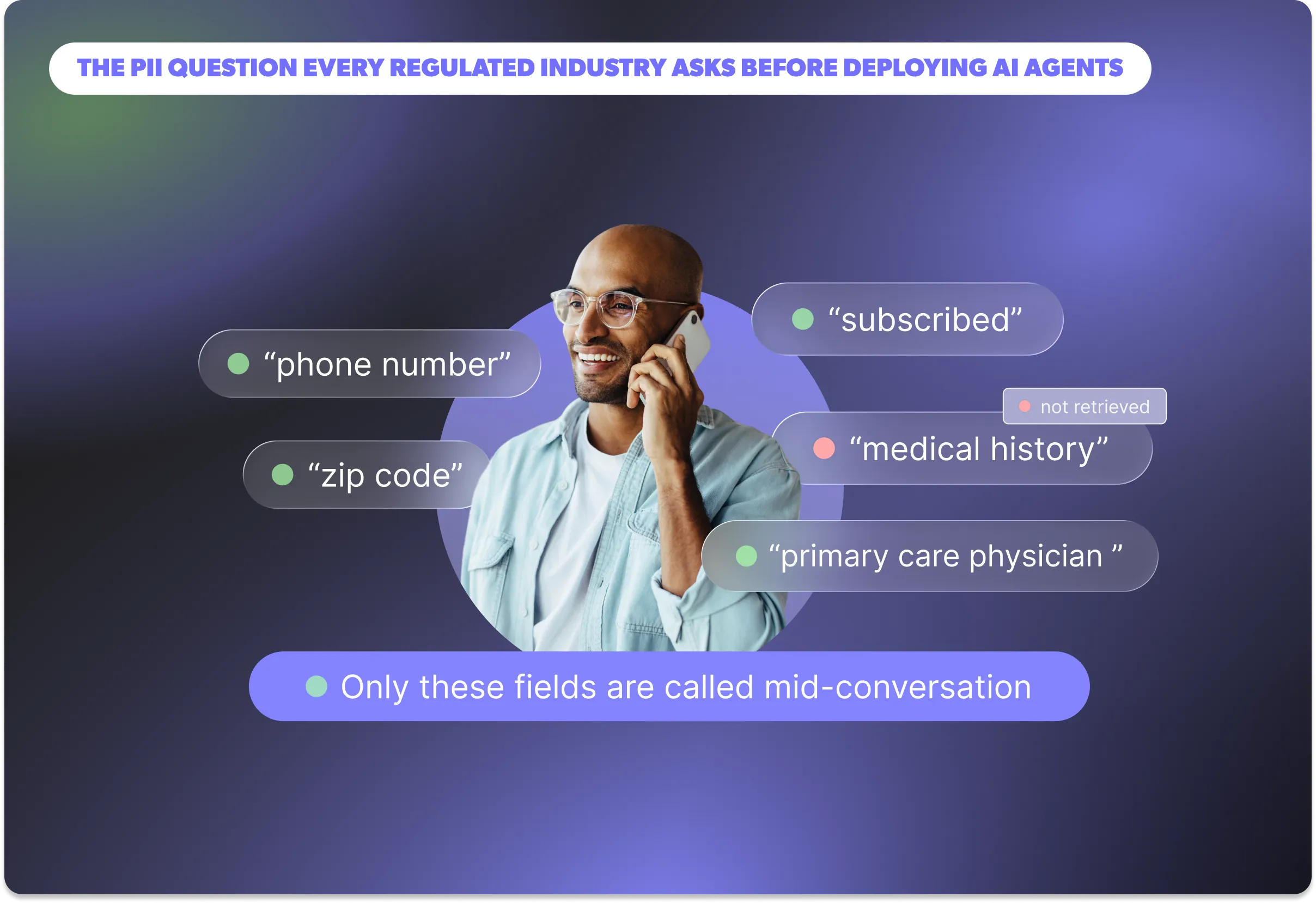
The PII Question Every Regulated Industry Asks Before Deploying AI Agents

When prospects in healthcare and financial services hear "PII," they often imagine bulk data transfer: the idea that deploying an AI agent means copying a database somewhere. In most modern deployments, that's not what's happening.
Read More
Why Customers Confide in Voice AI Agents More Than Your Reps

At HumanX 2026, Regal's VP of Growth Lex Sivakumar shared what 400 million analyzed calls reveal about voice AI. Customers are not just accepting well-built AI voice agents. They are opening up to them more than they do to humans.

Read More
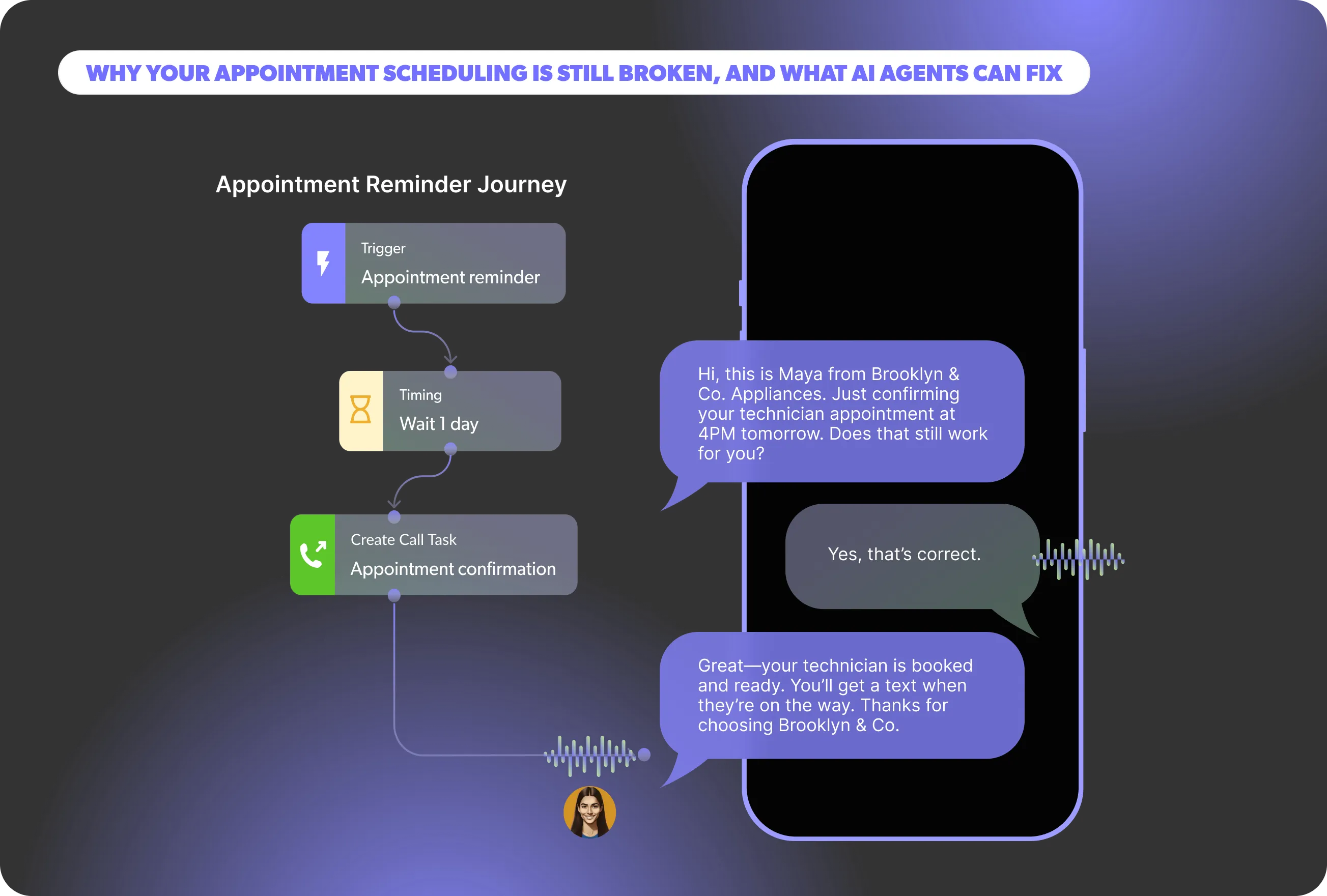
Why Your Appointment Scheduling Is Still Broken (And What AI Agents Actually Fix)

With AI agents, every appointment gets a confirmation call. Each contact gets a chance to reschedule, and the confirmation rate goes to 100%, not because the AI is better at conversations than your agents, but because the AI never runs out of capacity.
Read More
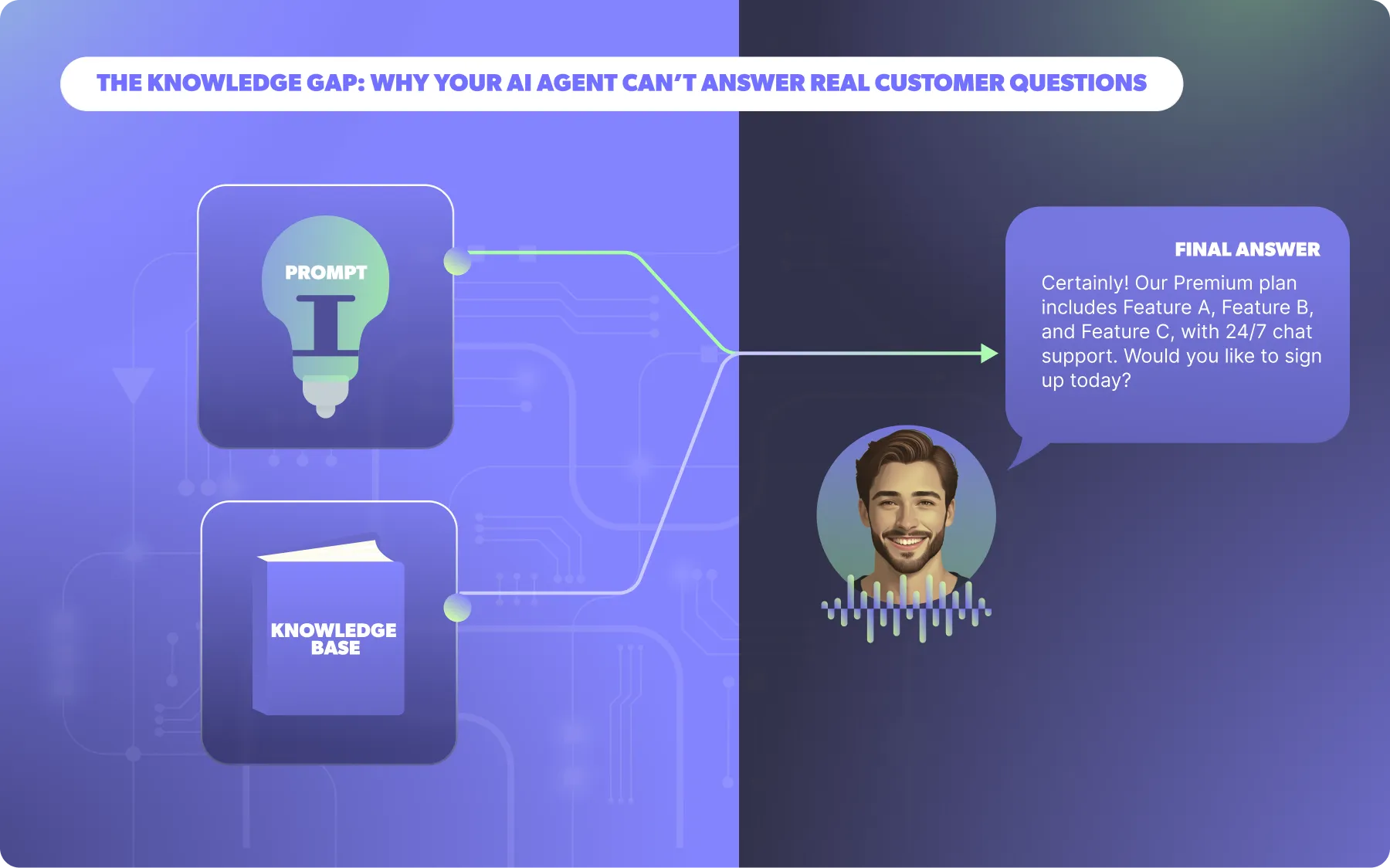
The Knowledge Gap: Why Your AI Agent Can’t Answer Real Customer Questions

AI agent performance depends on how well it aligns with real customer language, not just fluency. Regal Improve helps teams identify gaps and improve outcomes by analyzing real conversations and surfacing high-impact opportunities
Read More
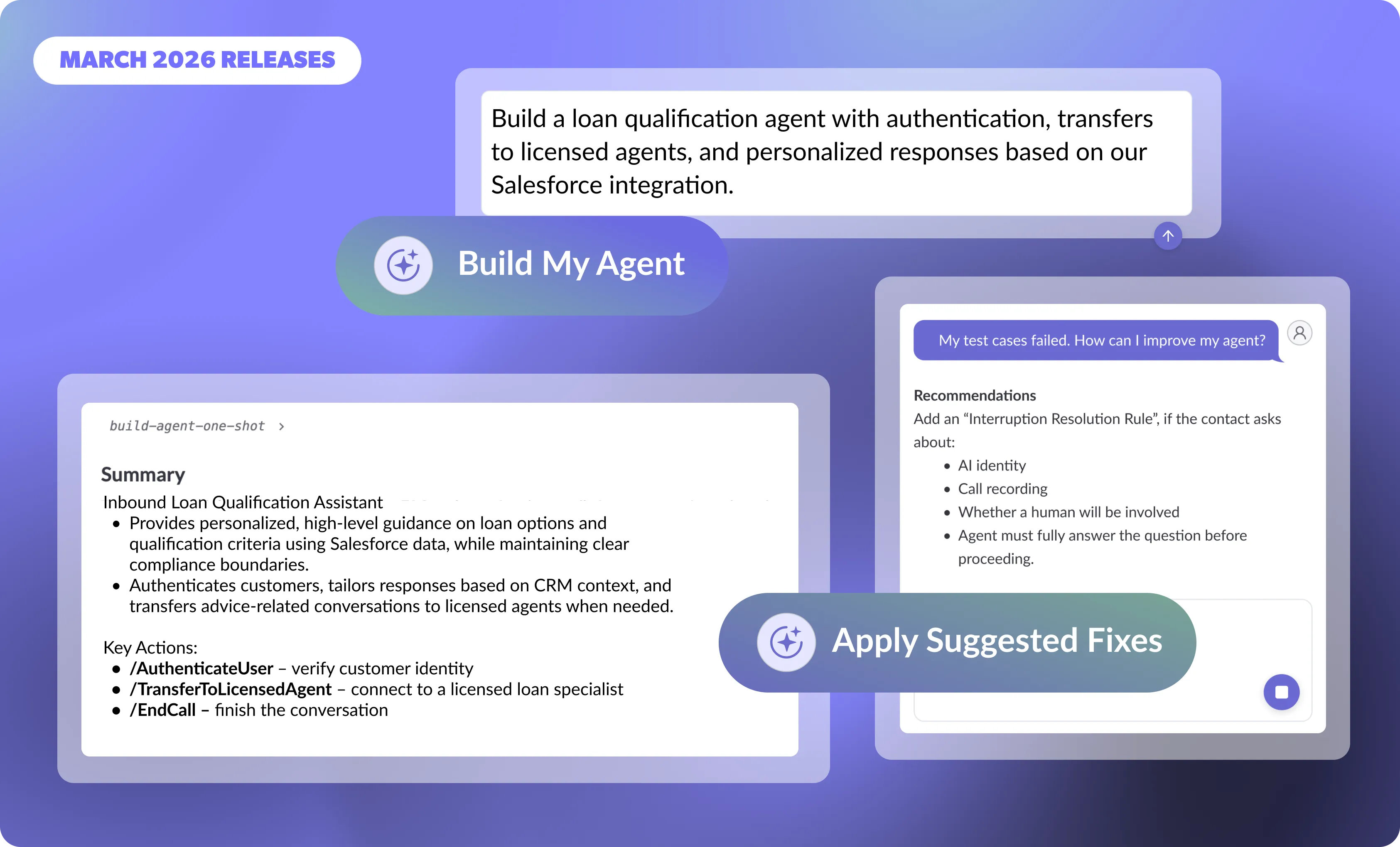
March 2026 Releases

In March, we made it faster than ever to build, launch, and continuously improve AI agents with Copilot, Regal's AI agent for building AI agents. Together, these updates lessen the time needed to launch and maintain agents, so you can focus on understanding your customers, unlocking new use cases, and driving faster business outcomes.
Read More
Announcing Copilot: Continuous Agent Improvement

Regal is announcing Copilot, our agent for building AI agents. Create, test, deploy, monitor, and improve your Regal AI agents faster than ever by managing an agent instead of going through each step yourself.

Read More
How American Standard Helps Homeowners Start Remodeling Projects with Ease

American Standard’s AI agents streamlined the home remodeling journey by responding instantly to every homeowner inquiry, capturing demand in real time, and creating a faster, more seamless path from interest to installation.

Read More
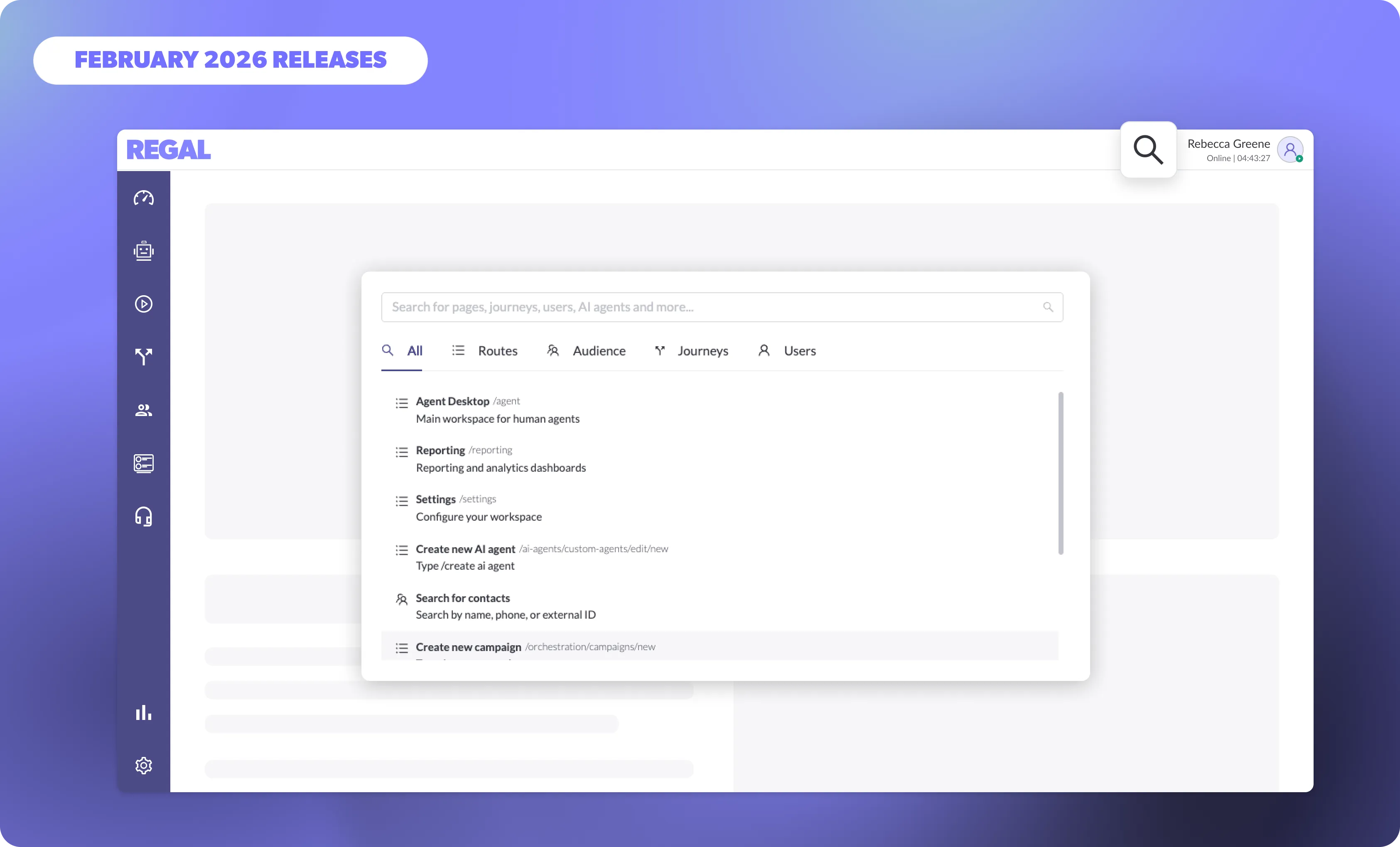
February 2026 Releases

In February, we made AI agents sound and feel more natural, even when handling complex, multi-step conversations with conditional logic. These updates give you the control to build AI agents that don't just follow a script: they adapt, respond, and engage naturally with each customer. 
Read More
The Future of Voice AI in 2026: What the Data Is Telling Us

The Regal team discusses new research on where Voice AI agents are headed, and why this transformation is far bigger than just cutting costs.

Read More
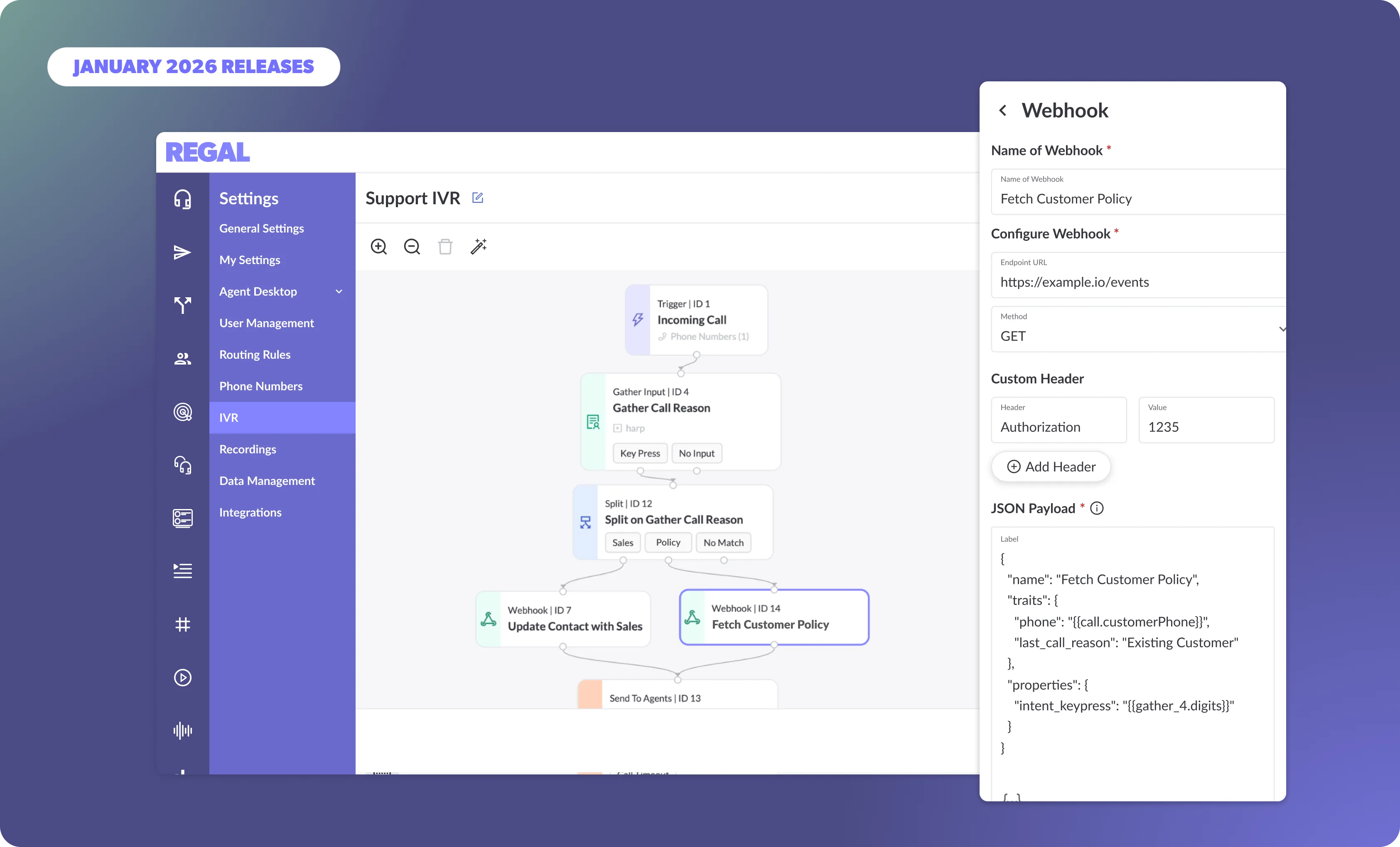
January 2026 Releases

In 2026, we're focused on making every interaction with your AI agent feel more human, and speeding up the agent development process so you can drive results faster. We kicked off the year by advancing the reach and contextual intelligence of AI agent conversations.

Read More
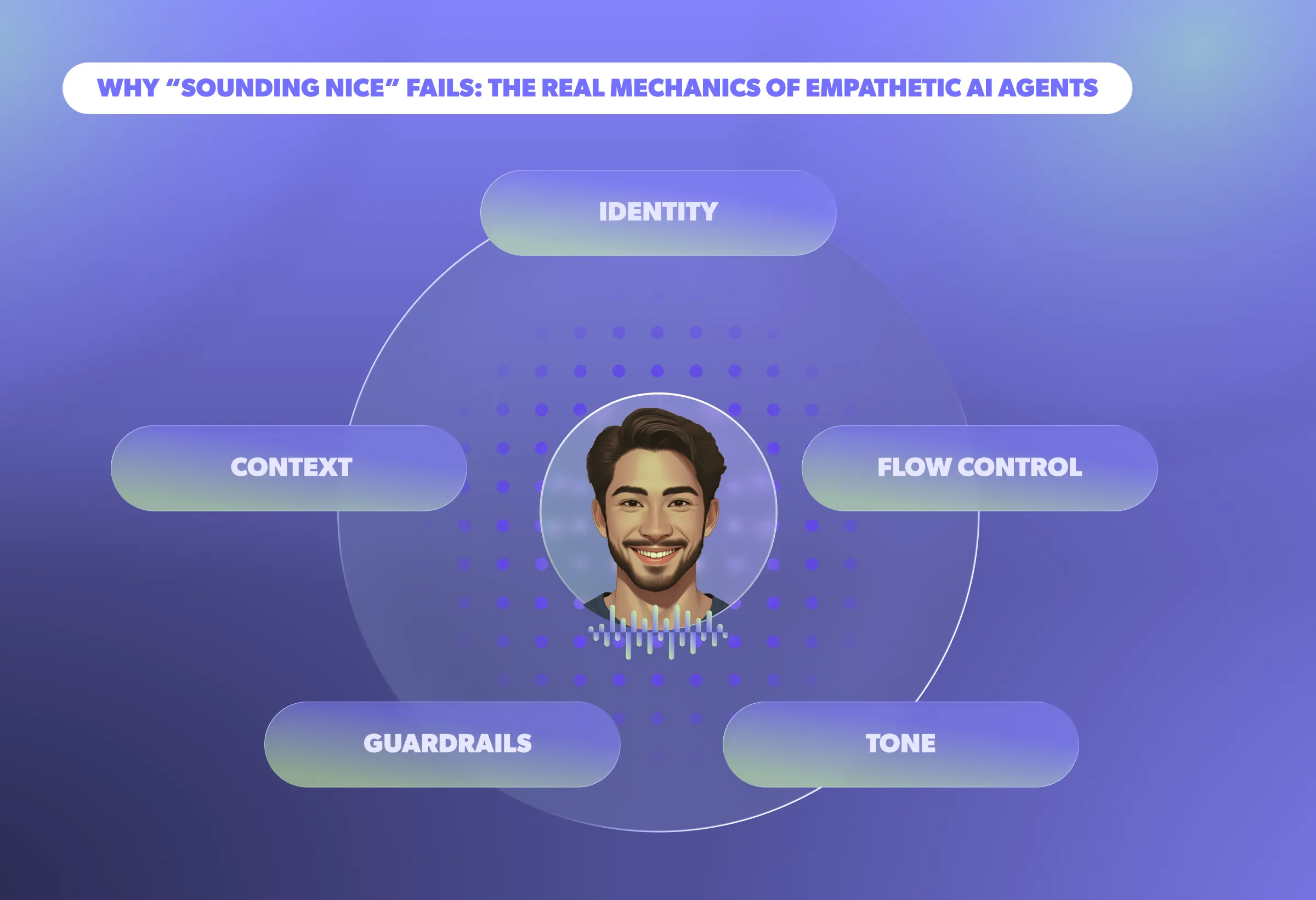
Why “Sounding Nice” Fails: Engineering Empathy in AI Agents

How to build an AI agent that balances empathy with control, and drives real results in production.

Read More
Support Customers Directly on Your Website with Chat AI

Now, you can embed Chat AI directly into your site, providing customers with dynamic, contextual responses that move them toward a decision.

Read More
From Bottleneck to Breakthrough: Creating Delightful Experiences with Voice AI Agents

At the AI Summit New York, Regal Director of Product & Product Marketing, Yael Goldstein shared how enterprise organizations are moving beyond theory to deploy Voice AI agents that transform customer experiences.

Read More
Introducing WebRTC Voice: Click to Talk, Right From Your Website

WebRTC Voice enables real-time voice conversations: instead of dialing phone numbers or switching applications, customers can enable voice conversations directly in your website widget.

Read More
December 2025 Releases

December's releases expand where and how you can deploy and scale your AI agents, including a new embeddable website widget for chat and WebRTC. We also released several features to increase observability across the Regal platform.

Read More
Turn AI Agent Data Into Better Customer Interactions: A Timeline-Based Approach

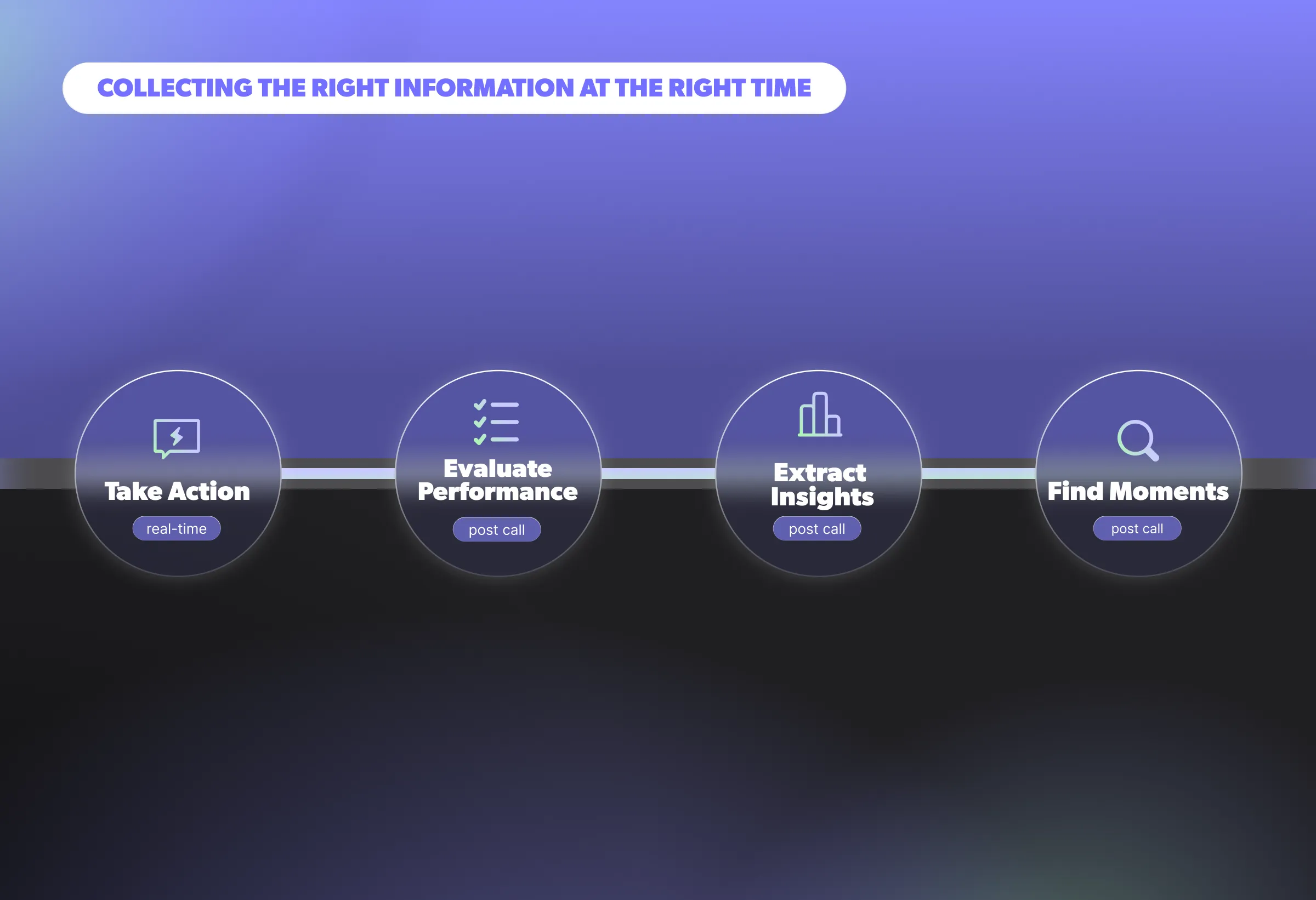
Leverage real-time decision-making and post-call analysis to increase personalization in your customer interactions, evaluate your agent long-term, and extract insights for continuous improvement. ‍

Read More
The Voice AI Agent Triangle: Speed, Control, Expression (Pick Two)

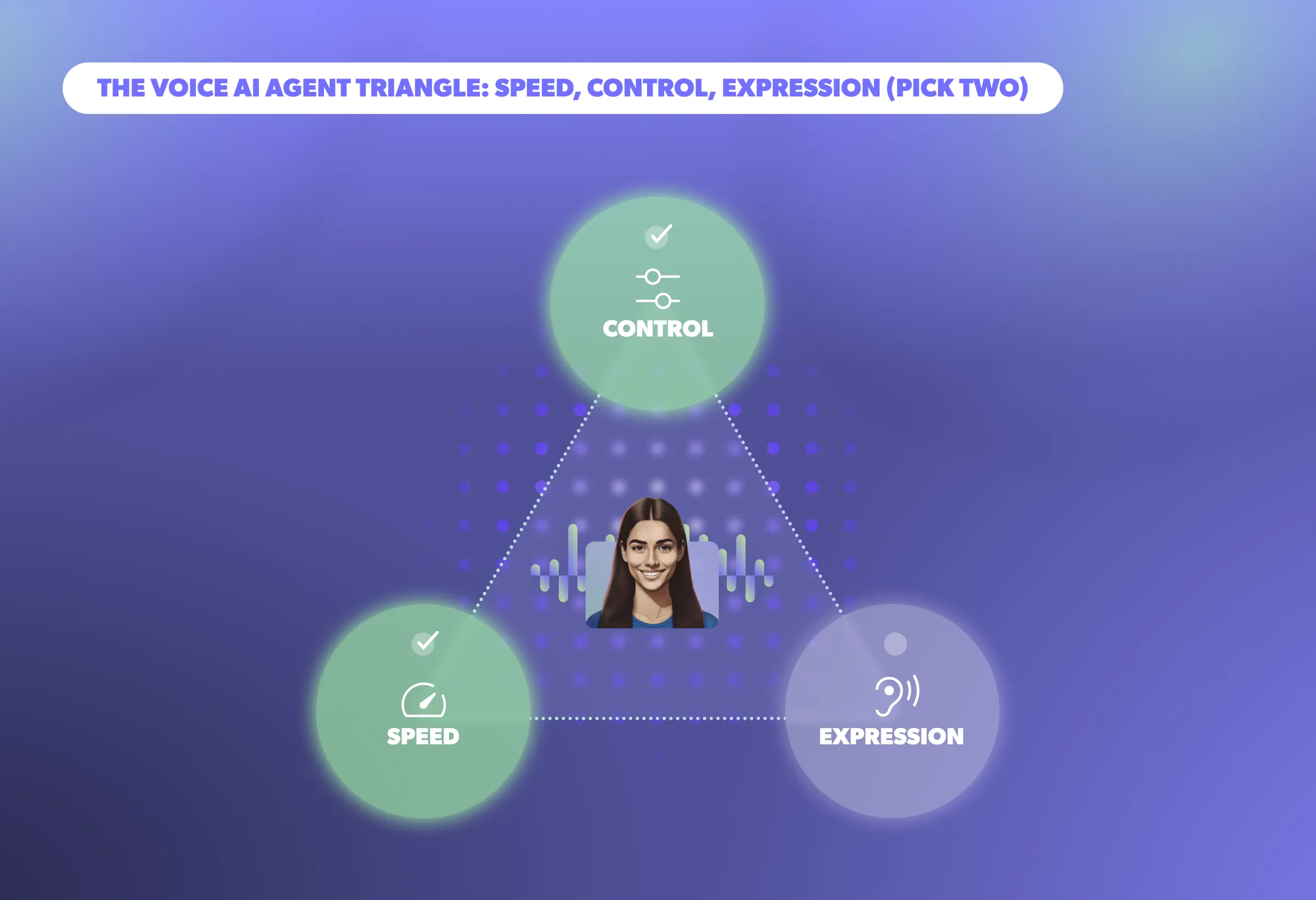
Every production Voice AI agent is a tradeoff system. Successful Voice AI agents are deliberately constrained, and those constraints can be visualized in The Voice AI Agent Triangle.

Read More
How eHealth Elevated the Medicare Experience with Always-On Voice AI

eHealth’s AI agent streamlined Medicare enrollment and support by scaling up for peak call surges, eliminating after-hours wait times, and delivering exceptional experiences for beneficiaries.

Read More
2025 Product Recap: Building the Voice AI Agent Platform for Enterprise

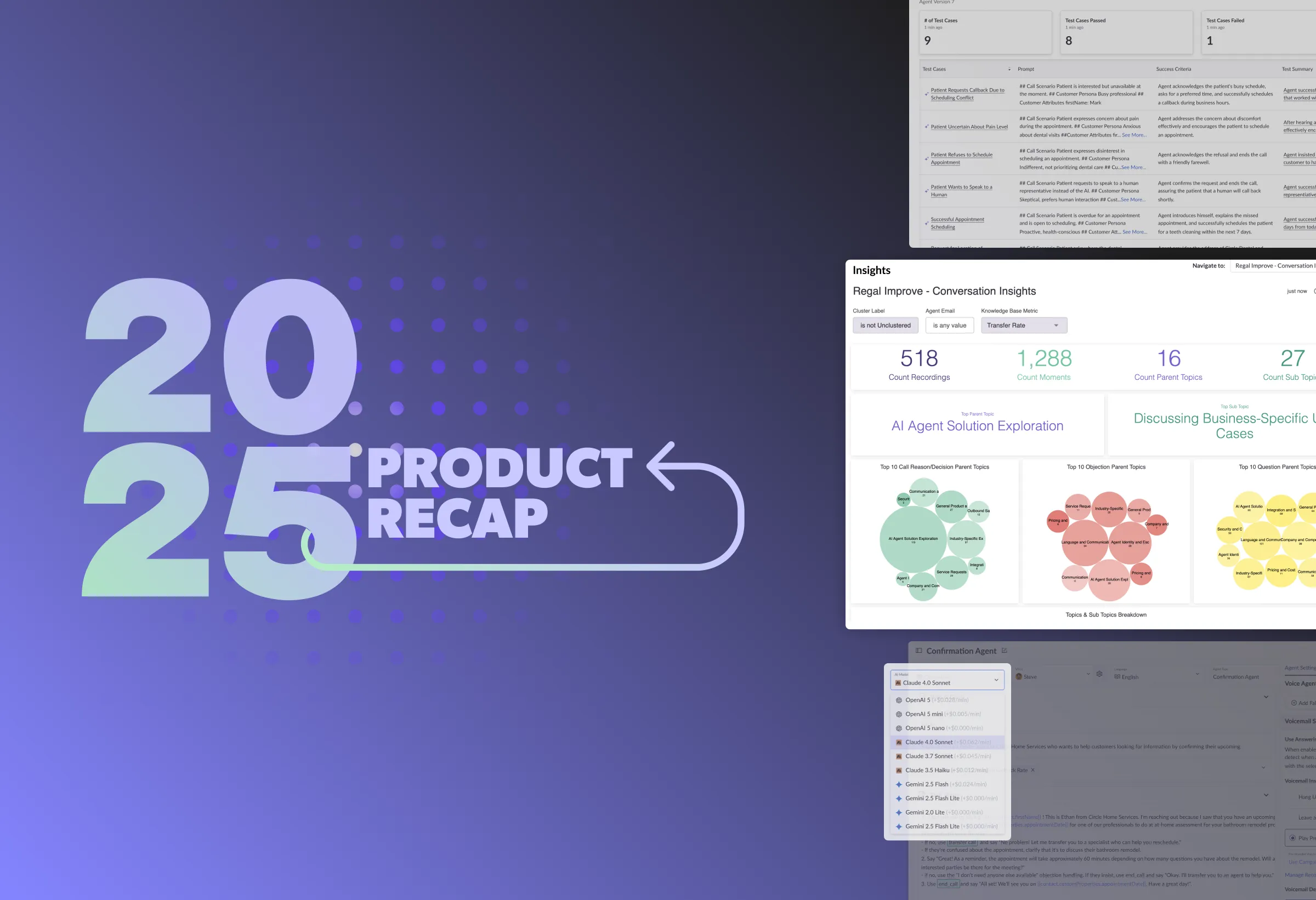
Learn about the 2025's product highlights, from the AI Agent Builder to Simulations, deeper observability, and automated insights for continuous improvement at scale.

Read More
2025 in Review

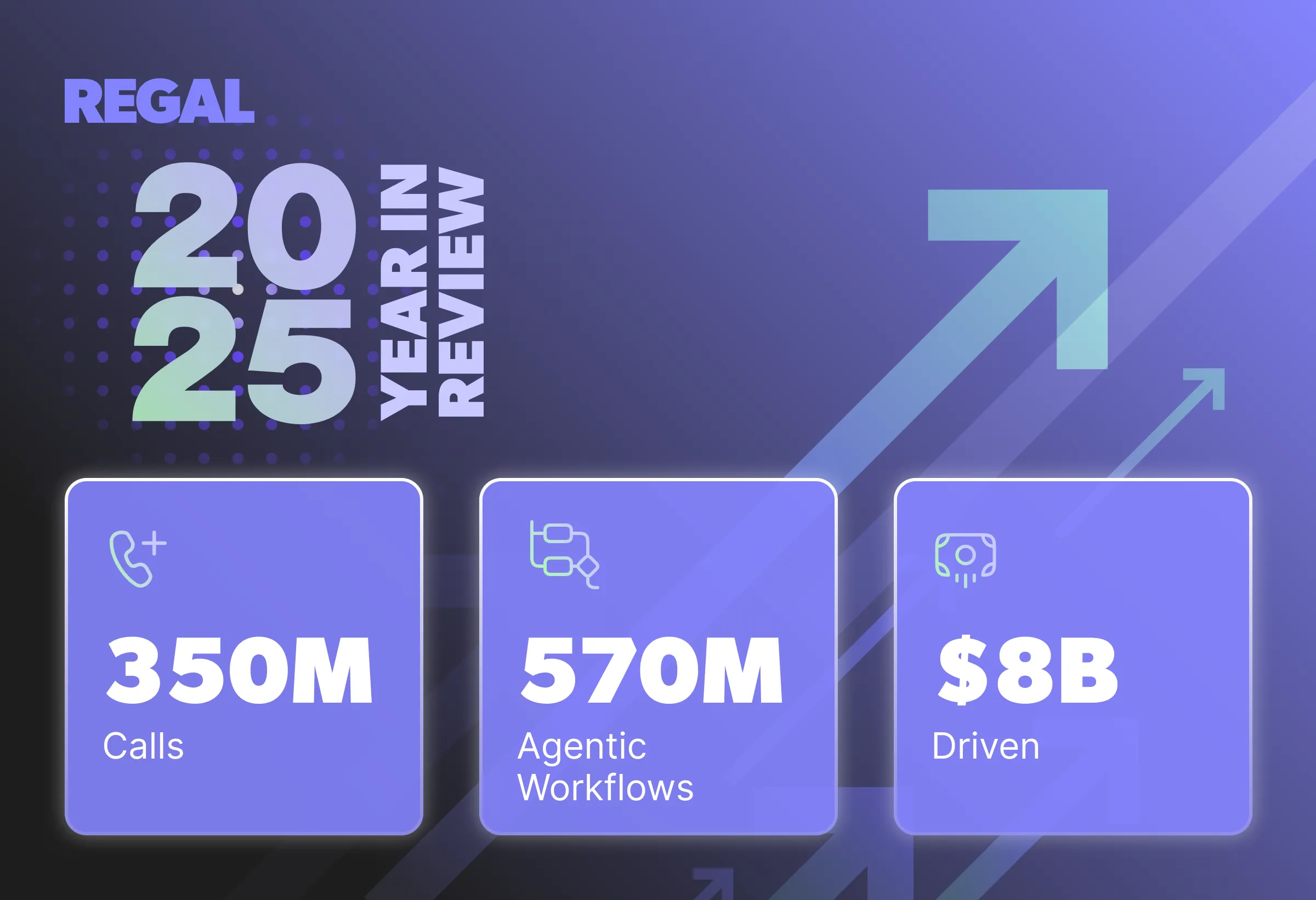
Celebrate a milestone year as Regal customers scaled AI Agents to 350M calls in 2025, and get a preview of Regal's vision for 2026 to help teams build and improve agents faster, with less effort.

Read More
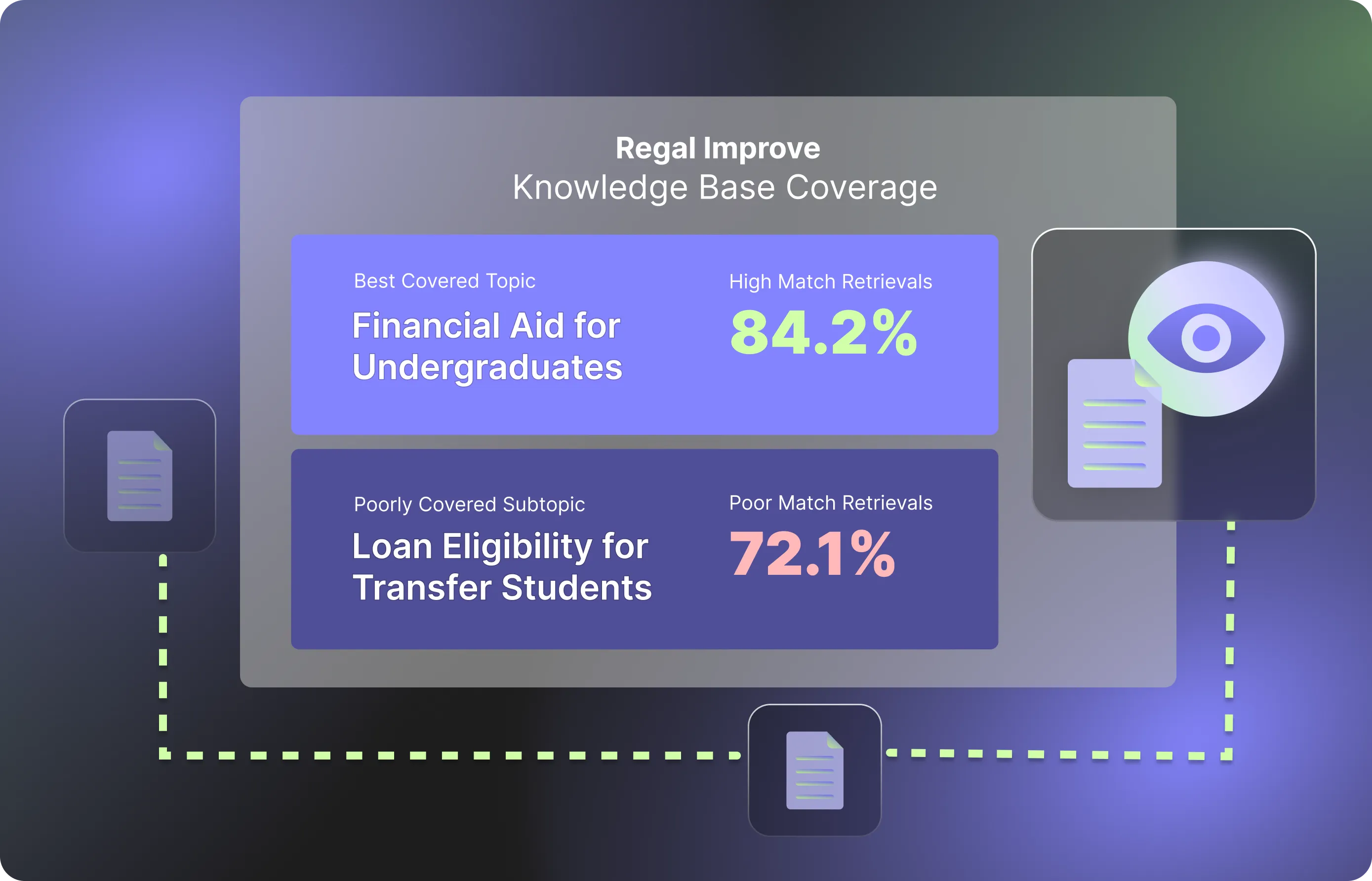
Pinpoint Critical Knowledge Base Gaps with Regal Improve

‍Customer conversations are inherently dynamic, and Regal Improve’s Knowledge Base Coverage tracks changes in retrieval performance over time and at scale. This makes it easy to verify that KB updates increase coverage and if your documentation is keeping up with evolving customer requests.
Read More
November 2025 Releases

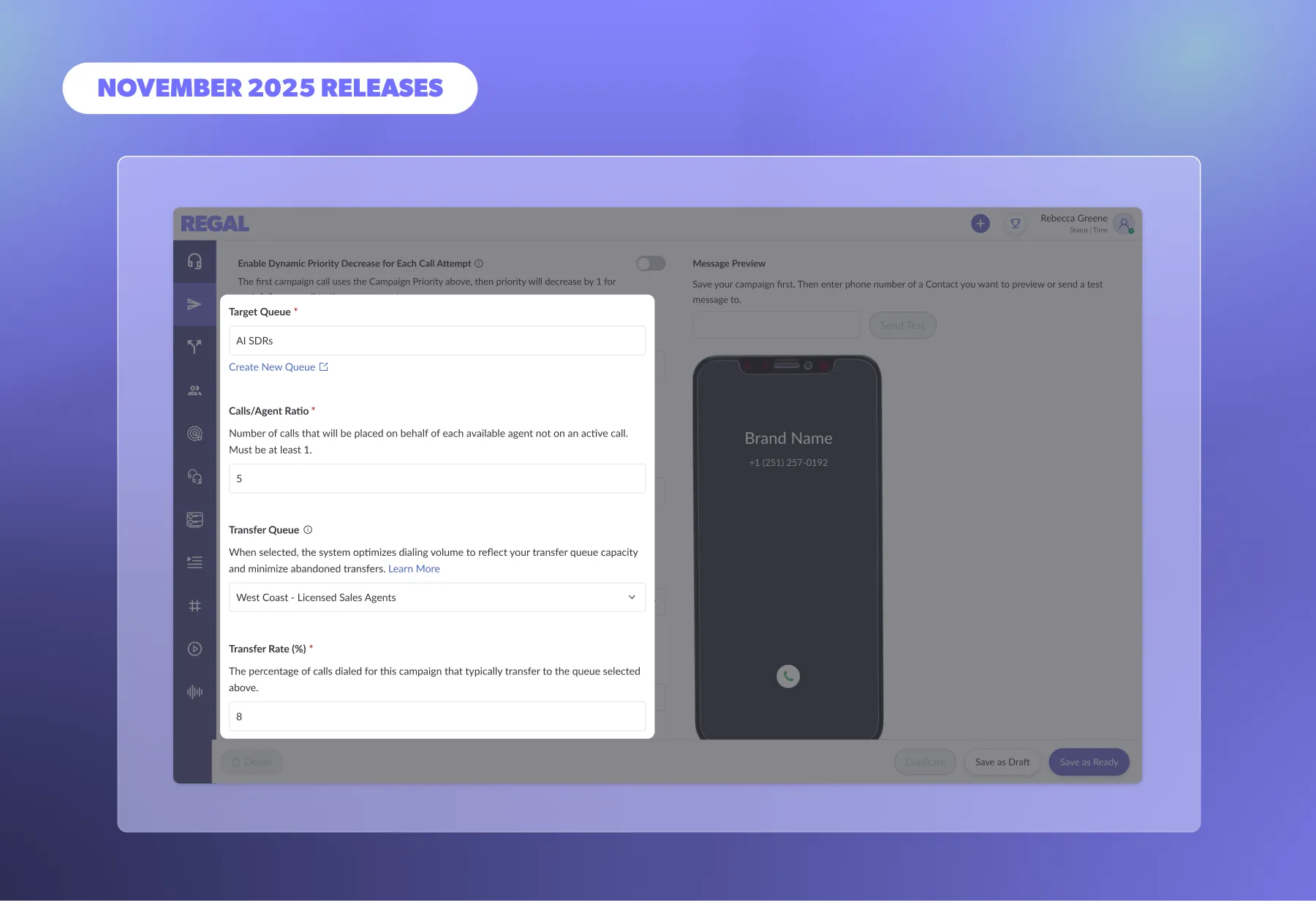
November's releases make it easier to scale your transfer-heavy call flows, with new tools that align dialer pacing to downstream agent capacity and streamline complex handoffs. You’ll also see improved post-call workflow accuracy, with reliable data extraction and disposition outcomes driven by LLM configurability and earlier validation.
Read More
Teaching Voice AI to Behave: Prompting Principles Every Parent Already Knows

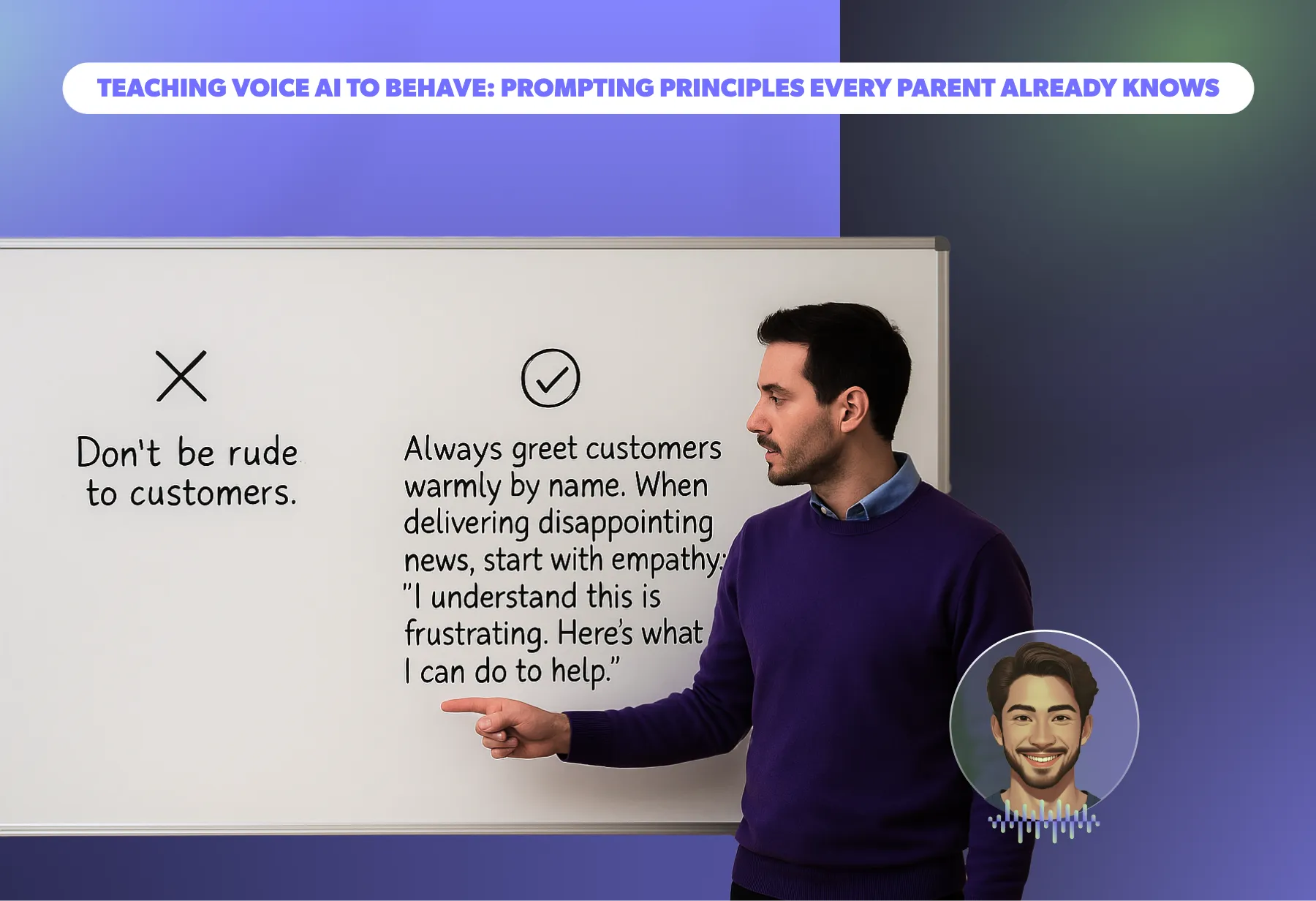
Building a great AI voice agent isn’t so different from parenting a five-year-old: clarity, examples, and structure make all the difference. This post breaks down proven prompting principles—from positive framing and persona design to conversational guardrails—that help AI agents sound natural, stay on task, and follow directions every time.
Read More
How to Make Voice AI Agents Think and Act Like Your Best Human Agents

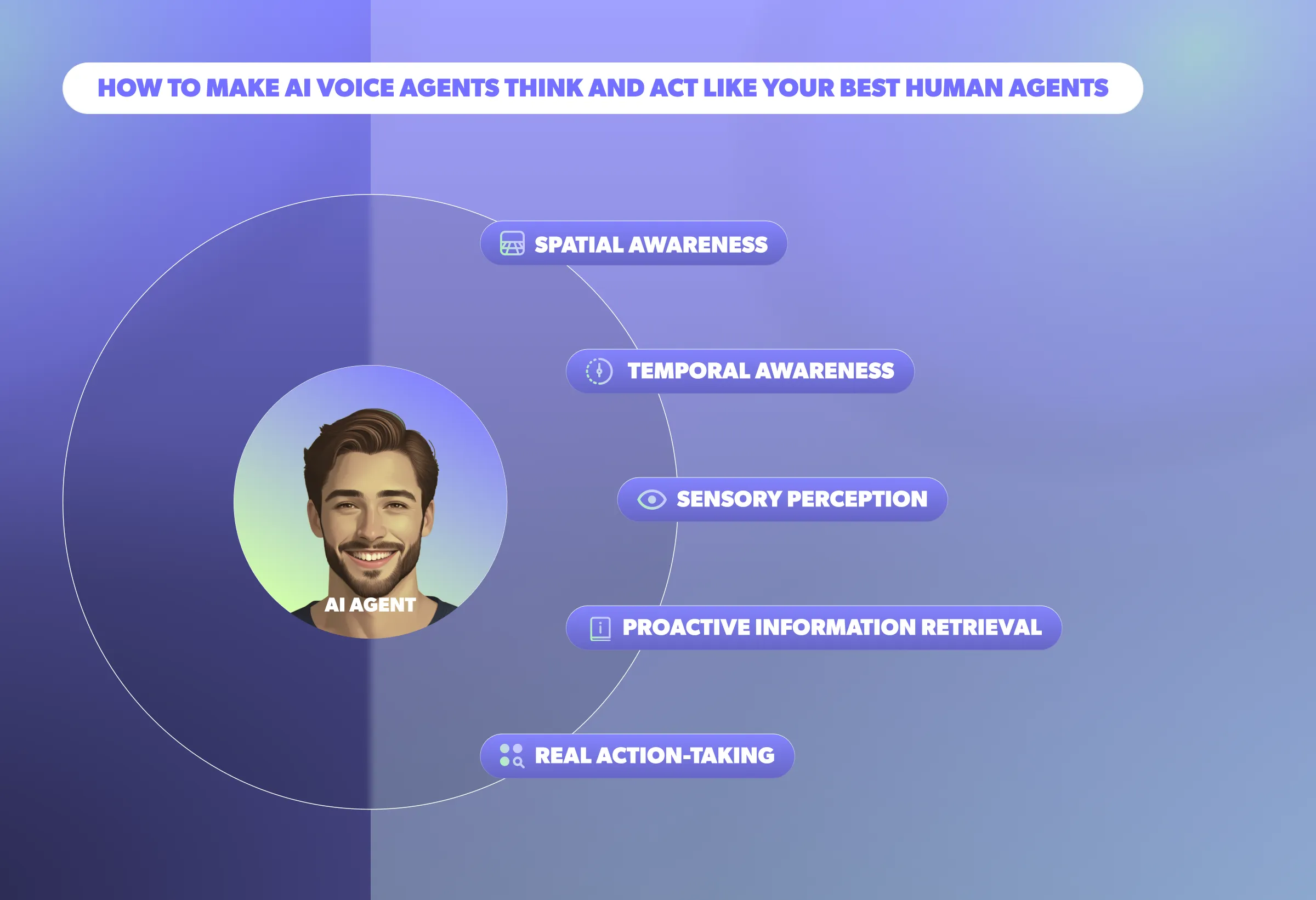
See how modern AI voice agents can match your best human reps by building five core capabilities into every call: spatial awareness, temporal awareness, sensory perception, proactive retrieval, and real action-taking. This post breaks down what each pillar means in practice and how they turn voice AI from a conversational bot into a fully empowered operator.
Read More
How Kin Insurance & a360inc Achieved Faster Outreach and Better Customer Experiences with AI Agents

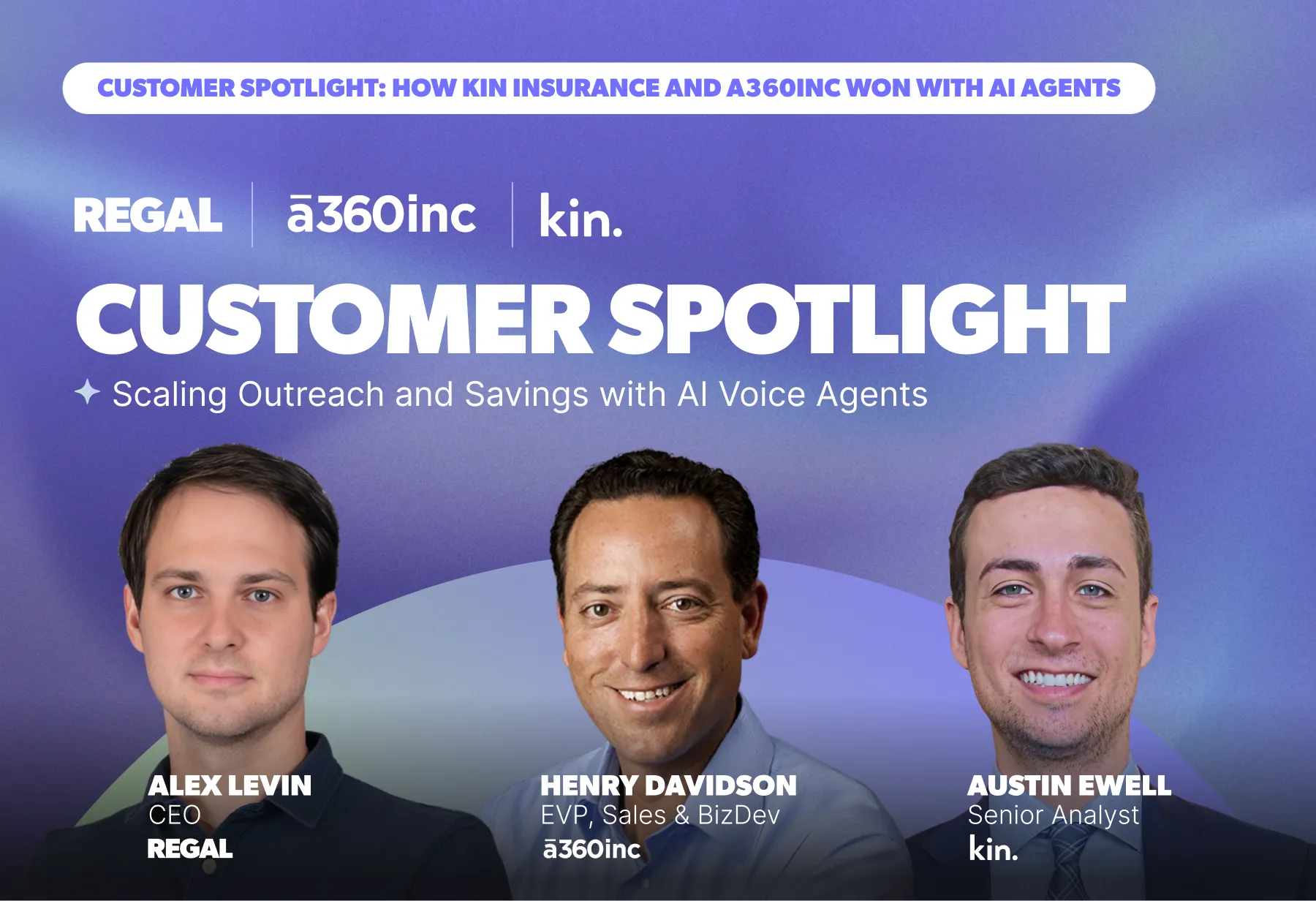
In this fireside chat, Regal Co-Founder & CEO Alex Levin sits down with Kin Insurance’s Austin Ewell and a360inc’s Henry Davidson to share how their organizations are using AI agents to transform outreach, customer experience, and operational efficiency. They discuss real-world deployments—from qualification and human agent handoffs to complex negotiation workflows—break down the results, and offer practical guidance for leaders adopting AI agents at scale.
Read More
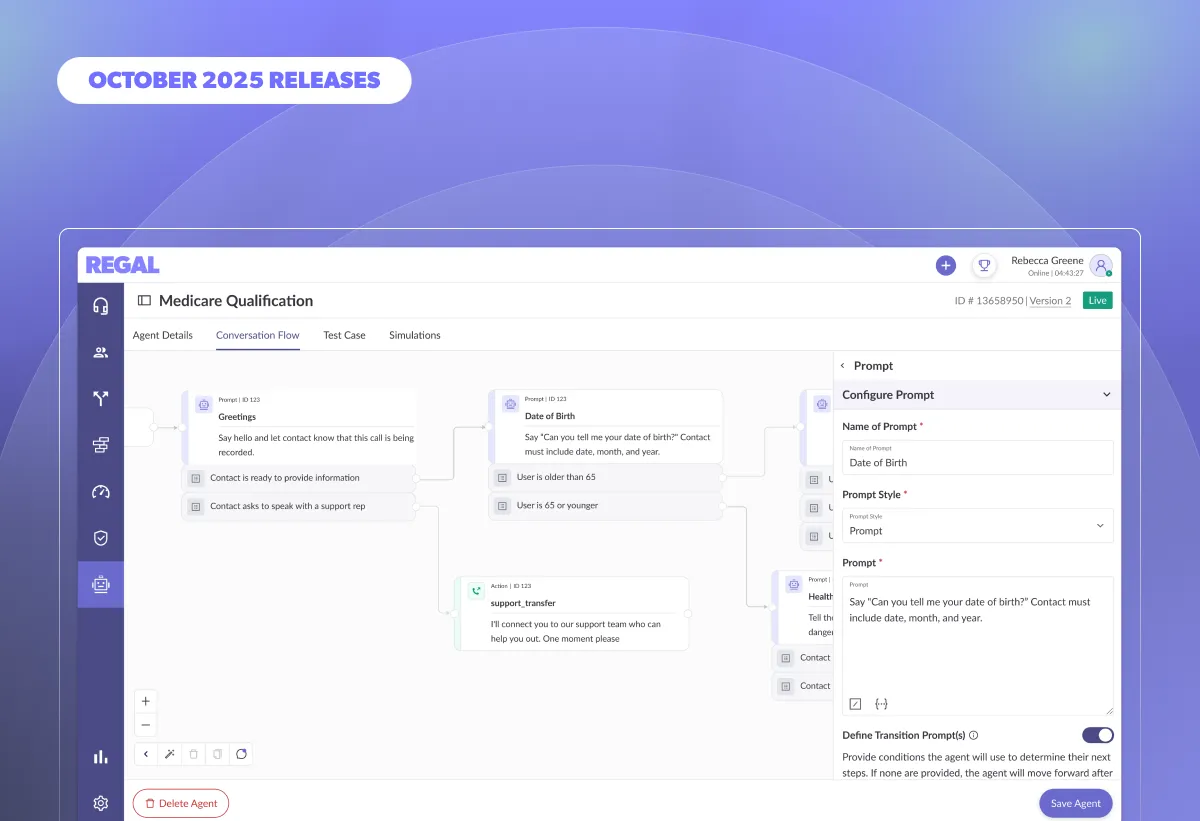
October 2025 Releases

October’s releases give you deeper structure and insight across your AI operations—from designing predictable, multi-state conversation flows and delivering seamless human handoffs to uncovering performance insights and strengthening your agents’ knowledge for continuous improvement.
Read More
How a360inc automated notary outreach and negotiation

See how a360inc automated notary outreach and negotiation with Regal’s AI Agent, cutting costs by 80%, saving money on bid collection, and boosting coverage with unlimited outreach, structured negotiations, and reliable data capture.

Read More
September 2025 Releases

September’s releases give you greater visibility and control across your AI operations—from monitoring agent action invocations, contact receptiveness to AI, and dialing compliance, to experimenting confidently with the latest LLMs and expanded Simulations coverage.

Read More
Introducing the Multi-State Agent Builder

Introducing Regal’s Multi-State Agent Builder, a purpose-built tool for orchestrating complex, non-linear conversations. Gain full control over prompts, logic, and actions to scale AI agents with accuracy, personalization, and enterprise reliability.

Read More
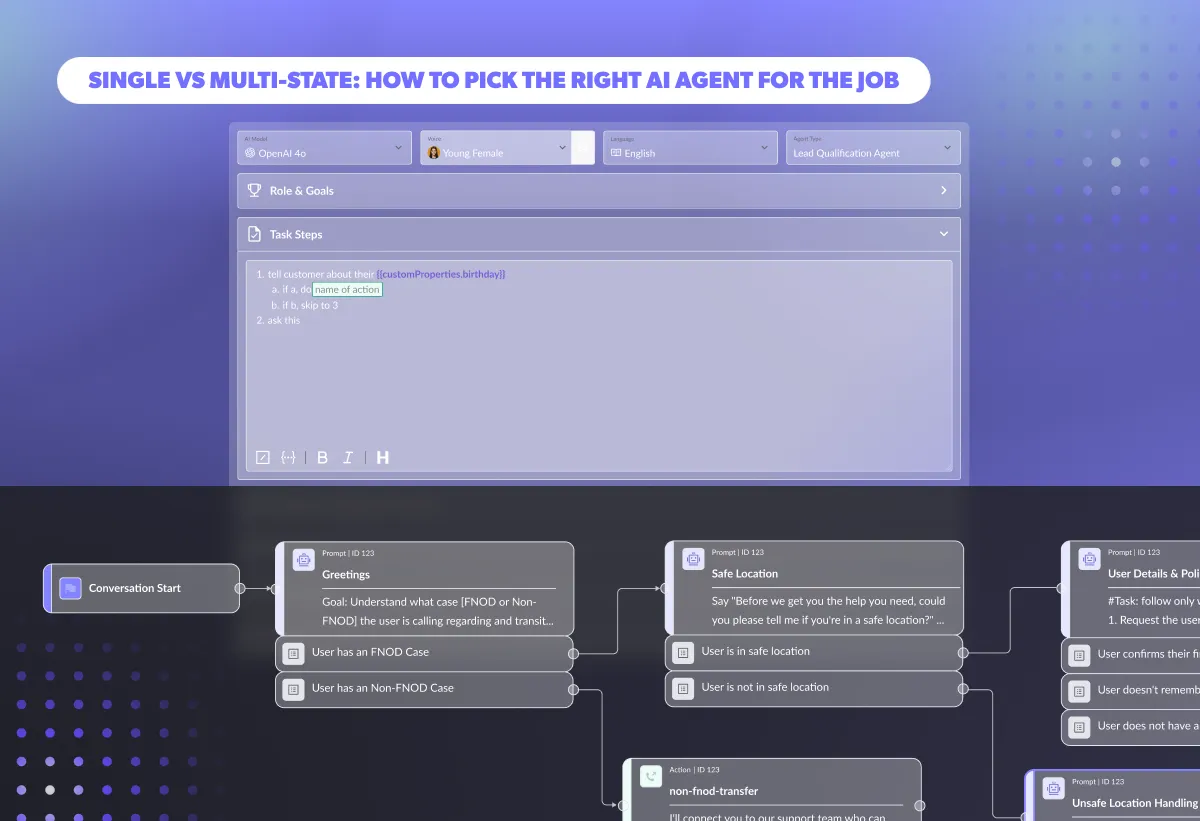
Single vs Multi-State: How to Pick the Right AI Agent for the Job

Learn about the difference between single-state and multi-state AI agents, and how each impacts speed, scale, and reliability. Discover when simplicity is enough and when enterprise workflows demand structured orchestration, so you can choose the right design for your use case.
Read More
The Evolution of AI Agents: From Chatbots to Multi-State

Trace the evolution of AI agents, from scripted chatbots to IVR systems to single-state GenAI, and now to multi-state agents that unlock true end-to-end orchestration at scale.

Read More
The 6 Testing Capabilities Every Voice AI Platform Should Deliver

Explore the six testing capabilities that ensure voice AI agents deliver consistent, trustworthy customer experiences at scale.

Read More
From Pilot to Scale: How to Test AI Voice Agents in Regal

See how to test AI Voice Agents in Regal with simulation-based suites, manual checks, and end-to-end validations. Ensure logic, voice, and telephony all perform reliably so every deployment scales with confidence.

Read More
The Rise of Voice AI Agents: Real-World Deployments Across the Enterprise

In this AI4 fireside chat, Regal.ai COO Sahil Mehta and TaskUs CCO Jarrod Johnson explore how enterprise organizations are deploying voice AI agents across customer experience, support, and sales. They share real-world deployments, discuss quality and ROI trade-offs, and outline best practices for aligning operations and product teams when adopting AI agents at scale.
Read More
Measuring AI Agent Success: An Enterprise Guide

Learn how to measure AI Agent success in Regal with real-time dashboards, KPI reporting, and custom analysis. Get full visibility into performance, customer experience, and business impact—so every deployment drives results.

Read More
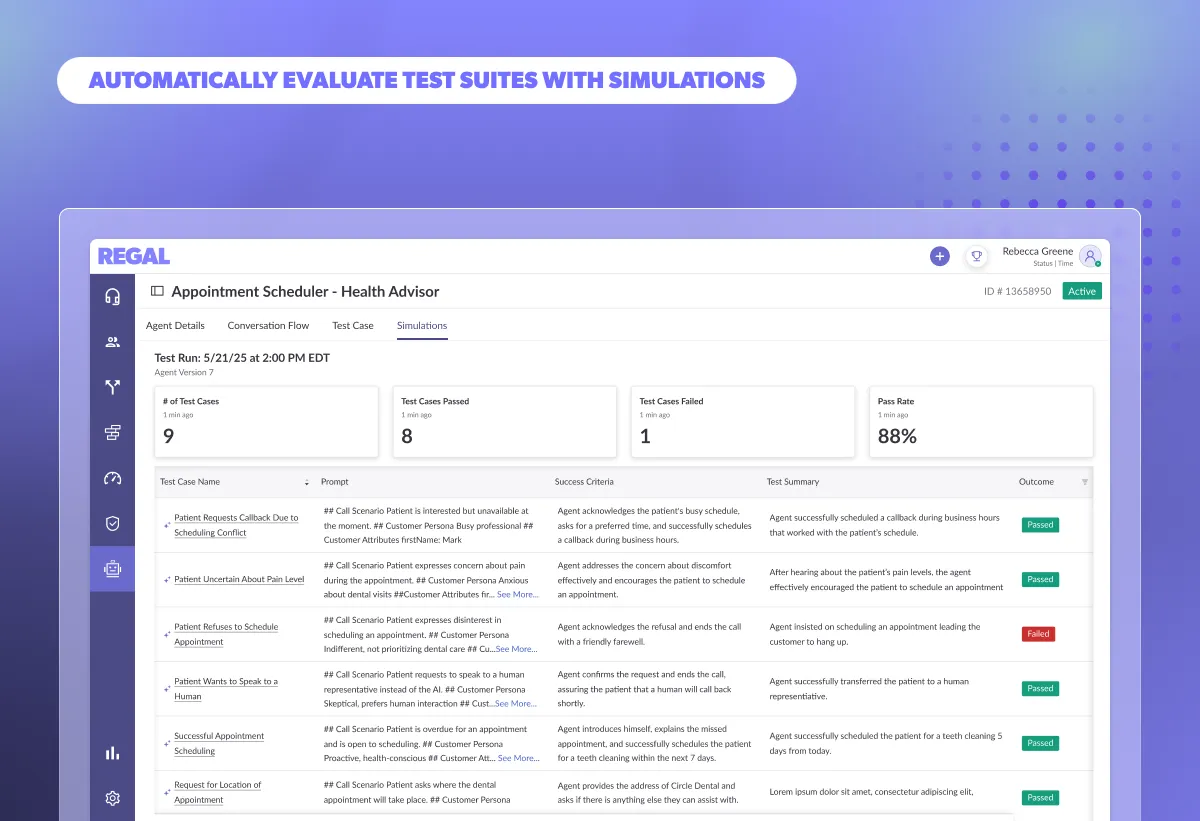
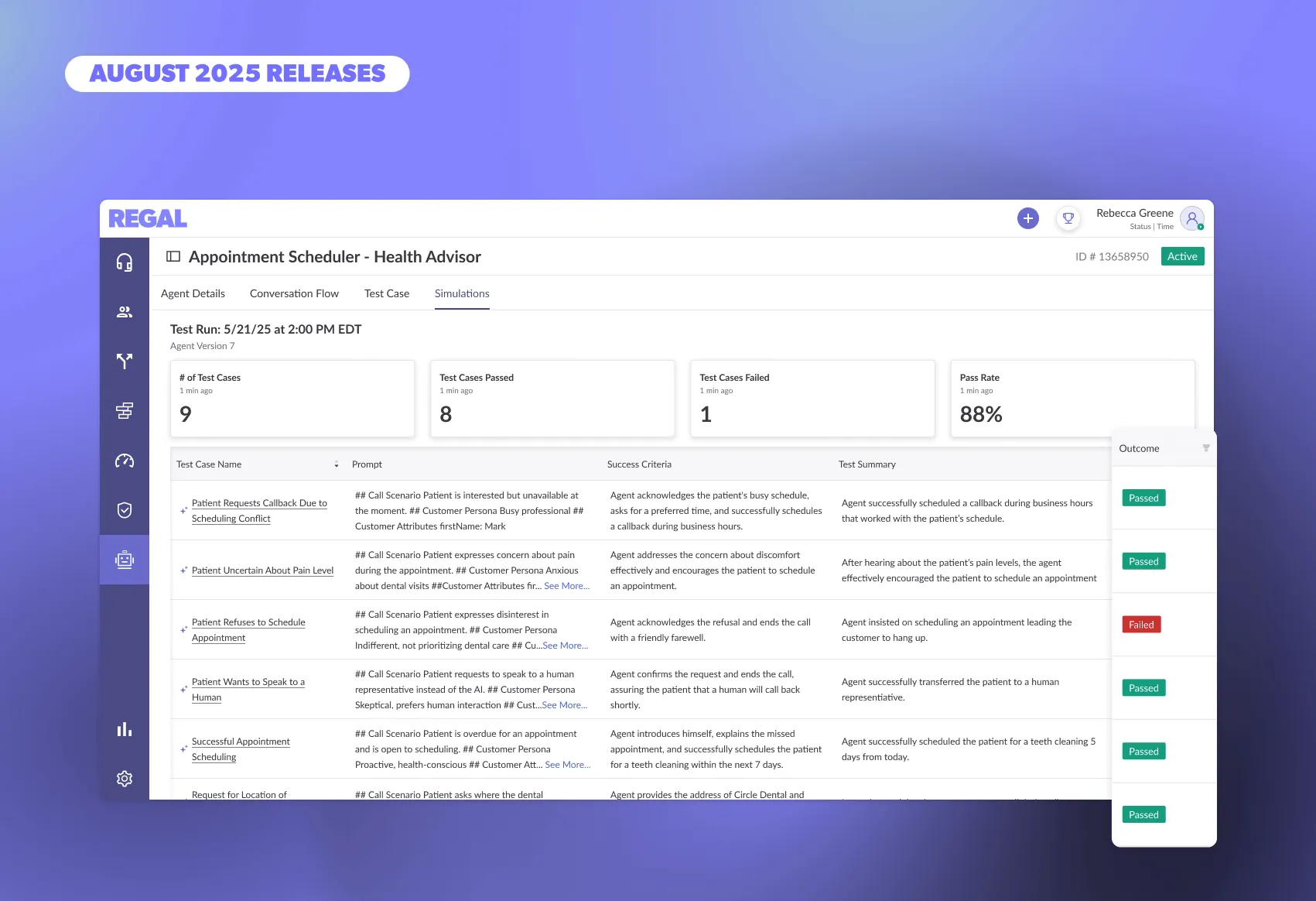
Automatically Evaluate Test Suites with Simulations

Discover how you can use Simulations to evaluate scenario-specific conversational flows that pinpoint AI Agent failures before launch. Speed up regression testing, validate prompts, knowledge bases, and custom actions at scale, and deploy reliable AI Agents with confidence.
Read More
August 2025 Releases

New features include automated test evaluations, the Regal Improve insights dashboard, PII-safe recording actions, 25 ultra-realistic voice options, bulk Knowledge Base URL upload, and expanded quiet hours compliance—designed to accelerate iteration, improve agent performance, and safeguard customer trust.
Read More
RAG Hygiene: How to Scale and Maintain AI Agent Knowledge

Learn how to maintain a clean, reliable RAG system for AI Agents. Discover best practices for structuring source docs, chunking content, titling for retrieval, avoiding redundancy, and keeping knowledge bases fresh to ensure accurate, scalable performance.
Read More
Announcing Regal + ElevenLabs: Dynamic Voices for Every Conversation

Regal and ElevenLabs bring expressive, multilingual AI voices to customer and sales conversations, adapting tone and emotion in real time to boost conversions, trust, and satisfaction at scale.

Read More
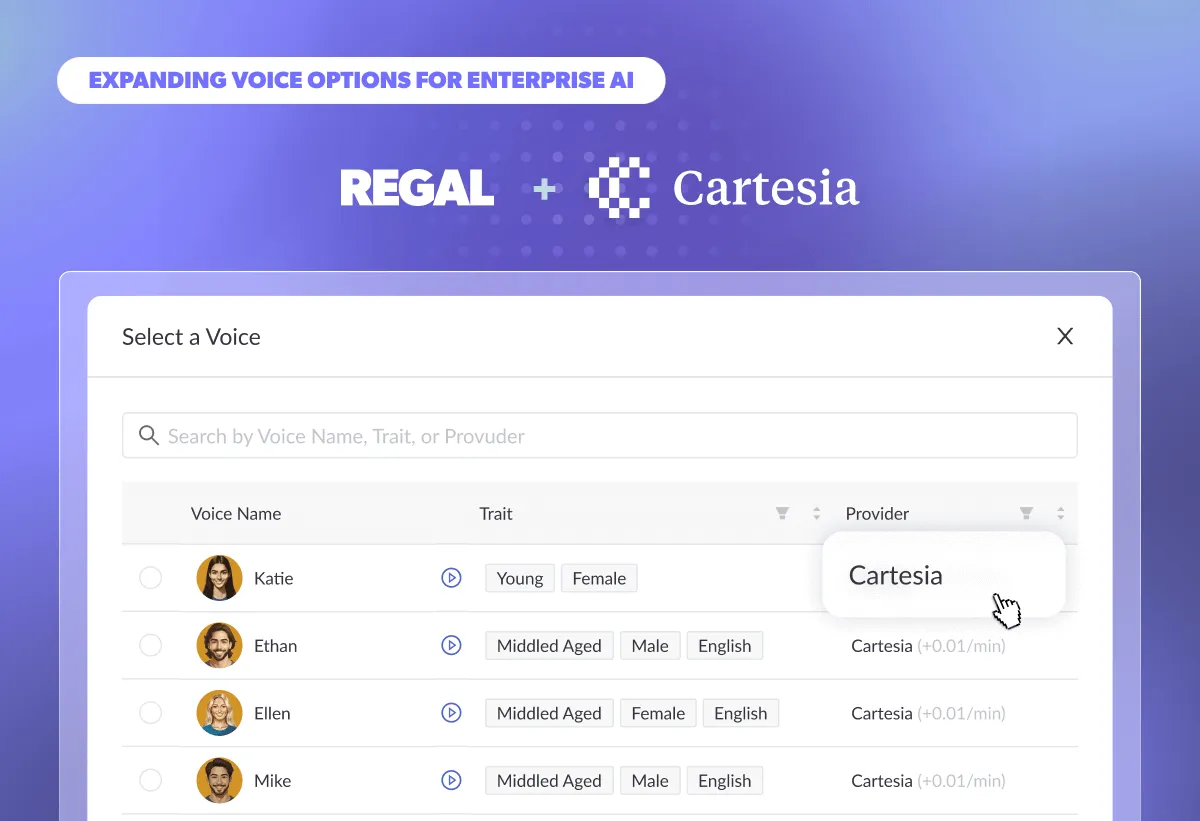
Announcing Regal + Rime: Human-Like Voices at Enterprise Scale

Regal is partnering with Rime to deliver ultra-realistic, emotionally nuanced AI voices for enterprise contact centers. Discover new voice options that capture human qualities like pacing, resonance, and subtle expression, and learn how Rime’s technology powers conversations that build trust at scale.
Read More
Introducing Simulations: End Manual Bottlenecks in AI Agent Testing

Discover how Regal’s AI Simulations eliminate manual QA bottlenecks for enterprise AI agents. Auto-generate test cases, run bulk end-to-end conversations in seconds, and validate performance at scale before any live calls are made.

Read More
Introducing Real-time Agent Stats for Live Performance Monitoring

Introducing five new real-time AI Agent metrics, giving you real-time visibility into transfers, conversation quality, and customer receptiveness to AI.

Read More
Regal Improve: How We Turned Transcripts Into Strategic Insights

Learn how Regal turns unstructured AI Agent transcripts into actionable business intelligence. Discover patterns, pinpoint performance gaps, and update prompts or knowledge bases to improve customer experience at scale.

Read More
Introducing Regal Improve: Conversation Insights for Smarter AI Agents

Regal Improve gives enterprises a scalable way to analyze thousands of AI agent calls, uncover conversation patterns, pinpoint knowledge gaps, and improve AI performance and customer outcomes over time.

Read More
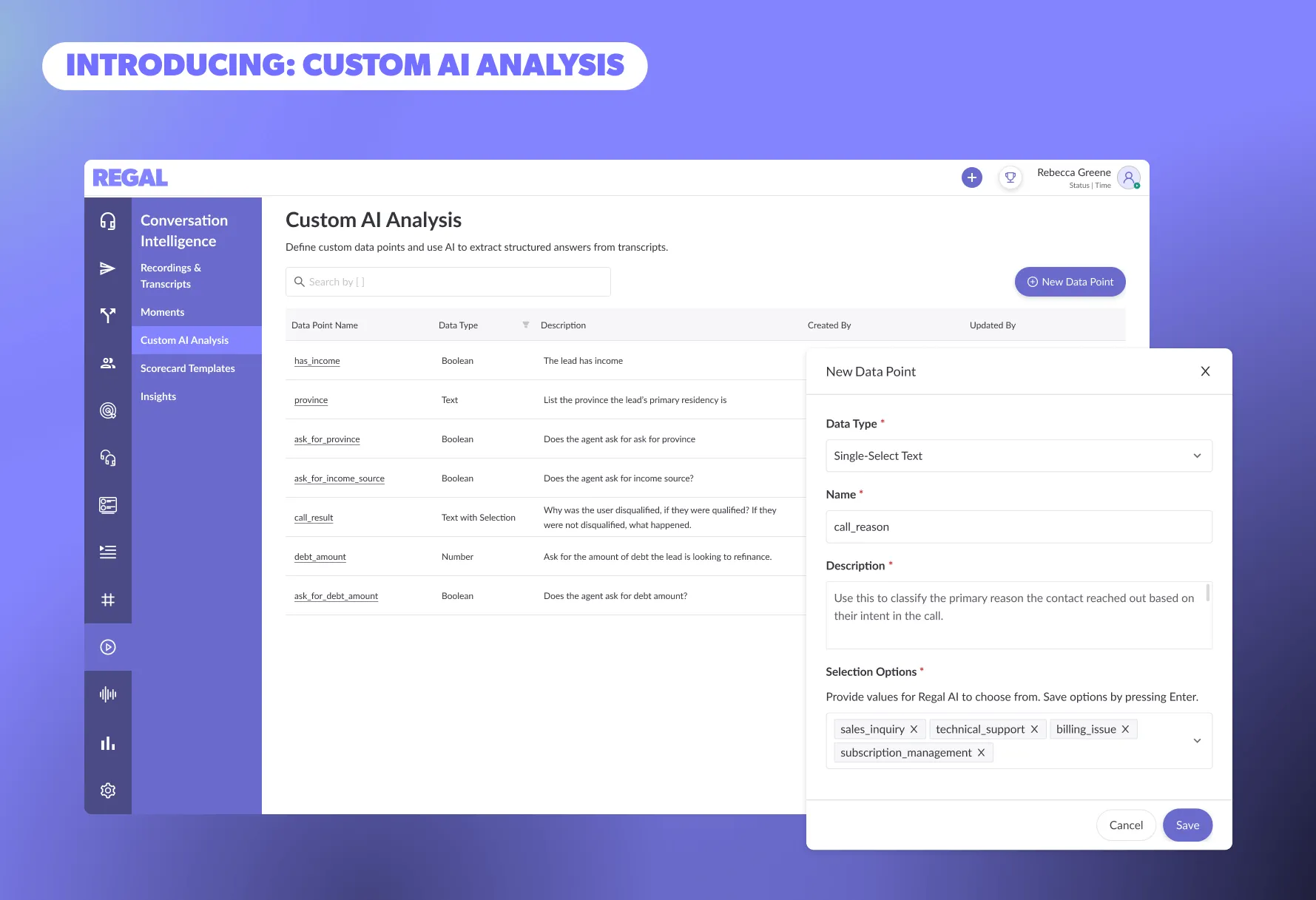
Introducing Custom AI Analysis: Extract Data from Every Conversation

Regal’s Custom AI Analysis transforms post-call transcripts into actionable, structured data points, so you can personalize follow-ups, analyze trends in-aggregate, and scale improvements across every interaction.

Read More
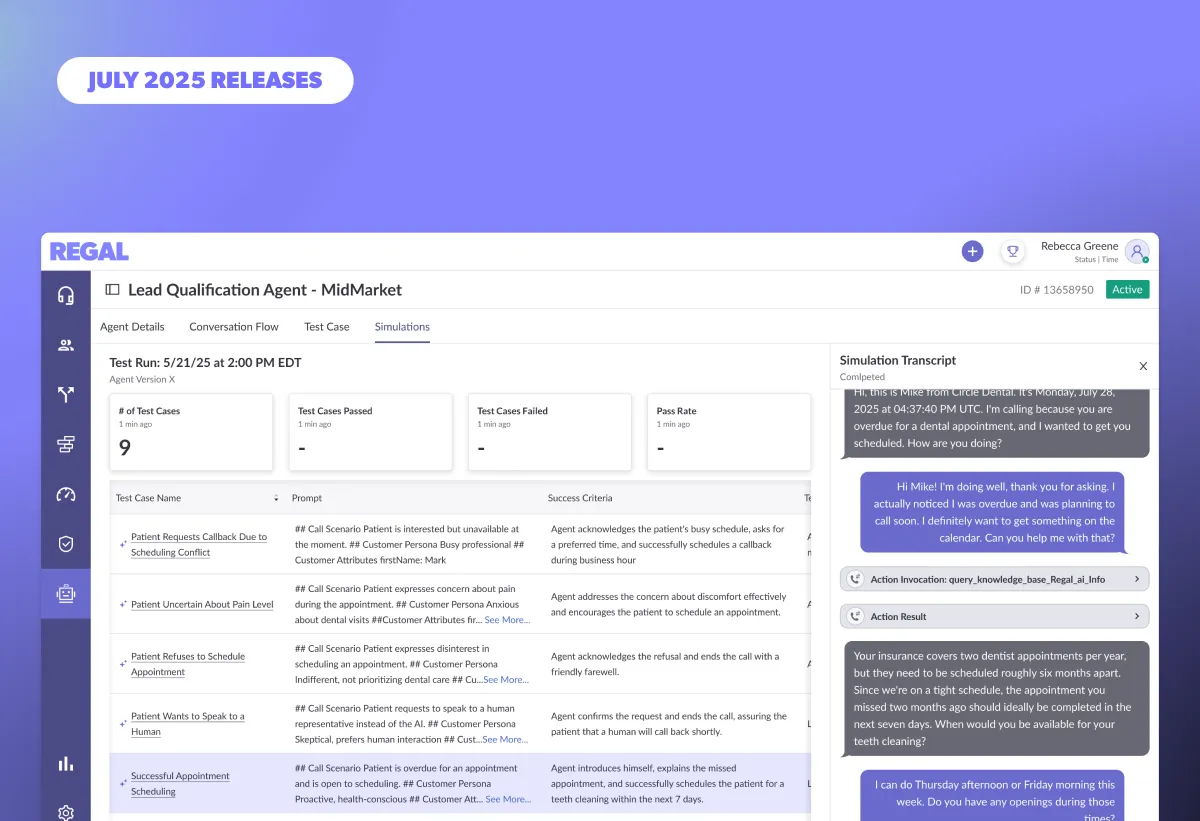
July 2025 Releases

New features include AI-powered conversation simulations, custom post-call analysis, voicemail configuration options, real-time metrics, and full transcript exports, all designed to improve AI Agent performance and compliance.

Read More
Inside Regal’s H2 Roadmap Reveal: The Future of AI Agents

If you missed our H2 Roadmap Reveal, here are the biggest takeaways, including real customer wins and a preview of what’s coming in the second half of the year.

Read More
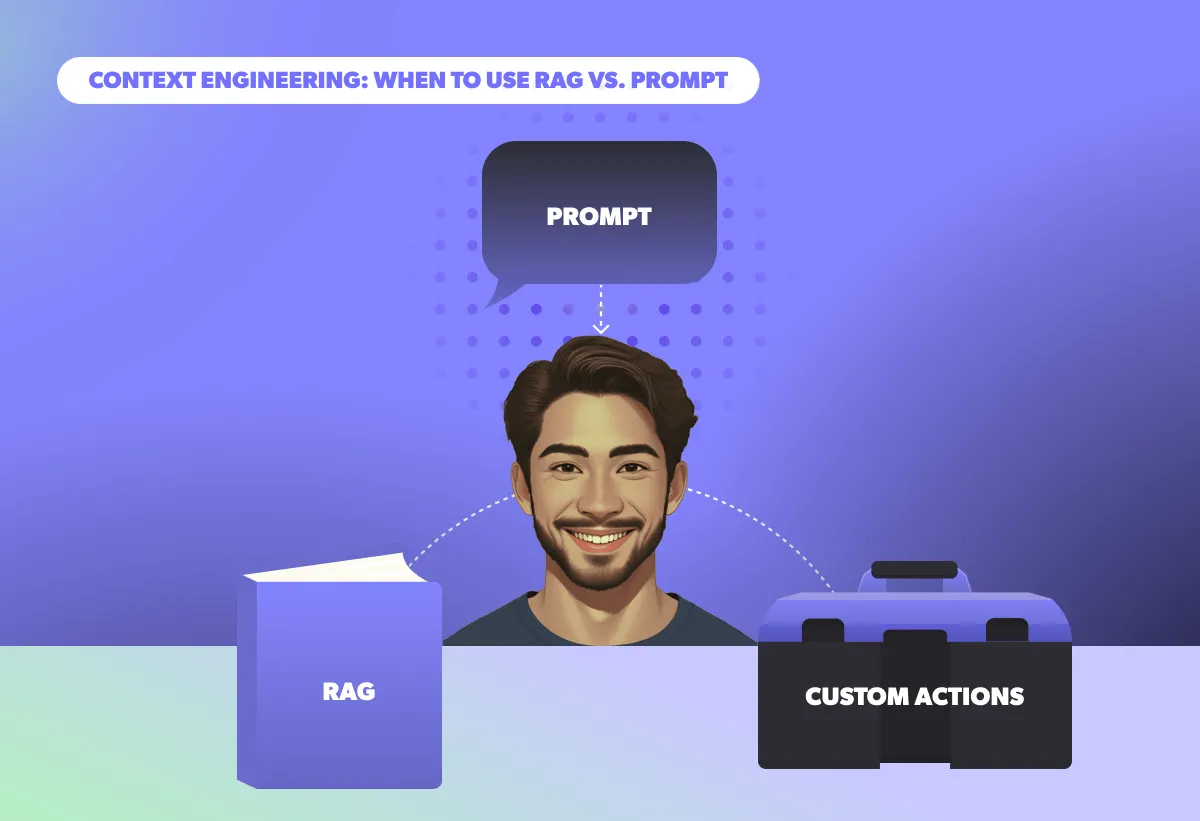
Context Engineering for AI Agents: When to Use RAG vs. Prompt

Master context engineering by choosing the right method for AI agent knowledge—prompts for behavioral control, RAG for long-form, unstructured data, and custom actions for precise lookups.

Read More
Building AI Voice Agent-Ready APIs: Lessons from the Front Lines

Lessons from the frontlines on how to build AI Voice Agent-ready APIs.

Read More
Announcing Regal + Cartesia: Expanding Voice Options for Enterprise AI

Regal is partnering with Cartesia to deliver ultra-low latency, high-fidelity AI voices for enterprise contact centers. Explore new voice options, hear them in action, and learn about Cartesia's industry-leading voice AI offerings.
Read More
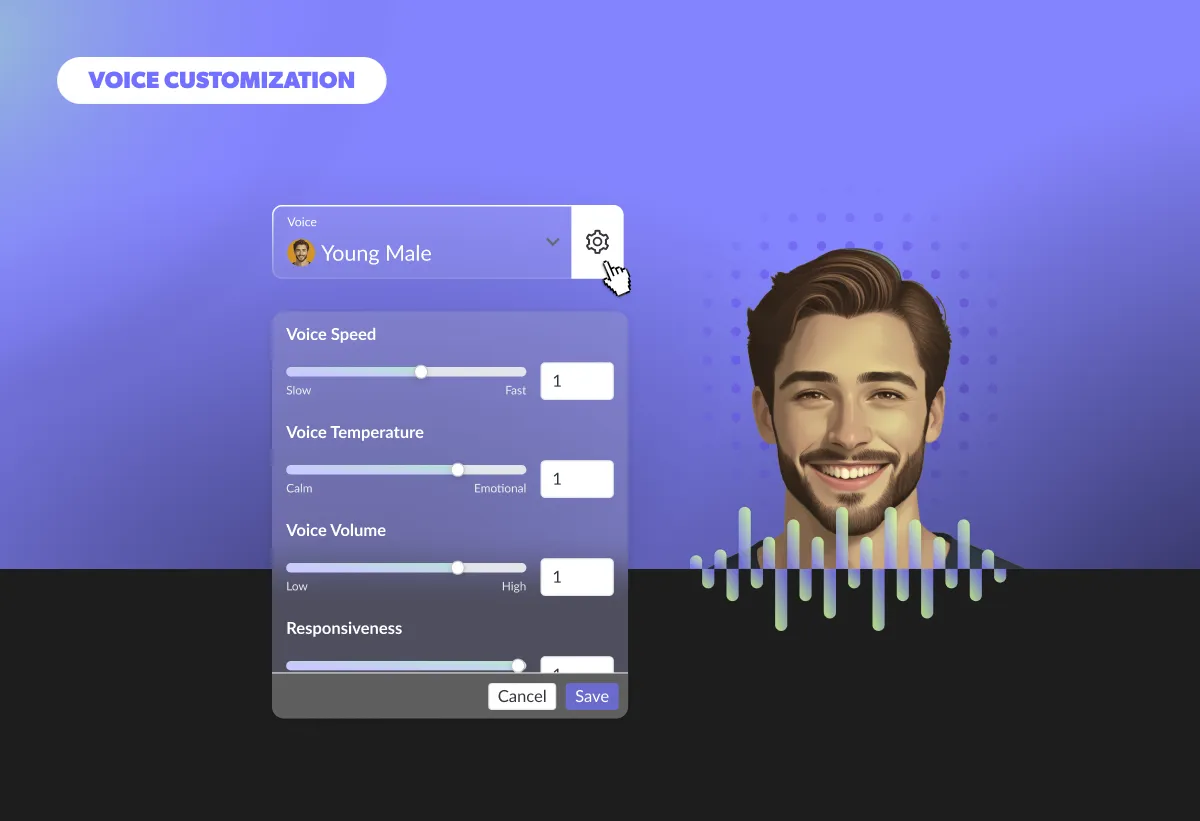
How to Perfect Your Voice AI in Regal

Learn how to tune AI voice agents for sales, compliance, and customer experience. Explore Regal’s voice parameters, like speed, tone, temperature, responsiveness, to optimize conversion, clarity, and trust at scale.

Read More
The LLM Matchmaking Guide for Enterprise-Grade AI Agents

This guide outlines the capabilities, trade-offs, and real-world applications of every model currently supported in Regal.

Read More
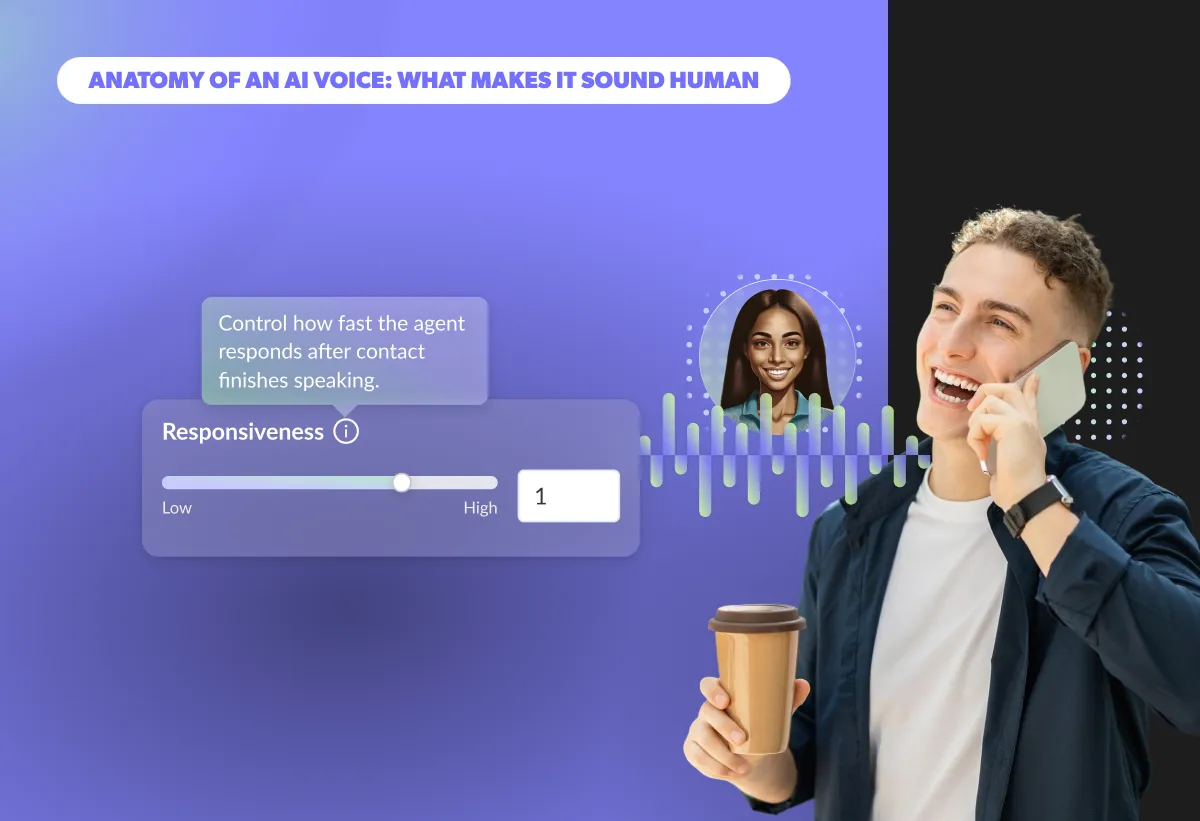
Anatomy of an AI Voice: What Makes It Sound Human

This article outlines the core characteristics that influence how voice AI is perceived on live calls. From mechanical traits like speed and volume, to more emotional and conversational behaviors, we’re going to look at what those characteristics mean, why they matter, and how they impact your bottom line.
Read More
Voice AI Customization 101: Settings That Work Best

Learn how to configure your AI Voice Agent for real performance. This guide covers the most important voice settings in Regal, what ranges top brands use in production, and how adjusting speed, tone, and responsiveness impact cost, containment, and overall customer experience.
Read More
Introducing Knowledge Bases for AI Agents

Regal’s Knowledge Base feature brings Retrieval-Augmented Generation (RAG) to Voice AI Agents, enabling real-time access to proprietary data for smarter, compliant, and brand-aligned conversations at scale

Read More
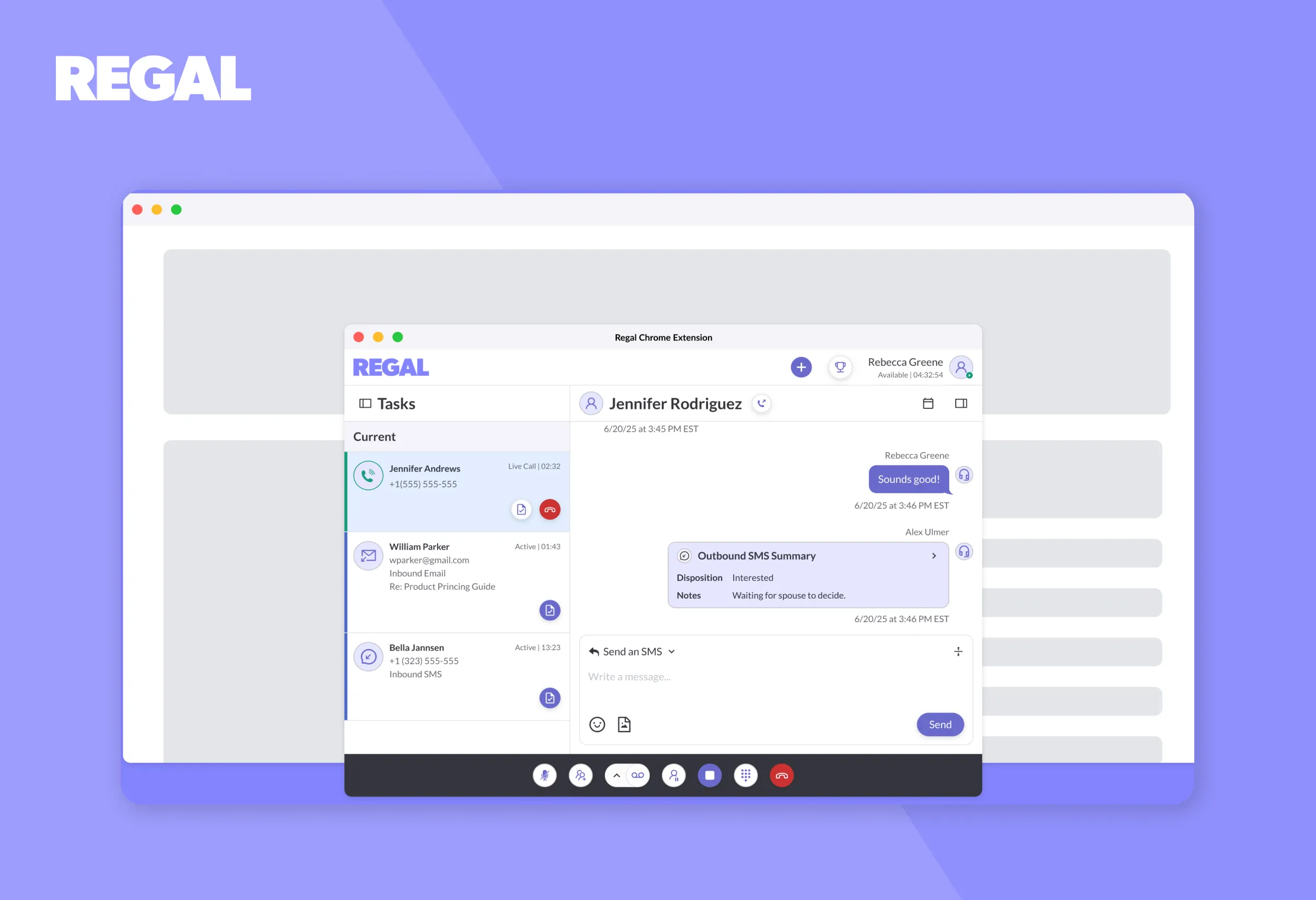
June 2025 Releases

June’s releases give you more control to test, improve, and scale AI agents—while also making life easier for human agent teams. From real-time debugging tools to capacity control and a floating Chrome extension, we’re unlocking faster workflows, better control, and stronger performance across the board.
Read More
RAG: The Reason Regal’s AI Agents Are So Smart

Learn how RAG transforms AI Agent performance by retrieving real-time customer and contact data—ensuring every Voice AI Agent response is unique to your business, contextual, and compliant.

Read More
Introducing Progressive Dial for AI Voice Agents

Discover how you can now staff Regal’s progressive dialer with AI Voice Agents—to run high-volume outbound campaigns with smarter pacing, instant call connection, and voicemail detection—boosting efficiency and eliminating abandoned calls.

Read More
How to Use SIP Headers in Regal to Route and Personalize AI Voice Calls

Learn how to use SIP headers with Regal AI Voice Agents to personalize routing, enrich transfers, and integrate with your existing telephony stack—no backend changes required.

Read More
Build AI Agents Without Code, Directly From Regal’s Platform

Discover how Regal's AI Agent Builder lets enterprises create and deploy custom Voice AI Agents without code, integrate with existing systems, and scale workflows to deliver human-like customer interactions at scale.

Read More
How to Use SIP to Integrate Regal Voice AI Agents with your Contact Center Software

Learn how SIP integration enables enterprises to connect Regal Voice AI Agents to existing CCaaS platforms, pass call context in real time, and deploy voice AI without infrastructure changes.

Read More
May 2025 Releases

May’s releases unlock more conversations with AI Agents through smarter dialing, automatic callback scheduling, and native calendar booking to boost connect rates and accelerate follow-ups.

Read More
How AI Appointment Setter Technology is Redefining CX at Scale

Discover how AI appointment setter technology is being adopted by enterprises in industries like healthcare, insurance, and education as a strategic advantage for scaling operations and improving customer satisfaction.

Read More
The Automated Phone System Revolution: Why 73% of Enterprises Are Getting It Wrong (And How to Get It Right)

Explore how automated phone systems are transforming enterprise communication strategies. Learn how to avoid common pitfalls, optimize customer journeys, and achieve ROI through strategic deployment across industries like healthcare, insurance, and education.
Read More