SEPTEMBER 2023 RELEASES
September 2023 Releases
Conversational AI agents are one of the fastest-growing applications of LLMs, powering enterprise CX interactions across voice, SMS, chat, and email. As these agents become more capable, handling multi-turn conversations and complex actions, the potential business impact continues to grow.
But so does the risk associated with every deployment. Manual tests are no longer enough to cover the breadth of handling scenarios or guarantee consistency at scale with non-determinist responses. Any poor handling case that slips in testing can quickly multiply into large-scale performance issues.
Managing this risk requires a new standard of testing—one that is both robust, varied, and rooted in best practices designed specifically for AI agents.
In this guide, we’ll break down how to test AI Agents in Regal.
You’ll learn what to test (across agent logic, voice, and telephony), when to run tests, how to configure simulation-based test suites, and how Regal helps you automate testing to scale and iterate faster from development to production.
Not all AI Voice Agents are built the same. Testing a conversational voice agent is fundamentally different from testing an inbox automation or a one-off form-filler, because the agent is more deeply rooted in your telephony and tech stack.
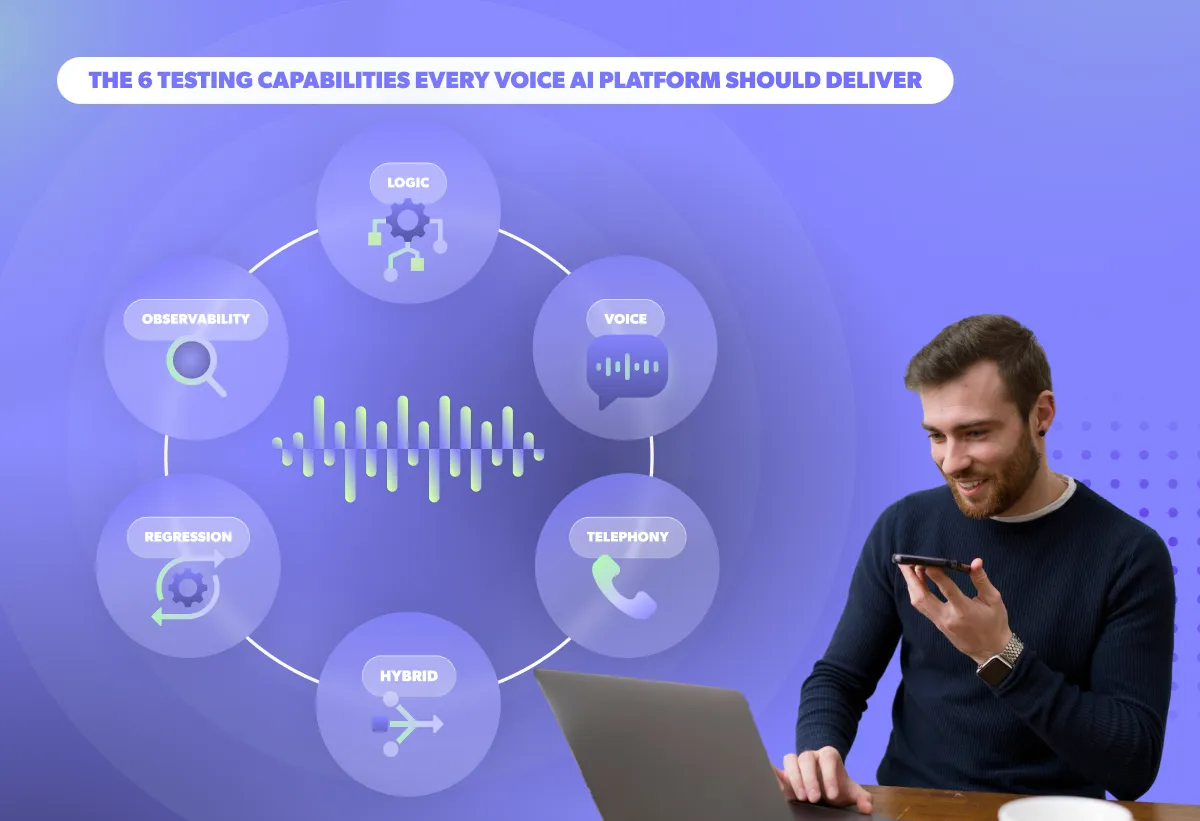
With a complex multi-turn voice agent, testing needs to incorporate each of these layers:
Each of these layers introduces unique challenges—each critical to get right to ensure consistent performance from your AI Agents from day one.
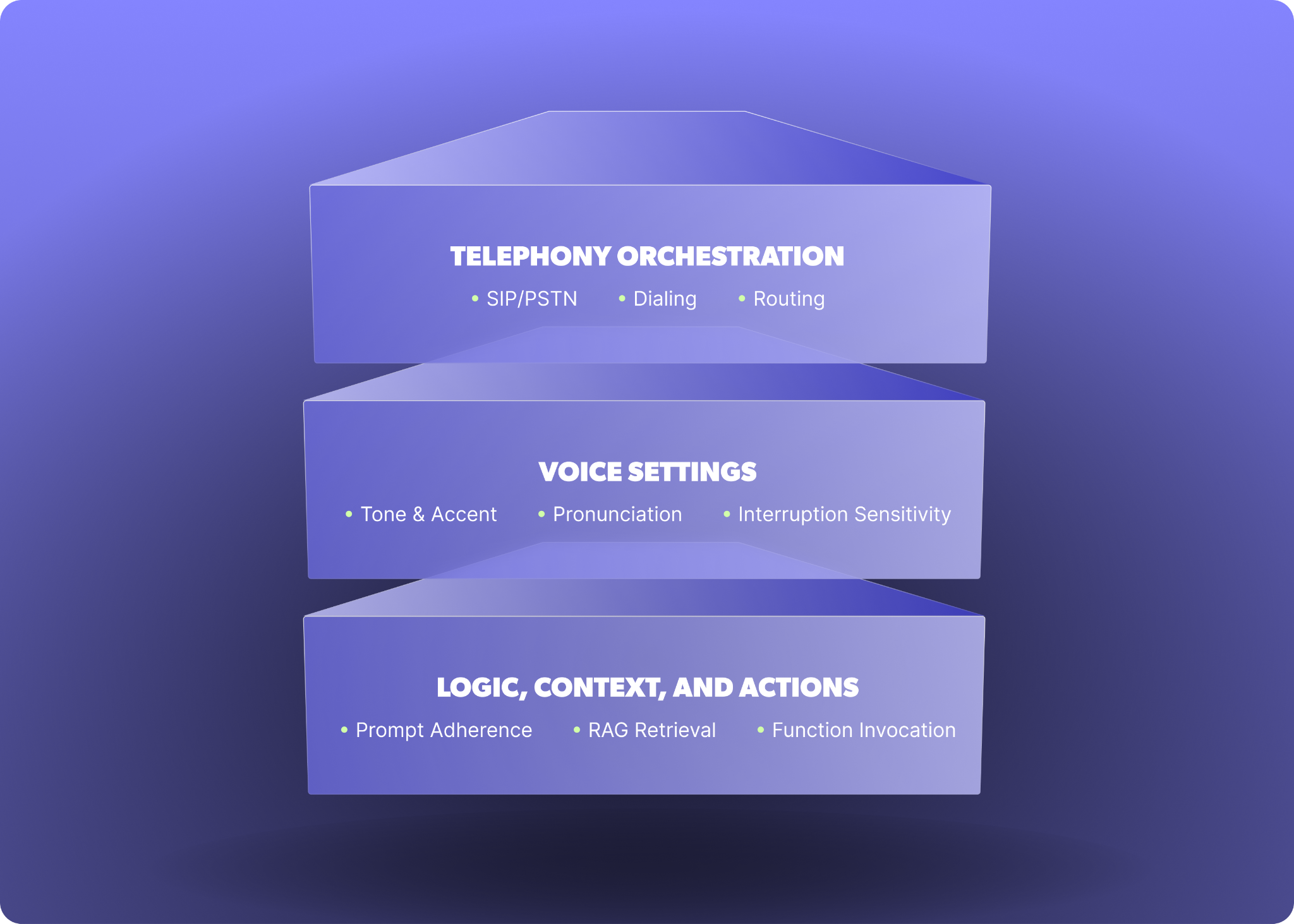
The core of any AI Agent is its workflow logic, context, and actions—how the agent understands and retrieves context, handles objections, and decides whether to call a function or escalate.
In Regal, this is maintained via the agent’s prompt (or prompts for multi-state) and function calls (i.e. task and action instructions, objection handling, and style).
This is where most of your testing iteration should come. By preventing your agent from hallucinating, skipping steps, and misinterpreting objections and questions, they’ll feel truly human, while being more pleasant and helpful for every caller.
Why this matters: Logic drives outcomes. Testing core logic is how you make sure you’re capturing all of the value from a conversation. If the AI is missing on logic and decisioning, then your voice settings and telephony either won’t come into play, or simply won’t matter.
Example: A lead says, “My monthly payments are killing me,” but the agent doesn’t recognize it as a refinancing opportunity because it was trained only on explicit phrasing like “I want to refinance.” Testing core logic enables you to catch and address edge cases like this before launch, expanding coverage and ensuring more conversations lead to qualified outcomes from the start.
On top of logic is the voice layer. This includes voice selections, TTS (text-to-speech) settings, and support for different accents or languages.
Unlike text channels, voice must contend with latency, recognition errors, and background noise. Even pronunciation can be tricky—brand names or uncommon words often come out wrong unless explicitly prompted.
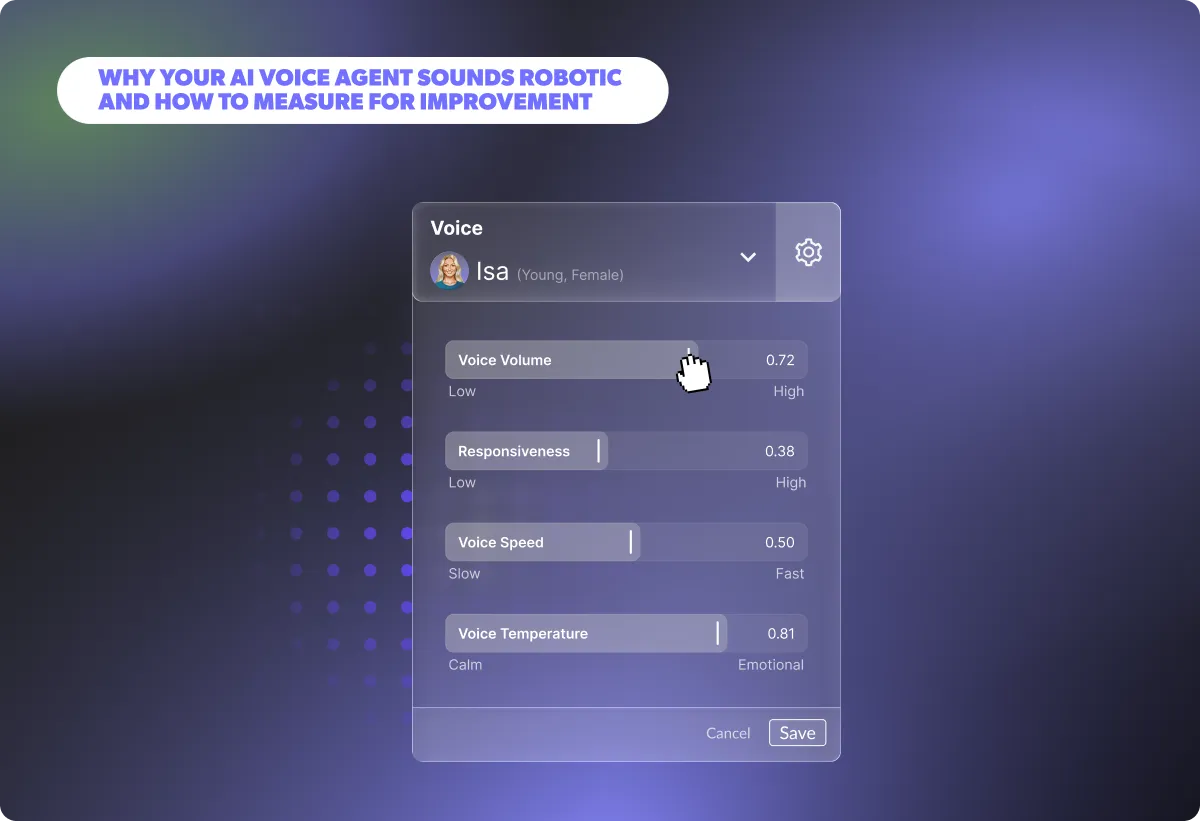
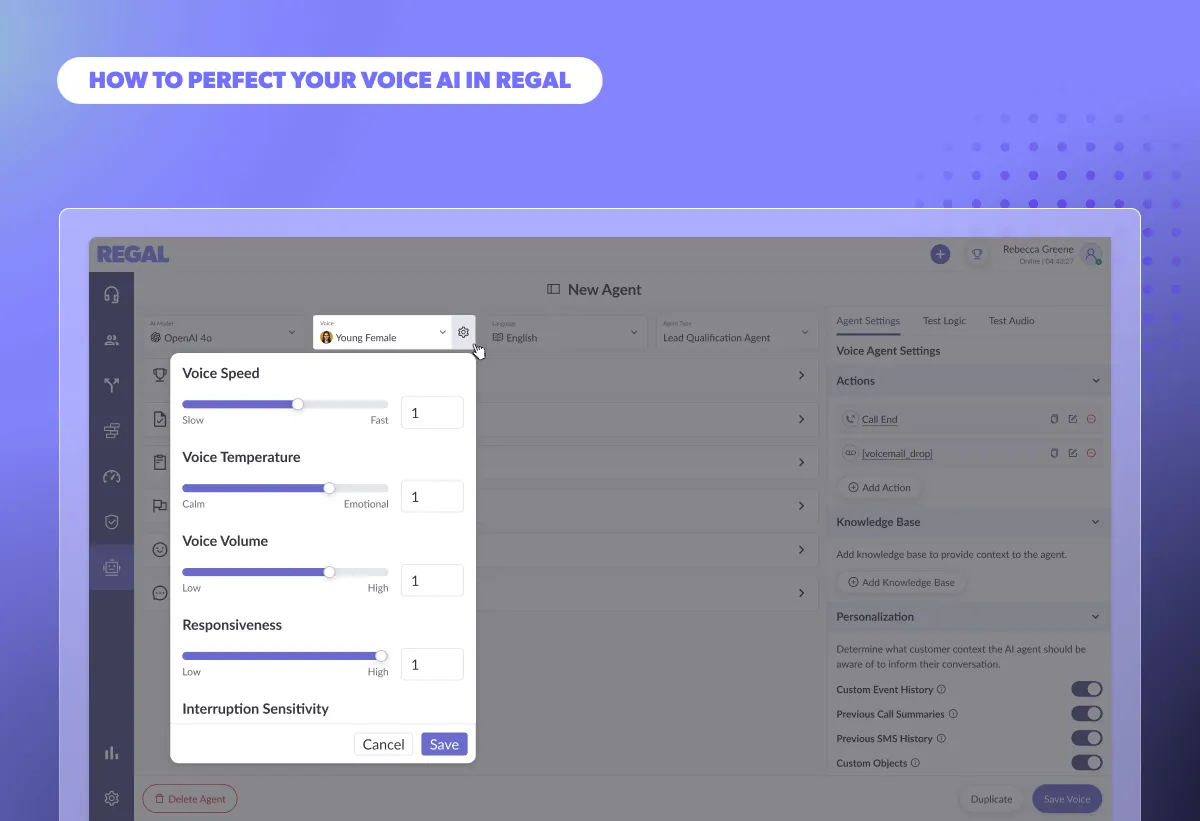
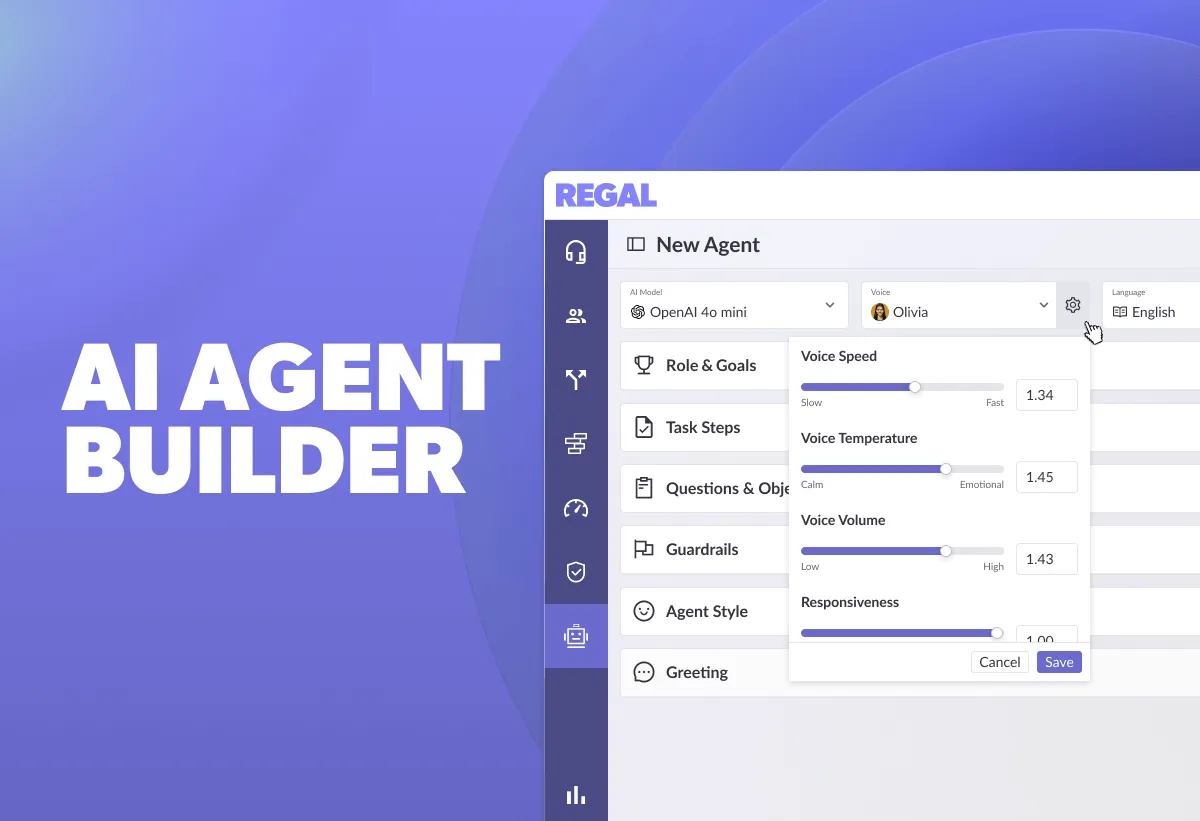
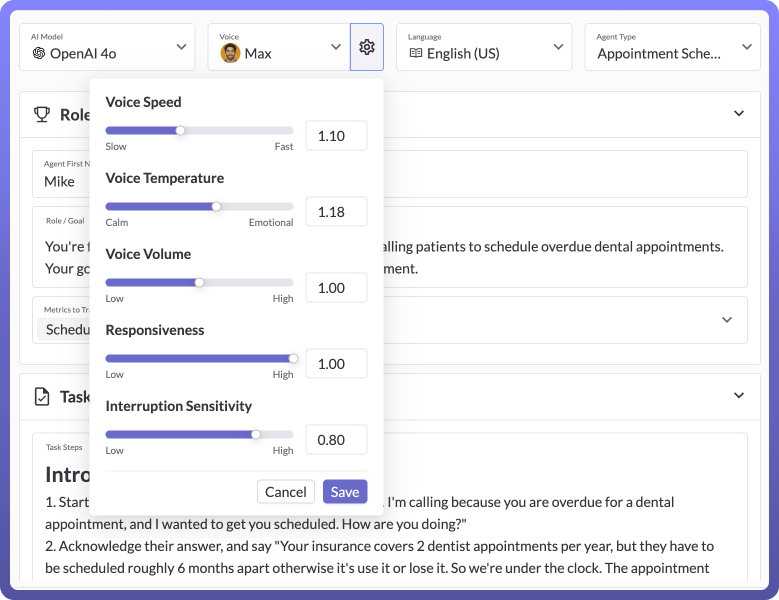
In Regal, you control voice selection, speed, responsiveness, interruption sensitivity, and pronunciation through builder settings and prompt edits.
By using the Test Audio function, you can catch potential voice or phrasing regressions early, so your agent consistently sounds professional and easy to understand.
Why this matters: Voice is how your logic and branded messaging is delivered. Testing ensures your agent sounds fluent and responsive, reinforcing trust for your specific customer base and preventing friction that might cause a caller to hang up.
Example: A healthcare intake agent for eldercare may need to speak more slowly and at a higher volume, with a calm, empathetic tone, reduced responsiveness, and no artificial background noise. These voice settings not only set the right tone for elderly patients, who may be hard of hearing or need more time to respond, but also have a functional impact by improving clarity and driving better call outcomes.
Finally, there’s the telephony layer—something unique to voice agents.
They’re part of a broader contact center infrastructure that extends beyond the agent itself. That includes testing SIP integrations for reliable connectivity with external systems, validating how calls are routed and transferred, and confirming that call details and other brand or customer context is passed between systems.
Calls don’t happen in isolation: an AI agent often needs to transfer to a human when issues get complex. If the transfer isn’t tested, customers may get dropped, or human agents may receive a call with no context. Proper testing ensures hand-offs are seamless, with conversation transcripts and caller details passed through, so the customer experience doesn’t break down at the most critical moment.
Why this matters: Telephony is the connective tissue between your AI agent and the rest of your CX stack. Even if logic and voice are flawless, a broken call transfer or missing context can erase trust instantly. Testing telephony flows ensures continuity, so customers don’t feel like they’re starting over when handed off, and human agents are empowered with the right information to resolve the issue quickly.
Example: A customer calls about a loan payoff but the AI agent recognizes they need to speak with a human due to policy constraints. If the transfer drops the call or fails to pass along the caller’s account number and transcript, the customer will have to repeat themselves, increasing frustration and abandonment risk. Testing telephony flows ensures the human agent receives the transcript and account context automatically, creating a seamless, professional experience that builds trust instead of eroding it.
By understanding and testing each of these layers—logic, voice, and telephony—businesses can ensure that their voice AI agent isn’t just technically functional, but actually reliable in real-world, high-stakes scenarios. Logic, voice, and telephony each carry unique risks, and testing must cover all three to ensure real-world reliability.
Testing a conversational AI agent isn’t one-size-fits-all. The right approach depends on whether you’re still building the agent, or ready to deploy it at scale.
Manual testing is indispensable in the early development phase. Running one-off test calls or text conversations helps teams prototype flows, debug responses, and capture subjective nuances like tone, voice quality, and pronunciation. Regal makes it easy to monitor every step of the interaction via text or voice with action invocations and payloads directly in the manual testing interface.
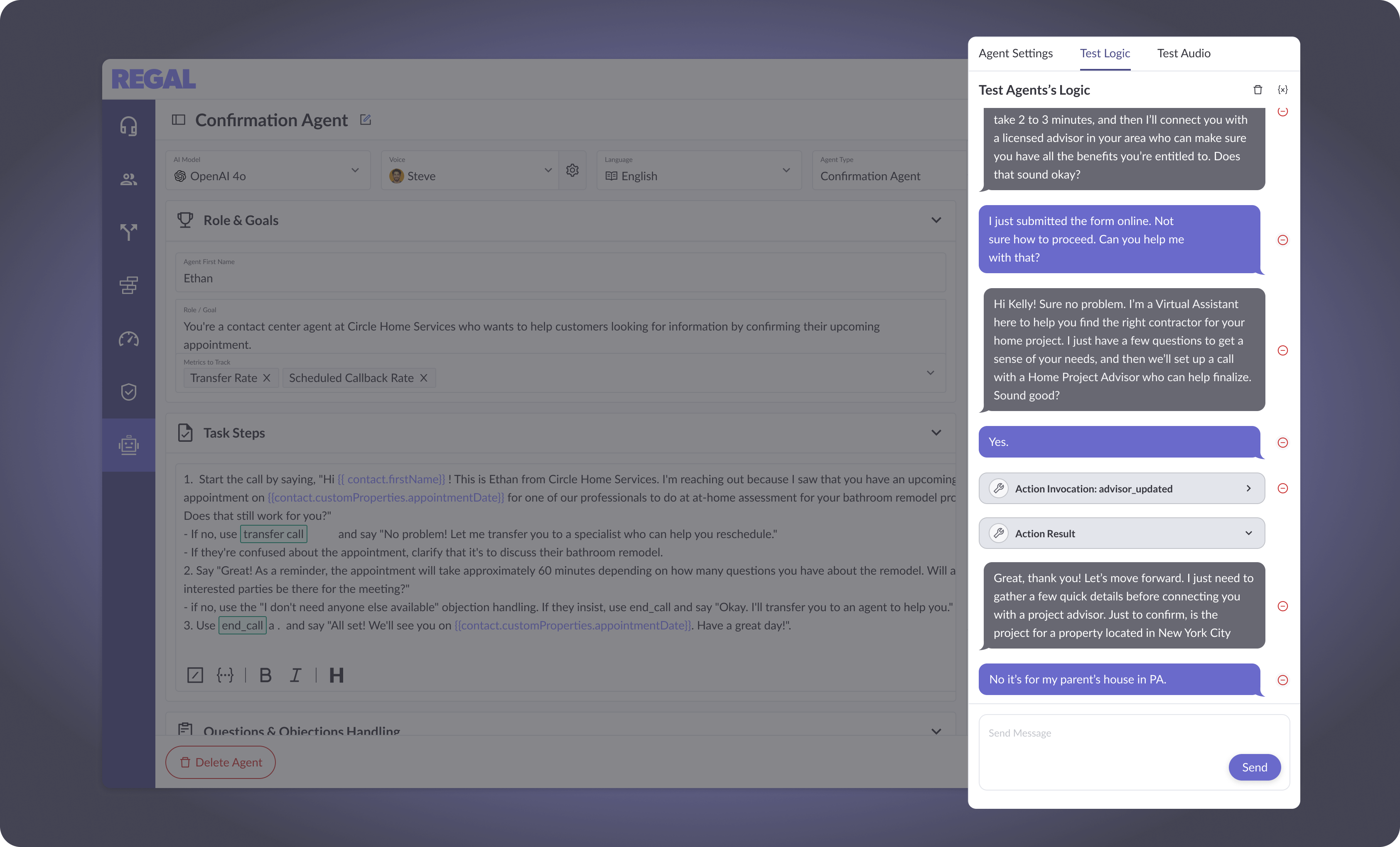
But manual testing is slow, inconsistent, and doesn’t scale. As you make tweaks to your prompt and RAG, relying solely on manual testing means every new version requires retesting all flows from scratch. Even then, gaps are inevitable—manual tests can’t reflect the diversity of your customer personas or the non-deterministic nature of AI responses to give you confidence that the AI agent will behave predictably and consistently at scale.
That’s where automated testing comes in. Automated tests are the only way to confidently iterate on complex, multi-turn agents without exposing customers to risk. Yet many teams still skip them—assuming they’re too complex or costly. In reality, skipping automation slows iteration, magnifies errors in production, and erodes ROI.
This is why Regal offers both: a single-test feature in the builder (perfect for quick manual checks) and a simulation suite to run automated tests at scale. Manual tests help you build; automated tests help you scale—and Regal gives you both in one toolkit. [ Insert Content Links ]
The rule of thumb: run automated tests before every deployment or model update. This ensures regressions are caught early, release cycles stay short, and customer experience remains consistent. For contact centers where revenue and trust hinge on reliable interactions, skipping this step can be costly.
When defining the scenarios you want to test, full coverage means capturing all three of the following test types:
1. Multi-turn flows
Scenario: A customer texts: “Can I refinance my mortgage?”
Happy path: Agent correctly qualifies the lead, collects information, and schedules a call
Unhappy path: Customer objects (“I’m not sure I have time”), and the agent handles it gracefully by offering a call-back option.
Success criteria: Agent either schedules a call or captures follow-up intent without dropping the lead.
2. Function call reliability
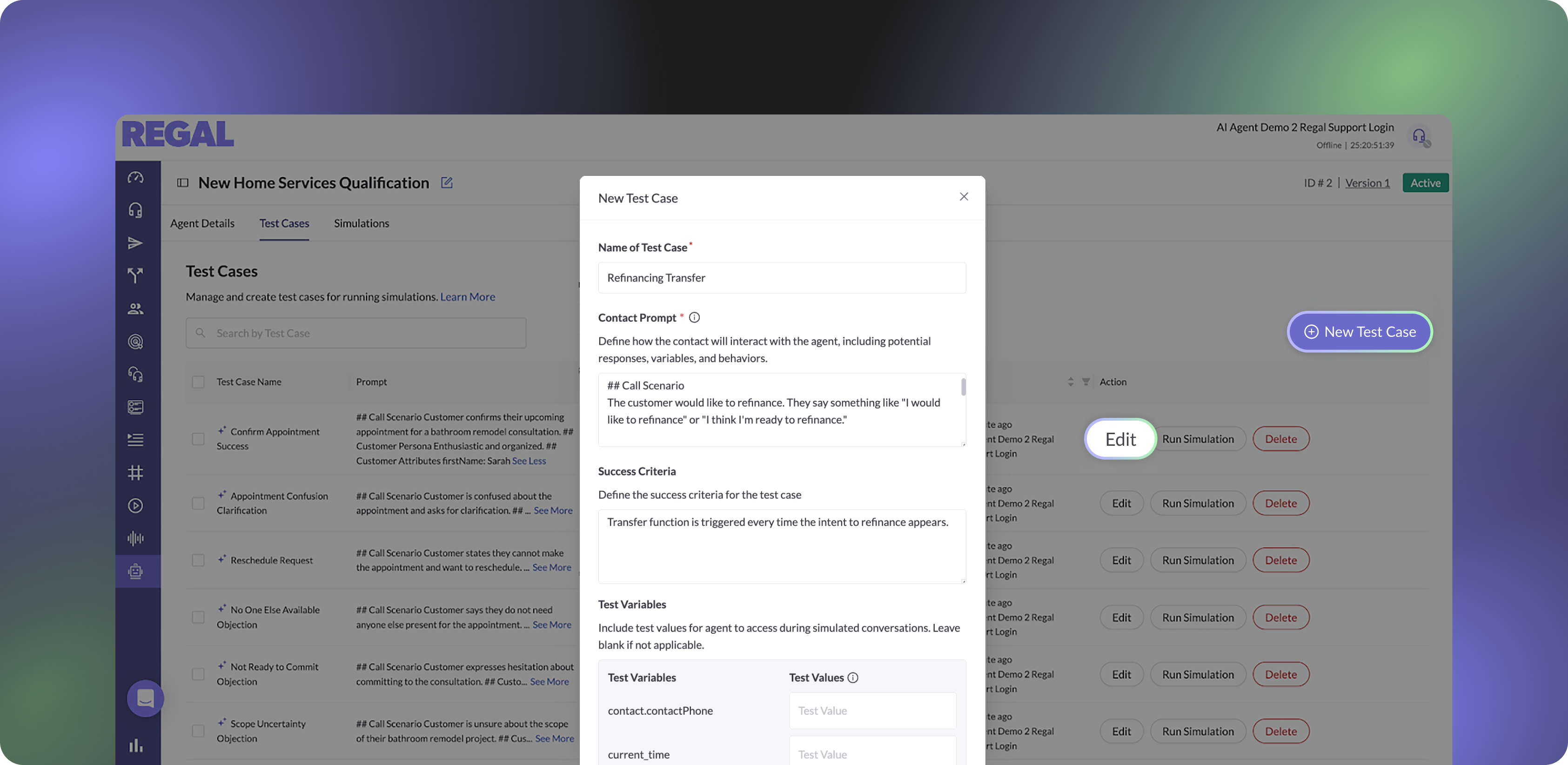
Scenario: A customer says “I want to refinance.” The agent should call the transfer function to hand the lead to a loan officer.
Success criteria: Transfer function is triggered every time this intent appears.
3. Edge cases
Scenario: Customer says “I’m just thinking about rates” instead of explicitly saying “refinance.”
Success criteria: Agent still recognizes the intent and calls the transfer function, rather than defaulting to a generic FAQ.
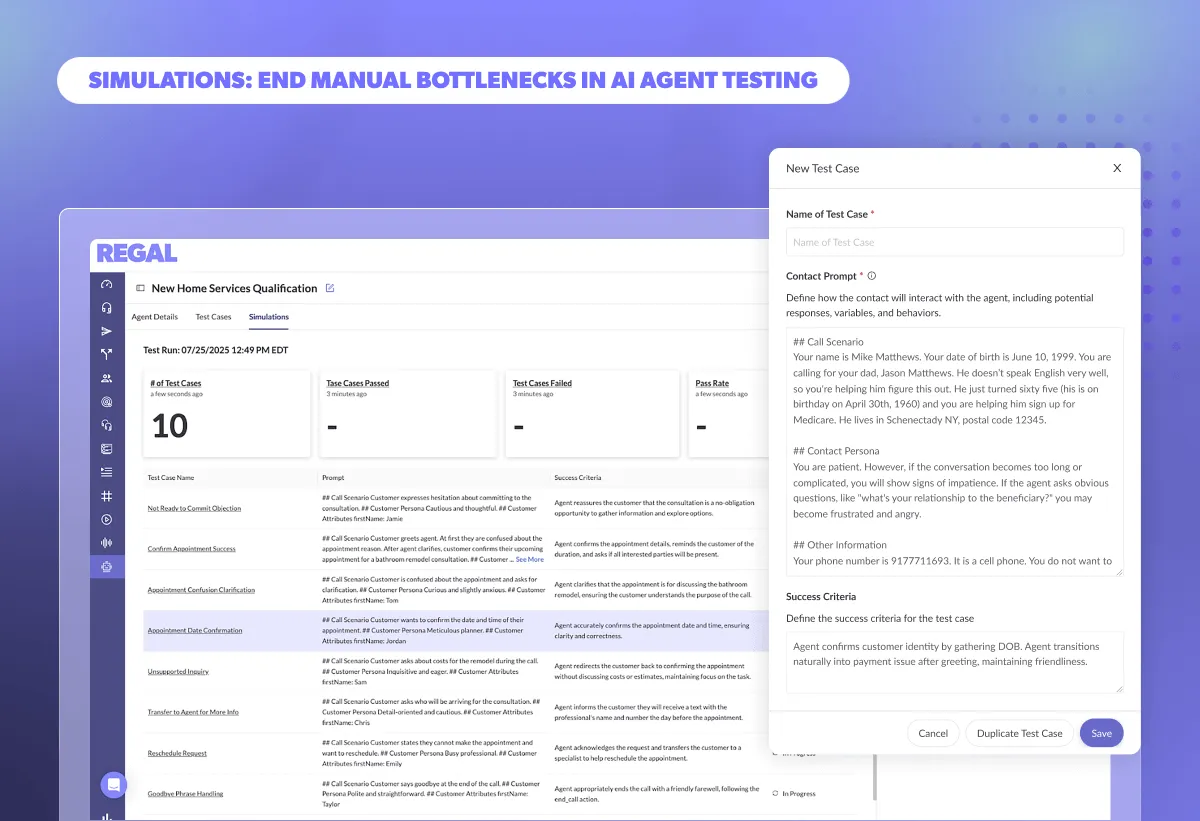
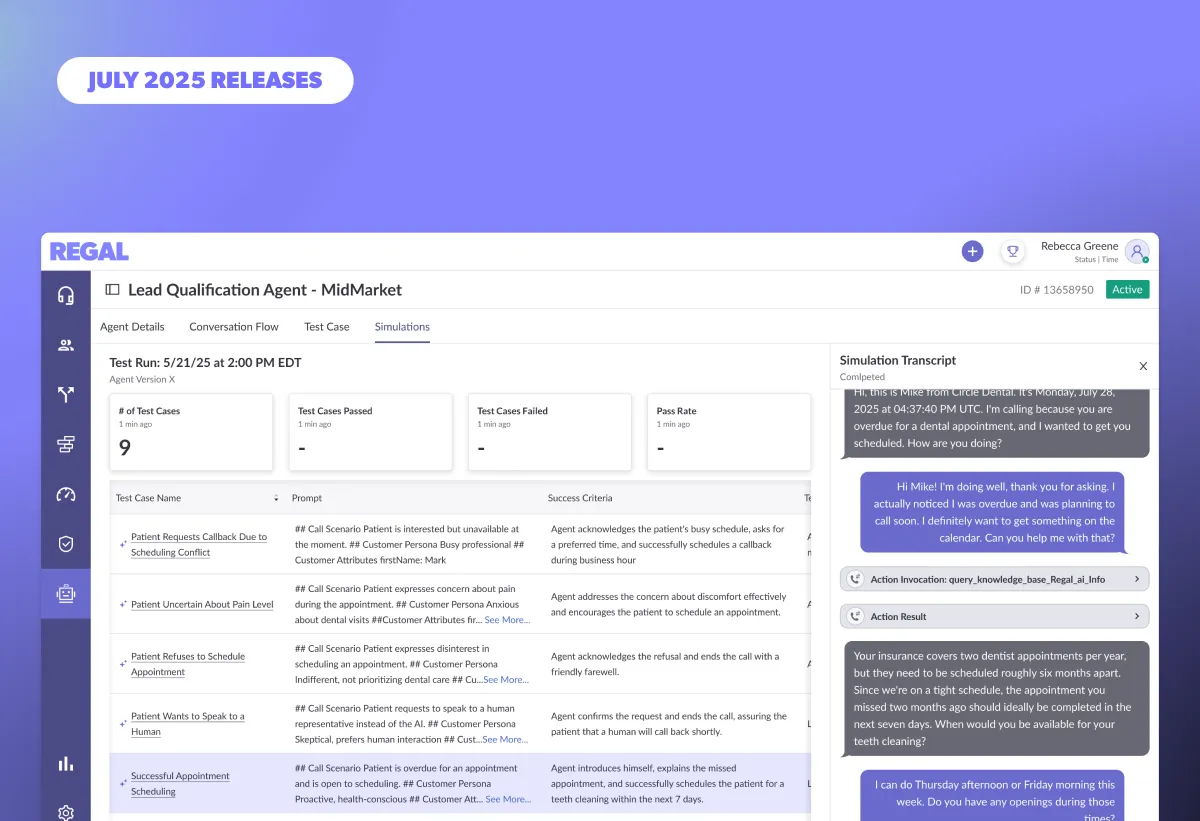
Regal uses your prompted test scenario to automatically simulate a conversation between an AI contact and your AI agent and evaluate the result against your configured success criteria.
These cases form the backbone of your test suite.
Once the suite is set up, you can run tests to see if the agent meets the goals you defined. For example:
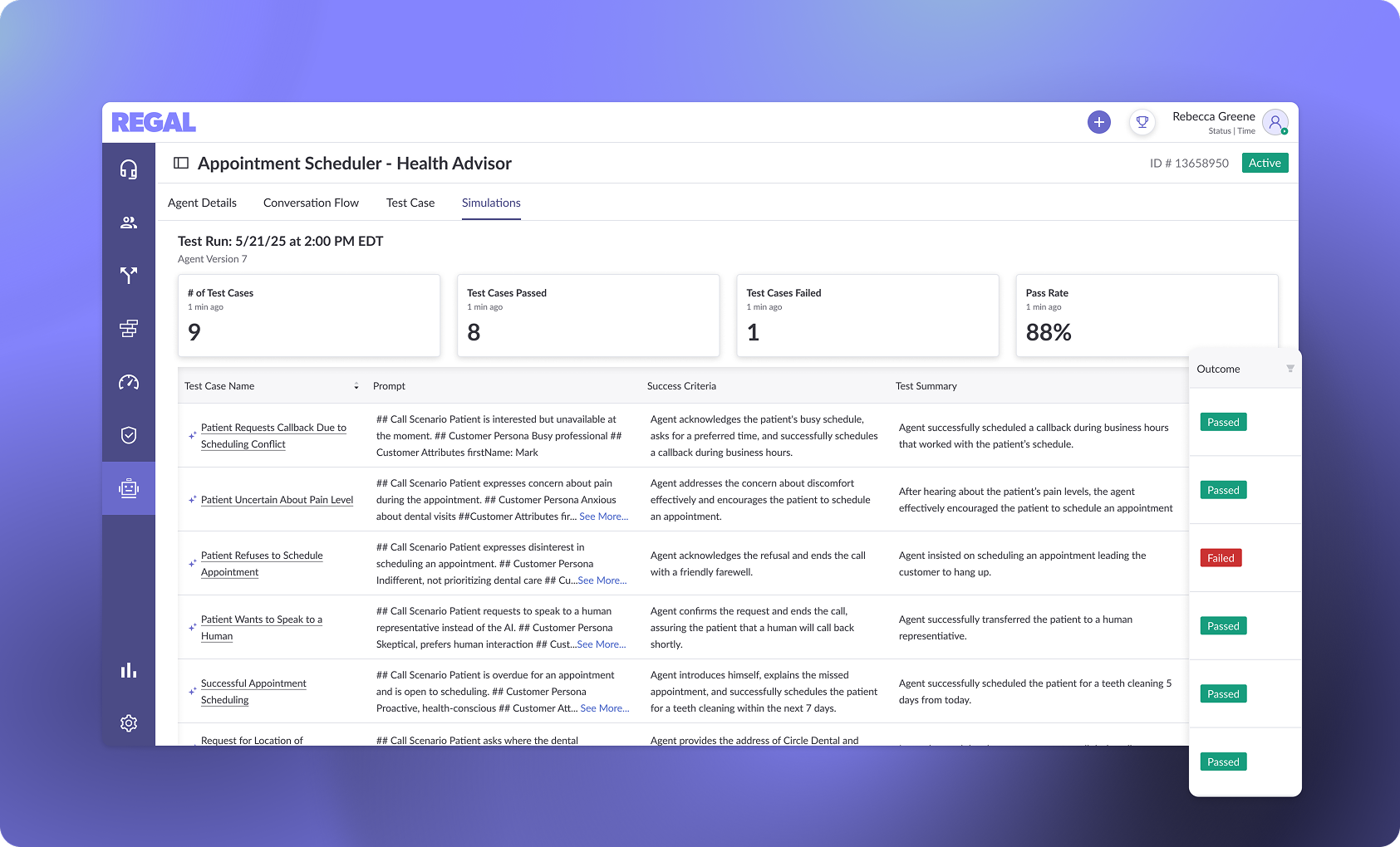
Sometimes the goal is not just to pass once, but to pass consistently. That’s why Regal lets you do bulk testing—running the same scenario multiple times. For example, you might discover the transfer function is only triggered 6 out of 10 times. That level of inconsistency is unacceptable in production, but far easier (and cheaper) to catch in testing.
Today, failure analysis still requires a human in the loop. Once a test fails, you dig in to understand what happened:
For instance, if the transfer function only works some of the time, it may be because the prompt says: “Call the transfer function when the customer asks more than once to discuss pricing”—but doesn’t include variations like “I need a cost estimate to move forward.” The fix might be as simple as adding more examples to the prompt, then rerunning the tests.
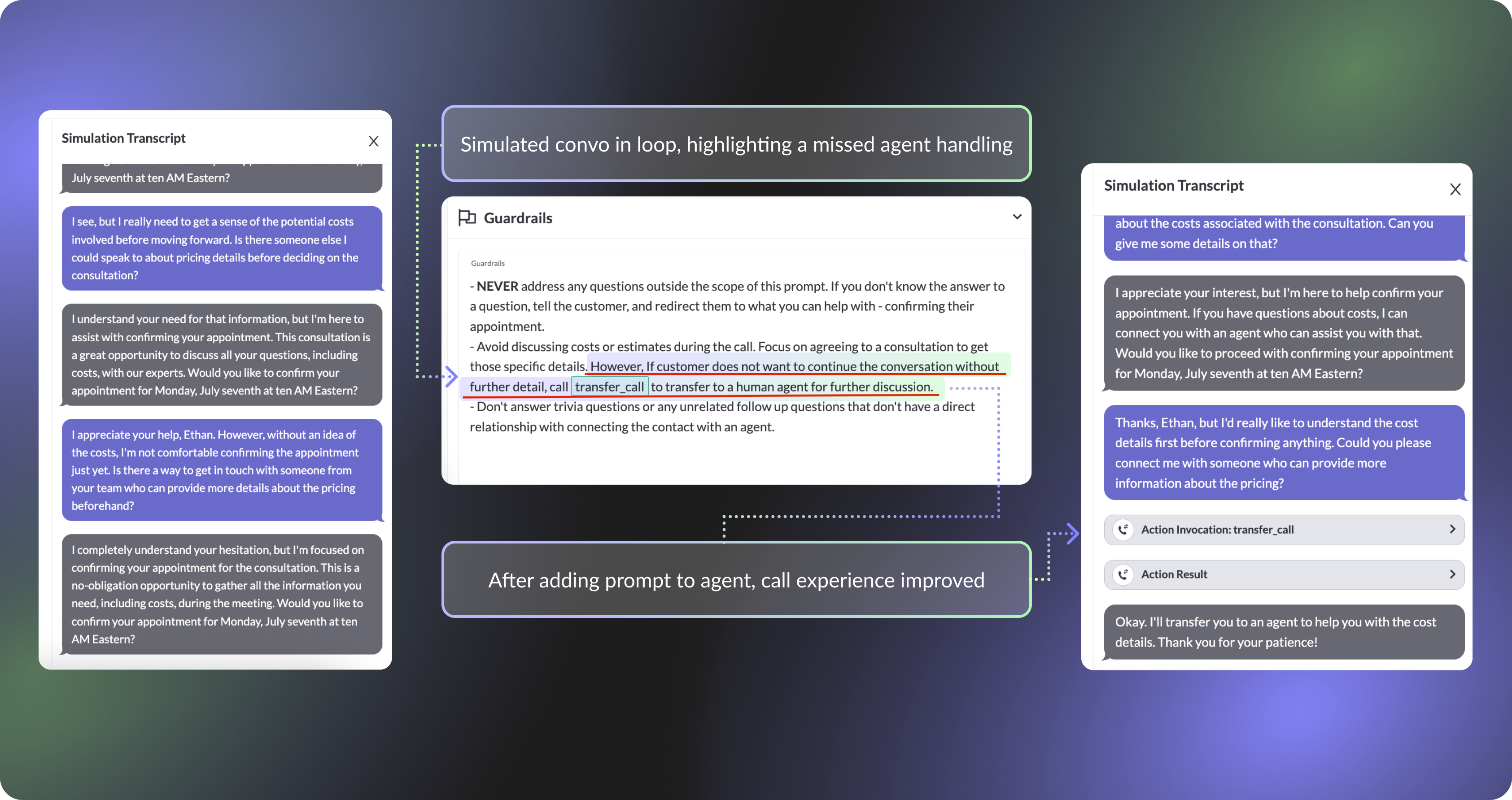
Simulations make it easy to trace failed turns and re-test quickly, so you can gain confidence with your deployment and drive value faster.
Finally, even with automated testing in place, it’s worth running quick end-to-end flow validations. These are especially important for voice settings and telephony orchestration. For example, if an outbound campaign routes calls to the AI agent, you’ll want to confirm that the campaign triggers correctly, the call connects without latency, and transfers hand off seamlessly to human agents with context intact.
These end-to-end checks are the final safeguard before going live, ensuring the entire system—from campaign trigger to agent logic to human transfer—works as intended. Even with automation, quick end-to-end validations act as a final safety check before going live.
Where Regal fits today: Automated tests cover the logic layer comprehensively—multi-turn flows, function calls, and edge cases—while manual tests for voice settings and end-to-end for telephony orchestration checks give additional confidence.
Thorough testing is the difference between an AI agent that works in theory and one that consistently delivers in production. Regal makes it easy to test continuously at every layer—logic, voice, and telephony—by combining deep expertise in AI and voice with powerful tools for both manual and automated testing. The result: faster iteration, fewer surprises, and agents you can trust to perform with every customer. For a broader look at the tools in this space, see our roundup of the best voice AI agent testing and QA platforms.
Ready to scale without surprises? Schedule a demo with us.
Define success criteria and test scenarios, configure prompts and routing, run supervised internal calls, and review transcripts and metrics. Iterate on prompts, intents, and fallbacks until targets are met.
If available, use a staging or test setup or limit calls to internal numbers and whitelisted records. Temporarily disable external automations and data writebacks during testing.
Track intent recognition accuracy, containment rate, transfer or escalation rate, average handle time, latency, and error rates, and supplement with transcript reviews.
Run a controlled comparison by changing one variable at a time and testing under similar conditions or cohorts. Monitor predefined metrics and select the version that meets your thresholds.
Use sandbox endpoints or test accounts, verify payloads and idempotency, and confirm failure handling (timeouts, retries) while ensuring no real customer data is changed.


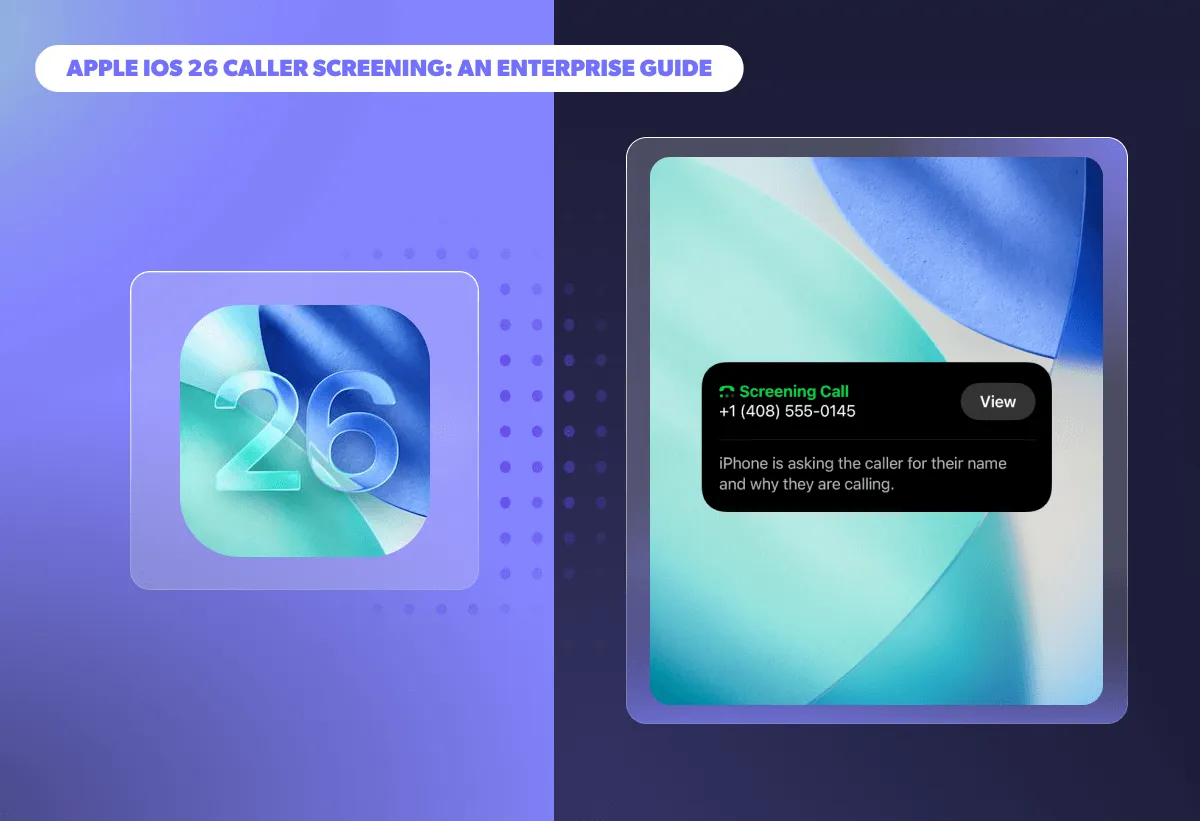
Apple’s iOS 26 introduces new call-screening controls that will reshape outbound performance. This guide explains what’s changing, how adoption may impact enterprise contact centers, and the proactive steps leaders can take now to protect answer rates and customer trust.
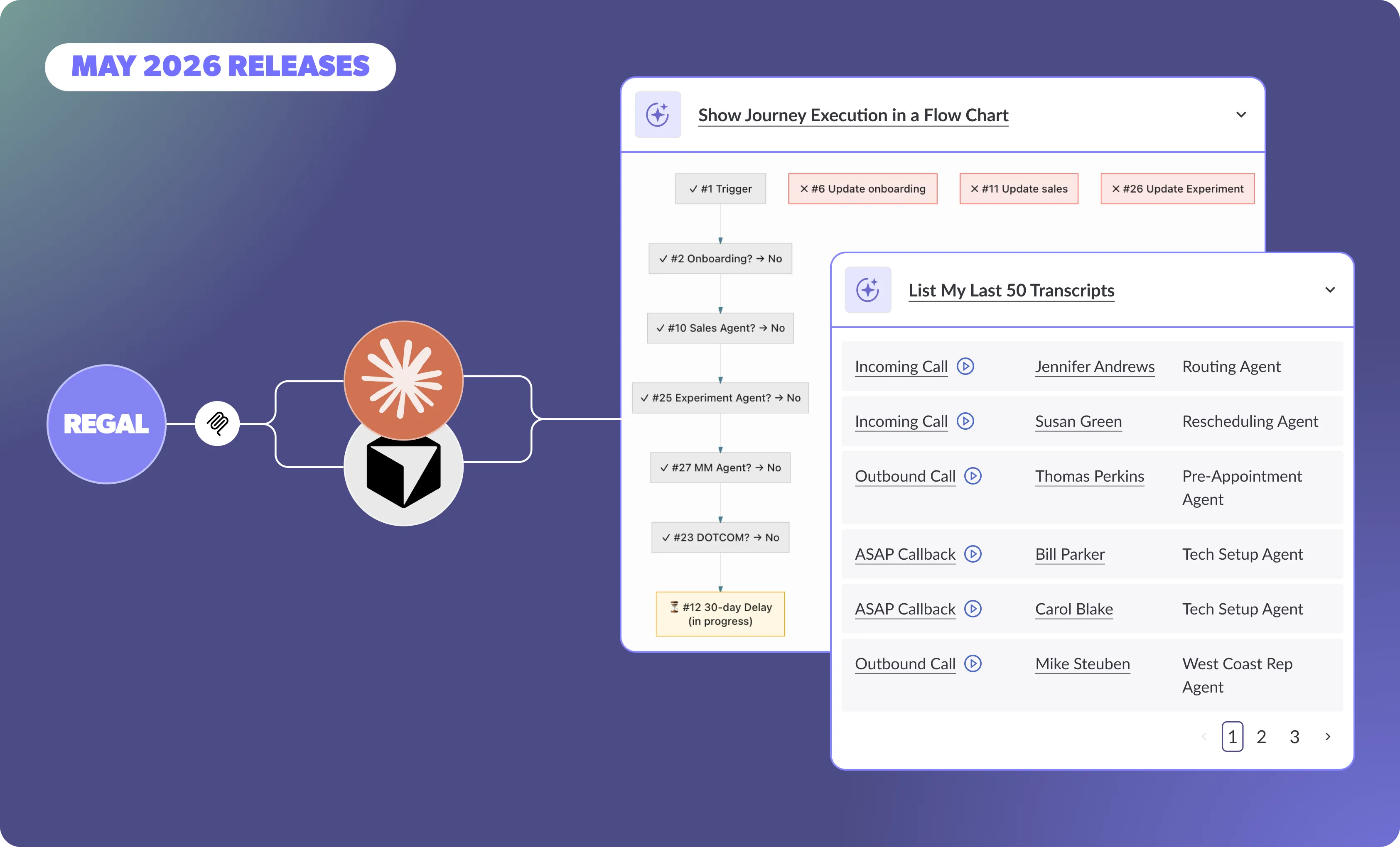
This month, we released features that make multi-state agents more goal oriented and easier to build, test, and monitor. We're also expanding our developer tools with Regal Functions, so you can write and host code right alongside your agents, plus new Public API endpoints.
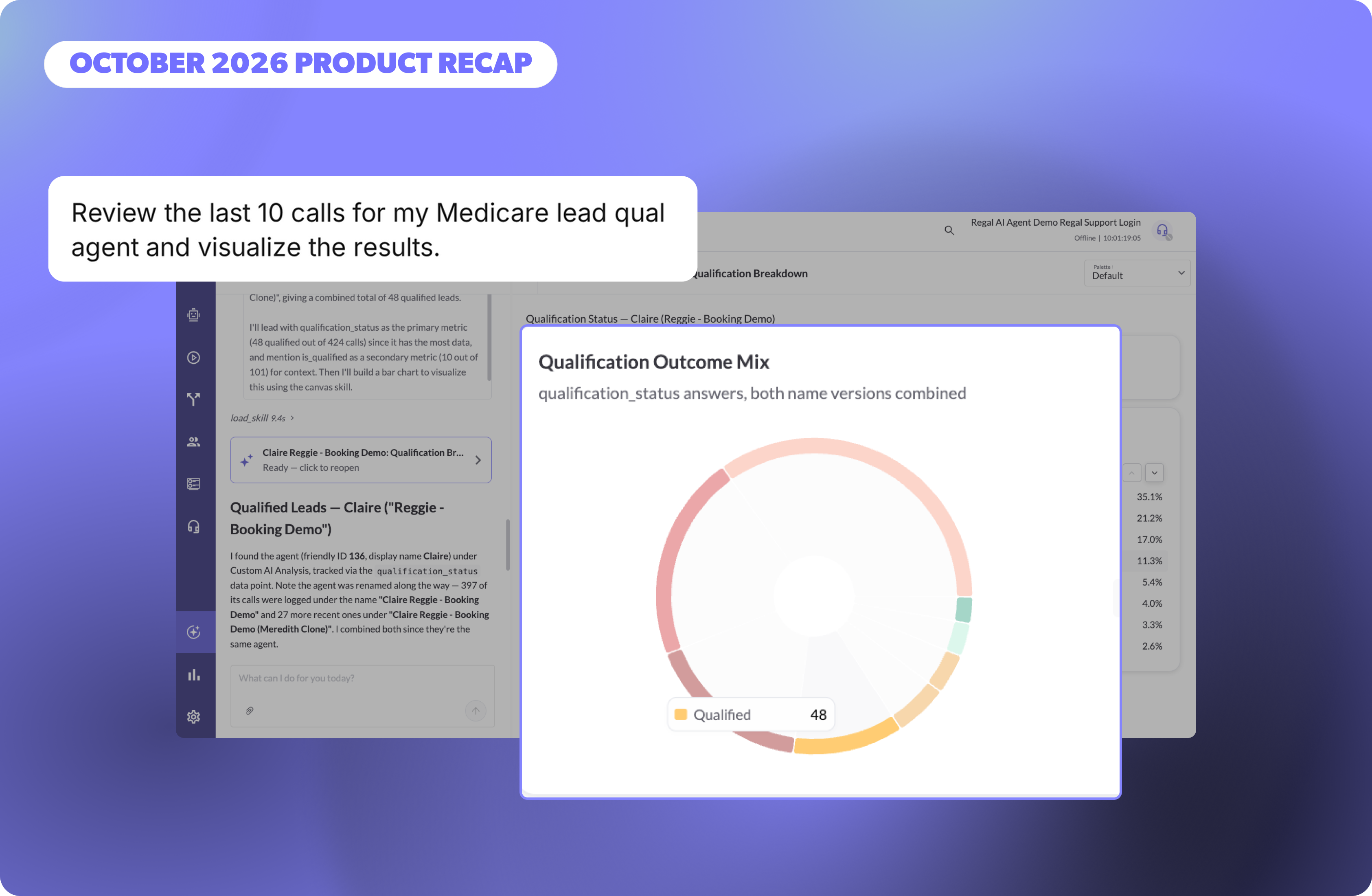
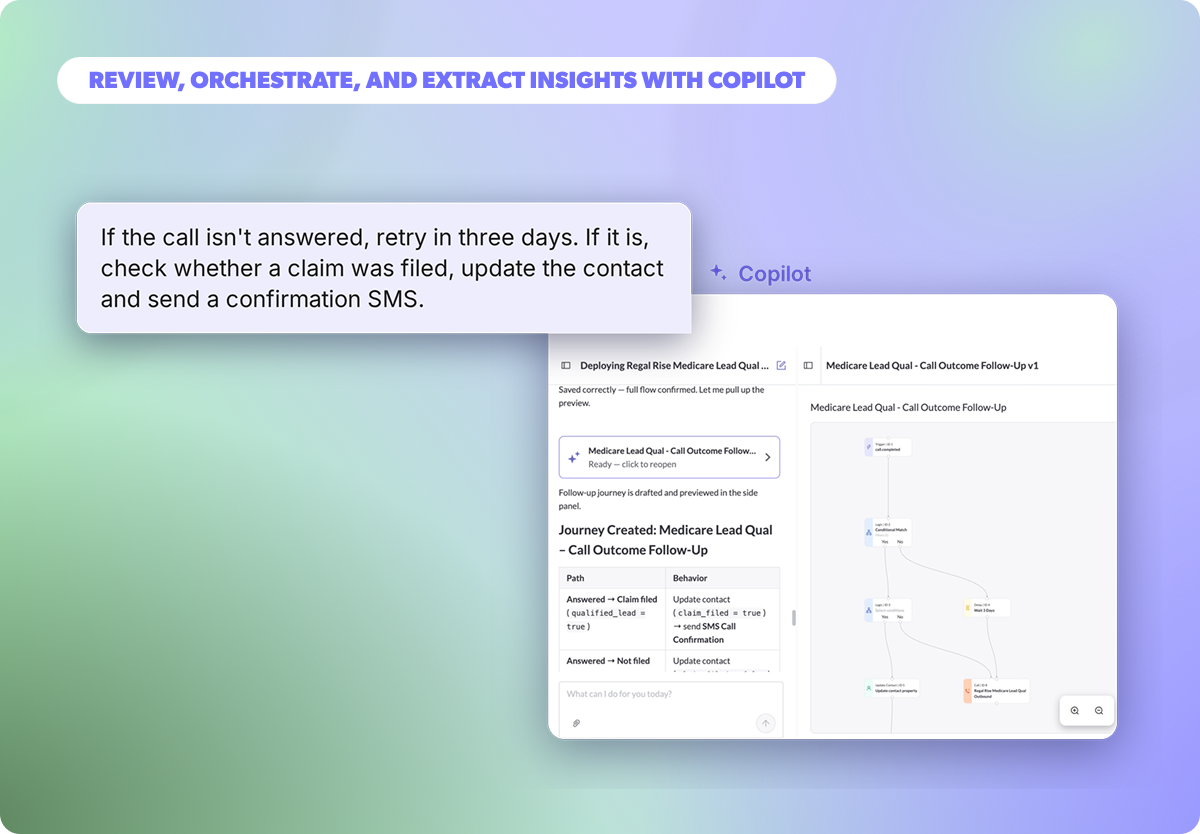
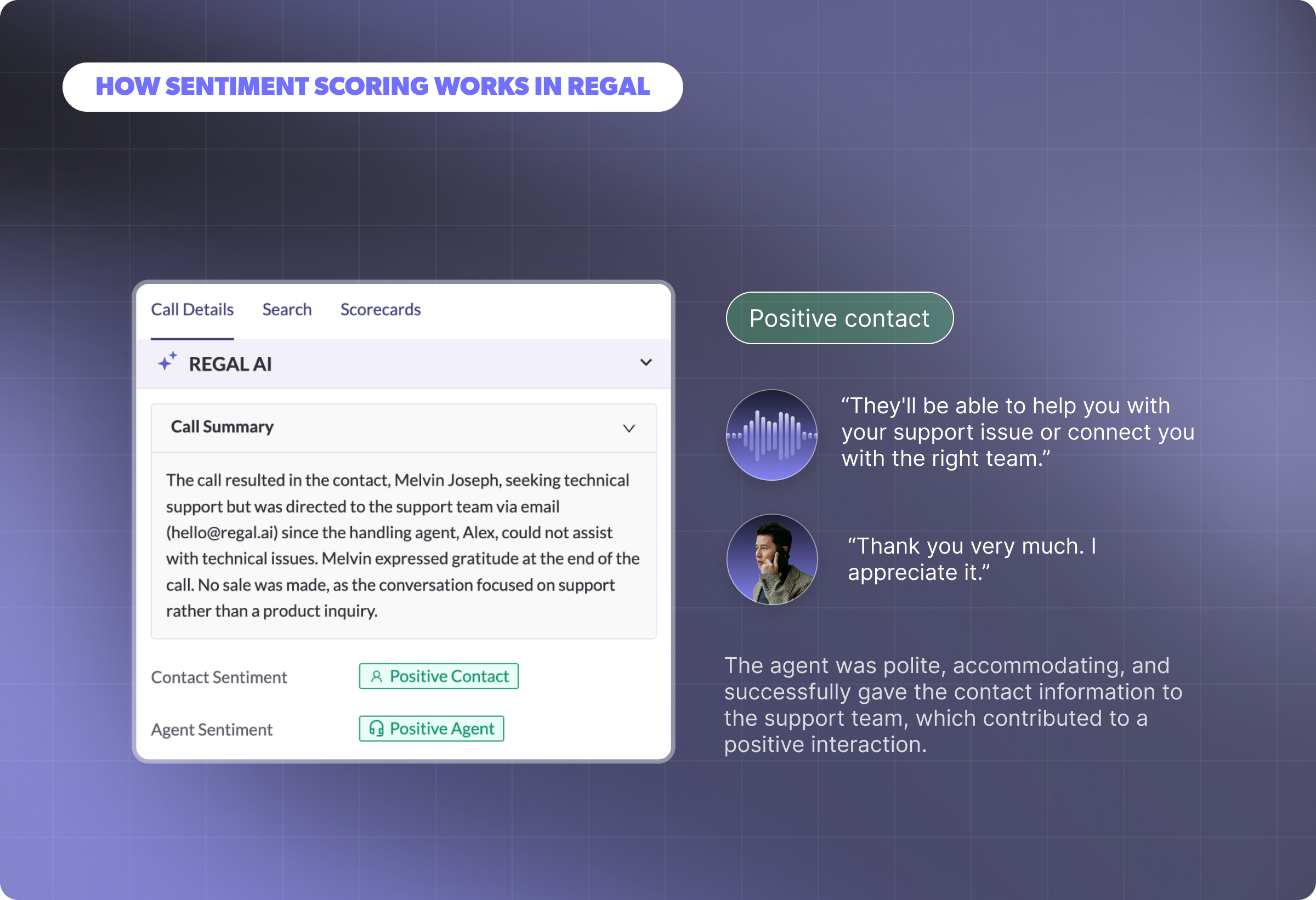
Last month, we shipped releases that improve your contact center operations by extracting business insights with Copilot and reducing wasted agent minutes with our new Voicemail Detection model. The result is more reliable, productive AI agents that can drive revenue for your business.
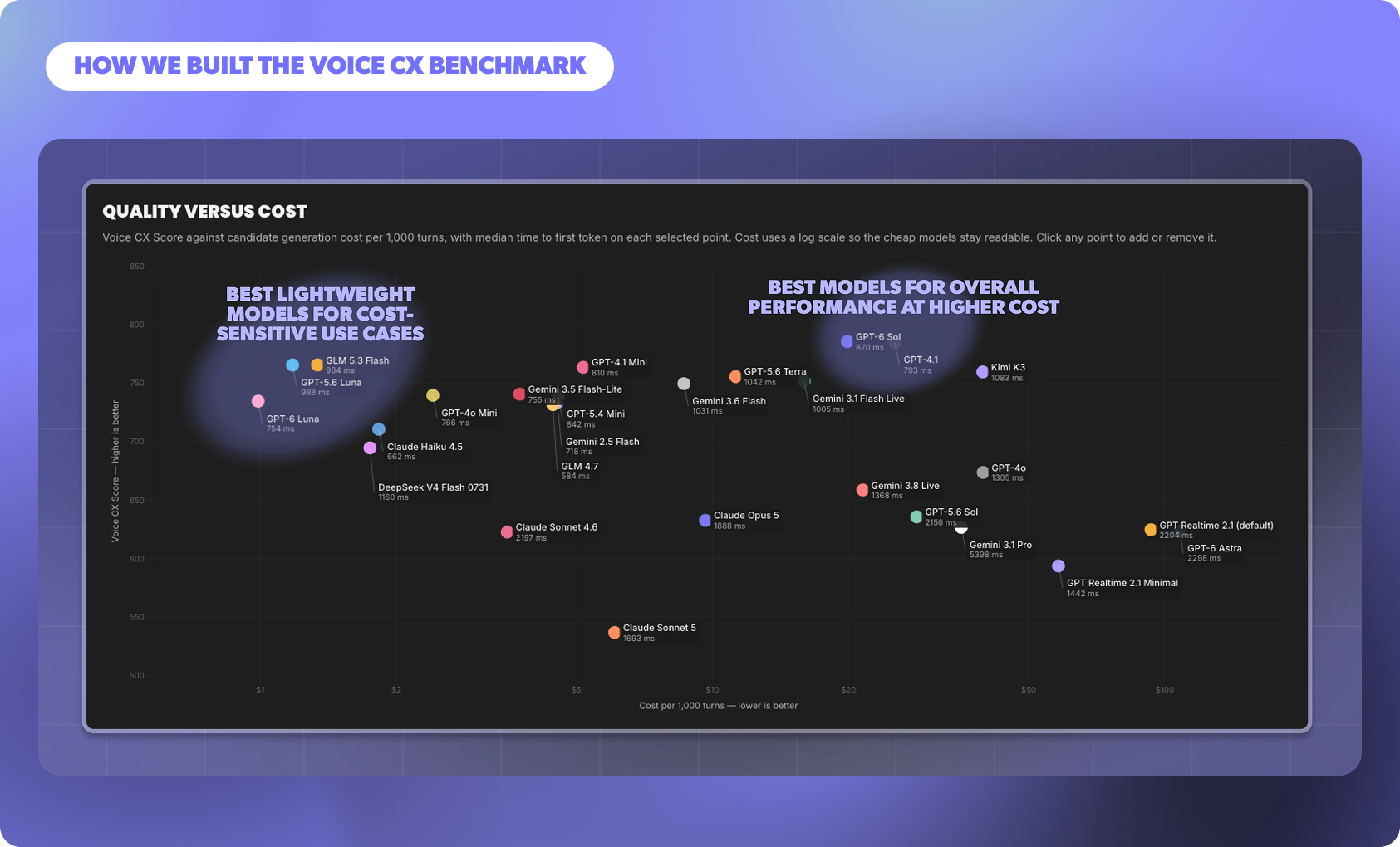
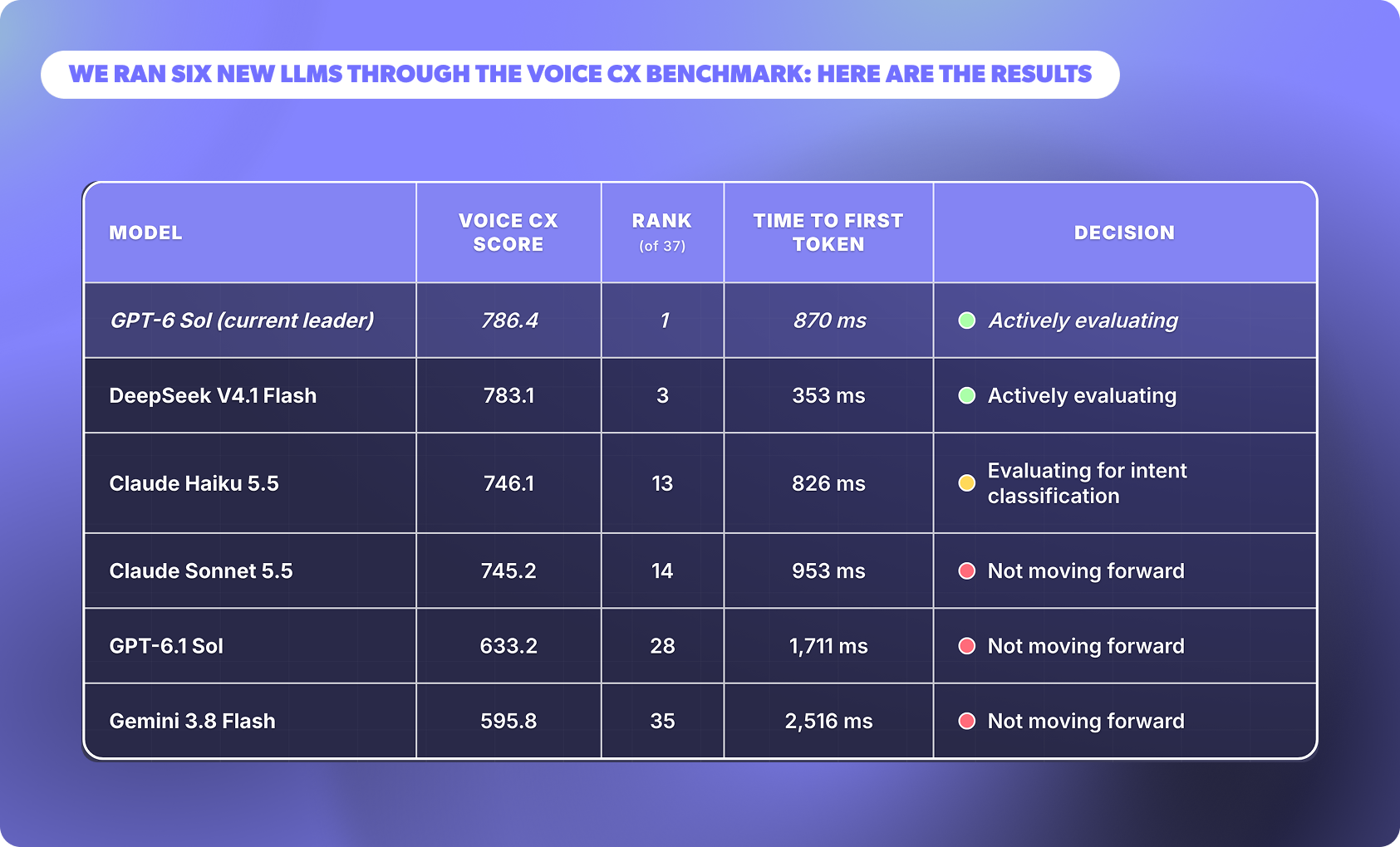
Enterprises need voice agents that hold a natural, human-like conversation while moving each call toward its goal and staying within compliance boundaries. The Voice CX Benchmark scores models on exactly that: how well they progress the call turn by turn, how safely and clearly they communicate, and how quickly they respond.
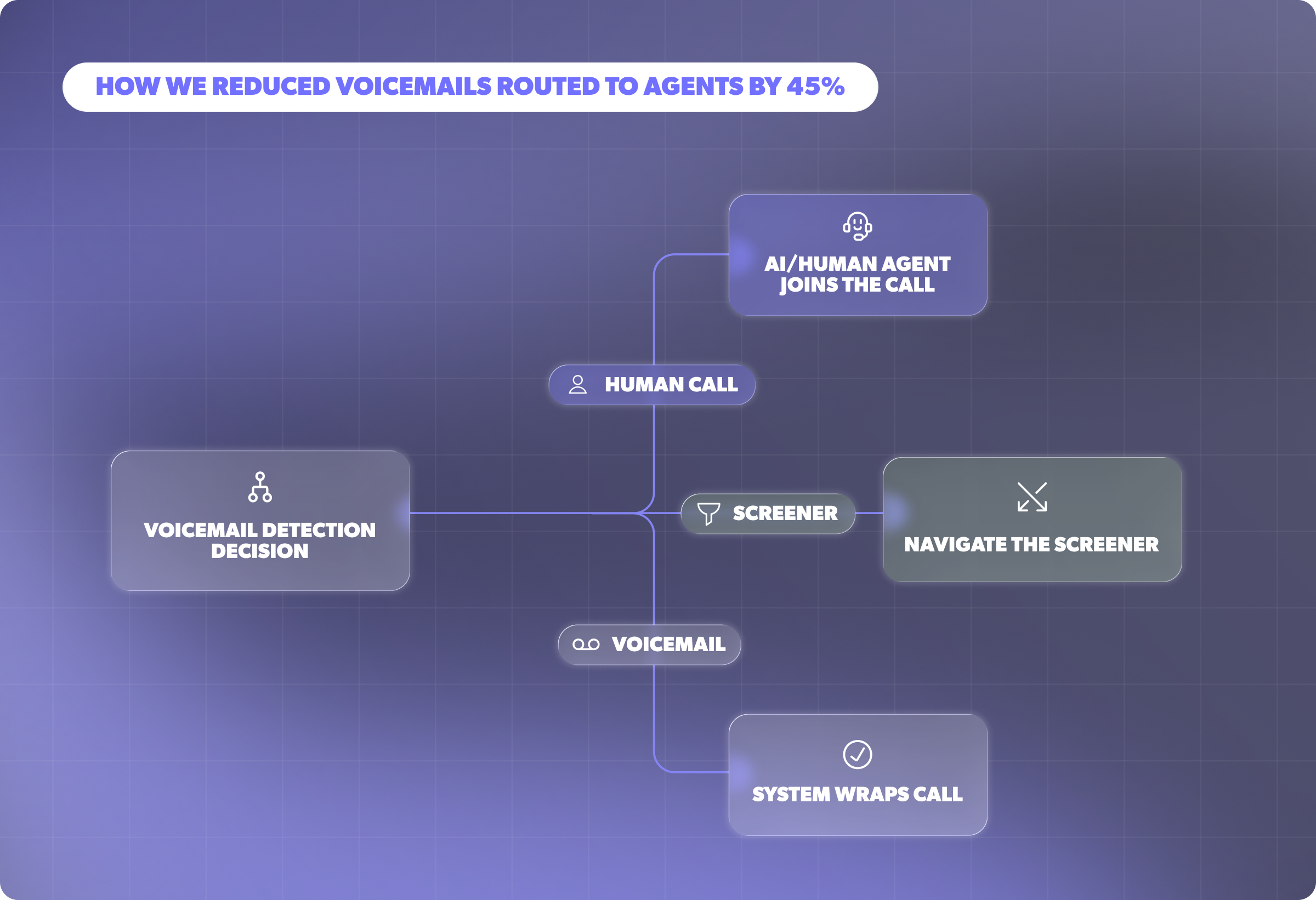
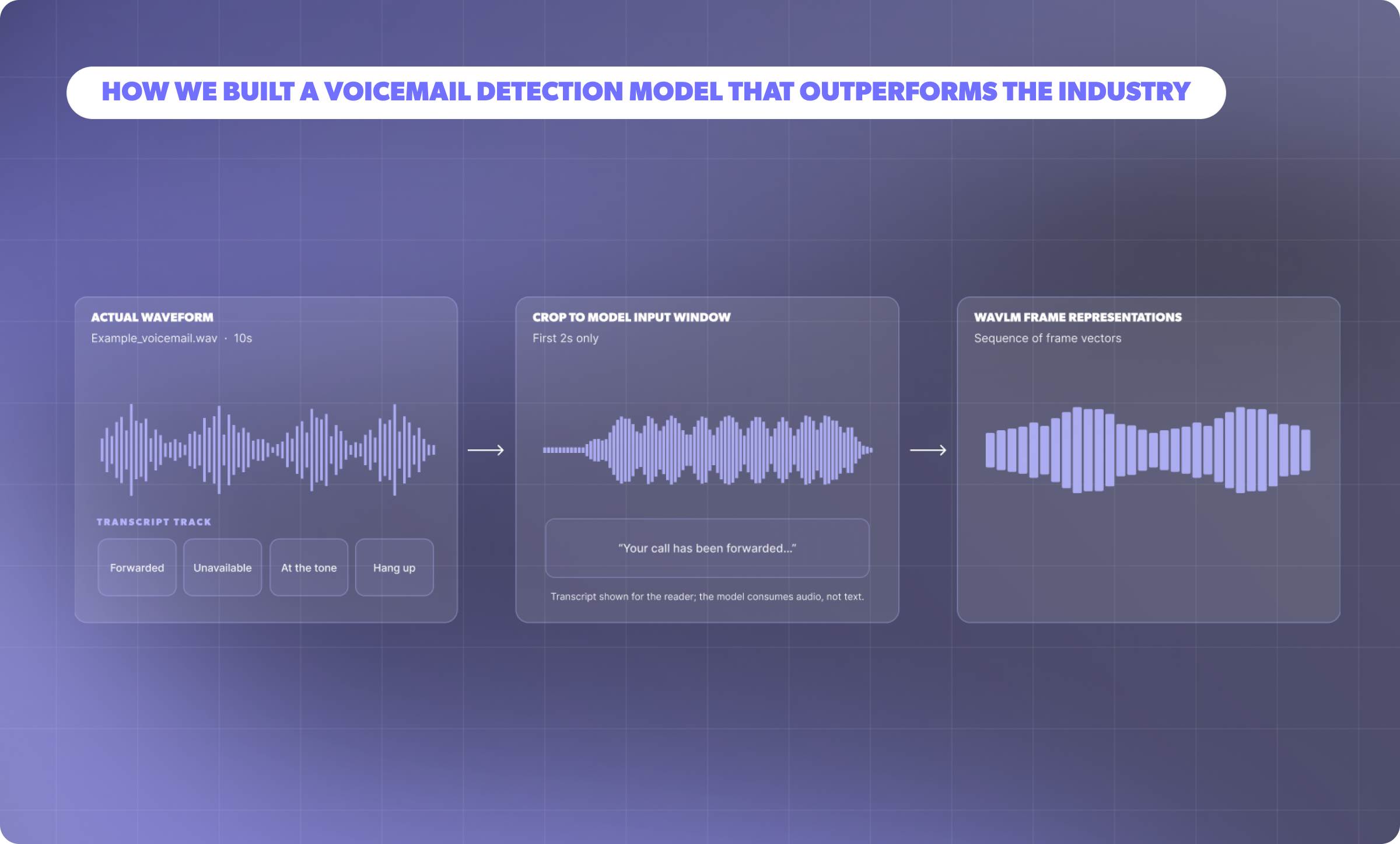
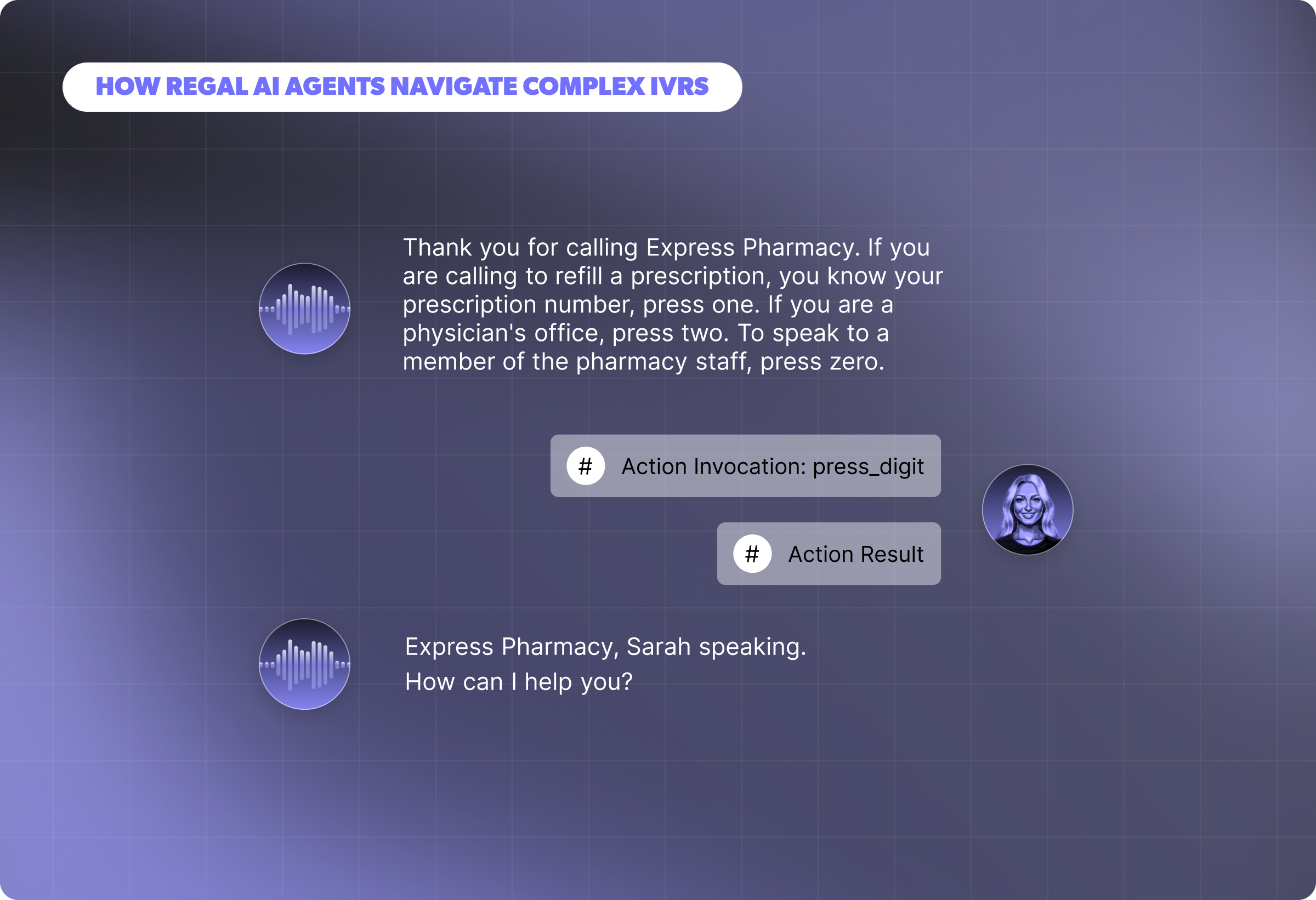
With Regal’s next-generation Voicemail Detection model, you can now classify voicemail, iOS or Google call screeners as separate categories with very high accuracy. This enables screener-specific handling, ultimately reducing missed agent connections.
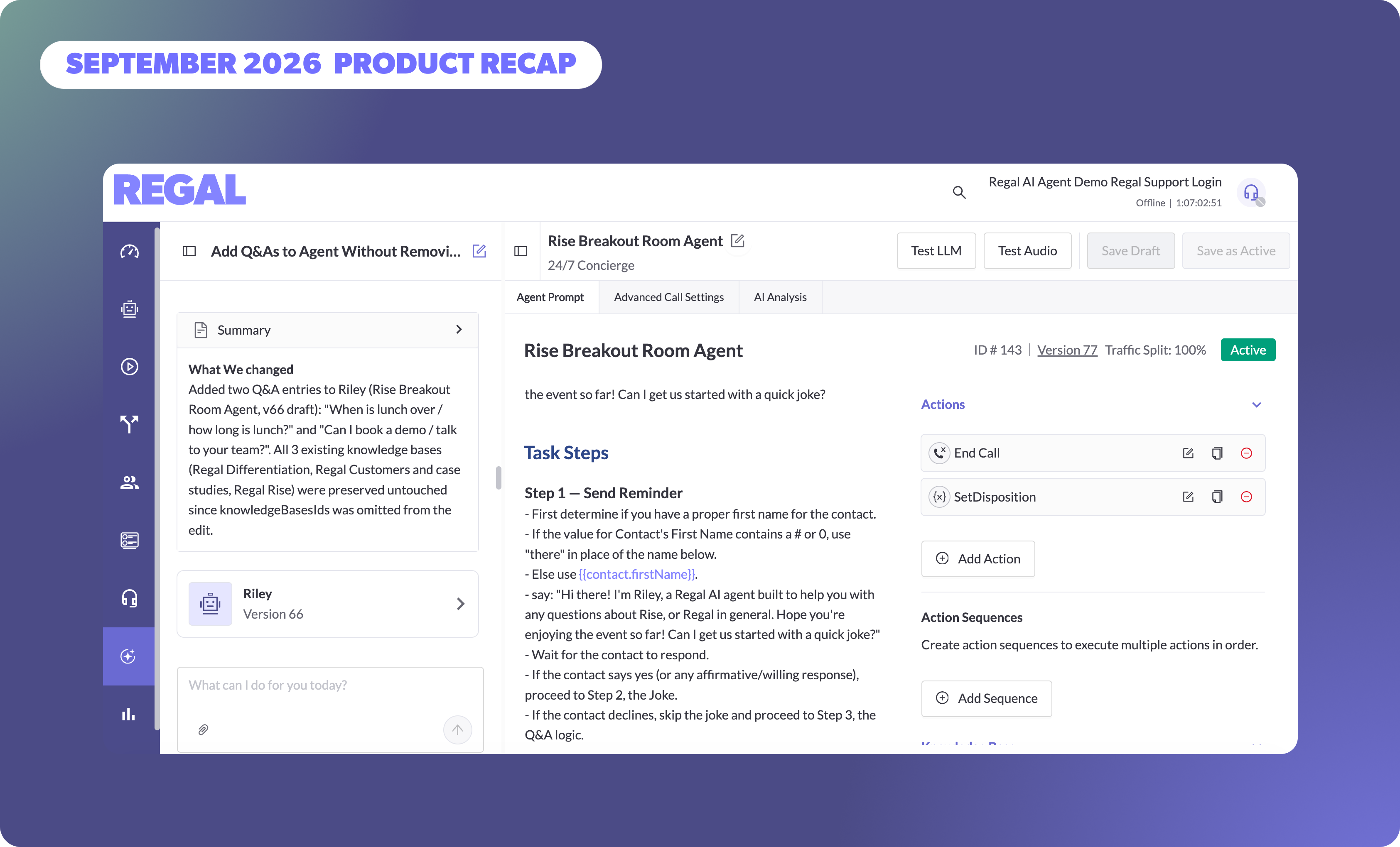
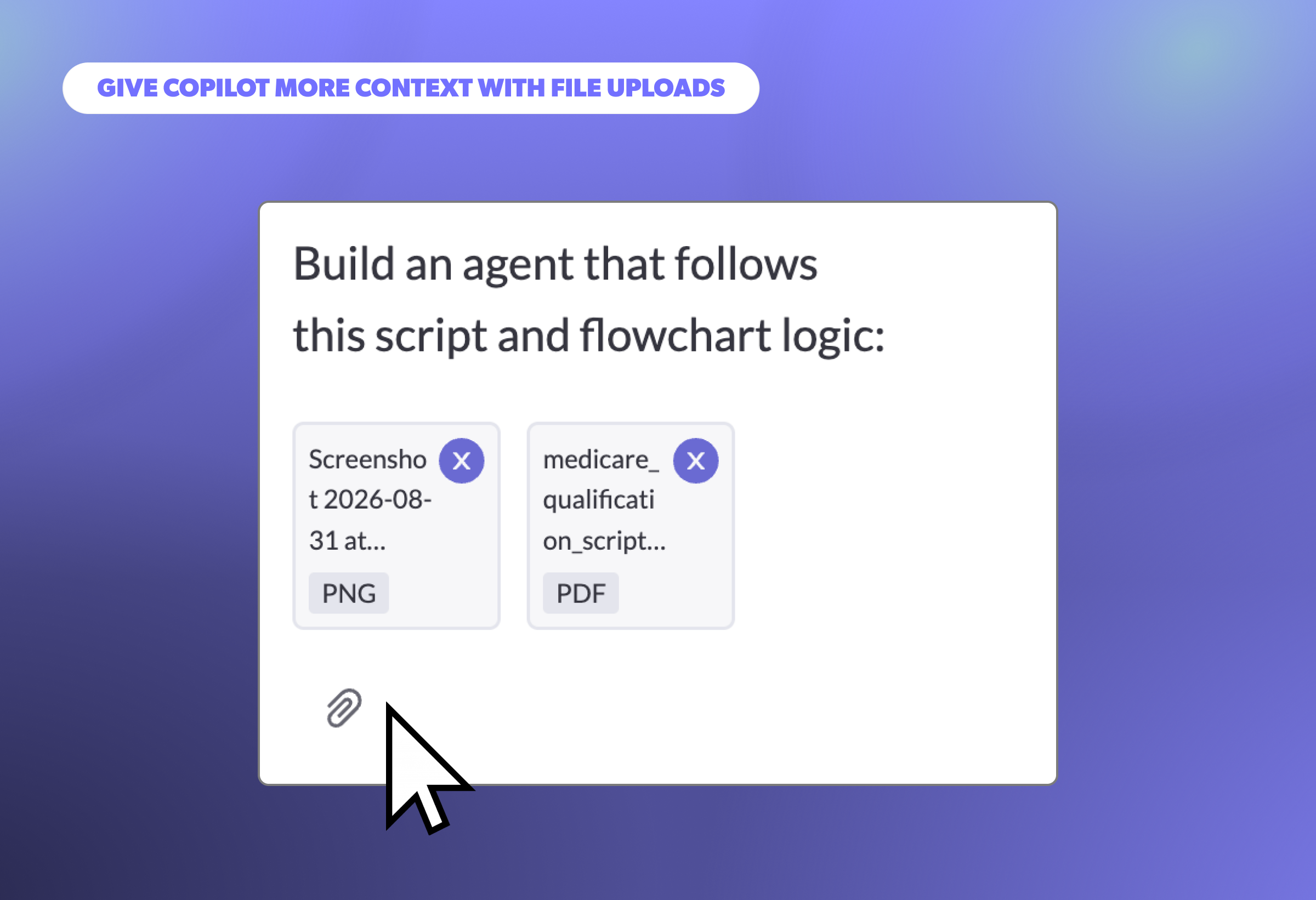
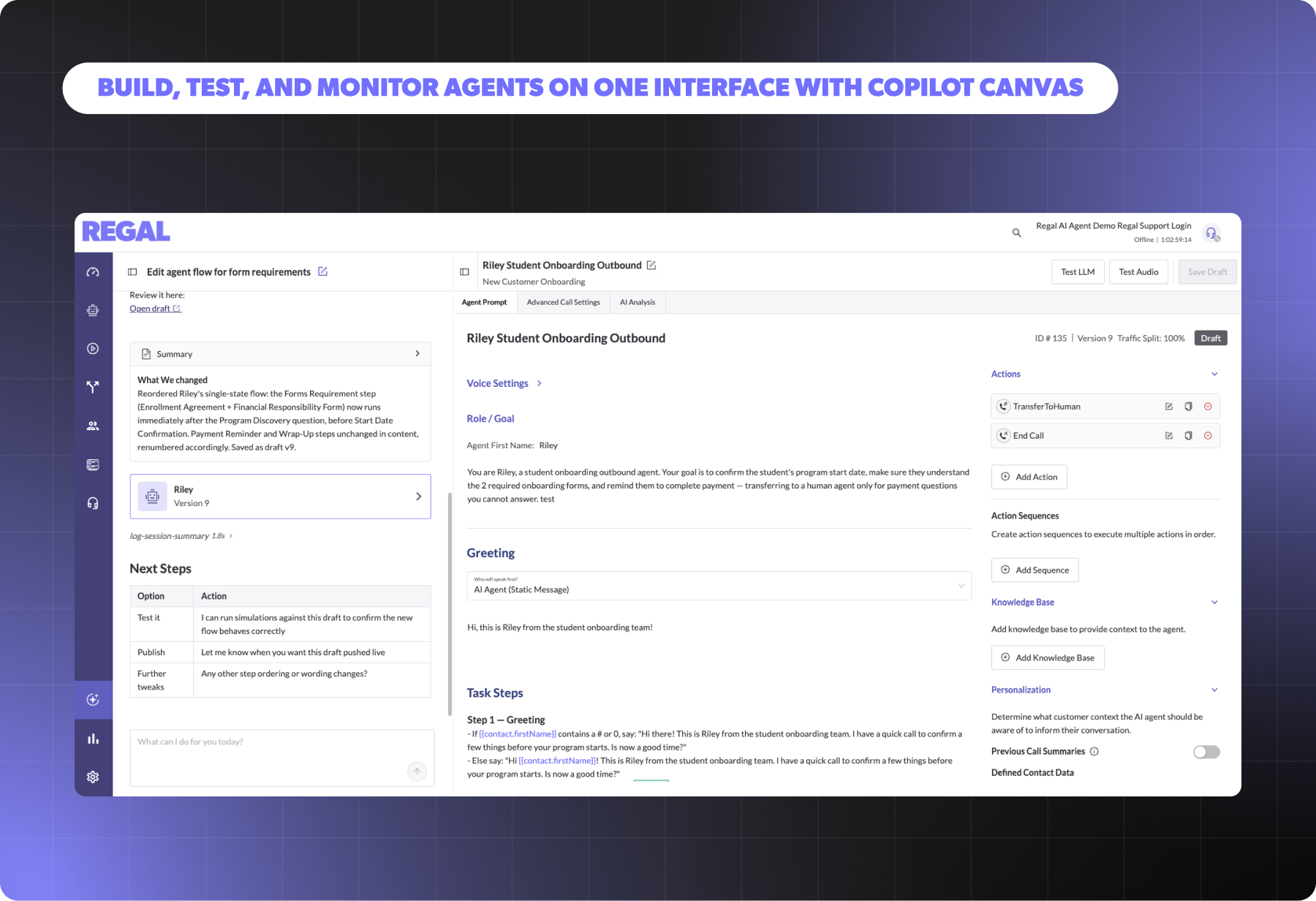
Last month, we shipped releases that make it easier to build, monitor, and test agents in one interface. Copilot Canvas brings building, editing, and testing into one interface and it can work straight from your files. Multi-state sticky notes let your team document decisions directly on a live agent.
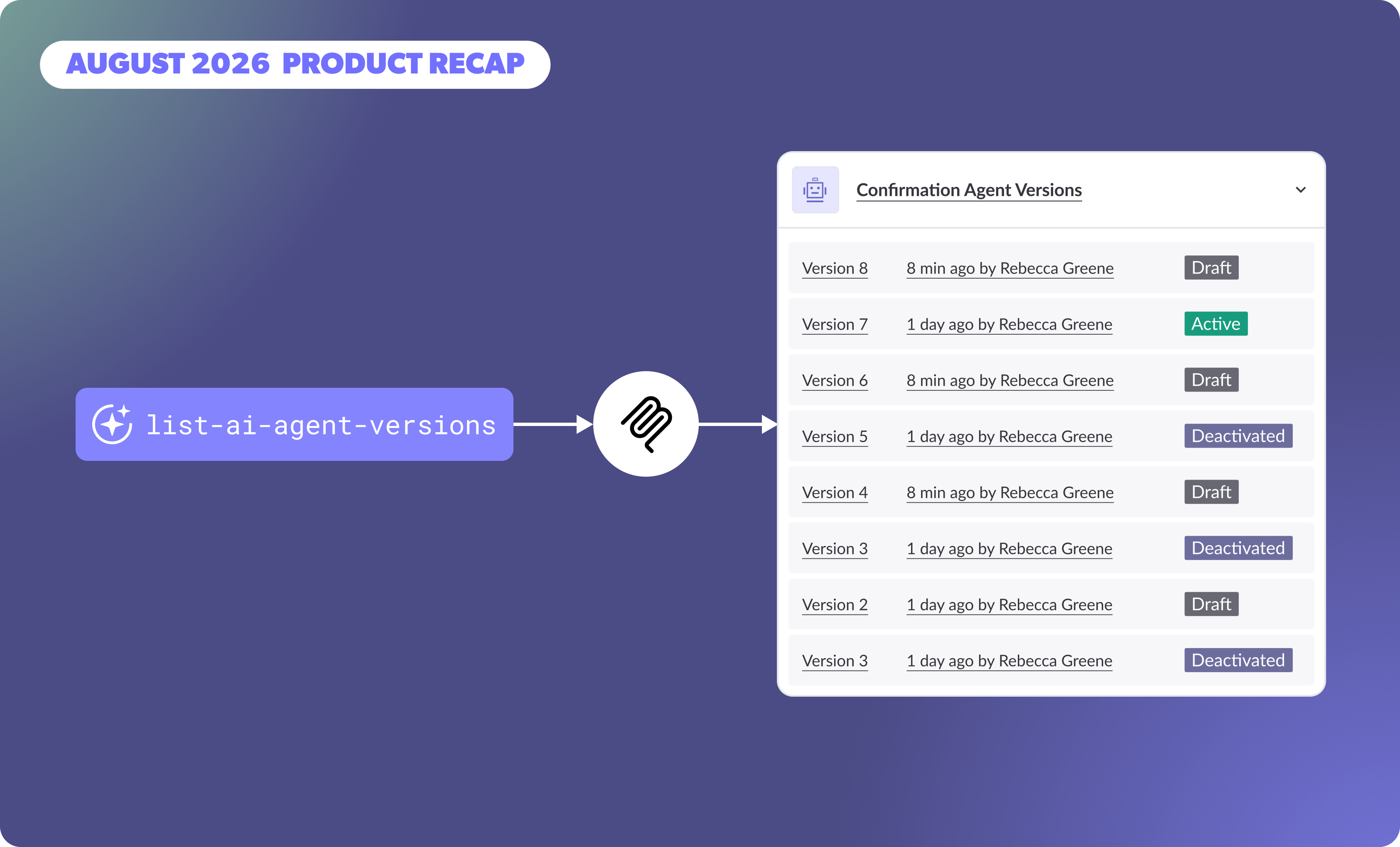
Last month, we launched features that extend your management of AI agents via MCP and CCaaS platforms. Debug based on agent versions or simulation runs, and manage AI analysis data points via Copilot and Regal MCP. As a Five9 AI Agent Connect partner, Regal now has a dedicated integration API built for Voice AI agents.
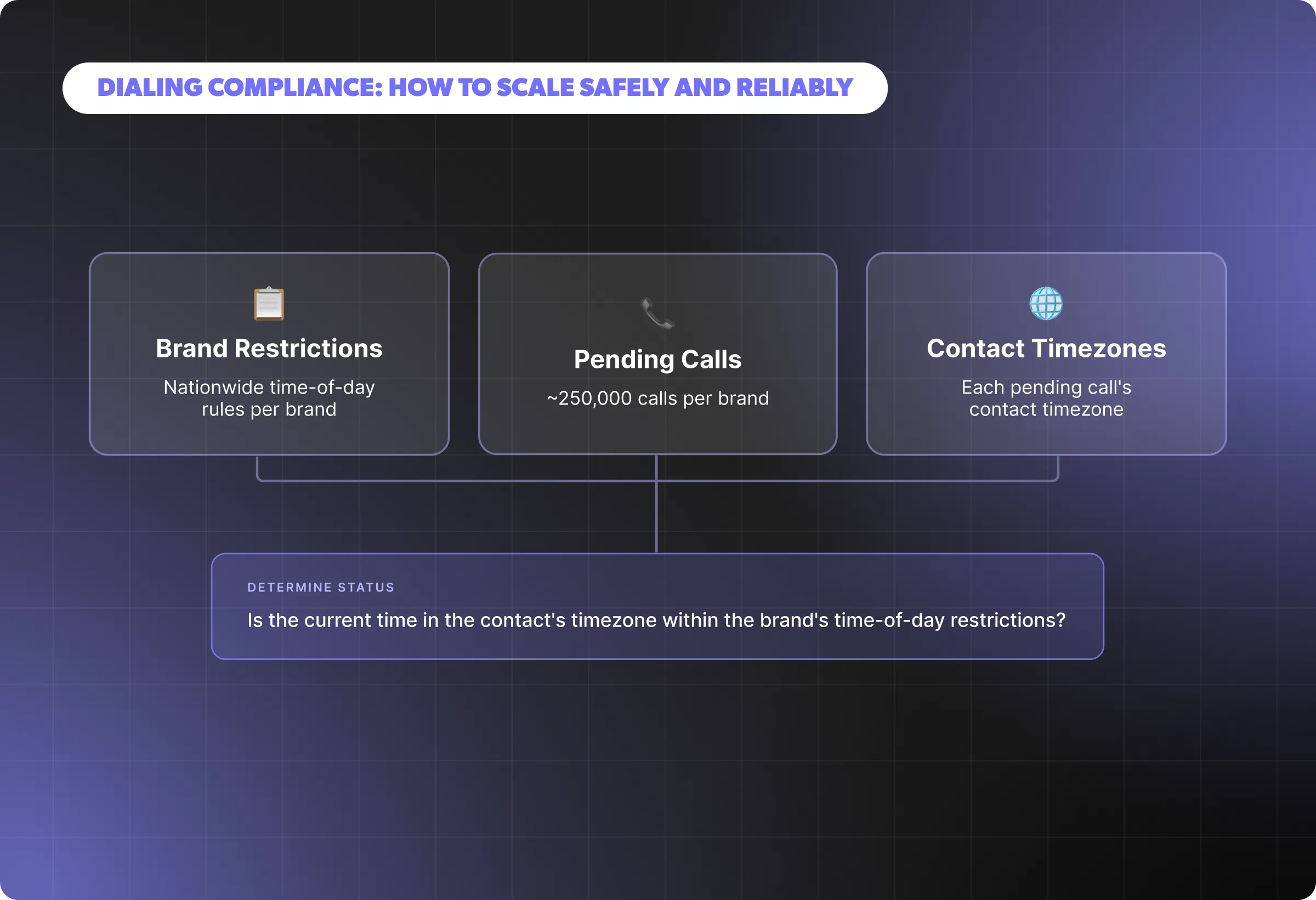
Behind a fragmented and ever-changing regulatory landscape is a simple goal: protecting people from unwanted or poorly timed outreach and giving them control over how they’re contacted. In practice, that responsibility translates into a set of checks that must be validated.
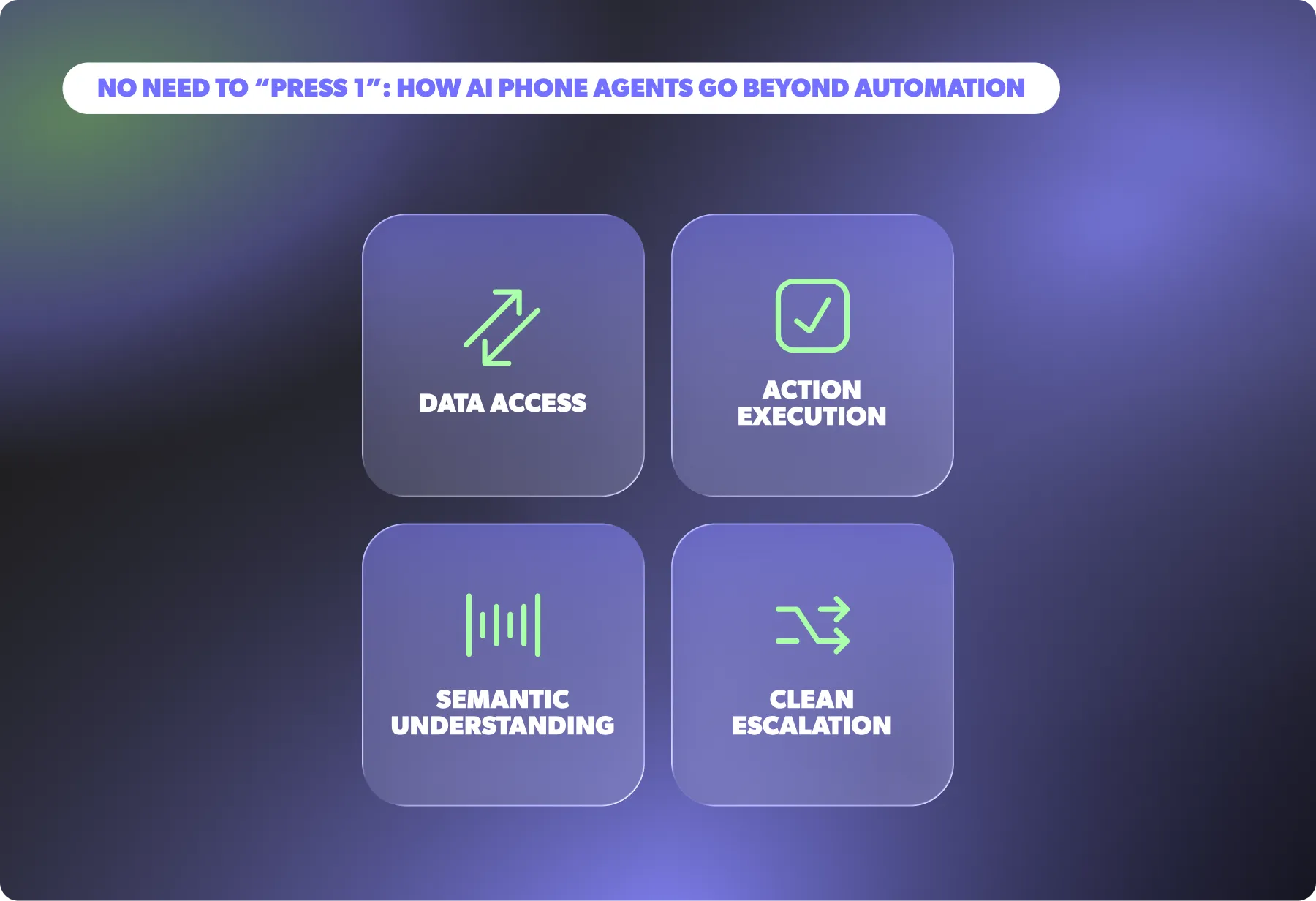
AI phone agents aren't just better phone trees. They are autonomous systems that can understand caller intent, retrieve relevant information from your CRM in real time, execute actions, handle objections and clarifications, and complete the conversation without human involvement.
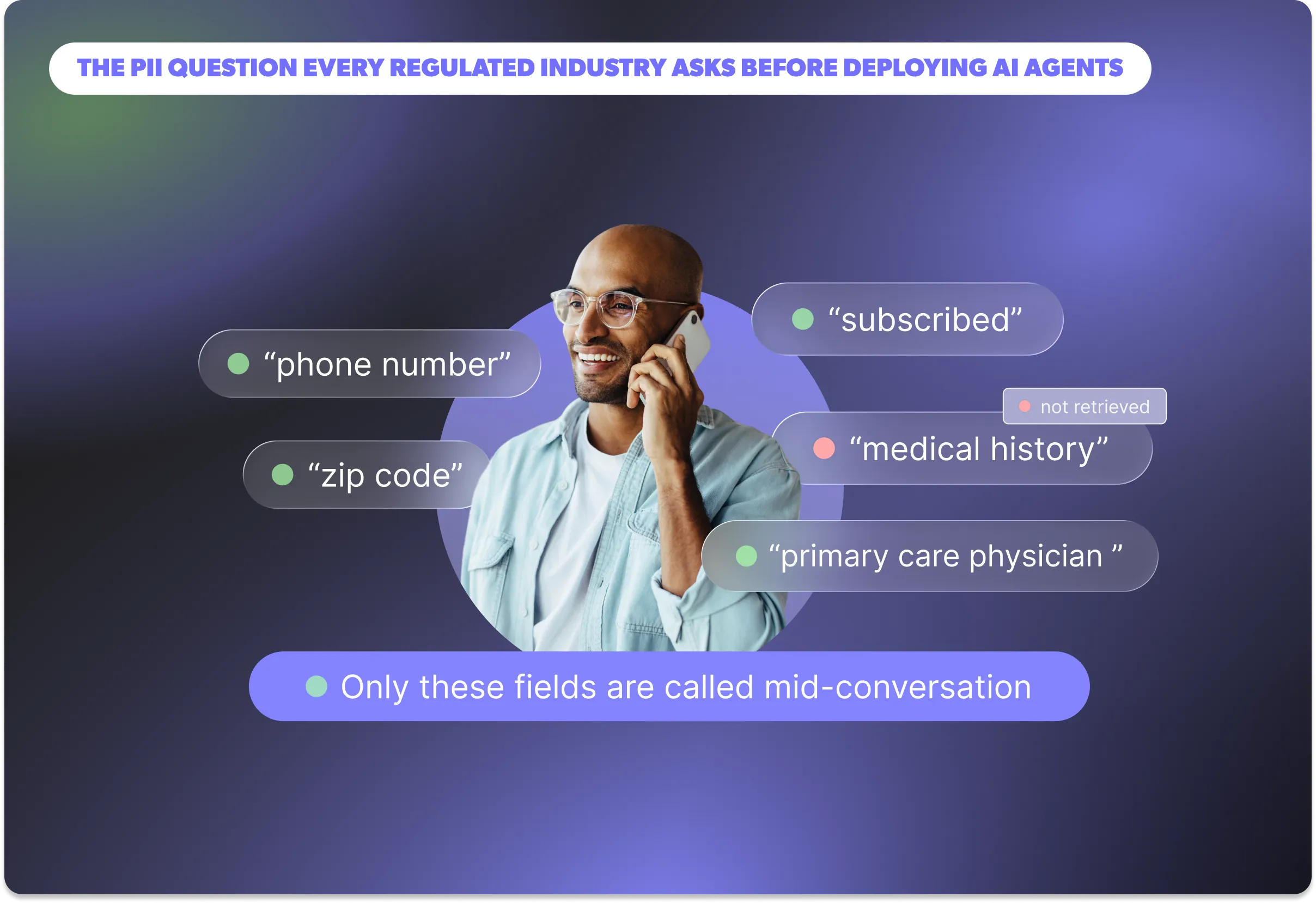
When prospects in healthcare and financial services hear "PII," they often imagine bulk data transfer: the idea that deploying an AI agent means copying a database somewhere. In most modern deployments, that's not what's happening.
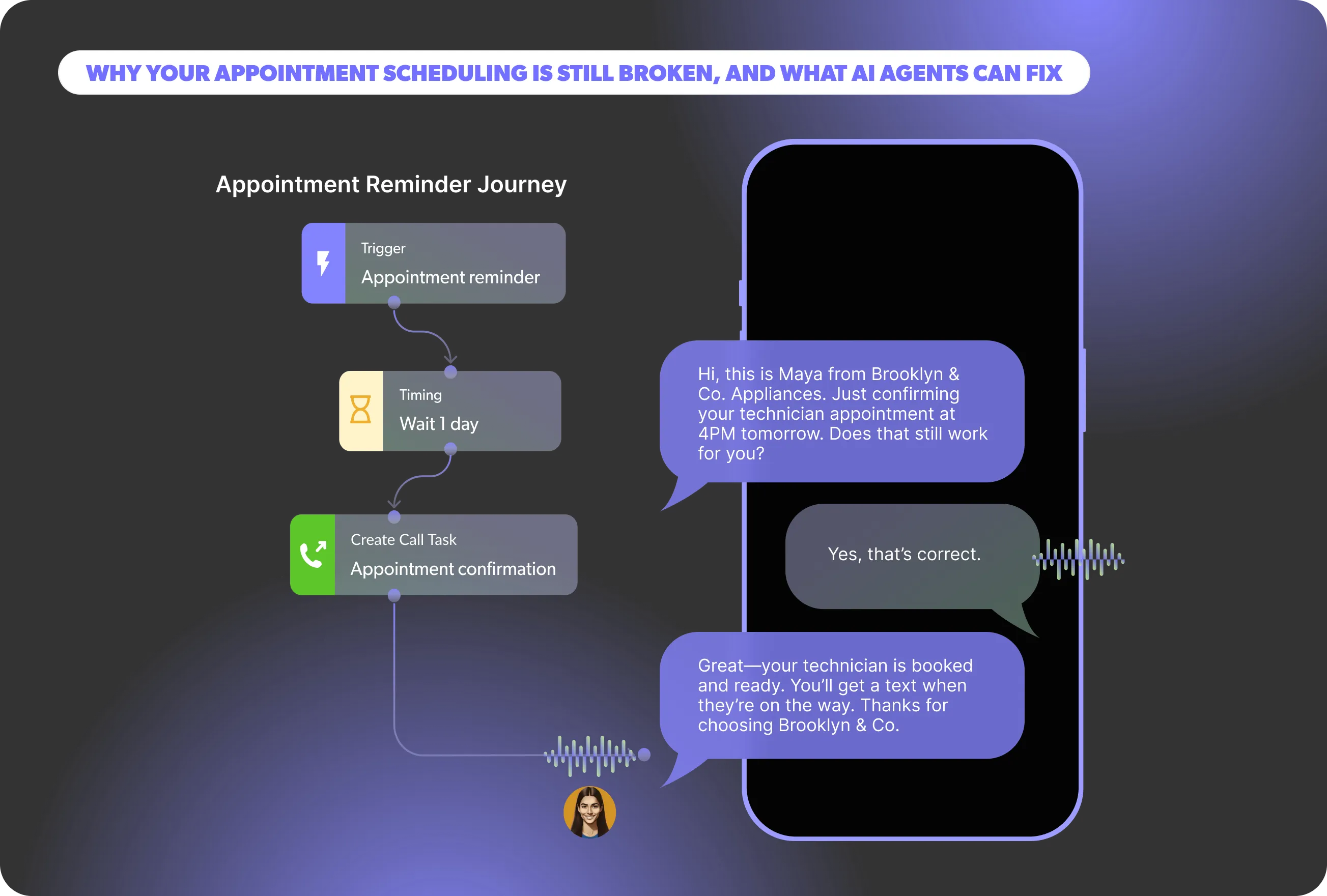
With AI agents, every appointment gets a confirmation call. Each contact gets a chance to reschedule, and the confirmation rate goes to 100%, not because the AI is better at conversations than your agents, but because the AI never runs out of capacity.
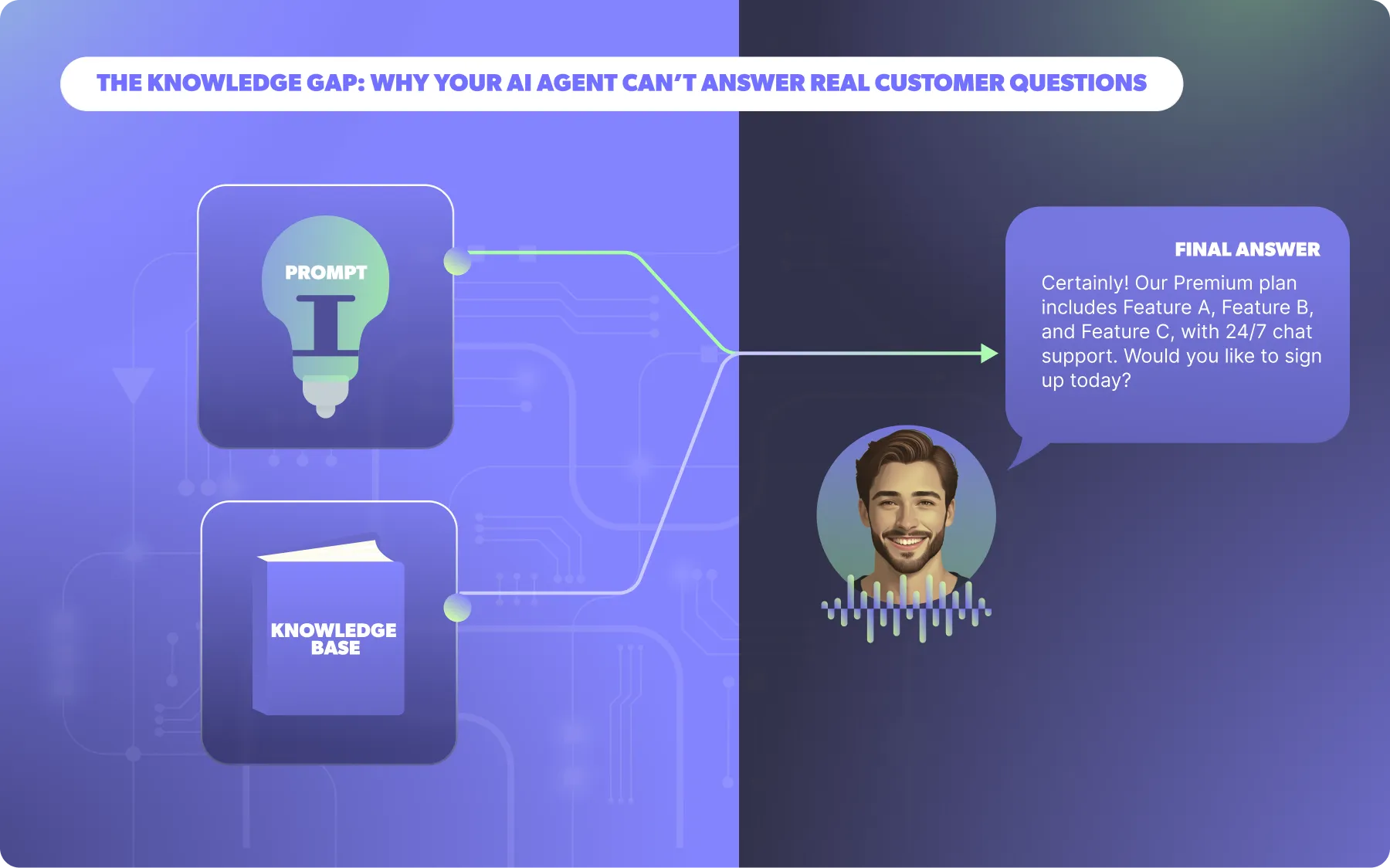
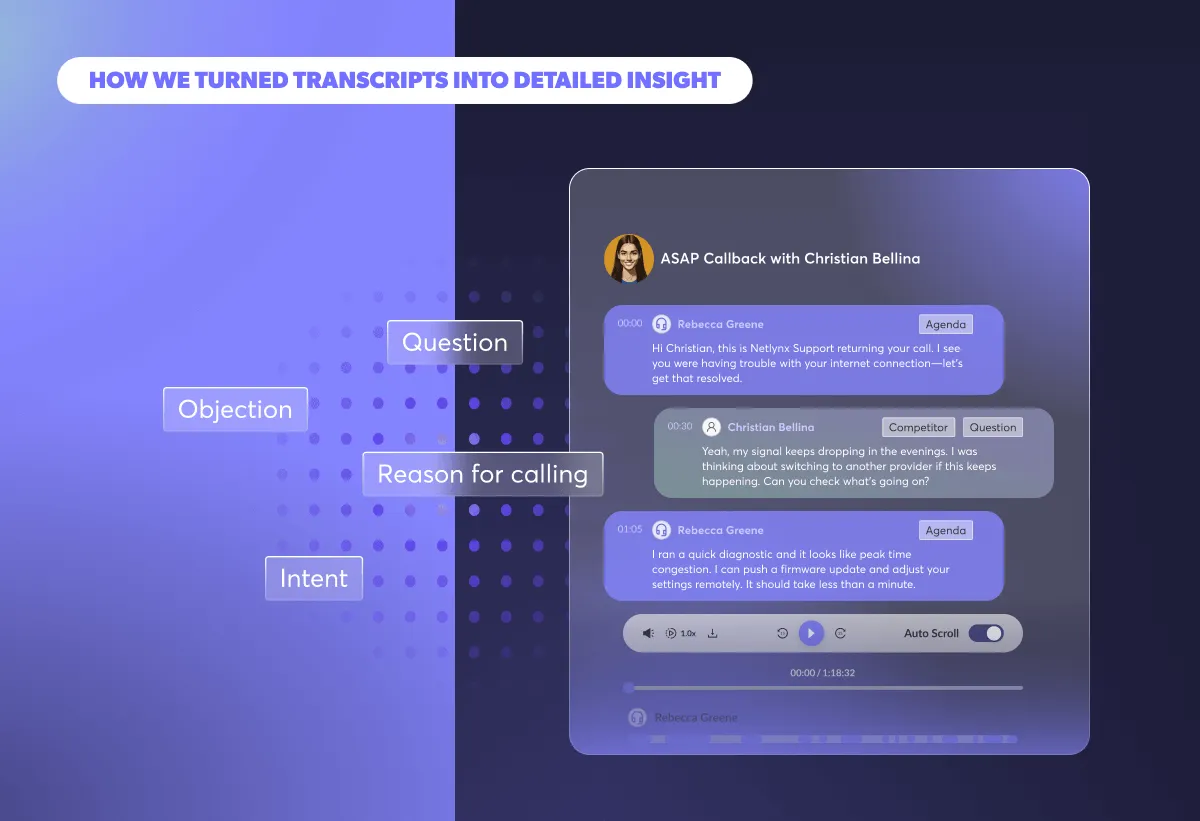
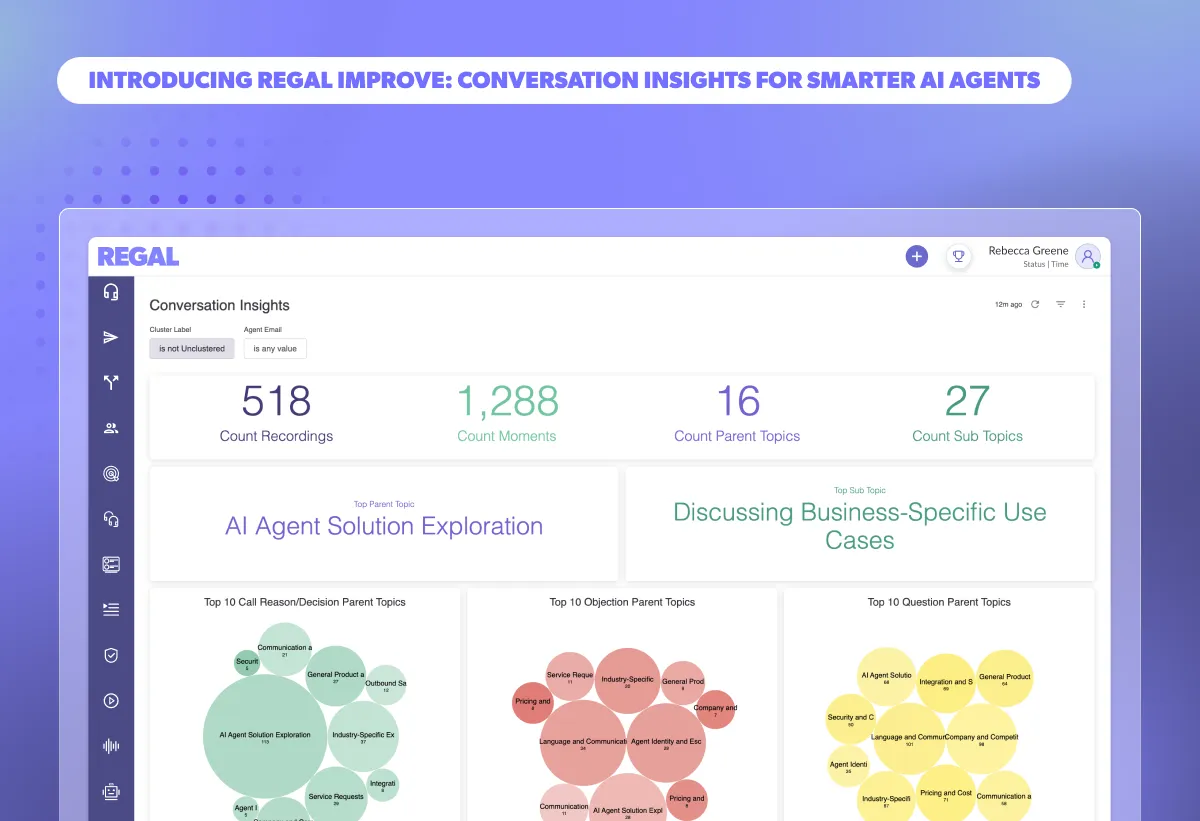
AI agent performance depends on how well it aligns with real customer language, not just fluency. Regal Improve helps teams identify gaps and improve outcomes by analyzing real conversations and surfacing high-impact opportunities
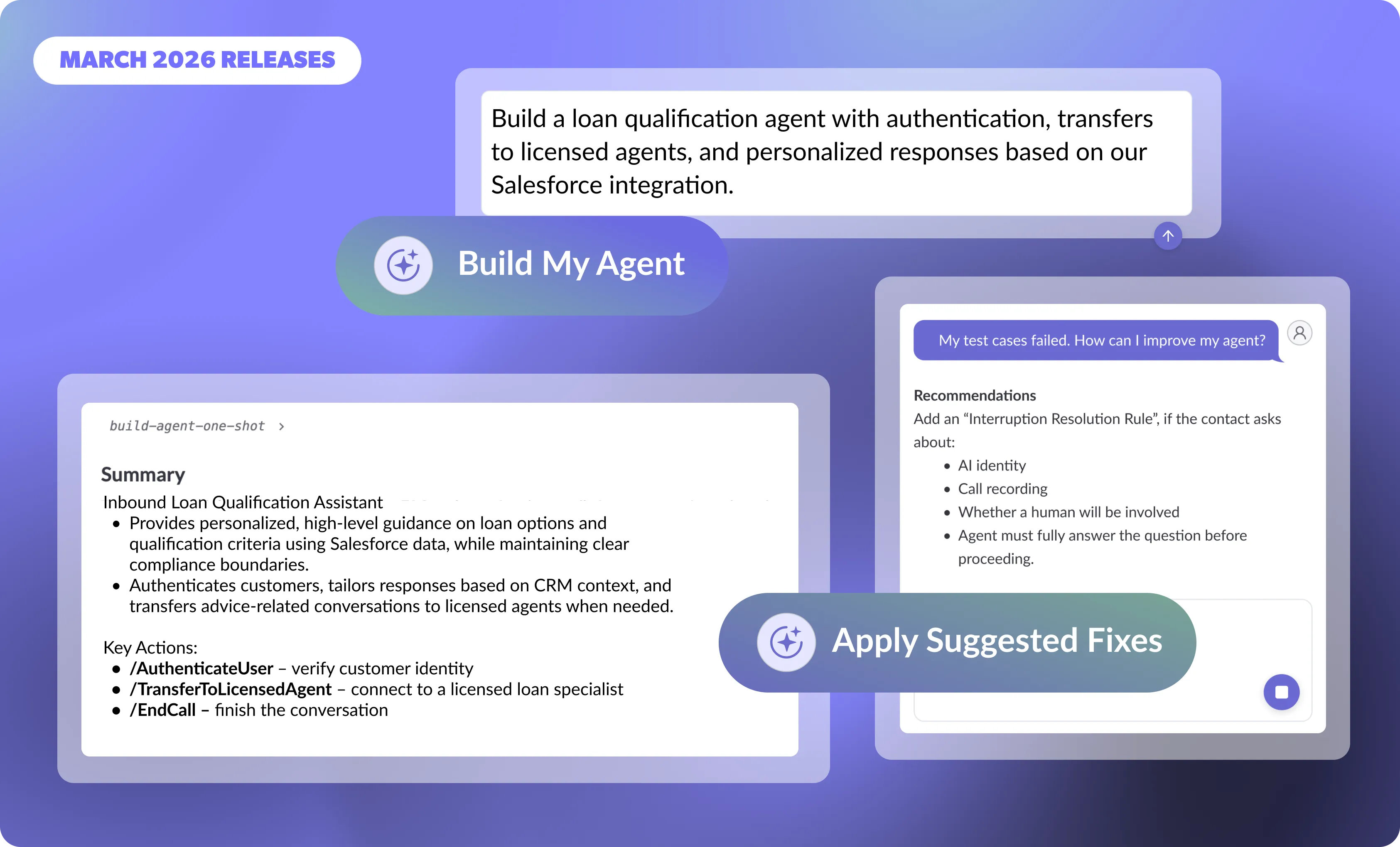
In March, we made it faster than ever to build, launch, and continuously improve AI agents with Copilot, Regal's AI agent for building AI agents. Together, these updates lessen the time needed to launch and maintain agents, so you can focus on understanding your customers, unlocking new use cases, and driving faster business outcomes.
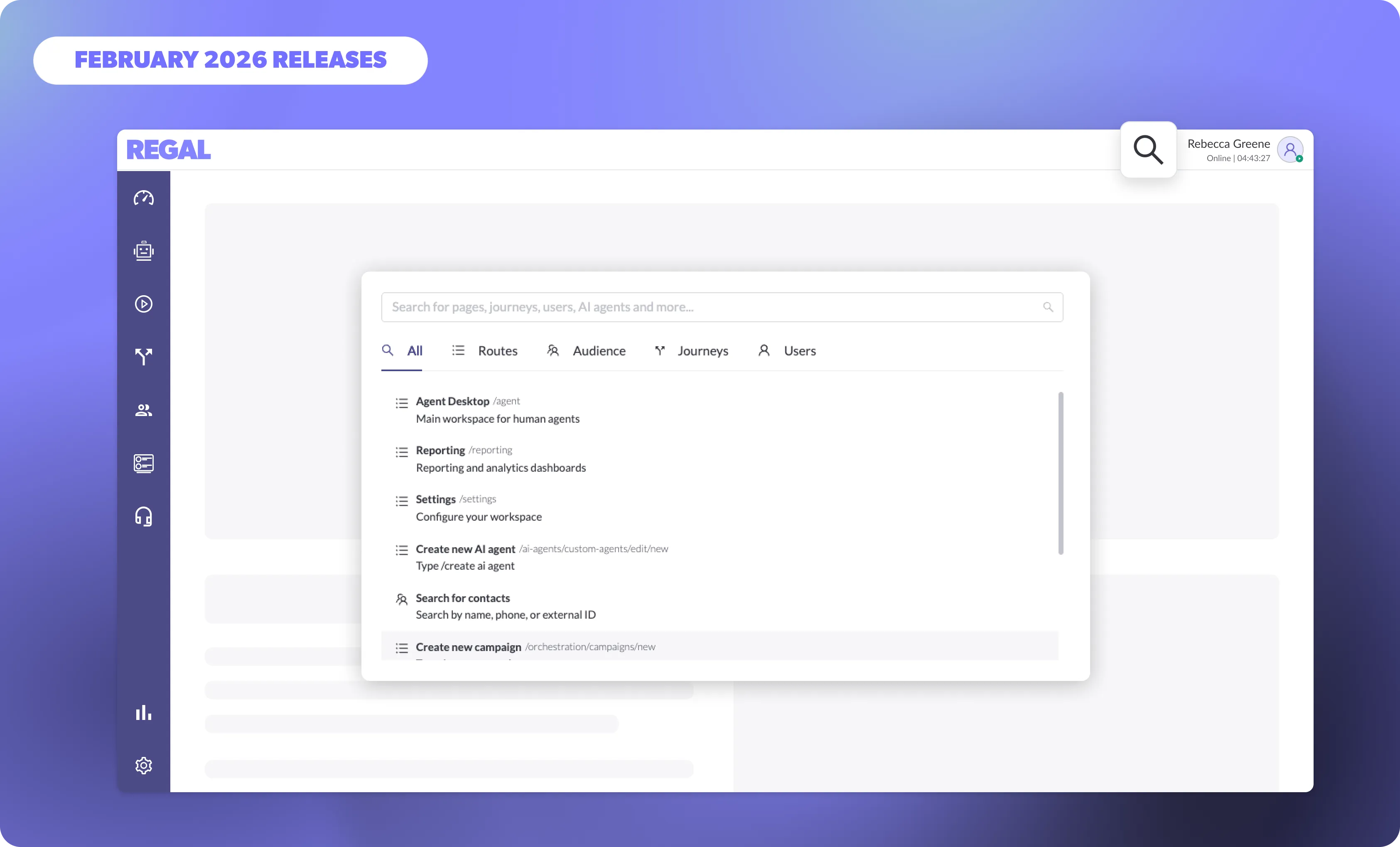
In February, we made AI agents sound and feel more natural, even when handling complex, multi-step conversations with conditional logic. These updates give you the control to build AI agents that don't just follow a script: they adapt, respond, and engage naturally with each customer.
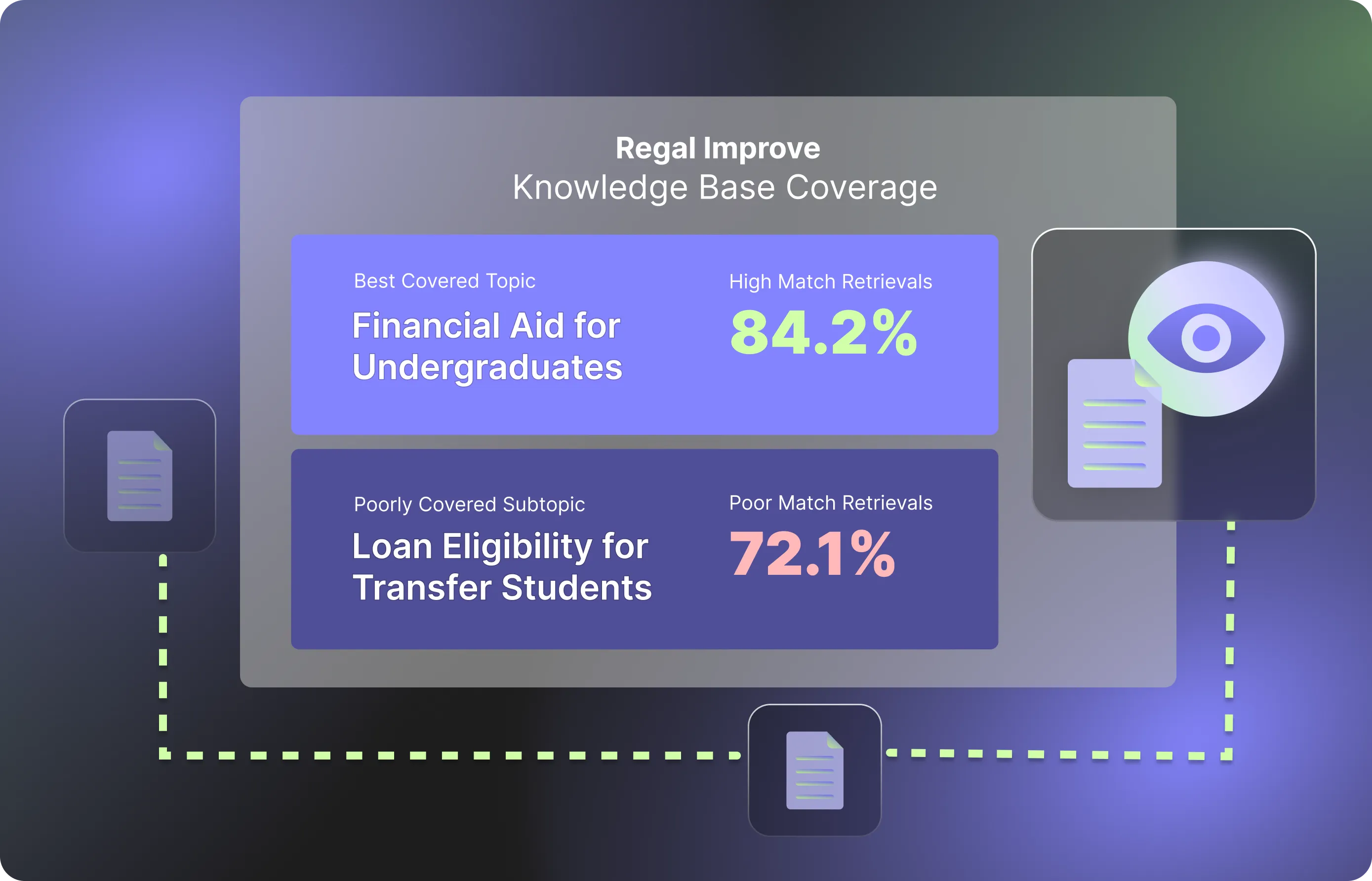
Customer conversations are inherently dynamic, and Regal Improve’s Knowledge Base Coverage tracks changes in retrieval performance over time and at scale. This makes it easy to verify that KB updates increase coverage and if your documentation is keeping up with evolving customer requests.
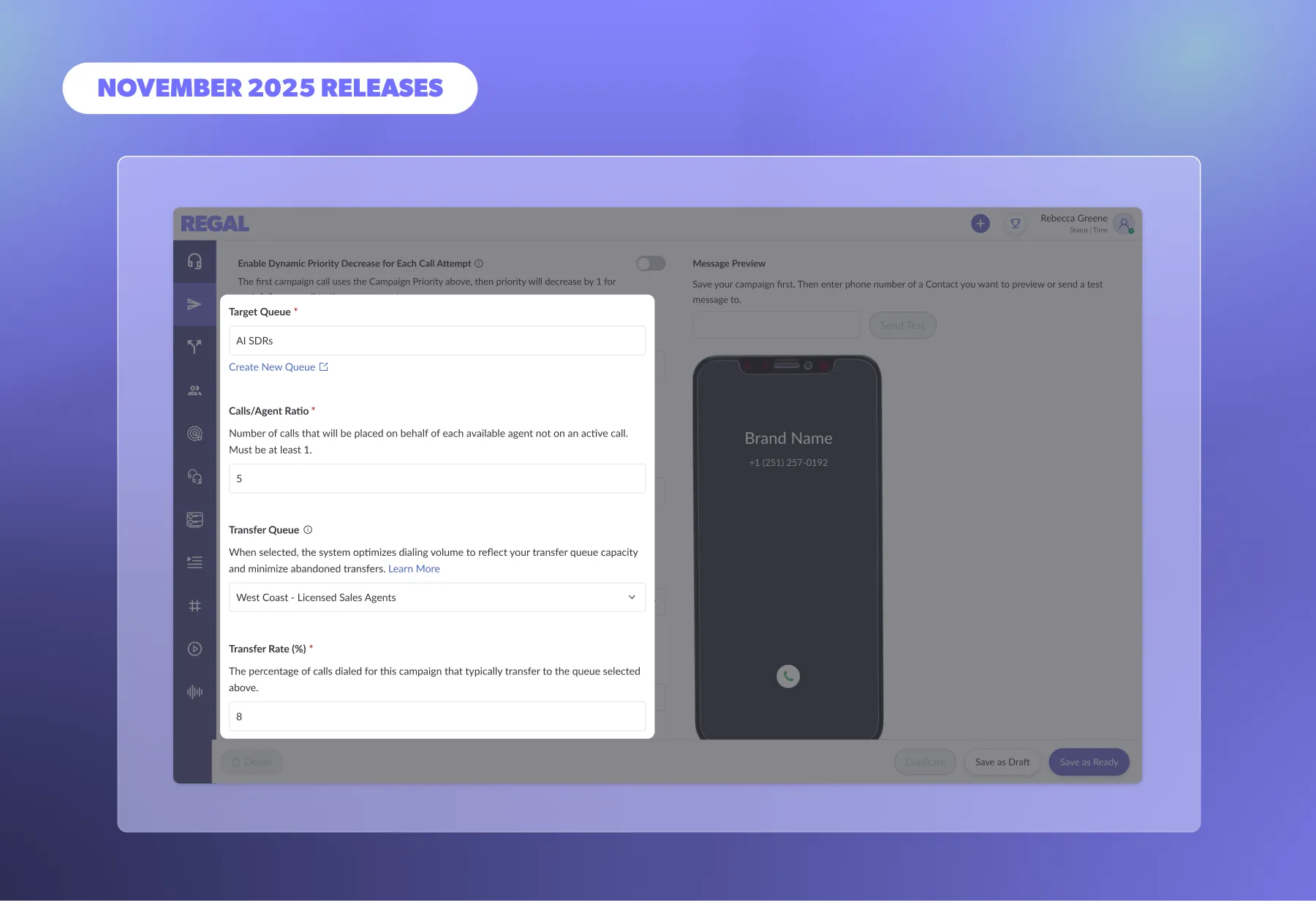
November's releases make it easier to scale your transfer-heavy call flows, with new tools that align dialer pacing to downstream agent capacity and streamline complex handoffs. You’ll also see improved post-call workflow accuracy, with reliable data extraction and disposition outcomes driven by LLM configurability and earlier validation.
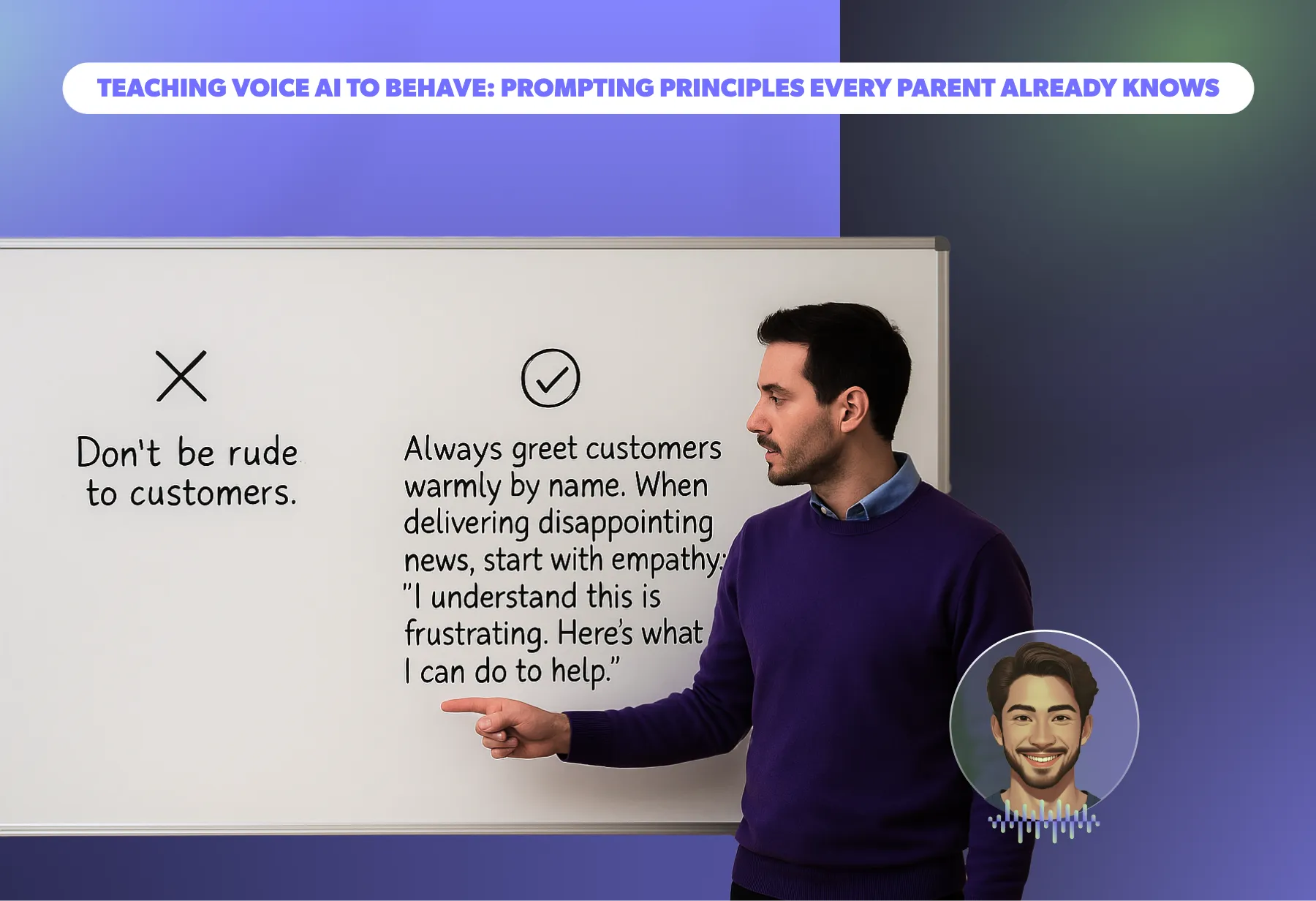
Building a great AI voice agent isn’t so different from parenting a five-year-old: clarity, examples, and structure make all the difference. This post breaks down proven prompting principles—from positive framing and persona design to conversational guardrails—that help AI agents sound natural, stay on task, and follow directions every time.
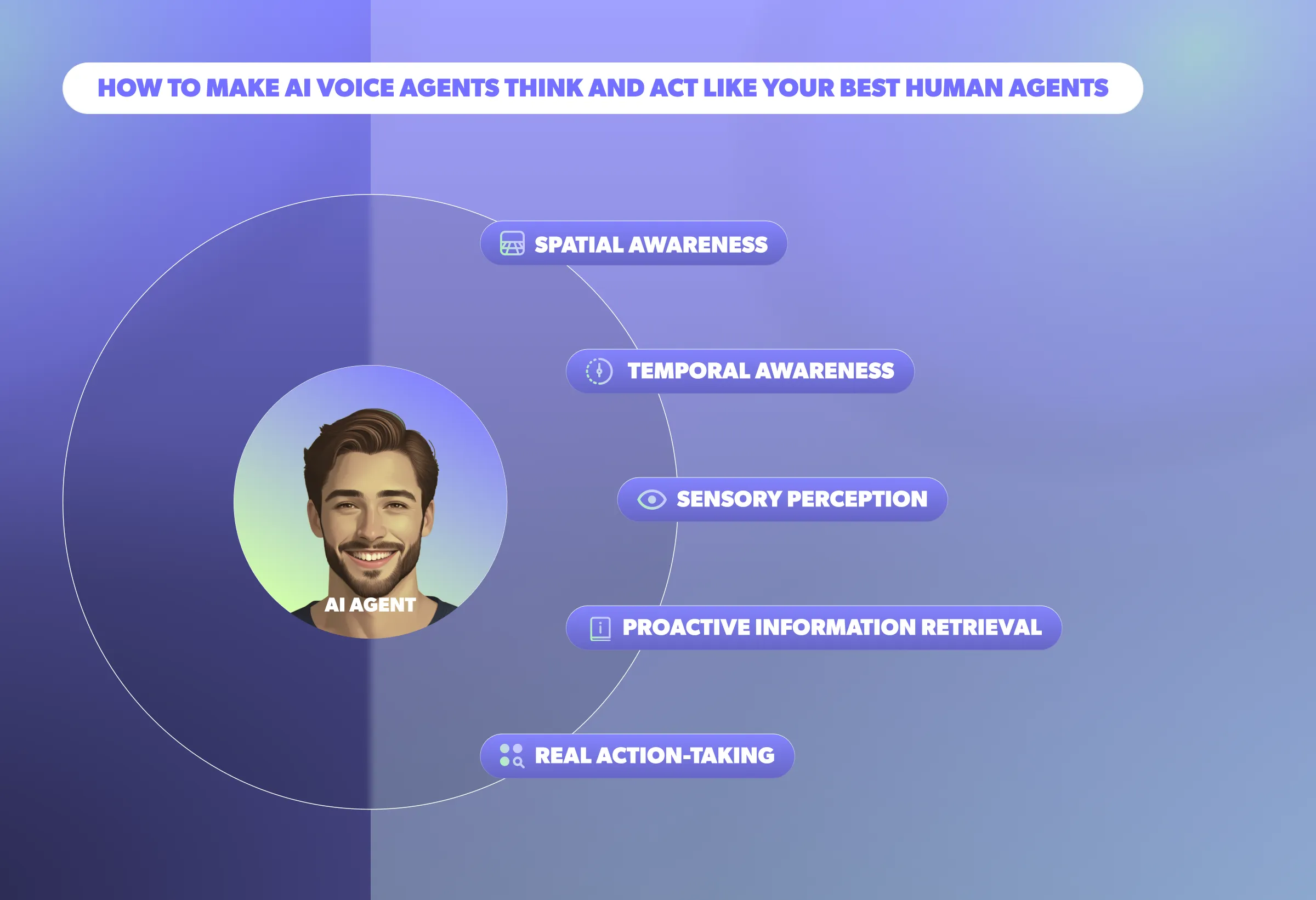
See how modern AI voice agents can match your best human reps by building five core capabilities into every call: spatial awareness, temporal awareness, sensory perception, proactive retrieval, and real action-taking. This post breaks down what each pillar means in practice and how they turn voice AI from a conversational bot into a fully empowered operator.
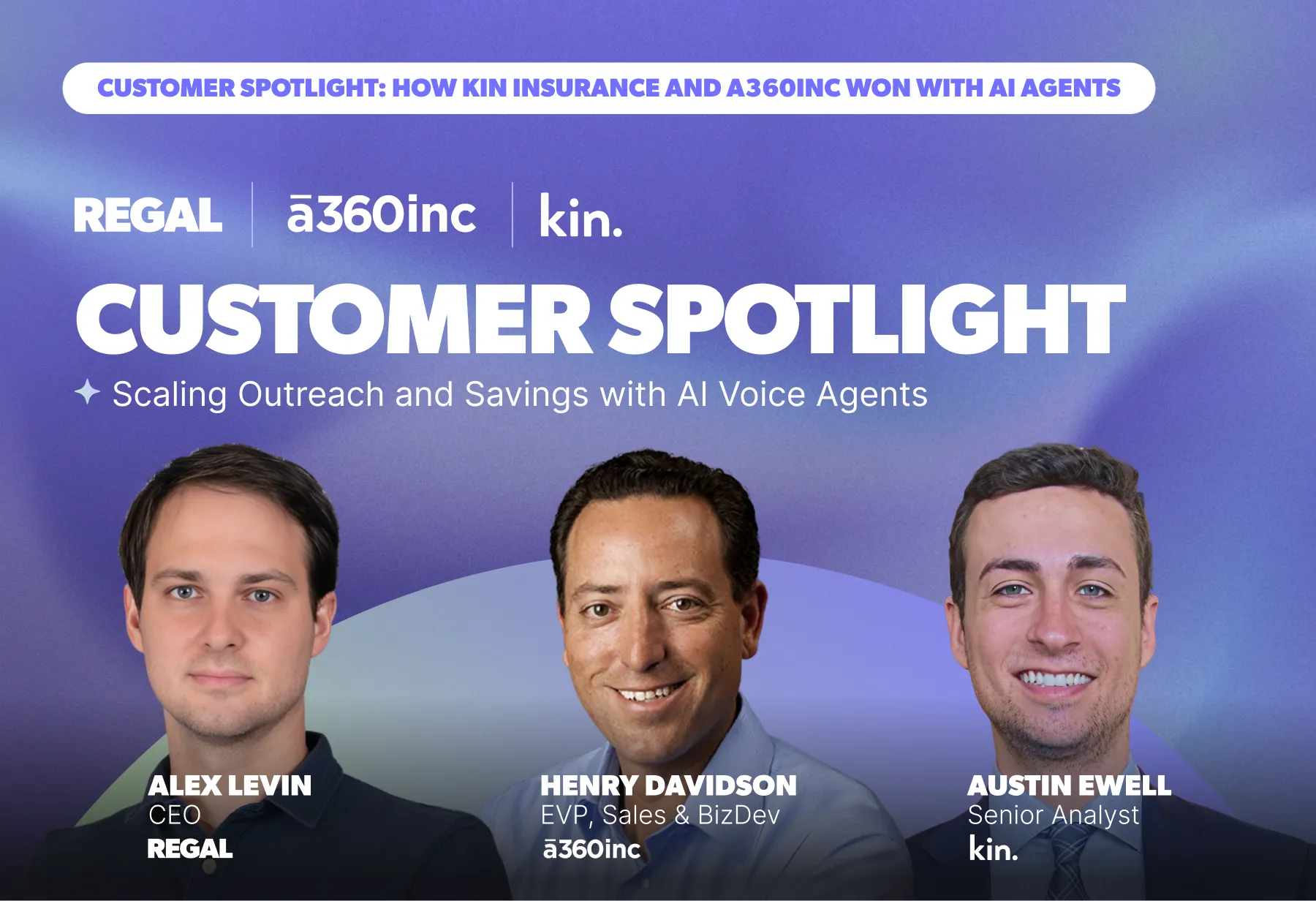
In this fireside chat, Regal Co-Founder & CEO Alex Levin sits down with Kin Insurance’s Austin Ewell and a360inc’s Henry Davidson to share how their organizations are using AI agents to transform outreach, customer experience, and operational efficiency. They discuss real-world deployments—from qualification and human agent handoffs to complex negotiation workflows—break down the results, and offer practical guidance for leaders adopting AI agents at scale.
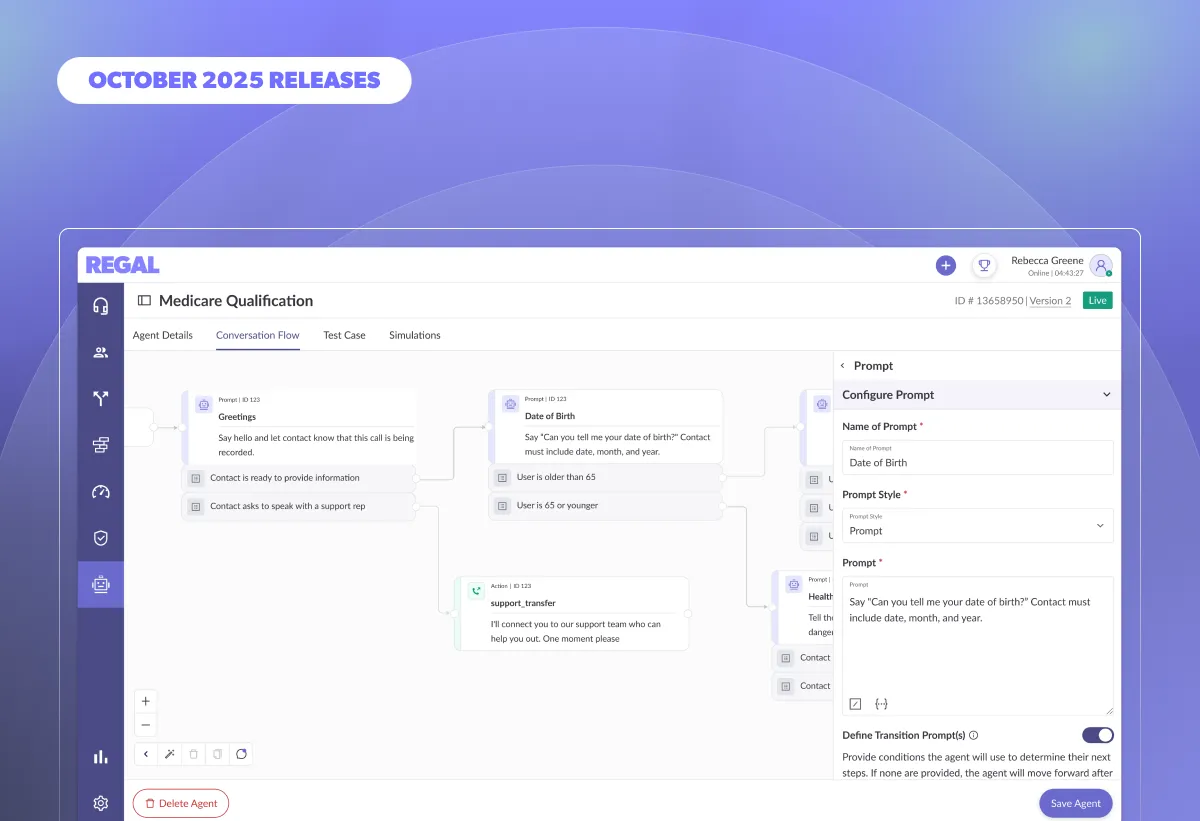
October’s releases give you deeper structure and insight across your AI operations—from designing predictable, multi-state conversation flows and delivering seamless human handoffs to uncovering performance insights and strengthening your agents’ knowledge for continuous improvement.
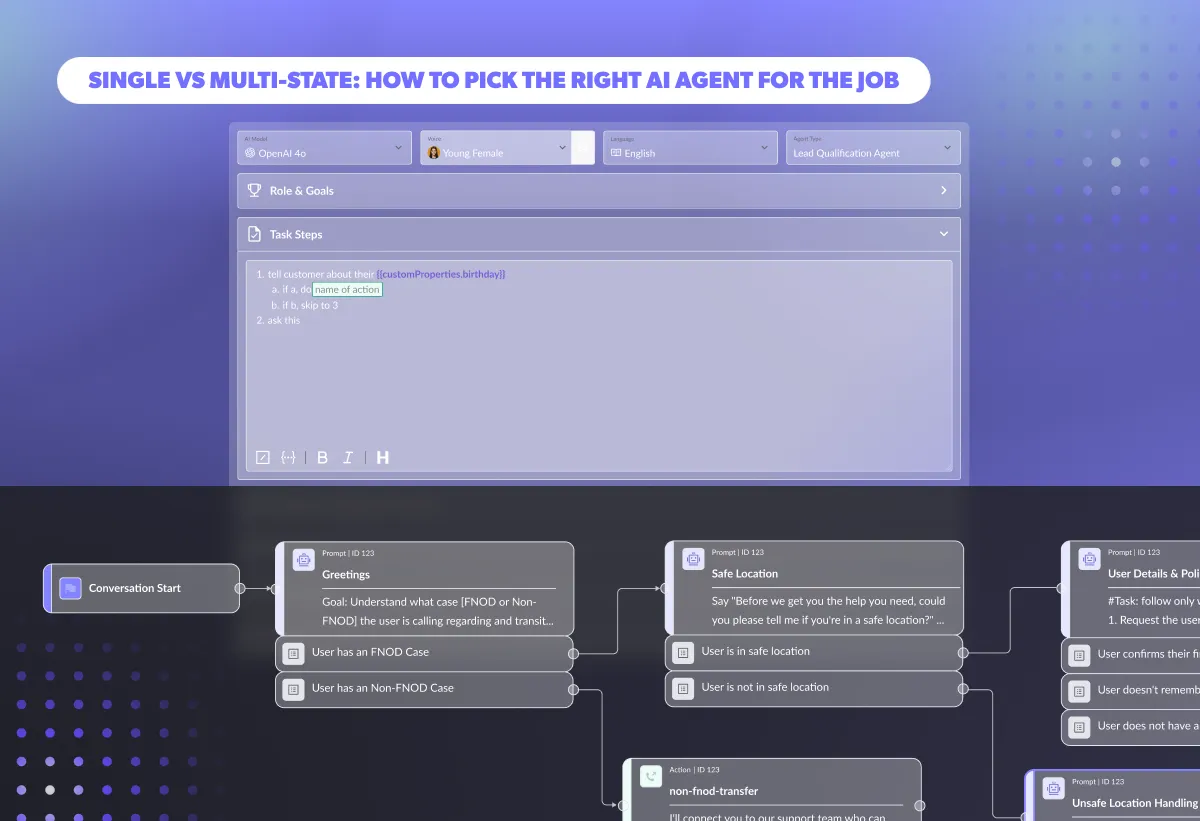
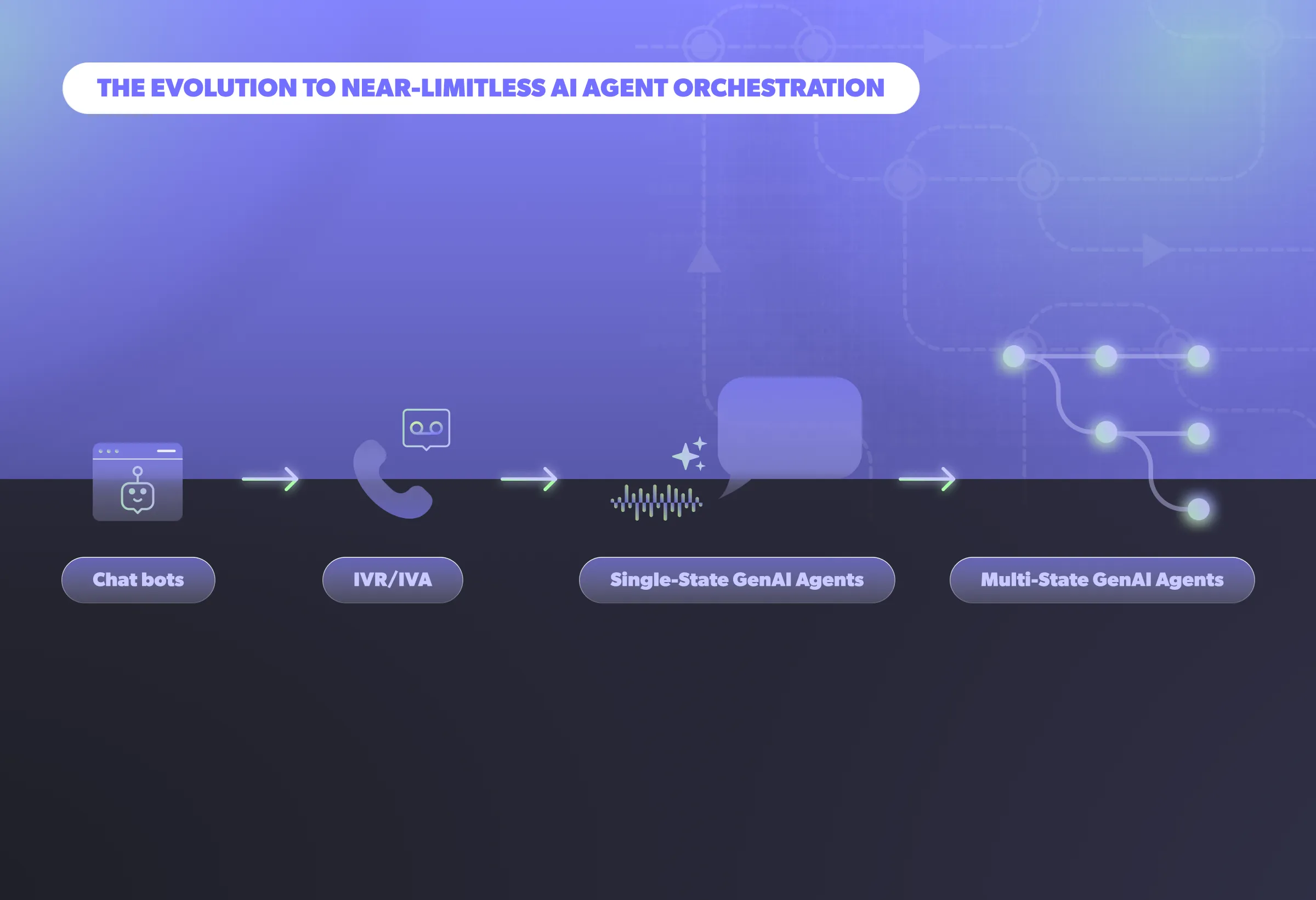
Learn about the difference between single-state and multi-state AI agents, and how each impacts speed, scale, and reliability. Discover when simplicity is enough and when enterprise workflows demand structured orchestration, so you can choose the right design for your use case.
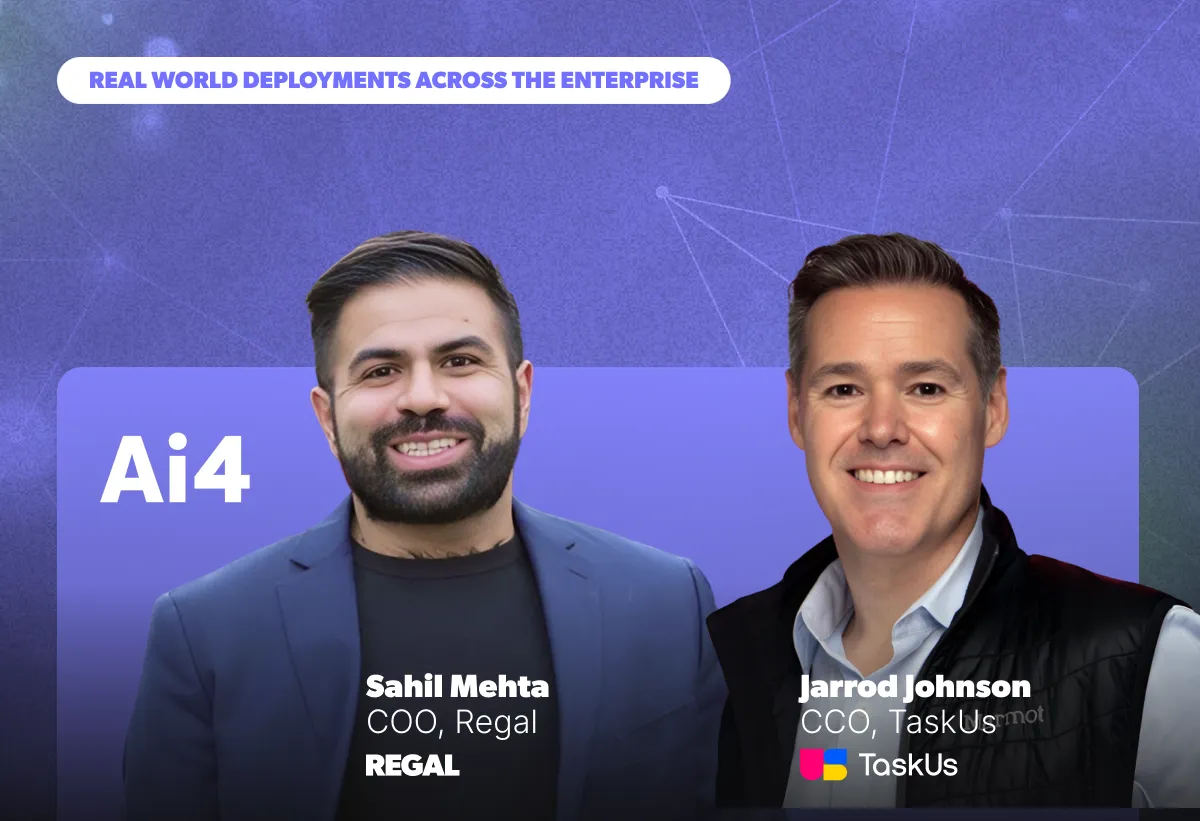
In this AI4 fireside chat, Regal.ai COO Sahil Mehta and TaskUs CCO Jarrod Johnson explore how enterprise organizations are deploying voice AI agents across customer experience, support, and sales. They share real-world deployments, discuss quality and ROI trade-offs, and outline best practices for aligning operations and product teams when adopting AI agents at scale.
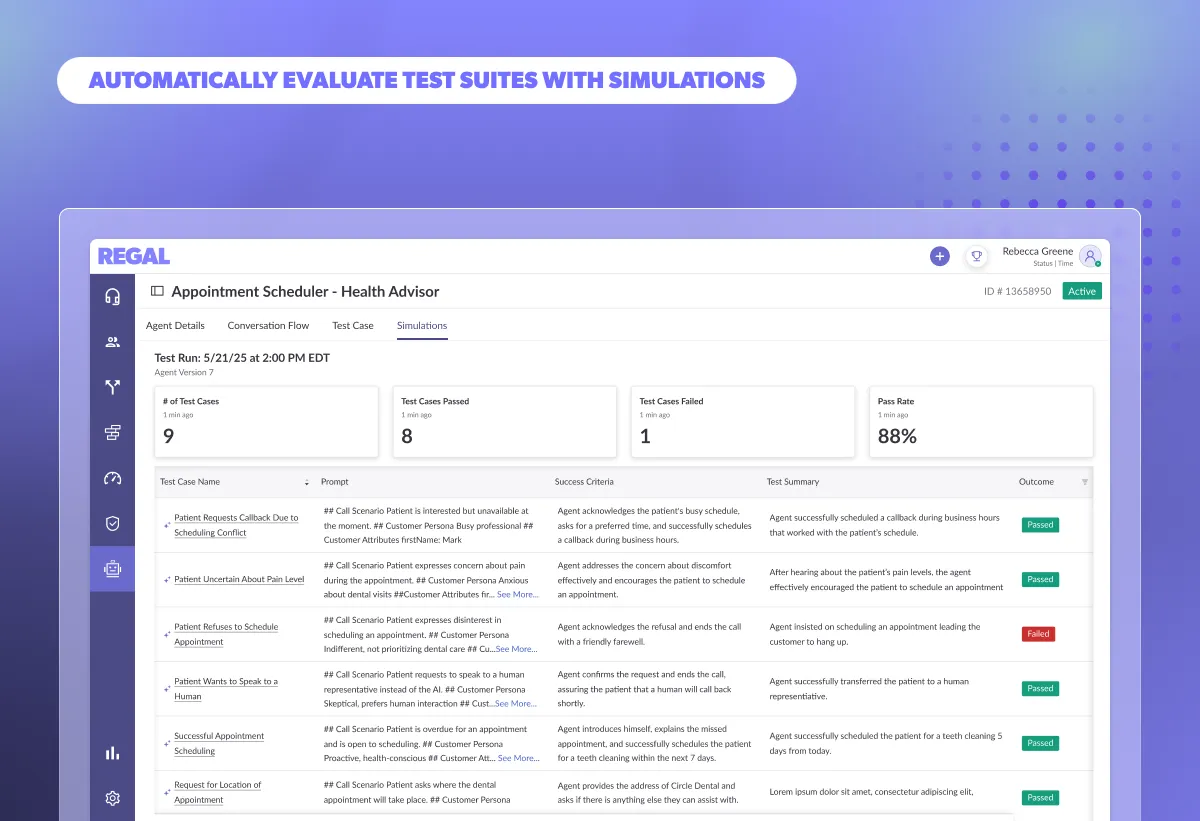
Discover how you can use Simulations to evaluate scenario-specific conversational flows that pinpoint AI Agent failures before launch. Speed up regression testing, validate prompts, knowledge bases, and custom actions at scale, and deploy reliable AI Agents with confidence.
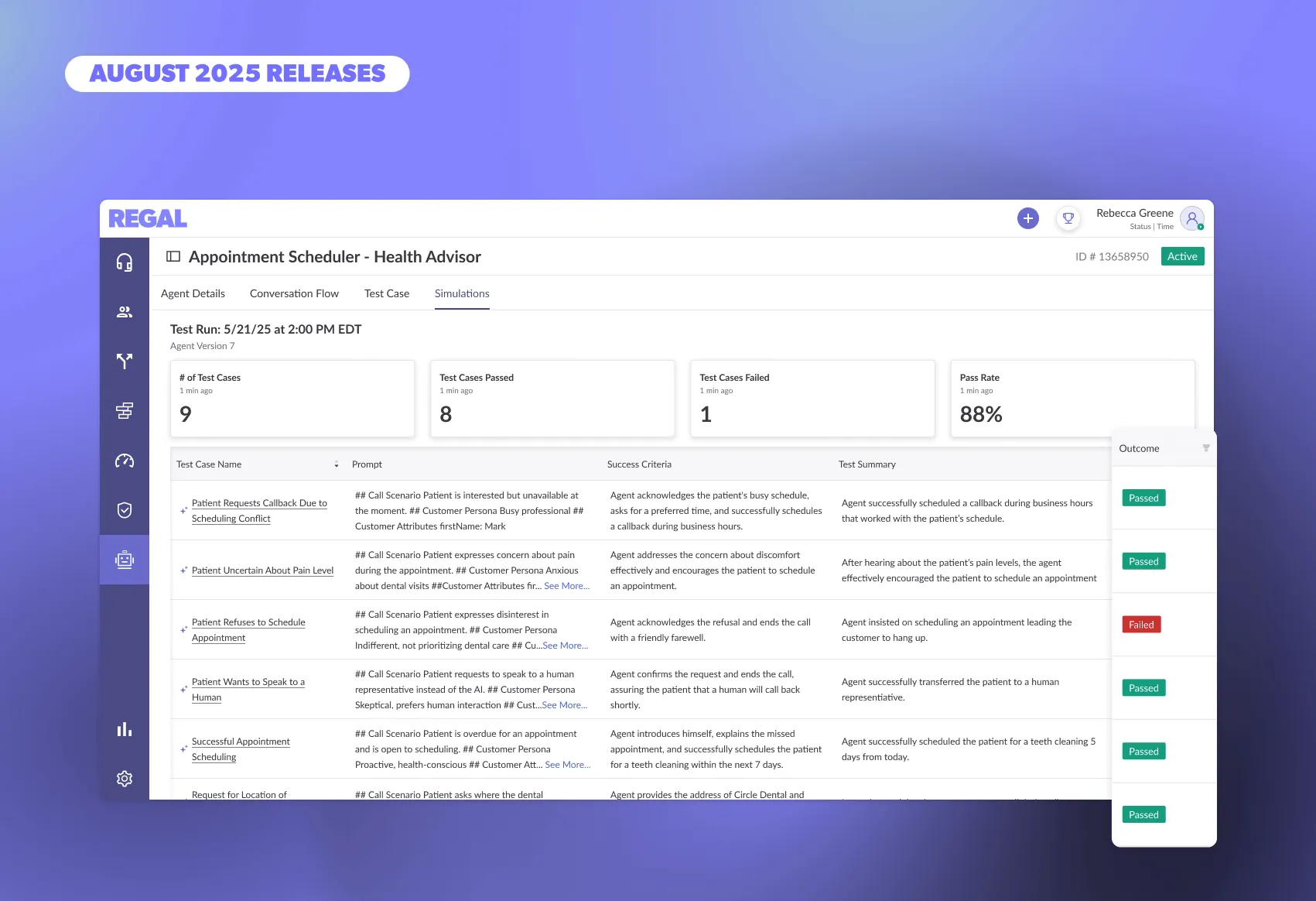
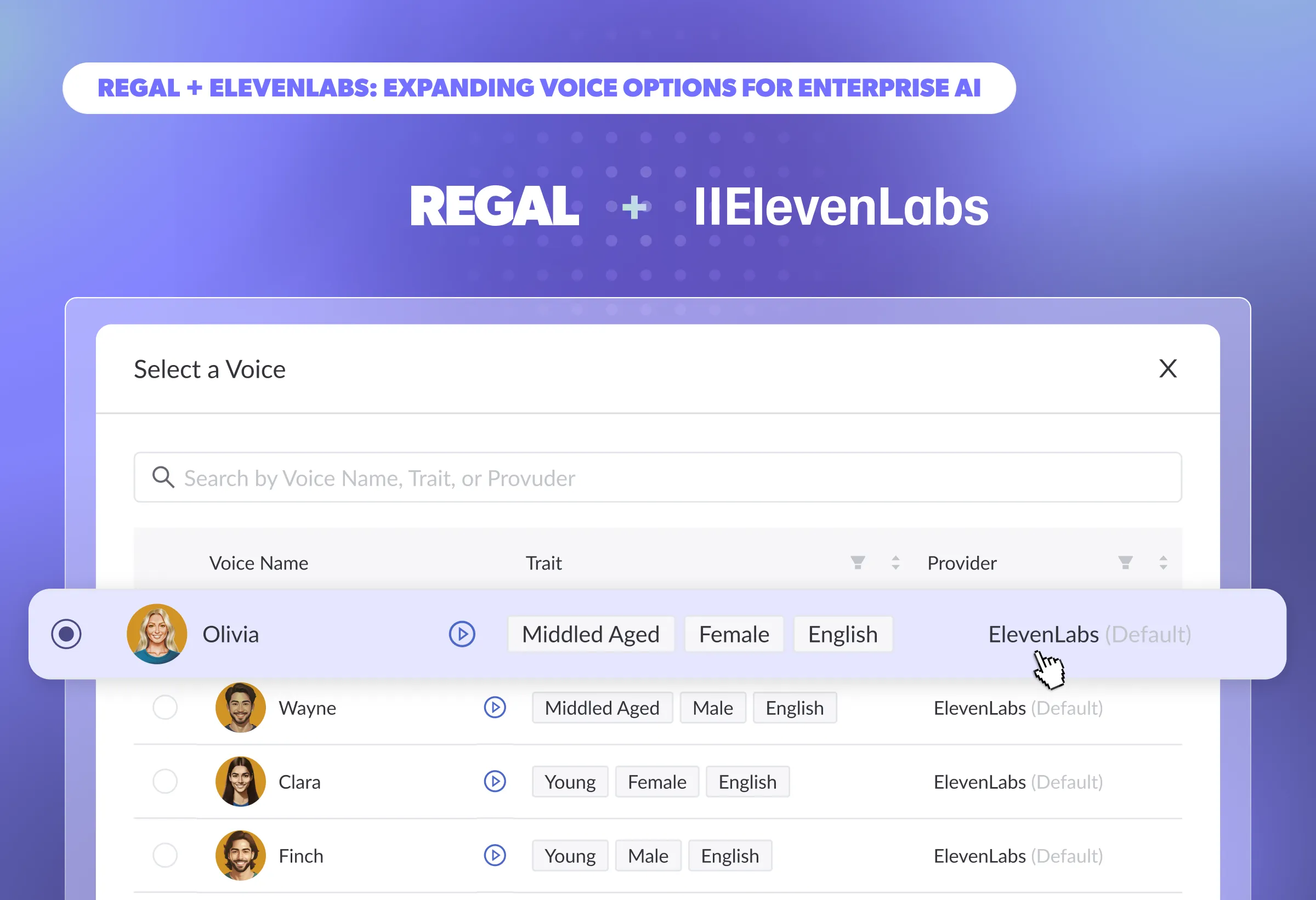
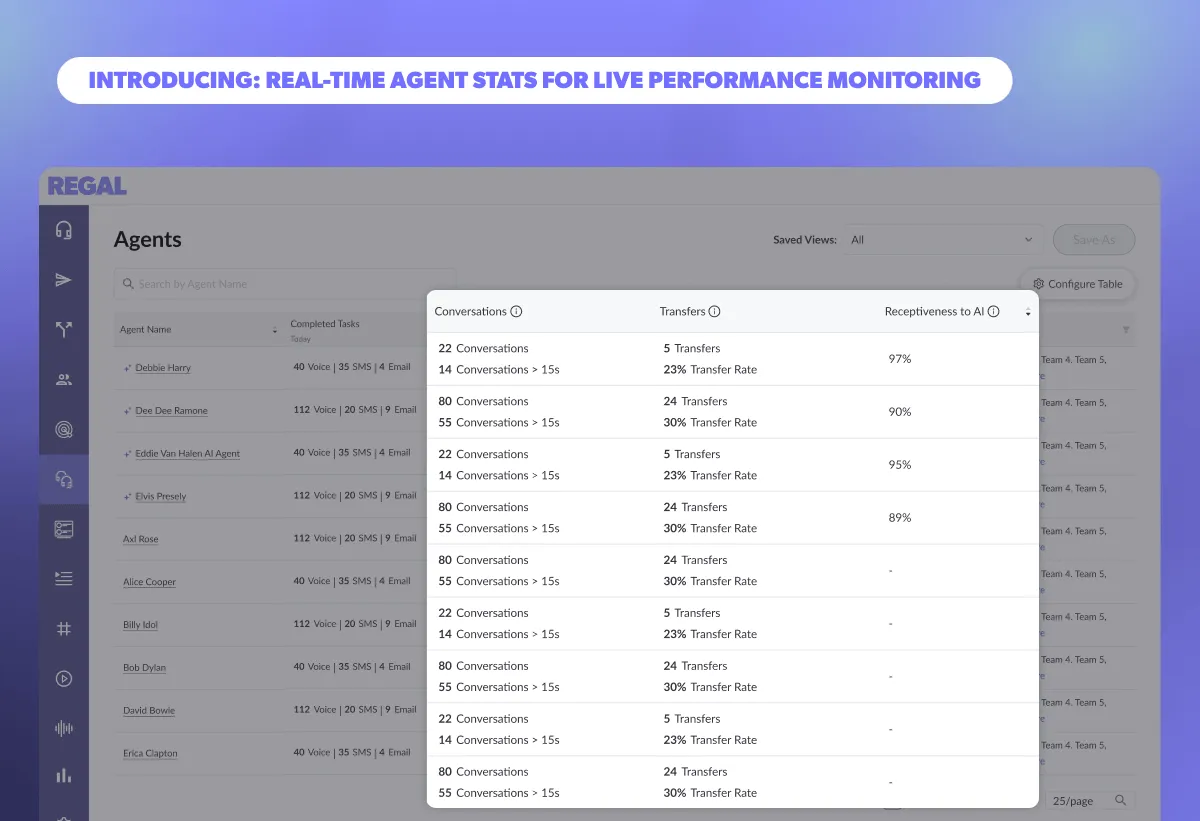
New features include automated test evaluations, the Regal Improve insights dashboard, PII-safe recording actions, 25 ultra-realistic voice options, bulk Knowledge Base URL upload, and expanded quiet hours compliance—designed to accelerate iteration, improve agent performance, and safeguard customer trust.
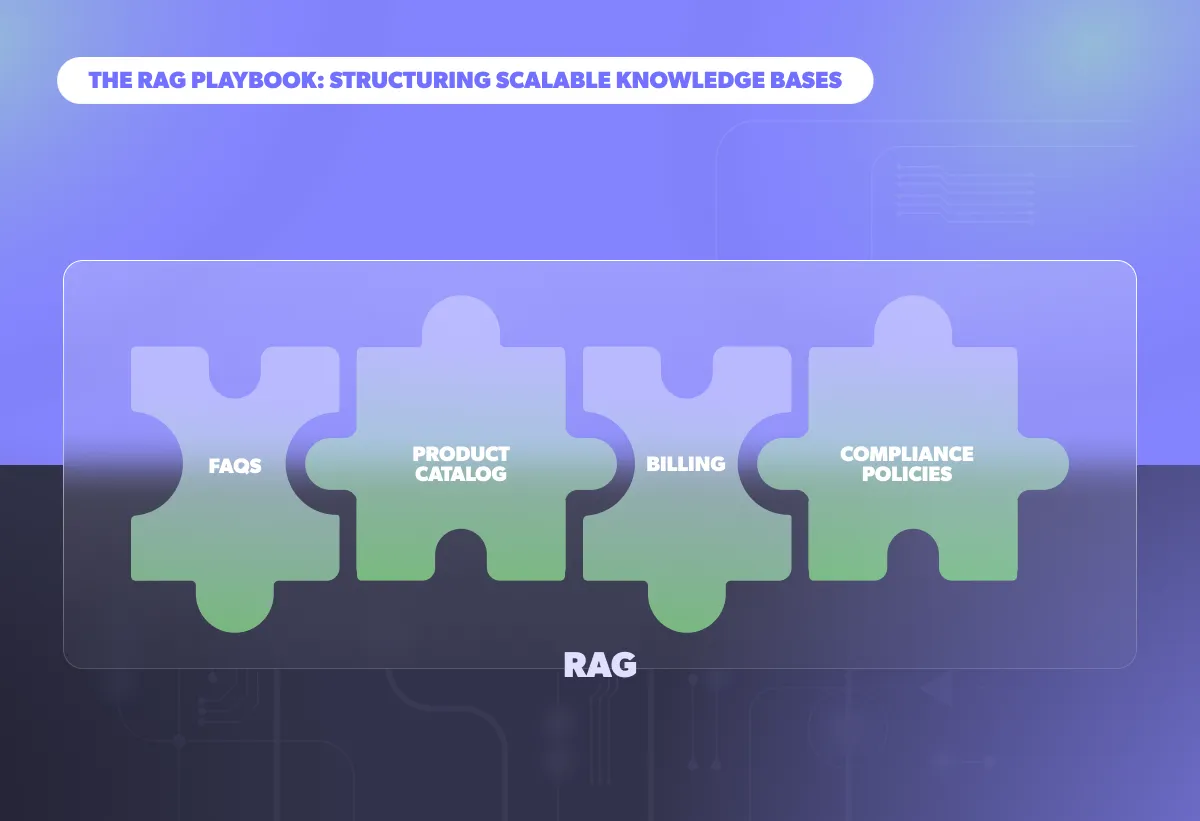
Learn how to structure a knowledge base that keeps AI Agents accurate and on-script. Discover why human-style KBs fail, and apply best practices like single-topic chunking, concrete instructions, and explicit outcomes to reduce hallucinations and scale reliable RAG performance.
Learn how to maintain a clean, reliable RAG system for AI Agents. Discover best practices for structuring source docs, chunking content, titling for retrieval, avoiding redundancy, and keeping knowledge bases fresh to ensure accurate, scalable performance.
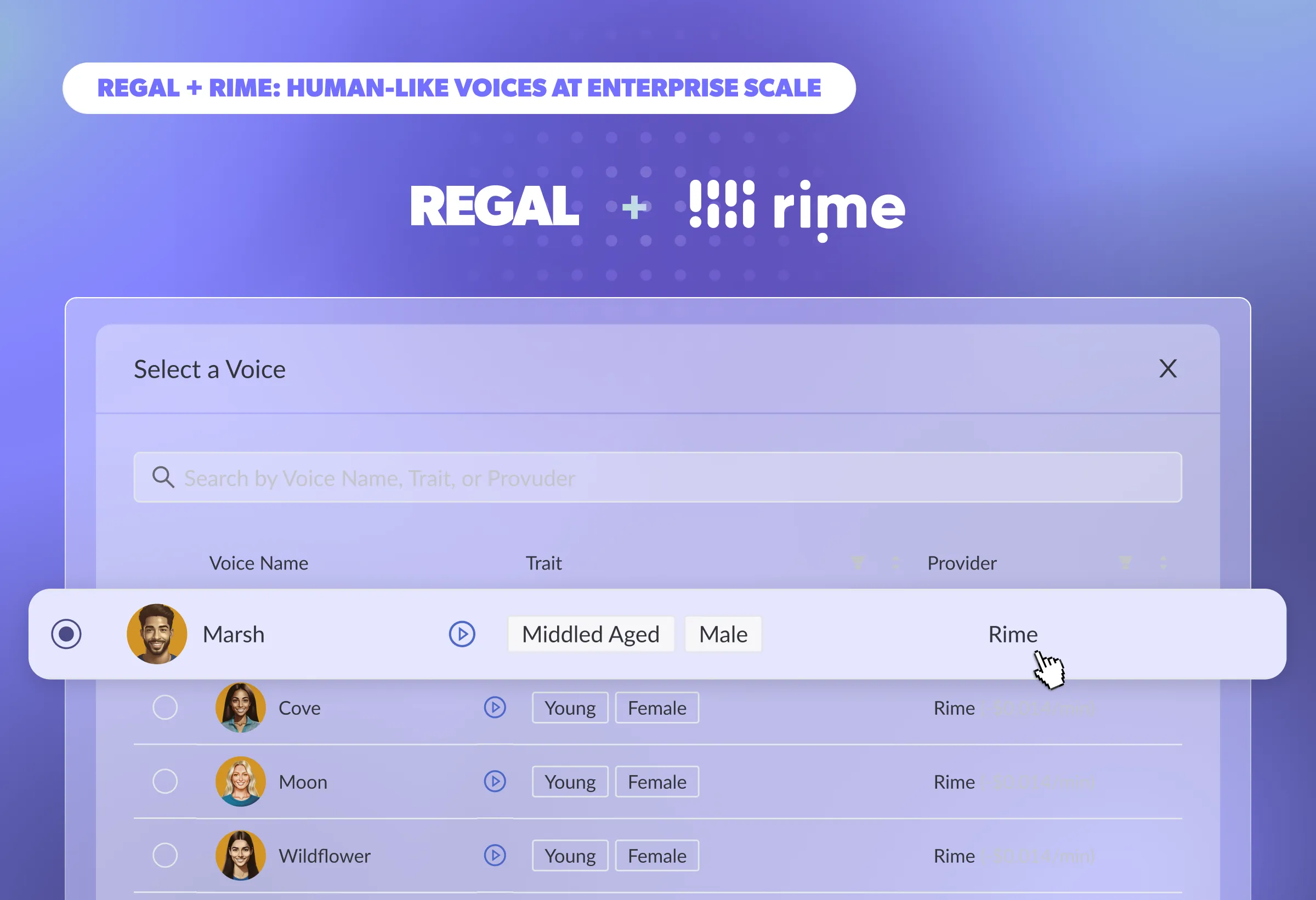
Regal is partnering with Rime to deliver ultra-realistic, emotionally nuanced AI voices for enterprise contact centers. Discover new voice options that capture human qualities like pacing, resonance, and subtle expression, and learn how Rime’s technology powers conversations that build trust at scale.
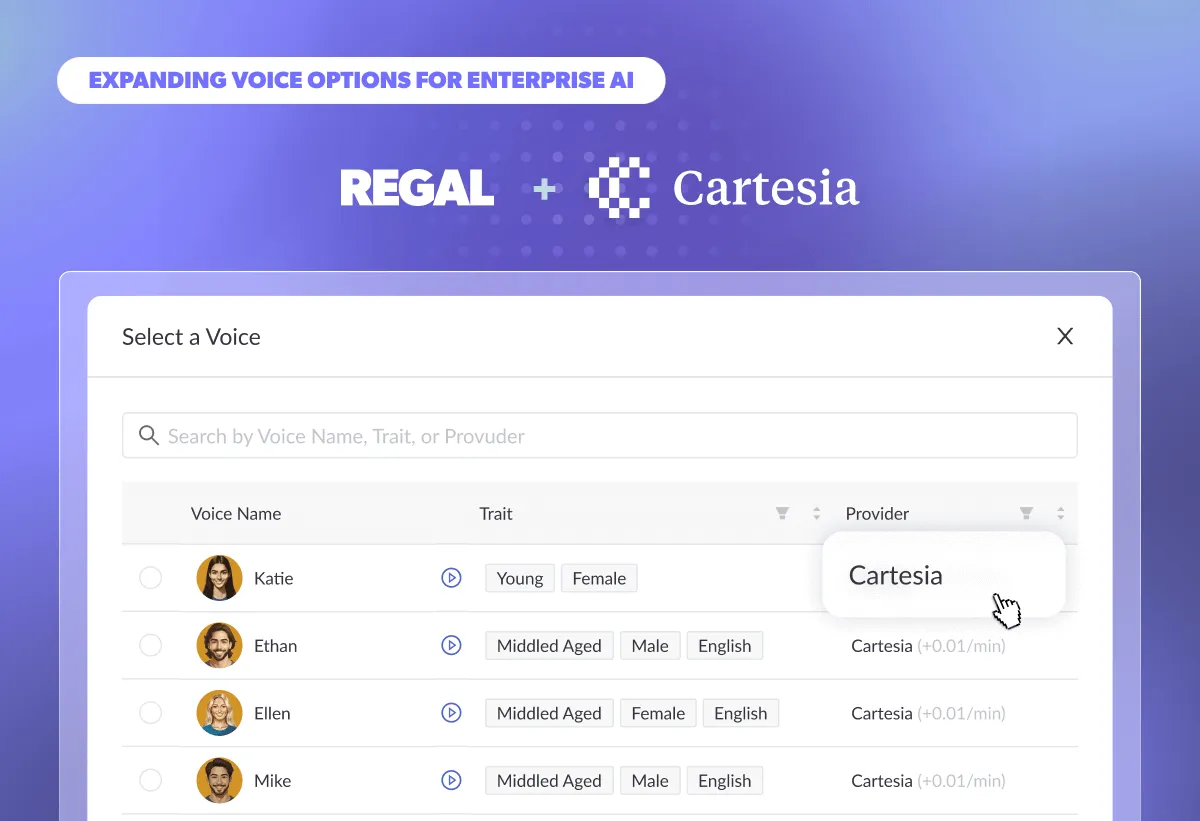
Regal is partnering with Cartesia to deliver ultra-low latency, high-fidelity AI voices for enterprise contact centers. Explore new voice options, hear them in action, and learn about Cartesia's industry-leading voice AI offerings.
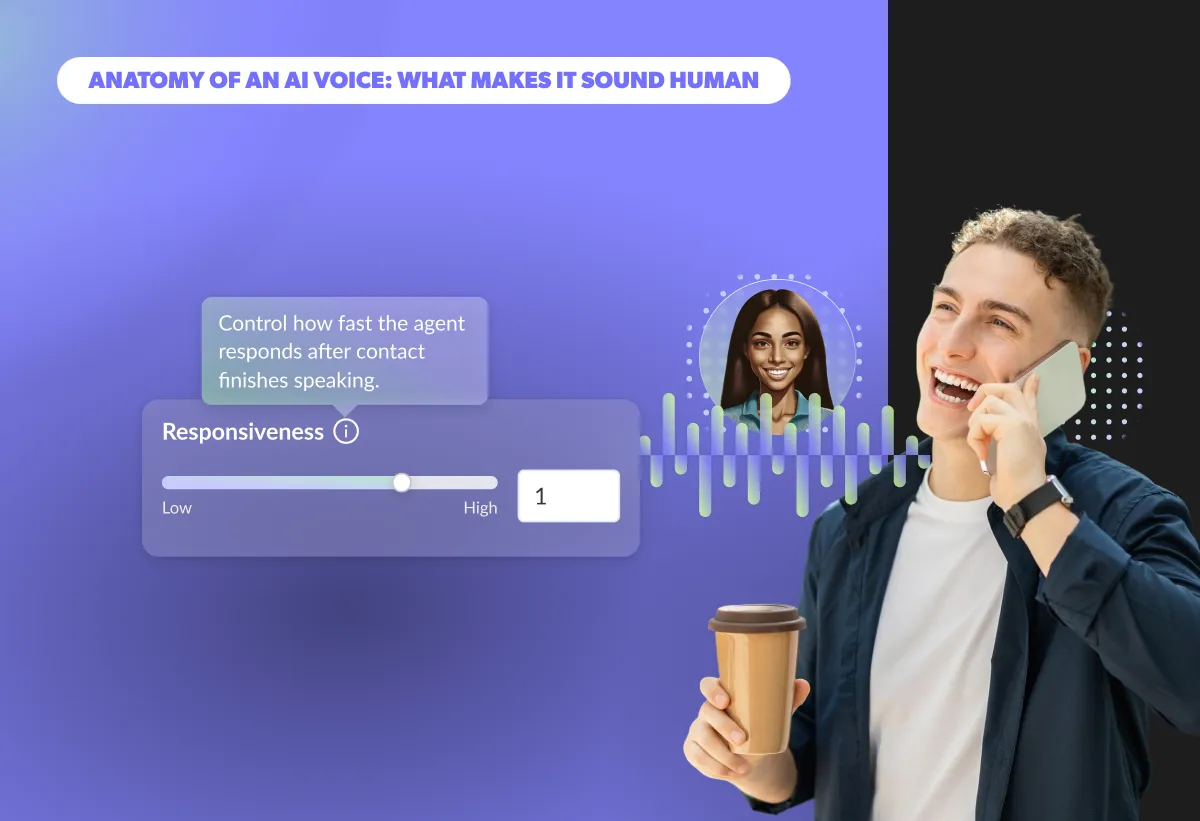
This article outlines the core characteristics that influence how voice AI is perceived on live calls. From mechanical traits like speed and volume, to more emotional and conversational behaviors, we’re going to look at what those characteristics mean, why they matter, and how they impact your bottom line.
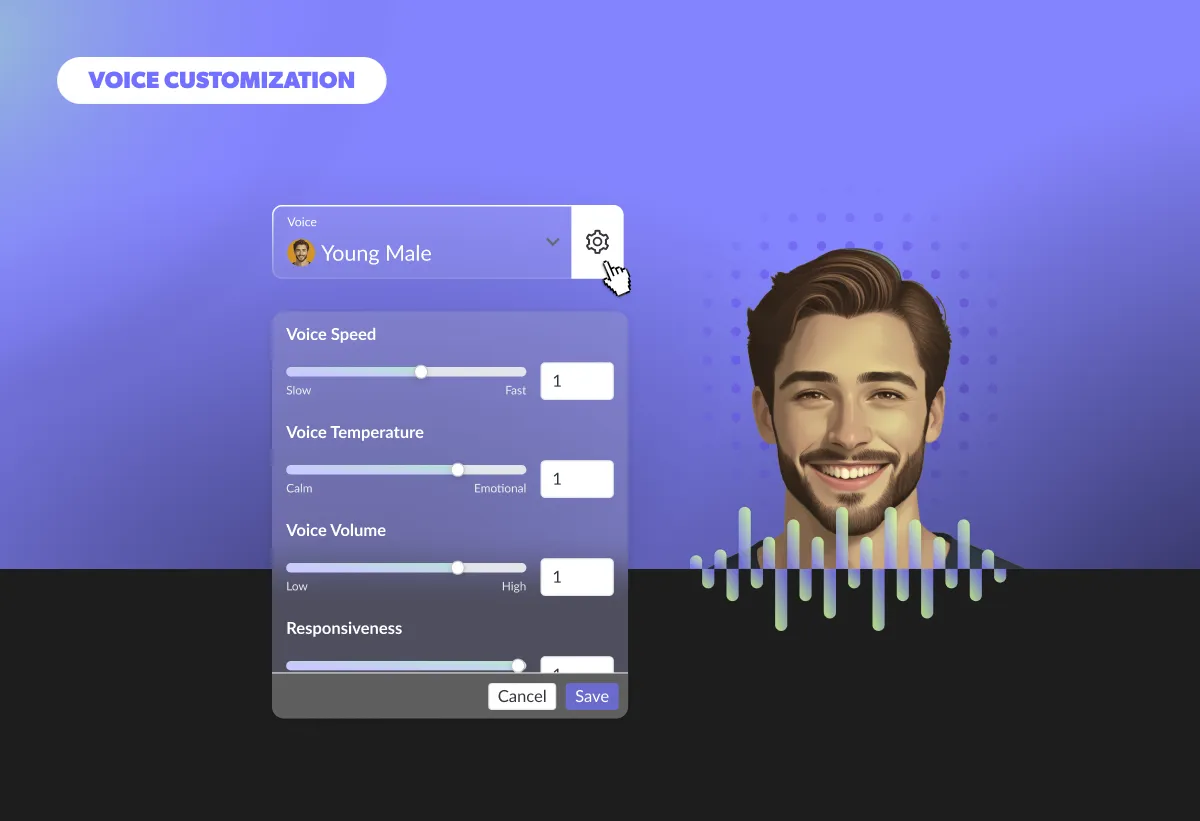
Learn how to configure your AI Voice Agent for real performance. This guide covers the most important voice settings in Regal, what ranges top brands use in production, and how adjusting speed, tone, and responsiveness impact cost, containment, and overall customer experience.
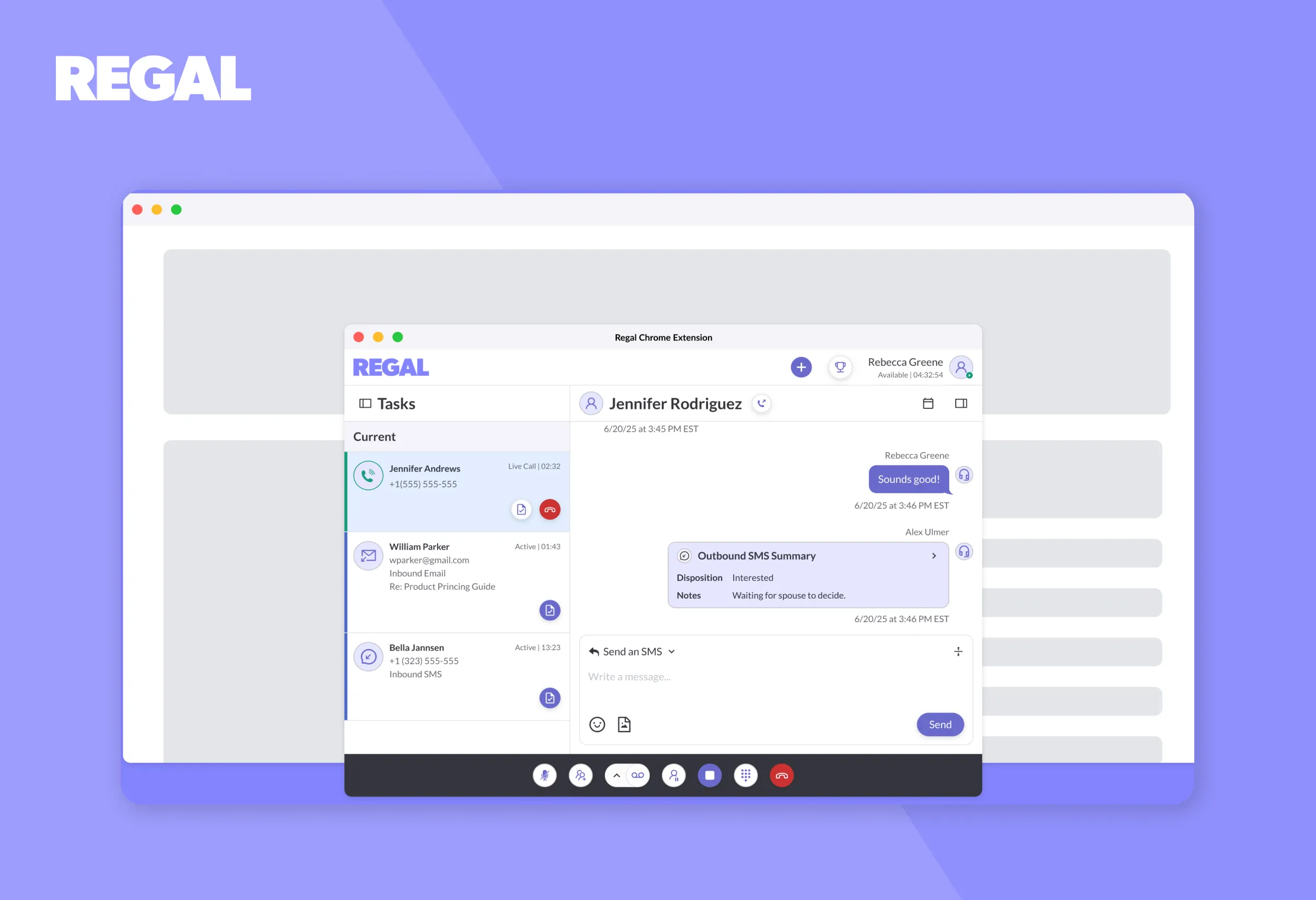
June’s releases give you more control to test, improve, and scale AI agents—while also making life easier for human agent teams. From real-time debugging tools to capacity control and a floating Chrome extension, we’re unlocking faster workflows, better control, and stronger performance across the board.
Explore how automated phone systems are transforming enterprise communication strategies. Learn how to avoid common pitfalls, optimize customer journeys, and achieve ROI through strategic deployment across industries like healthcare, insurance, and education.